If you caught our New Zealand post, you’d have learned there aren’t just 2 Hungry Voyagers anymore. There’s 3. Most importantly, he’s not just an ultrasound photo anymore, he’s a whole baby now.
Traveling with a Baby
Is it hell? Maybe a bit.
Pirates of the Caribbean
Nassau was famous for it’s relationship with the real life pirates of the Caribbean.
Soaking in the Rays
In Mauritius, we adopted a great travel policy. Day On, Day Off.
One order of the National Dish, Please
The National Dish of The Bahamas is Crack Conch with Peas and Rice.
Check out our last post on The Bahamas, if you want a chronological account of this trip. We decided to hit two countries with our 7 month old for his first international adventure, one “easy” one (The Bahamas), and one with a little more oomph in it.
Traveling with a Baby Part Two
Is it still hell? Yeah a little bit.
Surf City
El Tunco was our spot for the next 4 days.
Volcanic Coffee
Tusell Tostadores
Pool Day. Fun Day
Day On, Day Off.
National Dish
Pupusas from Pupusería El Sol
Cliffside Dinner
Coctel de Conchas from Cielo Mar
Volcano
Hiking San Salvador Volcano at Parque Nacional El Boquerón
Kia Ora, and welcome to New Zealand! This trip would be special for two incredible reasons. First, this was the last of the six 6 ‘livable’ continents we had to visit: North America, South America, Europe, Asia, Africa, and now Oceania. But more importantly, it was our Babymoon. That’s right, the Hungry Voyagers are increasing in size!
It’s been a dream of ours to visit all the continents and as soon as the pure ecstasy of that positive test wore off, we looked each other in the eye and said, “Oh shit. We have to go to Oceania.” And thus, the New Zealand trip was born.
Landing and First Day
Getting there was an adventure in itself. We’d have to embark on an 8,250 mile journey around to the other side of the globe, all while Emily was pregnant. A quick flight to Chicago, a medium flight across to Los Angeles, a 9 hour layover, and then a 13 hour beast of a flight across the Pacific Ocean.
Before that beast of a flight, we had to make a quick pit stop in Los Angeles to In-N-Out Burger. Last time we were in the LA, we didn’t get the chance, and we weren’t missing the opportunity again. Our verdict? Actually pretty average. Now, we were at probably the most famous (and busy) location at LAX Airport, so we’ll give them the benefit of the doubt as it was really busy.
In-N-Out girlie
A grueling 20+ hours of traveling later we landed in Auckland, New Zealand. Country number 28 and Continent number 6. The best part? It was 6am here, so we now had an entire day to do things after not sleeping for 20 hours! This was just practice for the little one to come.
We had our rental car delivered to the hotel and couldn’t wait to get out on the road. New Zealand is one of those pesky countries that drive on the left side of the road. I’d only experienced driving on the left side in one other country, Mauritius, and it ended up being pretty easy. After a couple shaky minutes, I felt right at home. It’s not too hard to do, but you have to think twice when you do everything.
In my quest to visit as many football stadiums as possible, we stopped by the ground of Auckland City FC, by far the most successful team in the relatively new New Zealand league, winning 4 out of 5 league titles and 13 Oceania Champions Leagues. They also recently gained worldwide notoriety after playing in the Club World Cup against Bayern Munich and getting a famous draw against Boca Juniors.
The stadium wasn’t our main destination however, it just “happened” to be on the way to Maungawhau, the highest natural point in Auckland. It was a decent walk up, and the heat was deceiving. The sun was real powerful here. It made sense, December was summertime down here and we (Emily) paid the price for our (her) lack of planning (Notice the sunburn later).
Maungawhau is a volcanic cone which blew its lid almost 25,000 years ago. The crater is huge, no photos do it justice. The main selling point of this were the beautiful, panoramic views of Auckland.
All that walking gave us the munchies, we needed pies. In case you didn’t know, Kiwi’s are obsessed with their meat pies. They are everywhere. Every shop, cafe, corner, restaurant. Basically, they love them, and we were about to see why. Nearby was Muzza’s Pies. A small, yellow cafe located on a quiet street in the city. We waited in the short line and got to a small counter with a glass case containing what little pies remained. We went with a Mince Pie and a Mince, Cheese & Jalapeno Pie with 2 cans of L&P and took them outside to the tiny white chairs sat out front.
The pies were great. A buttery, flaky crust surrounded the hot gravy and and minced beef inside. It was very flavorful and the Jalapeno pie had a surprising amount of spice to it. The L&P’s were also great. We had seen that these were a New Zealand favorite and had to try it. It was basically a if a Lacroix and a light lemonade had a baby. After all the climbing in the heat, they hit the spot, until we saw how much sugar was in them. Oh well, we’re on vacation.
For dinner we would be going to an Auckland favorite, Ahi. Here they were dedicated to showcasing the best of New Zealand’s diverse culinary culture through fresh, local ingredients. Perfect.
We wandered around the Commercial Bay mall until stumbling upon the restaurant. It ended up being a lot harder to find than it had to be, but the mall was filled with street food options and the smells were incredible. We end up in a mall most places we go, so it had to checked off in Oceania anyway.
The actual restaurant was incredible. We walked in to an open floor with entire length windows showcasing a 180 degree view of the surrounding city. Behind us was the kitchen, which was completely open for all customers to see. We spent a good chunk of the time watching the chefs meticulously prepare the dishes. There was even a chef that spent a massive chunk of time using tweezers to place flowers on each dish. It felt like we were in The Menu.
I ordered a glass of Mature Vino Pino Noir from Rippon Winery and Emily got herself a fun mocktail. First up was a fresh Te Matuku oyster with garden granita and Morningside cider. The garden granita was essentially herbs blended together and frozen into a a slush on top. The waitress came over with a gun and shot some foam on top, which ended up being the Morningside cider.
Next, White Asparagus with Buffalo Mozzarella, chicken wafers, green peppercorn, and smoked hazelnuts. Again, super fresh and every aspect of the dish had distinct but complementary flavors.
And finally for our Main, a Lumina lamb rump & shoulder with Courgette carpaccio, nasturtium , and Kawakawa. Yeah, it sounded foreign to us too. Basically, it’s lamb with thinly sliced zucchini, flower, and Maori plant. New Zealand is famous for its lamb. If you’ve been to any fancy restaurant, they surely have a NZ Rack of Lamb on the menu, so having it directly from the source was special.
Siri, play ‘Concerning Hobbits’
Next morning we loaded up into the rental and took a 2 hour drive down south towards a special village. The winding roads through rolling, grassy hills and quaint, country farms gave us a sneak peak of the magical realm we were about to enter. Emily and I had binged the Lord of the Rings movies just a couple days before flying, so our minds could only see The Shire everywhere we turned.
Eventually a road sign, Hobbiton Movie Set Tours, and a big green bus plastered with Hobbiton branding pulling out of a parking lot. Something told us we had arrived. It was either that or the millions of people that had congregated outside the waiting area. We signed in and got a ticket for our tour which was in an hour. We hung around and got a Meat Pie from the cafe on site, shocking.
As our time came, we lined up and got on our big green bus plastered with Hobbiton branding. On the short drive to set, our guide told us stories of cast members coming by and doing this tour, and showed a little documentary of how the area was picked out and built the set.
Soon enough, we arrived. We walked down a small, dirt path that winded through the trees. Eventually emerging through in an opening, the famous sign, Hobbiton.
Enjoy the photo dump. It was an incredible experience, made even better by the fact we’d just seen the movies. It’s one of those places that transcend reality and make you feel like magic is real, similarly to Disney World.
The Baggins Residence
The tour ended at the Green Dragon Inn for a pint of Hobbit beer. This was a fun little moment, topped off with the fact that we had now officially had a beer on every continent (except for you Antarctica, maybe one day).
Now it was time to get back into the trusty rental and drive another 2 hours to the city of Rotorua. It was late and we were hungry. A quick search showed that Eat Street was the place to be in Rotorua. This was a walkable food court with restaurants of all kinds. We went with Brew Craft Beer Pub for some homely food, New Zealand Steak over Chips and a pint of a New Zealand Pale Ale.
Before heading back to our AirBNB, we went to load up on snacks at Pak ‘n Save, which I assume is like the Walmart of food here. We had a funny encounter as we were leaving. I must have pulled too close to a Māori family, full with traditional face tattoos and everything. The large lady proceeded to stick out her tongue and eye my down, leading to the famous quote, “I almost got haka’d on by a Māori lady at a Pak ‘n Save in Rotorua”. Just a couple days ago that would have been pure gibberish to us.
Geothermal Wonderland
Rotorua is a geothermal town, similar to when we went to Hveragerði in Iceland. Because of this, it reeks like eggs everywhere. I’m not joking. it absolutely stinks. Everywhere.
Kuirau Park was just one of many geothermal hotspots in the area, with scorching hot springs bubbling and sizzling away. It was a cool little spot to go for a walk, but once you’ve seen one hot spring, I think you’ve seen them all.
Whakarewarewa Thermal Reserve was like the previous place but on steroids.
Whakarewarewa Redwoods Forest
That night we had, probably our favorite meal of the trip. Nestled away about a 5 minute walk from Eat Street is Number 8 Wire, an unassuming, hole in the wall restaurant.
I ordered the the Hawkes Bay Rack of Lamb with a Port Wine Jus sauce and a red wine from the local winery, Volcanic Hills. The lamb had been raised and butchered about 3 hours from the restaurant, and the wine was made less than 30 minutes away. It was absolutely incredible, one of my favorite meals throughout these travels we’ve done. These are the moments I wish I was a better writer to better portray how it was. You could taste the freshness. It tasted real. It was meaty, tender. The jus was rich and a perfect complement to the lamb.
The South Island
The next day we’d be flying out of the tiny Rotorua Airport to hop on over to New Zealand’s Southern Island. When I say tiny, I mean tiny. There was one gate, no security, and maybe like 3 guys outside that brought the plane in and checked everything.
Don’t get me wrong, the North Island was a great time, but the South Island was magical in comparison.
We’d be staying an Airbnb in Queenstown, right on Lake Wakatipu, overlooking The Remarkables mountain Range. To say the views were remarkable would be an understatement but, then again, for the next couple of days I could say the same thing at any time and it would be true.
We put our bags away and took the rental on a scenic drive following the lake to Glenorchy. I really wish I was a more talented writer, so I could write beautiful poetry to you about the endless mountain ranges, the milky turquoise blue lake water, the winding roads that went up and down, or the lush green trees that dotted the landscapes. But I’m not. So I’ll say this instead. This was the most beautiful drive I have ever done.
Glenorchy was a tiny town that sat on Lake Wakatipu at the base of the Humboldt mountains. We parked up at the scenic walkway and went for a stroll. If I could bottle this air up and sell it, I’d be a millionaire. It just felt fresh.
At one point I went to press Emily to pose with the ultrasound of our baby, and an older Asian lady pointed and smiled, “Oh, Baby. Baby!”. She then grabbed the arm of a man in her group who was holding a big, expensive camera and pressed him to take a photo of us with Emily’s iPhone. He pointed the phone at us and did some tweaking with settings I’ve never seen before and handed it back. Kind people everywhere.
What a view for your backyard
Back at the AirBnb and only a beautiful 5 minute walk down the lake was Altitude Brewing. Nestled on the lake with a backdrop of mountains, it’s one of the most scenic breweries we’ve visited. Untappd ratings out of 5:
The next day we were up bright and early at 6am for a day of adventure. This wasn’t any adventure, this was the adventure to do while in New Zealand: the Milford Sound. This was an all day, 10 hours of driving tour that we booked.
Our tour guide for the day was an Irish guy that moved to New Zealand and never went back. I wish I remembered his name, he was the perfect guide for the day. It’s a grueling task to, not only drive that distance, but to keep a minivan filled with people entertained for that long of a time, and he smashed orit. His knowledge of New Zealand’s history, animals, and plants was so interesting.
The first major stop was on our roadtrip was Te Anau, the last town before the Milford Sound.
Lake Te Anau
We stopped outside a restaurant for lunch which, I’m assuming, the tour company has a deal with so that people will go inside. Earlier in the drive we had got talking to the guide about food and he recommended we skip the tour restaurant and walk 5 minutes down the road to Miles Better Pies. He said the Venison and Plum Pie here is the best pie he’d ever eaten.
Entering Fiordland National ParkEglinton ValleyHollyford RiverFalls CreekMirror LakesThe coldest, purest water I’ve ever drank
This particular stop was the greatest moment of the trip for me. The most, holy shit this is gorgeous moment.
Our guide was really passionate about conservation and New Zealands wildlife, and constantly mentioned the Kea. He told us how endangered there are now, only about 5,000 left in the wild. We were lucky enough to see a couple, living up to their reputation, trying to destroy somebodies car.
Average New Zealand photoTutoko River
It already felt like we’d had the tour with everything we’d seen, but now we had finally made it to the Milford Sound itself. There were millions of people here, unloading from bus after bus. We waited in a terminal until our number was called, then loaded onto the ship that would take us up and down the Sound.
If the entire trip had been just this, it would have been worth it.
Wine Country
Over the next couple of days, we’d be driving north, stopping at a new town each night. For the first day of our great Northern Migration we’d be doing our own tour of Central Otago, one of the many world renowned wine regions in New Zealand. Let me tell you, I’ve never seen so many wineries in one place in my life. Every 5 minutes there were signs for a different winery.
Emily obviously couldn’t drink but I had taken on the noble quest of trying many different wines and taking home the best of the best. I know, I know. I’m somewhat of a hero.
The first stop was Felton Road Winery. This place was highly regarded, so much that we had to email them and ask if we could visit. On the tour with us was a French family that drove up in an RV. If you drew a traditional old French family it would be these people, and they absolutely reeked of cheese. It was a standard winery tour. We were taken around the premises, lectured about the grapes, and shown the process of creating the wines. Then came the tasting.
We didn’t tell the tour guide in time that Emily wouldn’t be tasting, and her first pour had to be dumped, prompting the old French man to tut and sigh. It was hilarious. They get a bad rep, but I love the French. The wine here was actually amazing. I ended up buying a bottle of the Felton Road 2023 Calvert Pinot Noir. Maybe in 5 years when we open it we’ll do a review.
Not a bad drive
Next on our stop was Carrick Winery. This wasn’t a traditional winery, it was more of a restaurant. We didn’t want any food and headed out back to an amazing overlook of the valley. Here, we ordered wine from a truck and looked out over the lake. I couldn’t tell you what I got, but it was decent, not as good as Felton, but still decent.
Next up was Mt. Difficulty Wines. There was no tour here, but I went with a tasting of multiple wines. Now I know almost nothing about wine. I know if I like something, but I have no idea about all the terminology and intricacies of what makes a good wine. This tasting was just me and the bartender. He would talk like 5 minutes describing a single wine then pour me a taste and just stare at me. What are you supposed to do in a situation like this. I tried my best. Swirl the wine around the glass, think real hard when tasting it, give a slight nod of the head, “Ah yes. Good”. They actually were good too, I just didn’t know how to say it.
I ended up buying a bottle of the Mt Difficulty 2021 Ghost Town Syrah. We’ll include it in the review of our New Zealand wines in 5 years time. Great place, still not as good as Felton though.
Posing with old reliable
That Wanaka Tree
I’d had all the wine I could stomach, it was time to get to our first overnight stop, Wanaka. A tree here had gone viral. Yes, a tree. So much so that it gained the nickname “That Wanaka Tree”. Located on Lake Wanaka (creative name), it sits out on the water with a stunning backdrop of the Southern Alps. There were a ton of people here, all getting that perfect Instagram photo. It is a beautiful spot. The water is so blue, I still couldn’t get that out of my head. The air is cool and fresh. Its the type of air you want to breathe in all the time.
Emily is proud of this one#thatwanakatree
National Pie Dish
We’d already had many examples of the New Zealand national dish. How could we not? Pies were everywhere. But in our rankings of the greatest national dishes in the world, we only wanted to count the best, and that took us to Kai Pai Bakery in Wanaka. This little bakery was the recipient of a gold medal for their Mince and Cheese Pie at the 27th NZ Bakels Supreme Pie Awards. Yeah they have Pie competitions here, loads of them.
The bakery itself was a small shop located off the beaten road. Like any other bakery, their arrangement of pies sat behind a glass cage, tempting you in with their smells. And trust me, it smelled incredible in here.
There was only one option for us, the Mince and Cheese, only $5 a pie. It looked like any other of the 10 pies we’d eaten since being in New Zealand, and that wasn’t a bad thing. The crust was buttery and flaky. The beef inside was tender and covered in a rich beefy gravy and creamy, melted cheese. This was some real home cooked comfort food, I could eat these all day.
We both agreed, our favorite pie of the trip, slightly edging out the Venison and Plum pie in Te Anau.
Pies everywhereStreets of Wanaka
Wanaka was such a nice, little town. We spent our time walking along the waterfront, ate some slow cooked meat at Big Fig Wanaka and drank at Wanaka Brew Bar. I even got a tattoo to commemorate visiting 6 continents.
Christmas in Wanaka
Oh yeah and we stopped by the “stadium” of the local football team, Wanaka FC, a small 3rd division side that had beaten all odds and just been promoted to the 2nd division.
Tekapo
Next up in our northern journey was Lake Tekapo, a 2.5 hour drive north. These seem like long hours to be driving, but the scenery here is just unreal. Even though we’d been here for a bit now, we were still in awe of just everything. In terms of pure beauty, I think only Iceland rivals it.
We stopped at Lake Pukaki at the Mt Cook Alpine Salmon Shop. If I smell salmon within a 5 miles radius, I’m hunting it down and eating it, and this wasn’t any type of salmon. This was salmon from Cooks water. Who is Cook you may ask? You’ll find out later. Yeah the salmon was great, really fresh.
Tekapo is a tiny town, but it was gorgeous. The photos do the water no justice, it is the most milky, turquoise color you can imagine.
The Church of the Good Shepherd
For dinner we sat on the lake and had a food truck, The Better Batter, for some NZ Style Fish and Chips. Everyone raved about this place online, but I thought it was pretty mediocre. The fish was small and mostly greasy batter, and the chips were just mid. Maybe I’ve just been spoiled with Yorkshire Fish and Chips.
The view weren’t too bad though.
Tekapo is located within one of the largest dark sky reserves in the world. Because of the minimal light pollution, it’s one of the best places in the world to stargaze. It’s so good, that you can often see the milky way with your naked eye. We had bad look when it came to astronomical beauties. We’d been promised Northern Lights in Iceland and missed out on that, but this would be different.
We piled into a clunky van and drove up the hills until stopping in the middle of nowhere. Once there, the guides sat us around in a circle and talked about the stars for 20 minutes, showed us Saturn in the telescope, took a photo, then called it a night. We did not see the milky way. 0/2.
Getting Cooked on Cook
Today was the day. We’d been talking about him the entire trip: Cook. Mt Cook / Aoraki is the tallest mountain in New Zealand and home to an absolutely beautiful hike, the Hooker Valley Trail.
I’d been tracking the weather for the past couple of days. One day it looked good, the other, not so good. As we got closer, rainclouds and rainbows loomed over the mountains.
Rainbows and Cook
And as we turned into the park, it became all too clear to us that the hike would be closed. Rain dumped down as we twisted and turned through the hills, crossed one lane bridges, and hugged the coastline of Lake Pukaki. We were surrounded by huge, snow capped mountains on either side and, occasionally, Cook peaked through, taunting us.
Cook won today
There was still a visitor center which we read about the area, including books filled with people who died trying to climb Cook. I mean there were like 7 of these things filled with pages of people dying. “John Smith made it halfway then fell down a ravine and was never seen again”, that type of shit.
We also sat down at the Old Mountaineers Cafe for the most New Zealand meal we could conjure up: Mince and Cheese Pie, L&P, and a Lolly Cake. You cant get more Kiwi than that. We’d heard about Lolly Cakes since we landed, but could never find one. They’re real popular over here, but we thought it tasted strange. Very sweet and chalky.
Cook looms in the distance
Luckily for us, it wasn’t all doom and gloom, there was still a hike we could do: the Tasman Glacier View Track, a small 30ish min hike that gave us incredible views of Tasman Lake and the surrounding mountains. It wasn’t Hooker Valley, but it scratched that hiking itch for us.
It was absolutely pouring it down and freezing. We loved it and joked around saying it’ll be a great story to tell our child, “Your Mum was such a badass that at 4 months pregnant she hiked up the side of a New Zealand mountain in the freezing rain”.
We got back to our car and changed out of our cold, wet clothes before beginning the 3 hour drive back to Queenstown for a last afternoon in New Zealand before we flew back home.
We walked around downtown Queenstown, bought some souvenirs, and stopped at Mrs Ferg for a Hokey Pokey Gelato. Hokey Pokey is a popular flavor in New Zealand, essentially vanilla with honeycomb toffee. You can’t go wrong with those flavors, it was so tasty.
The flight to Chile was a fun one. We would be going over the famous Andes Mountains. Luckily for us, we had just watched Society of the Snow, which told the story of a Uruguayan rugby team that crash landed into the Andes and resorted to cannibalism to survive. Were we ready to eat other people? Would it count as a National Dish?
About an hour into the trip, the pilot came on the speaker. We only understood one word, “Andes”. It was repeated in English, which gave us the full context, “Intense turbulence expected as we fly over the Andes Mountains”. Fear set in. We began to sweat at the thought.
In reality, it wasn’t bad at all. Our flight path was made to avoid the mountains as much as possible, so we only went over a small part of them. What we saw though was incredible. Massive snow capped mountains went on for as far as the eye could see, a great introduction to the last country of this trip.
The neighborhood we were staying in was beautiful: Bellavista. Located right at the base of San Cristóbal Hill, it was filled with restaurants, colorful buildings, artisan markets, and bars with people out front trying to pull you in.
Our mission for the night was food, shocking. The National Dishes in South America had mostly disappointed thus far (except Argentina), and it was up to Chile to redeem the others and end on a high note. Lucky for us, Bellavista hosted one of the most iconic places in Santiago for this Chilean specialty, Galindo.
I had researched what this dish months before traveling here so we both knew what it was, but we couldn’t help but laugh after reading the menu. Pastel de Choclo was yet another cornbread type dish, similar to the Sopa Paraguaya and Chipa in Paraguay. These South Americans really loved their cheesy bread. Unlike Sopa, however, Choclo had a little more umph to it. It wasn’t actually cheesy bread, but a corn casserole housing ground beef, chicken, onions, egg, raisons, and olives.
The bright yellow layer of cheese created a strong contrast to the dark, stone bowl it was served in. The vibes were great. It was a cool, dark night and we were seated outside with San Cristóbal Hill looming in the distance. We both had a glass of our first Chilean wine as we cheers’d and celebrated successfully having each National Dish.
We each took a spoonful and had similar neutral reactions. It was okay, but wasn’t redemption for South America. The corn flavor was overbearing and the bottom was watery, which was a little strange. With the amount of ingredients, you’d think it would be more flavorful, but it was really just warm, creamy liquid with bits of boiled chicken.
We also ordered a Caldillo de Congrio, a rich seafood stew made with Conger Eel. This was another unique, special Chilean dish. It was definitely better than the Choclo. This was our first time eating eel, and we liked it. It wasn’t fishy at all, and the fresh, bright broth really made it an enjoyable experience.
Wine Tour Wasted
When in Chile, there’s only one thing you must do. A wine tour. They’re famous for it and, spoiler alert, there’s a reason why. It’s damn good. We opted for a tour in the MaipoValley, known for their Cabs.
A bus showed up at our hotel at 6am and we were ready to roll. First up was Campo La Quirinca, a small farm to table winery right in the heart of Isla de Maipo. They operated here like a farm, finding ways to be sustainable in their winemaking. For example, they grow cork trees with future efforts to use them to cork their own bottles.
One of the Cork TreesChickens!Feeding the horses
The tour started early and we had not eaten anything and were sat down at a table with nuts, dried fruit, potato chips, all which came from the farm, to taste with our wine. The wines were complex with lots of earthy notes and rich with berry flavors. We couldn’t look into our future to see how much wine we would actually be consuming, so at this point everything put in front of us was subsequently downed. My favorite was the Camenere Gran Reserve.
Looking back now, we didn’t want to jump the gun and buy a bottle at the first winery we visited, but we really should have here. This was the best wine we had the entire day (and not just saying that because the day gets blurrier as we keep drinking).
Blue, the Winery dog.
We hopped into the bus and head over to the next winery, Santa Ema. Here, everyone was really starting to feel the wine and people started to get to know each other. There was an older German couple, a couple from Brazil, the Americans from Texas, and the local Chilean. We began to get to know the Canadian couple in our group and had conversations about travel, wine, and of course football. The guy was, unfortunately, a delusional Arsenal fan and had some laughable opinions about the game.
The wine here was pretty good. We had a couple of empty glasses placed in front of us and for each new pour, our host gave an in depth description of the grapes and process that went into creating it. I remember a Chardonnay, a Merlot, and a Carmenere (we’ll talk in detail about later about this special type of wine).
This time we stumbled into the bus and headed to our next winery, TerraMater. This stop was for optional wine and food, which we of course did. We ordered a plate of Machas a La Pamesana and a bottle of their Vineyard Reserve Zinfandel, because why not. The clams were delicious, a Chilean specialty as our host said. I want to tell you the wine was great, but I honestly don’t remember.
For our last and final stop, we crawled onto the bus and headed to the largest and most famous winery of the region, Undurraga. It was immediately apparent this was the big dog of the area. The property was huge and the production here was larger than any of the other places.
There was a little counter here selling snacks, which I desperately needed. I asked our guide what the most Chilean thing I could order was and he said a Chaparrita. Take a wild guess what it is. If you guessed another goddamn Hot Dog, you’d be correct. Except this time it’s wrapped in pastry. It was actually pretty good.
Again, we were given mini glasses and had pours and again, I couldn’t tell you what any of them tasted like. But they were good enough for me to purchase two of their bottles, a 2021 Founder’s Collection Carmenère and a 2022 Terroir Hunter Carignan. The Carmenère grape is Chile’s signature grape. It was long thought to be extinct by the French, but showed up in Chile back in the 1990s and has been an important part of Chilean wine ever since.
And that was the end of the tour! It was a great time spent with lots of amazing wines and great people (besides the Arsenal fan).
Back to the hotel
As if we hadn’t done enough for the day, a reservation that night opened up at Peumayén Ancestral Food and we couldn’t pass up on it. This was a fascinating restaurant that focused on showing off indigenous Chilean food throughout history. This was presented through a tasting menu which showed off Chilean cuisine throughout all regions.
The first course included traditional breads found throughout Chile, going from those found in the Northern provinces to the Southern provinces as you go left to right. I honestly couldn’t tell you what any of these were or what they tasted like, but our waiter went into great detail on each and everyone of these little balls of dough. All I could think in the moment was getting them to sponge up the wine in my belly.
The next course was the starters, brought out and presented on a slate. From left to right: Corn Pastry with Azapa Olives and Cancha Powder, Roasted Paprika in Kalatanta and Goat Cheese with Ulmo Honey, Blood Sausage with Onion Jam, Red Wine, and Merkén, and Salmon Tartare with Mango and Chañar Sauce.
Then came the Main course. From left to right, Chochoca stuffed with Eggplant and Mushroom, Algarrobina Pork, Smoked Caldillo with Shellfish and Conger Eel.
And finally, dessert. Mote with Dried Peach, Profiterole with Lucuma and Milk Candy Sauce with Pisco, and a Papaya Pie.
It was such an amazing experience. I can’t go into detail on how every bite tasted (because I have no idea), but I do remember being so surprised at how much flavor was packed into each little bite.
Moving on Up in the World
The next morning we woke up (somehow) and headed out into the beautiful neighborhood that surrounded us. The weather was perfect. It was hard to think that only a couple days ago we were sweating our asses off in Paraguay.
The streets of Santiago
Emily’s goal to visit coffee shops around the world led us to Encanto El Eje, a quaint cafe that is designed to pull in those who want an Instagram photo. In fact, there was a younger couple filming a TikTok video right next to us. I get it though, it’s a beautiful cafe filled with greenery and flowers, coffee bags hang from the ceiling, bright lights illuminate the name, and the Colombian flag is ever present.
Looming over us in the distance since we arrived was San Cristóbal. It was destiny that we would arrive at the top at some point. Luckily for us, it was only a short walk to the famous Funicular de Santiago. This thing is over 100 years old, taking people to the top of San Cristóbal since 1925. We bought our tickets and poured into the bright red car that would creak its way to the top, going diagonally up the side of hill.
At the top, the Sanctuary of the Immaculate Conception on San Cristóbal Hill, a massive statue of the Virgin Mary and one of the main places of Catholic worship in Chile. The views up here of Santiago and the Andes Mountains were incredible. It really gave perspective just how massive the city was.
Capilla La Maternidad de María
We opted to go on the Santiago Cable Car for the way back down the hill. These things weren’t a hundred years old, they’d actually been renovated 8 years prior. Again, I could go on forever about how beautiful the views were. Something about mountains surrounding a large, metropolitan city that’s so pleasing on the eye.
STGO!
Hotdog from Hell
We’d eaten a good amount of Hot Dogs on our travels throughout South America. It’s something you wouldn’t imagine being popular down here, similar to Iceland’s obsession with them. The Choripan in Argentina was incredible, the Pancho in Uruguay was meh, but the one that scared me the most was the Completo.
Fuente Alemana was our stop for this horrifying creation. The great Anthony Bourdain visited here in his exploration of Santiago, stopping by for a Lomito, a similarly decadent creation drowned in mayonnaise. We weren’t here for that though, we wanted that dog.
It was a lively atmosphere. Waiters were running around blasting through customers like an assembly line. The grill was sizzling, chefs yelling out order. A line had started to form outside as we were seated, it was getting busy.
And then out it came. The Hot Dog Completo, my own personal hell. You wouldn’t guess there was a hot dog underneath it all. An absolute monumental amount of mayonnaise sat on top of tomatos, mashed avocado, and eventually, a hot dog. I couldn’t take more than a couple bites. No human should eat that amount of mayonnaise. Am I being dramatic? Yes. I hate mayonnaise, so it’s my fault for thinking this would be any different, but you have to put aside any past biases to experience local cuisines.
Emily liked it far more than me, and after wiping off about 75% of the mayonnaise, we were able to finish it. Chile, you have some explaining to do about this whole mayonnaise obsession.
Just a smidge of MayoOur order
Tourists in Santiago
La Chascona was the home of beloved Chilean poet and Nobel Prize winner, Pablo Neruda. We were recommended to visit here by the Hotel staff. The man lived a hell of a life, and it was nice little look into Chilean history.
We spent the night hitting bars around the neighborhood. Snowbar in particular was a fun spot.
The Final Day in South America
Plaza de Armas
A Lady Diana salon
For our final Chilean meal, we went to the historic Emporio Zunino. Opened in 1930, its been in the same family ever since, becoming a staple in Santiago. There was a ton of people here. We had to get in line, order, get a ticket, bring the ticket to a cash register, pay, then wait for one of the men in the old timey white outfits to say our number.
There was only thing we could order, their specialty, the Empanada de Pino. The pastry looked great. It had that rustic, homemade feeling to it.
I knew nothing about Paraguay. Actually, I knew one thing: the footballer Roque Santa Cruz. That was it, and I’m not sure that would help out much.
Early Impressions
Silvio Pettirossi International Airport was smaller and older than the airport in Buenos Aires, but that was fine, it meant we got through immigration real fast. We stepped outside and took our first couple of breathes in Asuncion. Is there anything better than those first moments in a new country? Our first two Uber’s cancelled on us as soon as they arrived at the airport but the third time was indeed a charm.
A small, old man hopped out of his small, old car and grabbed our cases. He had a warm smile and callused hands. As we drove further from the airport, it became more in line with what I was expecting from South America. It was rural and poor compared to what we had seen in Argentina. It also felt more tropical. Palms and ferns lined the streets. The dirt was a bright orange. You could just tell that in the summer, it got real hot here.
We checked in to our hotel and took a quick walk around the area.
The streets of AsuncionStreet art
Experiencing Paraguayan Cuisine
El Café de Acá was constantly recommended as one of the top restaurants in Asuncion, and luckily for us, it was only a 5 minute walk from the hotel. The vibes inside were great. A really homely and tropical atmosphere.
Shortly after we were handed a large, ice cold metal jug of water and a smaller cup filled with green herbs. This was Tereré, an iconic drink that dates back to the native Guarani people of Paraguay. Our waiter spoke little English and we speak little Spanish, so the explanation of how to drink it was a fun experience. Essentially, we had to pour water into the cup of herbs, wait for it to soak up, pour a little more, drink, and repeat. It was strong. An intense mint flavor hits you like a truck. Any travel fatigue I had was immediately erased. The combination of intense herbal flavors and ice cold water was incredibly refreshing. I could get down with some Tereré in the USA, lets make it a thing please.
Special Tea
Next up were the Mbeju, which are also very popular in Paraguay, and Paraguay, I am sorry. These were not the moves. It was like eating a combination of chalk and cheese. So dry that I found it hard to swallow. We also had a basket filled with Pastel Mandi’o (small empanadas), Bombitas de Chipa (more balls of cheese), and Paraguaya de Carne (greasy patties of soft beef). Honestly, they were all kind of meh. Nothing special, but nothing awful about them. But there was no need to worry, the main event was coming up.
Almost choked to death on thisParaguayan food basket
Sopa Paraguaya is the National Dish of Paraguay. This is why we were here. We’d had 23 National Dishes before this, and here was number 24. Upon first glance, it looked like it would just be cornbread. However after dipping our spoon in and getting a chunk of it….Yeah, it’s actually just cheesy cornbread. I really don’t know know how else to describe it.
Diving in to that Paraguayan Sopa (cornbread)
Not to say that it was bad. It was actually quite tasty, but there’s only so much you can do with cornbread. It was moist, cheesy, and hearty. The type of wholesome dish your Grandma would make.
The Factoria Hotel
Our home for the next two nights would be the beautiful Factoria Hotel, an old factory renovated into an amazing rustic hotel. Greeting us at the entrance was a collection of antique knick knacks and photos that had been kept from the original factory. Outside was our favorite.
That night we stopped by the local brewery, Sacramento Brewing Co. The beers were okay, nothing too special, but it was an enjoyable experience, and the surrounding street area, Santisimo Sacramento, was beautiful.
My Untappd ratings out of 5 from Sacramento Brewing.
Churro Campana – Blonde: 3.50 Arriero – Porter: 4.0 Shamingo – Pale Ale: 3.75 La Chuchi – Helles: 3.25 La Correli – Red Ale: 3.25 Mita’i Churi – NEIPA: 4.25
Downtown Asuncion Tour
The next day would be a busy one. We had a lot planned, so the only way to start the day was with a nice cup of coffee at a local cafe.
That cafe would be St. Martin. We loved it here. A tiny cafe on a back road. It just feltlike South America. The coffee and breakfast we had here was incredible, but the standout was definitely the Alfajores. Argentinians close your ears because you wont want to hear this. This one was better than anything we had in Buenos Aires, and was by the far the best of the trip. We could’ve spent forever here. Great coffee, great good, peaceful location. Highly recommend.
Fun fact about the photo below, it wasn’t until after I snapped the shot that I looked down and saw a dead kitten next to me. Pointing it out to Emily maybe wasn’t the best idea, and every time we laughed it ended with “Aw, but the kitten”.
Our activity for the day was a tour of downtown Asuncion by a local, Mateo. We had success using ToursbyLocals in Malaysia, and wanted to try it again. Spoiler alert, we had another incredible guide.
We arrived to our meetup point, Plaza de los Heroes, early and decided to sit in the park. Of all the things we enjoy doing on our travels, we shameless like to people watch.
Mateo showed up and introduced himself. He seemed around the same age as Emily and I, was born here in Asuncion, and loved History. This was apparent as he went into a 10 minute monologue on the founding of Asuncion. It was interesting to listen to. Living in America, especially for Emily being born there, you’re only really taught American history. Hearing in depth historical events about a smaller country like Paraguay that, to this day, affect the country, brings so much perspective about the larger world. Anyway, this monologue transitioned into the building next to us, Panteon Nacional de los Heroes. It was here that all the founders of Paraguay, and those who fought for its independence are buried.
That was the crazy thing about Paraguay. Its history is plagued with people and countries trying to invade them. You could see this best at Casa de la Independencia Museum. Mateo told us this is one of the only original buildings from Asuncion’s colonial past before the Spanish burnt the city to the ground. I wasn’t joking about everyone trying to invade them. The Spanish invaded. Argentina, Brazil, and Uruguay formed an alliance in the 1860’s to invade. Bolivia has tried to invade (I got the hint that people didn’t really like Bolivians here). But here Paraguay still stood as its own independent country, and this little courtyard with a single tree represented the power of its people to fight. It was quite beautiful really.
We continued walking and talking around the city. Asuncion was an interesting, little place. It seemed modern, yet at the same time not. Most buildings didn’t seem to aged, but the streets and sidewalks were filled with holes.
The tour climaxed at the Presidential Palace, named after Carlos Antonio Lopez, the first President of Paraguay. Mateo was very proud of this place and the story he told. He had been telling us about President Lopez the entire time, starting at the mausoleum where he is held, and now here we were at his massive palace. You could tell this was an important man to Paraguayans, especially History enthusiasts like Mateo.
Palacio de LopezEmily causing chaos in the old courthouseCatedral Metropolitana de Asuncion
The tour had been long, and it was a hot day. I asked Mateo if you every get used to the heat. “Never” was his reply. It wasn’t even the hot season yet and I was drenched in sweat. Our bodies and brains were ready to tap out. Luckily for us, the last stop involved a bucket of ice cold Paraguayan beer. I had drank a Pilsnen the other night at the hotel, but it hit different now that I was close to death. We sat, drank, and chatted about our lives. At one point I had referred to the USA as ‘America’. Mateo was not a fan of this, “You are not America. We are also America.” I couldn’t fault him, he was right. Different perspectives like that are what make travelling so great.
The Story of Paraguayan Jesus and Club Guarani
We love to visit local football games wherever we go. Well, it’s more like I love to go and Emily likes to see me happy. So naturally, we found there was a local team (Club Guarani) playing and we wanted to go. Now let me tell you, it felt like an entire adventure trying to get into this game. Let’s start off by rewinding to before the tour of Asuncion with Mateo.
As you may have read earlier, we took an Uber to go downtown, but before going to downtown, we stopped by the the Club Guarani store where the plan was to buy a shirt and figure out how to get tickets. Something to note, I’d tried and failed multiple times the previous night to get tickets online. The Uber drops us off outside the store and drives off quickly. It didn’t look like a bad area, there was just nobody around, and much to our luck, the door was locked and the shop closed. Great. We stood around and tried to think of what to do. Just as we were about to order an Uber to take us to downtown, a man decked out in Club Guarani gear with long hair and a beard showed up. This was Paraguayan Jesus. This man spoke no English and we spoke no Spanish, but he did everything possible to try and communicate with us. We bought a shirt and then asked about getting tickets for the game later.
We managed to understand that the ticketing department are at lunch and would be here in 15 minutes. Okay great, we went to go wait outside, but were met with shaking heads, “No, no”, as they pointed inside. About 20 minutes later, Paraguayan Jesus came over to us with somebody on the phone. He had called one of his friends that spoke English who told us that we would have to get tickets before the game at a location I didn’t understand.
Fast forward to present time. We’ve done the tour and have Ubered back to the stadium. I have no idea on how to get tickets. I ask one of the many security guards how to get tickets but am meant with blank stares. Then I get a tap on the back. I turn around and it is Paraguayan Jesus. He asks on his Translate app if we have tickets. I shake my head and say No. “Come”. He cancels his Uber and we march down the street to assemble the Avengers. He talks to 2 guys selling tickets and shows how much it is. I don’t have small enough bills and only a couple larger ones. At this point, I don’t care. “Just take it”. “No” Paraguayan Jesus says as a dealer comes out of a nearby Casino and offers to split our larger bill. He comes back with smaller bills and Paraguayan Jesus counts out everything, shows us the bill he gives to the guy, and gives us the rest of our money back. We shake hands and off he went. It was amazing and we will speak of his legend for years to come.
We went back to the many security guards decked out in full gear holding assault rifles, and proudly handed our tickets. We went through a metal detector and down and concrete tunnel which lead into a large concrete area filled with rubble and a single tree. We both had a giddy laugh. It had taken a lot to get here.
We had just barely walked in when we heard a lady talking and then “Chica!”. We turned to see two older ladies wrapped up in Club Guarani gear ask us to take a photo of them. We even got a photo taken of us.
The stadium, Estadio Rogelio Livieres, was old but nice. It was mostly concrete throughout and had one stand larger than the others.
We sat next to some large flags and banners that took up the entire section. As soon as the game began, a large group of people with drums, trumpets, and other instruments took up the area and started singing and playing beats. It didn’t stop for the entire game, South Americans know how to party.
Ay halftime I saw a man walking around with a large plastic bag. Watching him for a bit, I realized that this was Chipa, yet another cheese bread that is a very popular street food. I waved him over and bought one. It was definitely cheese bread, but it hit the spot. And best of all, our entire conversation was in Spanish. “Cuanto?” “Cuatro mil” “Gracias” “Gracias”. We truly are people of the world.
Chica with a Chipa
Club Guarani won 3-2.
Oh and the Uber back to the hotel? My Roque Santa Cruz ball knowledge finally came in handy as the driver and I conversed about Paraguayan football in our limited ability to communicate. I knew it would be useful.
We love a good day trip to another country. We did it in both Mexico and Malaysia and thought it was a great way to dip our toes into a different culture and check off another country from the list.
Chaotic Beginnings
We hadn’t been in Argentina for 24 hours before we planned to do a day trip across the bay to Uruguay. It was definitely one of those moments when you’re planning it you’re excited and don’t think that fatigue can ever affect you. This was the plan after traveling overnight: wake up at 5:30 am, schedule an Uber to pick us up, drive 45 minutes to the ferry terminal and get there 1.5 hours before departure like it said we had to be. As you can guess, that did not happen.
We woke up an hour late with my alarm still going off and 3 missed calls from a very angry Uber driver. I didn’t think we would make it to the terminal in time, but we sprung in to action. Clothes on. Uber bought. Passports packed. We were out the door, in an Uber, and 45 minute later at the Colonia Express terminal and through immigration. Our ticket said check in closed at 1.5 hours before. We definitely checked in later than that. Maybe we got lucky, but we got an extra hour of sleep, so that was a win win, maybe not for the missed Uber though. Sorry about that, Uber driver.
Ferry to Colonia
The terminal was small and packed to the brim with people. We didn’t know what to do, so we just sat next to a crowd of people and waited for instruction. Then suddenly, someone started speaking and the crowd shifted. We followed and started walking down a corridor which eventually led to the ferry.
The ferry was huge. Colonia Express is supposed to be the ‘budget’ option out of the ferries, and the way the reviews made it out to be, I was expecting some battered boat that could barely float, but this was nice. You are able to pick any seats you want, so we sat up near the front. It was a modern, comfy, and a smooth ride. Unless you stepped outside, then it was windy.
An easy 1 hour ride later and we could see the banks of Uruguay, country number 23 on our mission.
We made our way through the Uruguayan terminal to the familiar chorus of people offering tours and taxis. We didn’t need either of those. We had a plan. Wander around and find something interesting. We had 8 hours until our return ferry back to Argentina. The clock was ticking.
Bienvendios!
Colonia del Sacramento is one of the oldest towns in Uruguay, founded all the way back in 1680. Similar to Antigua in Guatemala, the entire town is a UNESCO World Heritage Site. The timeline of Colonia’s existence is actually quite funny, being passed back and forth between Spain and Portugal for a hundred years until finally becoming independent in 1828. The Spanish / Portuguese influence can be seen in the cities architecture, again similarly to Antigua.
We wanted to make our way to the Colonial District, and the first landmark in the way was the was the Historic Colonia Railway Station.
Colonial Treasure
A short walk later and we were standing on a wooden bridge in front of a large castle. Stepping through the gate was like going through a time portal. From here, the official colonial town began.
Streets became cobbled, houses became historical, old antique cars sat on on sidewalks. We were literally the only people here. Everyone else had been trapped into taking tours or guides around the town. It was so peaceful. A cool breeze from the water blew against our faces, birds chirped, and a lady swept dust outside her little store. It felt like a movie. This was the San Miguel Bastion, built in the late 17th century to protect the city from those pesky Spanish invaders.
PeacefulManning the defenses
Street Food National Dish
We wouldn’t have guessed that in this old, colonial town on cobbled streets, that we’d be eating the National Dish from a street food truck that looked like it was out of New York City. But here we were, at Mi Carrito to try the dish that represents Uruguay best, the Chivito.
A metallic, silver trailer with bright red Coca Cola signs sat next to a couple of small, red plastic chairs similar to those in Hanoi. In broken English I ordered our lunch, 1 Chivito, 1 Pancho, and 1 Pilsen cerveza. In addition to the National Dish, we had ordered a Pancho: Uruguay’s specialty hot dog. We’d recently had Argentina’s specialty hot dog, the Choripan, and wanted to compare. Apparently South Americans are really into hot dogs, who knew?
A man in the trailer ushered me over, “What do you want on your Chivito?” “Everything”. We had to do it right and everything meant getting the whole deal. I watched as they assembled this beast. Peppers, mushrooms, peas, corn, cauliflower, and tomato were placed onto a slice of bread that had been covered in mayonnaise. Beef, ham and egg that had been grilled together were then placed on top and here we were: a Chivito.
School children in their navy blue uniforms came running down the street laughing and joking with each other as they fumbled in their pockets for change and bought Chivito’s. Small moments like this are so special. It’s real life. This is just a normal day for them, getting lunch at a food truck nearby, but for us it was a special experience.
We each took a side of our sandwich and took a bite. There was a lot of flavors going on. The smoky char from the meat, the sourness from the vegetables that must have been soaking in vinegar, and the creaminess from the egg all collided with each other in its bready container. It was a hearty eat, but nothing too special.
Local beer and food. What a combo.
Oh, and the Pancho? Emily liked it more than the Chivito. It was simply a massive hot dog, drowned in mozzarella, mustard, and ketchup. It was basic. Don’t tell the Uruguayan’s this, but Argentina’s version was better.
Back to the Ferry
We spent the rest of our time in Colonia, walking around, taking in the scenery, and buying souvenirs. Oh, and we also watched a German Shepherd play in the water as his owners tried desperately to get him out.
Back to Argentina
It was a beautiful city that I’m sure doesn’t represent the whole of Uruguay, but we loved the peaceful bliss of it. Sometimes these lowkey day trips are almost like another trip within your trip.
Argentina was our first foray in to South America. The culmination of months of thinking “What if?” and “Well, we might as well”. Our Southwest Asian trip only 7 months earlier was supposed to have satisfied the desire to travel for a little longer, but instead, it made us hungrier. There were only two continents left, South America and Oceania, and we were so close to the other America, so why shouldn’t we?
Read on and adventure with us on our 2024 South American Trip.
First Impressions
After a long night of no sleep (Emily slept the entire way. Shocking.), we landed at Ezeiza International Airport in Buenos Aires. This was country number 22 and our fifth continent.
After an hour drive from the airport we arrived in our home for the next couple of days, Palermo. It was around 11am and we were the only ones out. Emily had been excitedly telling me early in the week, “Argentinians don’t leave their houses until the afternoon!” so she was quite proud her TikTok research had proven true. Obviously it was a weekday, but you do expect to see people in capital cities out and about, no matter the day.
Palermo was a cool little neighborhood located in the northern part of Buenos Aires. The streets were quaint and filled with murals and graffiti. It was beautiful and urban. Our research had led us here. Almost every recommendation we found was pointed towards Palermo, and we could immediately see why. The air was cool and crisp. We were going to like it here.
Early Eats
Back in the USA, Emily has made it her mission to visit as many different coffee shops as possible. Every Saturday or Sunday, we go to a different one nearby. This has led to the discovery of many cool little spots you wouldn’t usually find otherwise. Anyways, this tradition has carried over into our international adventures, so the first thing we had to do in Argentina was find a nearby spot, and luckily for us, Full City Coffee was a short walk away. It was also our first chance to try the Alfajore, an South American cookie with Dulce de Leche inside. We went with the almond version and it was great. The coffee was average.
Next, it was time for some Argentinian lunch and there was only one spot on our mind. Earlier in the day, a little yellow corner shop had caught our eye. Chori specializes in an Argentinian favorite, Choripan.
We went with the Chori de Cancha, sausage with chimichurri. It’s essentially a hot dog with an Argentinian twist, and is a very popular street food or something to eat while watching a soccer game. A sausage is sliced down the middle, thrown on a grill, and loaded up with chimichurri. Simple as that. The bread was crusty, the sausage smoky and fatty, and the chimichurri gives it a fresh, spicy kick.
Satisfied and full, we did what we always do when visiting a new area, walked around and explored. And there were some pretty cool spots.
Hotel Boutique Rugantino
During our time in Argentina, we’d be staying in a small Boutique hotel nestled away in Palermo. Rugantino was wonderful. Walking in you immediately smelled fresh bread, as it was made every day to be served at breakfast, alongside homemade jams and preservatives. Its tiny courtyard was filled with vines of all colors; green, orange, red, yellow. We walked up a small staircase and down a corridor overlooking the courtyard to get to our room. Inside, the room was decorated with vintage movie posters and looked over the street. We immediately fell asleep.
Our First Asado Experience
Argentinians eat late. Real late compared to us. I’m talking anywhere from 7pm onward. Because of this, certain places do special Happy Hours at times that Argentinians can’t comprehend eating at: 6pm. Luckily for us, that’s when we usually eat, and even luckier for us, a nearby barbeque spot, La Cabrera, had a great 40% off Happy Hour deal going on.
The process to get into this Happy Hour was quite interesting in itself. We showed up to La Cabrera at 5pm, where a line had already formed. Once we got to the hostess, we gave her our name and how many people were in the party. “Come back here at 6:15” she replied. Our name was on the list and our foot in the door.
Now, before we get into the actual food, it’s important to understand the significance of Argentinian barbeque. Every neighborhood has their local Parilla, or grill. Here, at these Parilla’s, is where the Asado experience is had. Asado is not only Argentina’s National Dish, it’s also not only just a way of grilling meat, it’s a cultural and social event where family, friends, and even strangers come together and share food together.
Now that you’ve got an idea of how special Asado is, let’s get back to La Cabrera at 6:15pm. We were among the first 10 people to arrive outside of the Parilla. We stood in a group that had formed around the hostess stand and waited for something to happen. 15 minutes went by without anything happening, except now the size of the crowd around this stand had increased to around 100 people. Eventually, the hostess said something in Spanish and began reading out names. If your name was called, you raised your hand and made your way through the crowd into the restaurant. Someone jokingly raised their hand, claiming to be someone they were not which drew a laugh out of the crowd. The atmosphere was lively, everyone was having a good time. It was in this moment I started to ‘get it’, why Asado was this big, social experience.
Eventually, “Daniel”. I raised my hand and forged a path through the tightly fitted crowd and through the restaurant doors. We were escorted past a grill packed with all different meats and into the main dining room. Waiters were already bouncing from table to table taking wine orders. We were placed at a table with another young couple. Very quickly a waiter came over and gave us a local wine recommendation, which we immediately accepted.
We ordered the Entraña, or a Skirt Steak, an absolute classic here in Argentina. We made eye contact and gave each other the biggest grins. “This is so cool” we both said simultaneously. It really was one of the most incredible culinary experiences of our lives. Here we were at a steakhouse in Buenos Aires, drinking some local Malbec, eating Argentinian Skirt Steak. It was perfect.
The beef was incredible. You could taste the smokiness from the grill on its charred crust. Every now and then you’d get a salty crunch from some flaked salt. It tasted real. No artificial bullshit, just real beef.
We ended up getting back to our hotel around 6pm and did what we do best: napped until dinner.
Messi’s Favorite Meal
Lionel Messi is a God in Argentina. You see more murals of this man on walls, buildings and sidewalks than you do the actual Argentinian flag. And honestly, it’s not surprising. People are obsessed with football here and Messi has won it all with them, including the World Cup recently. So of course while we were here, we had to try Messi’s favorite meal, the MilanesaNapolitano. In an interview with Marca, Messi talked about this Argentine dish:
Just like most people, Messi enjoys some of his mother’s dishes, most of all her milanesas, similar to schnitzel.
“I think it’s because of the sauce that she puts on top,” Messi explained. “I’ve eaten a lot of them, but the ones I eat at my house with that sauce… Others have tried them and said that they’re very good – really!”
Now we were at El Club de la Milanesa, and it was time to see what Messi was hyping up. In case you didn’t know, Milanesa is beef that has been pounded down, breaded, and fried. The Napolitano version includes a tomato sauce on top with mozzarella.
I thought it was okay. Emily loved it. Try to imagine how breaded beef with tomato sauce and mozzarella tastes. That’s exactly what it tasted like.
The Coolest Library in the World
One of the goals for this trip was very simple: get some banging Empanadas. That goal had brought us to La Morada, a little Empanada making, hole in the wall restaurant in downtown Buenos Aires. Inside was filled with old football photos and memorabilia, specifically for one of the local teams, River Plate (we’ll talk more about them later).
I went up to a the bar and was handed a menu. Research of the place had led me to three different Empanadas: a Carne Suave (regular beef), Carne Picante (spicy beef), and Picachu (cheese and ham). They were great. Super fresh and tasty.
The streets of Buenos Aires
El Ateneo Grand Splendid
The Greatest Steakhouse in the World
A couple months prior to this trip, I signed up to be on a waitlist for one of the most famous restaurants in the world with little intention of actually getting in. Fast forward 2 months and I’d actually completely forgotten about it, until one day receiving an email saying we had been accepted. We would be going to Don Julio.
And now the sought after day had come. We dressed up real nice and took a lovely, short walk to Don Julio. The air was cool and fresh. We could hardly contain our excitement. Once we arrived, a line was already forming for reservations.
We were led into the restaurant and past a group of chefs throwing large hunks of meat onto a grill. It’s got to be a thing at these Parilla’s where you have to walk past the grill before getting to your seat.
We were sat and almost immediately given fresh bread and given options for wine. We went with a Terraces of the Andes, Plot No. 1E El Espinillo. I had no idea what that meant, but the cicerone seemed very enthusiastic about it and we love Malbecs. A quick Google search after showed that that specific plot is in an extreme altitude (over 1650 meters above sea level!), and got an almost perfect score from renowned wine critic James Suckling. Cool, I guess. We also thought it tasted great, maybe we should be wine critics.
We went with a classic Asado experience: A Provoleta, Beets, and the mother of all steaks, an Entrecot (also known as a Tomahawk). In case you skipped ahead and missed why Asado is so sacred here, it’s not just a simple meal, it’s a social and cultural experience. This was serious stuff.
First came the Provoleta, an Argentinian favorite. This is quite literally just a slab of Provolone cheese that is grilled and sprinkled with Oregano. It sounds simple, and that’s because it is, but biting in to the crispy exterior and getting a mouthful of gooey cheese was so satisfying. It was cheesy, salty, and a little herby. And we just love cheese, so it was perfect.
Then came the moment we had been waiting for. Over came our server with the beast itself. She began sharpening her Don Julio branded knife and expertly sliced the meat off the bone and onto our plates. It was a perfect Medium Rare. The crust was glistening, the meat juicy, and our stomachs rumbling. We each took a bite. My god it was good. It was so rich and just, beefy. I lathered some Chimichurri on and took another bite. Absolutely beautiful. It’s not hard to find a good steak, but there are levels that ascend them to something other worldly, and this was definitely in another universe.
Trophy
5 out of 5 stars. Would definitely Don Julio again.
La Boca
The next day we dedicated to each of our favorite things, soccer and theatre. We snapped a quick photo with one of the millions of Messi murals in town and hopped in an a Uber across town to the Boca neighborhood.
In case you didn’t know, football in Buenos Aires is a serious affair. The two biggest teams in the city, Boca Juniors and River Plate, absolutely despise each other. It’s a passionate, violent rivalry that started in the early 1900’s. And with our luck, the Uber driver who would be driving us to Boca was an older man…… who loved River Plate.
He immediately asked us something in Spanish, and repeated in English once he saw our confusion, “Why are you going to Boca?” “We are touring all the stadiums, River is next”. That eased the tension as he happily told us he was River Plate. He ended being a great guy, and the drive their was filled with him just talking shit on Boca and their team. “Boca is a poor neighborhood and their stadium is tiny. River is rich and our home is huge.” Once we reached Boca, he started pointing to the buildings, “Look how poor and terrible it is here”.
It was all fun until at one point, he said very seriously, “Once it gets to 5pm you get out of here. Do not be here when it is dark”. I had heard Boca was considered the ‘bad place’ of Buenos Aires, but I actually thought it looked charming. Almost every building was painted blue and yellow in support of the team. It was a great show of unity.
We were dropped off in front of the stadium, La Bombonera, as our Uber driver gave one last scoff. It was incredible. The entire street was covered in Boca Juniors colors, flags, badges, and scarves as the famous stadium sat looming over everything.
We went inside and took the Museum tour. I was in awe. Boca Juniors is up there with one of the most iconic teams of all time. Seeing things like a shirt worn by Diego Maradona, the Copa Libertadores trophy, and boots worn by Riquelme was incredible.
Food wasn’t hard to find. Right across the street from the stadium was a small Parilla decked out in Boca memorabilia called La Glorieta de Quique. We took a seat and ordered a Choripan, a Lomito, and a giant Quilmes cerveza. We’d been to a Michelin Star steakhouse on this trip, but this might have been my favorite restaurant atmosphere so far. Behind us were four, giant, open grills filled with meat and fries.
We were handed our food quickly. It was literally just a sausage in bread (Choripan) and an entire steak lumped in a sandwich (Lomito). We lathered them both in chimichurri and dug in. It was simple, but damn it was good. The bread was so crispy and fresh, the meat was smoky, and the chimichurri was fresh and spicy. If this was my neighborhood, I’d be here all the time, and it was cheap as hell too. $5 for the Choripan and $8 for the Lomito. Can’t beat those prices.
Maradona and the Pope
Fancy Theatre
Theatre kid with Theatre
Later that day we had tickets for a tour around Teatro Colon, one of the most renowned opera houses in the world. It was so renowned that they didn’t have any English tours available, and instead, we were stuck in a Spanish tour. Oh well, we thought, Emily speaks a little Spanish, maybe we’ll understand a bit that’s going on. Spoiler alert: we had absolutely no idea. But that didn’t take away from how awe inspiring this place was. Similar to the Vatican City, every square inch of this place is meticulously decorated. Marble, gold, velvet, stained glass. It was fancy as can be.
The tour culminated in us sitting in our own box overlooking the concert hall. The acoustics in this place are supposed to make it one of the best places in the world to perform. Even just sitting in here and hearing ourselves and others talk, you could tell it was different.
We ended our last day in Argentina by getting a late night treat. They really love their Gelato here.
On to the Next Country
The next morning we woke up early to catch a flight to the next country on our list. It was still dark out when we came to the lobby and we were greeted by the hotel cat.
Qatar was the 8th and last country we visited in our Southeast Asia 2023 Trip. If you want to read through chronologically, start here.
The End of a Dream Trip
We’d just had 3 weeks in Southeast Asia. It was the time of our lives. We’d explored 7 countries, been on 8 flights, and fallen in love with this corner of Asia. But now it was time to get home, and we were definitely ready to be back Charleston. However, first there was one last pit stop before we could enter the good ole United States. Our flight from Hanoi set off at 7pm and would take 8 hours. We were exhausted and longing for the comfort of our big bed back home.
We pulled into Hamad International Airport at 11pm, our flight would be leaving at 8am the next morning, giving us about 9 hours in Doha. I was actually pretty excited about being in Qatar. The most entertaining World Cup I can remember had just been held there, and the country seemed to be still running on that high. Even the sticker that held together our napkins was still branded with World Cup 2022 logos.
After taxiing and going through customs, I opened up Uber to get us a ride home. “All pickups from Hamad International Airport have been temporarily stopped.” Shit. When did that happen? Apparently last month, the Ministry of Transport had suspended all Uber pickups at the airport. We would have to find a Taxi.
Making our way out of baggage claim, we immediately found the Taxi area. I was impressed at the efficiency. We were guided to a room where everyone waited in an orderly line until a man pointed us to a taxi. Simple as that. No hailing one down or bartering a price. It was that easy.
A Room for an Emir
We were staying at the Ramada by Wyndham Doha Old Town, a nice, sleek modern building in the heart of Doha. It was too late and we were far too tired to appreciate the surroundings, but we could have slept on a rock bed that night and been happy. The lobby was clean and modern with photos of the Emir staring down upon us.
The receptionist told us we were staying in a very ‘special’ room. I gave an ‘Oh great’ while internally shrugging it off. That’s what every hotel says about every room they have. We got to our floor and walked to our room expecting a typical Best Western type room, but were incredibly surprised. It turns out, he wasn’t lying. Our room started with a long corridor stretching out to a massive room with a full length, 180 degree window. The walk from bed to bathroom was a workout. My first thought, ‘Damn, I wish we had more nights to appreciate this’.
Allllll the way to the bathroom
Midnight National Dish
As with the Philippines, we didn’t have much time to try the National Dish. In fact, by the time we had gotten to our hotel, it was already midnight, but we couldn’t let this stop us. This was our 8th and final country of the trip, and we hadn’t failed yet.
I asked the receptionist if he could order for us, gave him the cash, and went back up to the room to fight falling asleep. Earlier in the trip I had found one of the few places in Doha still open and delivering at midnight, Majboos Al Walaida. From here we would have their famous Mutton Machboos, the national dish of Qatar.
Around 1am, a knock on the door. It was finally time, and we had both managed to stay awake. The plastic bag was heavy, really heavy. It was only supposed to feed 2 people, but felt like it was enough for an entire family.
It already smelt divine, and peeling back the aluminum foil revealed a majestic sight. An entire hunk of mutton, yellow rice, and some chickpeas.
We sat on our bed, half awake and naked, and began munching. And, wow, it was incredibly tasty! Each grain of rice was packed with spice and flavor. The mutton was so tender that the plastic spoon was able to to cut through it with ease. The chickpeas gave a great contrast in both texture and flavor to the rest of the dish. This was the type of dish you could eat every day and not get tired of it. Bellies somewhat full, our heads hit the pillow and it was lights out.
4 Hours of Sleep Later
After a couple hours of sleep, the dreaded alarm went off. It was 5:30am. We were zombies. We watched the sun rise over Doha and got our first glimpse of the city in the light. It was now that we could fully appreciate our massive window in our special room. Emily was quick to throw up a pose.
Trying to poseView from our hotel room
As we stepped outside, the already hot desert heat hit us. We’ve felt tropical heat in Thailand, swamp heat back home in Charleston, but desert heat was a different beast. It strikes hard and hits you at your core. No sweating, just straight burning.
Our hotel was close to the Doha Bay. Our our side was Old Town, and in the distance, across the water, clouded by dust, was the famous Doha skyline. It reminded me of Dubai, everything was ‘Middle Eastern Modern’. It was clean and quiet.
And then it was time to get home. We ordered an Uber and set off for the airport. It was a quiet 15 minute ride as we travelled through Doha. I wish we had more time to explore and get to know the city more. Being one of the richest Middle Eastern countries, you could tell a lot of money had been pumped into getting Doha to one of the leading, modern cities of the world.
The National Museum of Qatar. Crazy architecture!
We’re coming home
And just like that, we were back at Hamad International Airport.
The Lamp Bear
We’d love to have spent more time here, but we successfully accomplished our mission. We will probably return one day. With Dubai, it is one of the most popular layover connectors between the Western and Eastern world. And for that reason, it served its purpose for us. Qatar was the first and last stop on this incredible adventure we had undertaken, and that’s why it will always remain in our memories. Also, the Machboos was great too.
Vietnam was the 7th country we visited in our Southeast Asia 2023 Trip. If you want to read through chronologically, start here.
Vietnam had been top of our travel list for some time now.
Vietnam. It grabs you and doesn’t let you go. Once you love it, you love it forever.
-Anthony Bourdain
The Visa process was also one of the more challenging (and expensive) ones. About a month before the trip, we filled out our e-Visa applications. We scanned our passports, attached a photo, filled out all the information, and paid the $70 application fee. A couple days later, “Denied: Incorrect full name”. This was a common problem, you had to fill out your first, middle, and last name in a specific order. I fixed it and sent it again. A couple more days later, “Denied: Photo older than 6 months”. Okay I couldn’t use my passport photo as my portrait photo. And then finally, a couple more days later, Accepted. This is why we don’t procrastinate.
First Impressions
We arrived at Noi Bai International Airport around 4pm local time. It was misty and raining slightly, a stark, but welcome, difference to the blazing heat we’d endured the previous weeks. Before we could relish in the cool air, however, we had to go through security. I couldn’t help but notice the police officers keeping a careful watch over everyone. Now they do this at every airport, but here in Vietnam they wore the green outfit. I obviously couldn’t take a photo, but I found this photo from Reddit which gives you a good idea.
It felt like we had just been transported back to the 1960s during the Vietnam War, the height of the US-Soviet conflict. Everything just screamed communism. I was excited. This is why we travel. To experience these cultures so different to what is in our comfort zone. Anyways, we got through security with no problems and met up with our driver to take us to our hotel, the Hanoi Siva.
We’d been spoiled in Thailand and Cambodia with our hotels, but this time, we’d be staying in a more basic setup. Just a small room with just a bed and a bathroom. But the main thing was, it was right where we needed it to be, in the center of the Old Quarter.
Pho-king Delicious
We rested, cleaned up, and went out for our first dinner in Hanoi. Of course it had to be a bowl of Pho . Luckily for us, just a 10 minute walk down the street was Michelin Bib Gourmand Pho Stall.
An endless stream of motorcycles whizzed by. Everywhere you looked, people cooking, eating, drinking, laughing. This was incredible. Everything was alive.
Eventually we pulled up to a small opening. This was Phở Gà Nguyệt, our dining location for the evening. Out front, a man chopped up chicken with his cleaver. Inside, the classic short Vietnamese stools surrounding tables. I held up 2 fingers to one of the ladies, and we were pointed into a second hole in the wall to our table.
This particular Pho Stall specialized in Chicken, so we each ordered a Phở đùi (Chicken Thigh Pho). This is what I live for. These are the moments that I will always remember and cherish. We were sitting in a little hole in the wall, drinking a 50 cent Saigon Lager, eating a $2 bowl of chicken thigh pho which has been chopped up and cooked by a man right out front.
The backstreets of Hanoi
Egg Coffee and War
We awoke to an orchestra of honking from the constant stream of motorcycles going up and down the street. To this day, whenever I close my eyes, I hear the tune of the Hanoi motorcycle orchestra. Not really, but holy shit there were a lot of bikes outside.
This was our first full day of the week we’d be spending here in Hanoi and the first time we got to experience the feeling of the city. The streets by themselves are an incredible thing to witness. I couldn’t get over how alive it felt, even this early in the morning.
We had learned a trick in crossing the street by the man who checked us in. With the constant barrage of bikes and cars, it seems impossible to get across, but you literally just have to walk at a constant pace and everyone will drive around you. We tested it out with a less than usual pace of traffic, and it actually does work. Its horrifying, but it works.
You can’t go to Vietnam without trying their iconic Egg Coffee. It sounds weird to think that eggs and coffee would go hand in hand, but bartender at Cafe Giang in 1946 had no other choice, and created it out of necessity. Back then, milk was hard to get, so he replaced it with egg yolk and condensed milk, and here we are 70 years later still drinking it. I will stand by the fact that the best food is created in places where its necessary to be creative. That is why street food thrives.
Anyway, we walked into back alley that lead to the cafe and were promptly seated upstairs. Being surrounded by old Vietnamese men chain smoking cigarettes really added to the old timey atmosphere. The coffee was great. The egg made it thick and creamy, which was a nice contrast to the strong tasting coffee.
All that Egg Coffee got us in the mood for some depressing war museums. First up was Hỏa Lò Prison Museum also known as the Hanoi Hilton to American POWs, this one was grim. This prison held a bunch of high ranking US soldiers, one of them being former Senator and Presidential Candidate John McCain who was held as a POW here during the Vietnam War. Oh yeah and here, it’s called the American War, we were reminded that a couple times.
It was really interesting to see the war from Vietnam’s side. Honestly, it also changed the way we saw it too.
Next up on the depressing war museum trail was the Vietnam Military History Museum. We feel bad for laughing, but in the moment we couldn’t help but think, “There is no wonder the US couldn’t beat these guys. They’ve been at war every year since their existence”. And that’s the truth, there was room after room of countries trying to invade Vietnam and getting their asses handed to them. Outside was pretty cool, they had a bunch of planes they shot down and some American tanks. Standard war museum things.
National Pho-ish
That night it was time for another $2 bowl of Pho from another Michelin Bib Gormound Pho Stall that was also 5 minutes away. Saying that anywhere else in the world would be insane, but this was Hanoi. Great Pho was everywhere. I mean, it is their National Dish. The Pho we had at Phở Gia Truyền would end up being our favorite. Whereas the previous place had specialized in Chicken, this was all about the BEEF baby.
We rolled up to the hole in the wall and stood at the counter which had the carcass of some animal hanging from hooks, while a man with a cleaver chopped up meat. This was classic Vietnam.
There was only a couple of things on the menu, so we both went with the Phở Tái nạm(Beef and Flank Pho). We took seat in a second hole in the wall and patiently awaited our bowl of goodness.
You thought we were done with food for the night? Nah, we’re The Hungry Voyagers, and we only had a week in Vietnam so you best believe we’re eating two dinners a night. Just down the road was Cha Ca Thang Long were we’d be eating their famous Cha Ca. This was yet another Bib Gourmand restaurant in Hanoi, and our second of the night.
Cha Ca is essentially Catfish marinated in spices, and here you cook it yourself at the table. We were given a bunch of bowls filled with various greens, noodles, peanuts, spices, everything. I just threw it all into the Wok and fried that shit up. It was super tasty. Compliments to the chef.
Day 3
There’s nothing like a good day trip. We had two of them booked for Vietnam, because there’s nothing we like best than loading into a van with a bunch of other sweaty tourists and being shepherded around touristy sights while everyone snaps photos of everything. I’m being pedantic, we actually do like these day tours, they’re a great way to see parts of the country, especially when you don’t have a car. This first tour I actually booked on whim, it wasn’t the top of my list, but I’m so glad we did it.
We loaded on to a bus at 6am, we were the first people on. For the next 30ish minutes, we bounced around Hanoi picking up the rest of the group. I’ve started specifically booking the tours that say ‘Small Group’. You end up paying extra, but instead of being on a 30 person bus, you’re only in a van with like 8 other people. It’s not only good for comfort in transportation, but you’re also not walking around with millions of other people. Anyways, we’d come to get real close with the people in our tour. I wish I remembered their names. We had Emily and I, an older English couple, a younger Dutch couple, and a German around our age.
Ninh Binh.
The Vietnamese countryside
The first stop on our tour was the ancient capital of Vietnam, Hoa Lua. This was our first glimpse of the overwhelming natural beauty that Vietnam has to offer. We walk across the Sao Khe River, stopping to take in the unreal backdrop of mountains covered slightly with fog. It didn’t feel real, and this was just a tiny taster of what was to come later today. Once at Hoa Lu, we were met with an imperial looking gate covered with flags I have never seen before. I asked our guide and he noted that they were Buddhist flags.
Sao Khe RiverHoa Lu GateHoa Lu MuralTam CốcNúi Ngoạ Long (Lying Dragon Mountain)
Next up, we loaded into
Ngô Đồng River
It had been a long day, but we still had work to do, Pho number 3 was calling our names. We’d had Chicken Pho and Beef Pho already, but this next one was something different. Don Duck Old Quarter, a Hanoi staple, specializes in, you guessed it, Duck, including Duck Pho.
Stir Fried Duck with Basil
We ended the night sitting outside a small bar, Beer Bar Café 81, and having a couple drinks. It had been probably the best day in all of our travels.
Day 4
The next day we woke up and strolled over for breakfast at Tranquil Books & Coffee. This little cafe was tucked away at the end of an alley and filled to the brim with books. Emily got a sandwich and I got Shakshuka, standard food, but the coffee was delicious, Robusta espresso with condensed milk, called Bac Xiu. Plus, the quiet, cozy vibes were exactly what we needed after a busy day.
On our stroll of the city we happened to walk past Hang Day Stadium, home of the local football team Hanoi FC. Part of my ‘checklist’ for each country is to visit the stadium of a local team, it’s always interesting to see.
For lunch we went to a very special place, Bún chả Hương Liên, famous for that incredible video of Anthony Bourdain and President Obama in Vietnam. In case you haven’t seen it, you can watch it below.
We walked in and were taken up two flights of stairs to our seats. To my amazement, we were given the table right behind where Bourdain and Obama sat. Yes, they have it encased in glass with their (cleaned) plates immortalized within. You could tell they were proud of it. The top menu item is even called the Combo Obama, where you can order exactly what they ate: Bun Cha, a Crab Spring Roll, and a can of Hanoi beer. Come on, we couldn’t not order it.
A couple minutes after we ordered, 3 waiters came rushing by and dropped off plates and bowls filled with a variety of foods. This was Vietnam, all hustle and bustle, those waiters never stopped the entire time we were there. Constantly dropping off food and cleaning tables. It was an assembly line of patrons.
Bun Cha is somewhat similar to Cha Ca in the sense that you create your own plate. In one of the bowls was grilled pork swimming in some type of broth, one had cold noodles, the other had lettuce and herbs, and the last had chilis. The idea here is to combine all of them into your own bowl, adding as much as you want of any particular ingredient for a personalized experience. I loved it. The pork was smoky and fatty, the sauce was a tangy and a little sweet, the cold noodles and greens cut through it all with their freshness. Super balanced and a really enjoyable experience.
Guess what we did next. If you guessed ‘Ate more’, you’d be correct. Listen, there’s so much tasty food in Vietnam and we only had a week. That means we have to sacrifice our bellies so that we can try everything. This is what we do for you all.
This was another small location. We walked in and were immediately ushered down a small flight of stairs to our little wooden table. We were at Bun Bo Nam Bo Bach Phuong to try their Bun Bo, a similar dish to Bun Cha, but ordered in a different way. I didn’t like this one as much, I thought it was a little boring compared to the flavors we’d already had in Vietnam. It was a bowl of beef, cold noodles, lettuce, herbs, shallots, and peanuts. Not bad at all, just a little underwhelming.
Later that night we had plans for another viral spot in Hanoi, Train Street. The videos of this online looked so sick it was probably our most hyped activity of the trip. Getting in wouldn’t be easy though as it’s illegal due to safety laws and regulations. It’s actually enforced too, there’s blockades and police roam the area, turning away people that try to enter through the openings. There are, however, loopholes, and I’d done my research. There are certain restaurants/cafes located along the rails that tell people the perfect times to come, so that you miss the police patrols, one of them being The Railway Cafe. I texted the number I found online and was given instructions by the owner Tuan. I’m not outing them by posting this information either, there are thousands of reviews of this place online, it seems like there may be a deal between the police and the cafes, but that’s just my theory.
About two hours later we were hit with the text ‘Come now if u can’. He didn’t have to tell us twice, we headed over as fast as we could. Once we got to an opening in the rail, the barricade was still there, but as our new friend promised, no police guards. I called him up and he emerged from his cafe and guided us through the barricade.
We were sat down in a literal hole in a wall next to the tracks with a couple of small tables which quickly filled up. In our hole was us, a British man married to a Malaysian woman, and an Australian family. We all had too much to drink and chatted the entire night, it was a great communal time.
And then it happened, a siren went off followed by people ringing bells and rushing to move tables away from the tracks. “Tuck in. Away from the tracks” we were told. This would be our first train of the evening. The tracks started shaking.
I’m not going to lie, the drunker we got the more fun the trains got. I absolutely see why this is a safety concern, but shit, if it isn’t the best time being drunk cheering on a train that flashes by right next to you.
With the legend himself
At one point Tuan came over to us and said he had a special Vietnamese drink not on the menu, Bia Trứng or Egg Beer. Does it work as good as the coffee? Absolutely it does, I think better.
Egg beer
We stayed all the way until closing at midnight, one of the best bar experiences of our lives.
Day 5
Ha Long Bay
Hanoi Night Market
Nem Lui (Pork Lemongrass Skewer)
Day 6
Every time we have a late flight back, it feels like we spend that last day just waiting around.
Banh Mi Pate Co Ha 2
Bread Roll with Pate and BBQ Pork. For the whopping price of 25k Dong or $1.
Cambodia was the 6th country we visited in our Southeast Asia 2023 Trip. If you want to read through chronologically, start here.
Nothing like a Spontaneous Trip
Cambodia was always on our list for this trip. What wasn’t planned was for our friends in Thailand, Mark and Pang, to also come. This happened, as all good plans do, over alcohol. We were at AV Izakaya in Bangkok, a bar with an adult video theme, as I drank a beer with a penis ice cube when an idea popped into my head. Let’s all go to Cambodia. Tickets were literally booked within minutes and it was official. We were all going to Siem Reap.
We landed at the newly built Siem Reap Angkor International Airport which was actually really beautiful and modern. When I say newly built, I mean this thing had opened just a month earlier meaning we were one of the first people to go arrive at it. Customs was a little weird, we had to give our passports to people, who offered to ‘expedite’ the process for a small fee. We said no and watched as our passports went down an assembly line of people who stapled a new page into the passport, stamped it, and passed to a guy to sign it. I think the people that paid maybe got theirs like 30 seconds faster.
A 30 minute drive in an uncomfortable Grab (our driver told us sad stories about himself the entire drive) and we were in town. We’d be spending the next couple of days at the Sarai Resort & Spa. It was beautiful, and it seemed like we were the only people there. Seriously, I think we saw 2 other guests the entire time.
National Dishes run Amok on this Blog
After freshening up at the hotel, we set off to find some grub. The sun had started going down at this point, so navigating through the streets of Siem Reap was quite the adventure. It felt like Thailand, but less developed. Little to no street lights and no sidewalks as TukTuks and bikes came out of the shadows and wizzed past us.
The place we’d be eating at was The Sugar Palm, famous for their Fish Amok, the National Dish of Cambodia. This place was so renowned for this Khmer favorite, that Gordon Ramsay came here to learn how to cook it.
It was nice inside, wooden and clean, much different to the rougher rural buildings we walked past on the way here. Glancing at the menu, Fish Amok required at least 30 minutes to prepare as it needed to be steamed in banana leaves. That was fine by us, that’s how you knew it would be fresh.
While waiting we also ordered Lok Lak, another Cambodian favorite. This was absolutely delicious, one of our favorites in Asia. The marinated, tender beef cubes were packed with flavor by themselves, but dipping them into the peppery sauce brought out crazy tangy, umami flavors. Big fans.
Palms around The Sugar PalmLok Lak!
Eventually came the main event, a small pot covered with banana leaves containing a thick, orange liquid. We stuck our spoons in. The texture was like a mousse or custard, very thick and creamy. The main base of coconut milk and spices gave a sweet and aromatic taste. The fish was light and fluffy. It was unlike we had ever eaten, but most importantly, it was delicious.
Fish Amok
Pub Street Chaos
The only way to describe Pub Street is chaos. As soon as the sun goes down in Siem Reap, Pub Street becomes the hub and everything gravitates around it. Lights flashing, EDM music blaring, women in tiny dresses trying to convince you in to their club, women that probably aren’t women trying to convince you to do other things, glasses clinking, foods frying. It was electric. We stayed here a long time, hopping from bar to bar. Great night.
Inspiring Stories
Still hungover from our Pub Street adventure, we rallied and pushed on. Southeast Asia is home to the greatest form of transportation: the TukTuk. Using our favorite Rideshare app, Grab, we ordered a TukTuk and and haggled with him to get a price where he would would drive us anywhere the entire day. Incredible. And so we set off through the countryside to our first destination: the Cambodia Landmine Museum.
I don’t know how else to describe the Cambodian countryside other than it looks like the setting of every Vietnam war movie ever. This TukTuk drive was probably the time I have felt most in an ‘exotic’ place to date. Here we were, in a TukTuk, driving down a dirt road in the Cambodian countryside. Wooden shacks and rice fields lined the road. It was a bit grim seeing some of the cows as they were clearly starving, their bones poking out from under the skin. That’s one of those unfortunate things you have to accept about traveling to non-western countries, animals aren’t treated nearly as nice as in the US.
The museum was a sobering experience. At its peak, there were around 20 million landmines scattered around Cambodia due to conflicts with the Khmer Rogue and the Vietnam war. Founded by Aki Ra, a former Khmer Rogue child soldier turned landmine activist, it is dedicated to educating the public on the dangers of these landmines.
The idea for a Landmine Museum and Relief Facility came from Aki Ra, an ex-child soldier. After years of fighting, he returned to the villages in which he had planted thousands of mines as a soldier and began removing them, by hand, and defusing them with homemade tools. In his home, he displayed some of the items he had made safe and charged the tourists $1 to view them. He used the money to support the children in his care.
In the villages where Aki Ra cleared mines, he found many children wounded by landmines, orphaned or abandoned by their families. He brought them home where he and his wife Hourt cared for them along side their own children.
Our guide, Mr. Hak Hort, lost his leg in a landmine explosion when we was a kid, an experience that, to this day, is still a common experience in Cambodia. Unfortunately, Hak’s older brother and sister were not so lucky, and were killed in the same explosion. It’s really a humbling experience to hear stories like this from the source. At the beginning we had statistics thrown at us: 20,000 deaths and 65,000+ casualties in Cambodia due to landmines. This was just one of those stories, yet it cut deeply. To think they were 65,000 others like Mr. Hort who have similar stories is haunting.
Mr. Hak HortDirt roads through the Cambodian countryside
Keeping with the landmine theme, we jumped back in the TukTuk and headed to APOPO. I use the words amazing and incredible way too much, but if there was one place to believe me when I say it’s absolutely incredible, it’s this place. APOPO is a nonprofit that trains African Giant Pouched Rats, or heroRATS as they call them, to detect landmines throughout Cambodia. The rats are light enough that they don’t set off the landmine and smart enough that they can be trained to find them. We were shown a demonstration and got to hold one of the retired rats.
I think doing the Landmine museum first and then coming to APOPO made for the perfect combination. Learning about how awful the landmine situation is in Cambodia and then seeing the work they’re doing at APOPO was so meaningful. We were so moved by the experience that we ended up adopting one of the rats: Ronin. Each month we will receive an update on how he is doing, where he is working, how many mines he cleared that month, etc.
2025 Update: Ronin has gone on to break the Guinness World Record for the most landmines detected by a rat.
For dinner, we met back up with our friends and headed to Tevy’s Place. This little restaurant had an incredible story. The owner, Tevy, was a victim of the Khmer Rogue regime.
Aged just eight years old, Tevy remembers soldiers ordering them out of their home and into the countryside. Everyone was put to work, a situation that saw the family split up. Eventually, she learned that her father had fallen ill and taken to a so-called hospital. He never returned.
In the years after the Khmer Rogue, Tevy jumped around from job to job, becoming homeless at one point. As a last ditch effort, she moved to Siem Reap and began selling vegetables in the market. This would eventually become her restaurant, Tevy’s Place. Never forgetting where she came from, she is committed to helping others in need, hiring an all-female staff, many of them who also come from challenging backgrounds like herself.
The first thing my eyes went to was the beer, which was only $0.50. It would be dangerous if we lived here. We ordered a Char Kroueng, and our new favorite, Lok Lak. The Char Kroueng was an earthy tasting stir fry. The chicken was tender and the vegetables gave a fresh contrast to the curry paste. It was good but not the best thing we ate. The Lok Lak was incredible. I know, shocking.
More Lok LakChar Kroueng
Sunrise at Ankgor
Angkor Wat. No visit to Cambodia is done until you’ve seen it. It’s one of the most recognizable monuments in the world. An enormous 400+ acre Hindu – Buddhist monument built in 1150. This day may have been the one we were most excited for on the entire trip. We weren’t excited, however, about being up at 4:00am for the tour. A bus came by and we stumbled on like zombies. We were the first ones on and sat in silence at the back while we drove around town picking up more zombies.
Mugshots for our entry passes
There’s a quiet stillness in the air so early in the morning. We were herded off the bus into a parking lot which contained at least 40 other buses. It was pitch black, there were no artificial lights here except the occasional flash of an iPhone camera. So many people around us, yet no noise. Emily held on to me. Our eyes slowly adjusted to being in the pitch black.
I had to snap a picture of how dark it was
The tour guide, Sen, shuttled us down pathways and over bridges. I had no idea where we were going, my body was moving by itself at this point, but eventually we came to a large opening. The first thing I noticed was the size of the crowd. Hundreds of people were set up waiting for the sun to rise. The tour guide told us the sun rose in 30 minutes, and that we would meet up after. We managed to struggle our way through the crowd and planted ourselves at a prime spot in front of the Reflecting Pond to await the show.
Over time, the black sky went through a colorful array of changes. Pink and yellow streaks danced through the air. As the sun rose higher, the sky became golden, slowly revealing the top of the majestic temple that had previously lay hidden in front of us. It was like watching a painting be created in real time. Eventually the sun broke free and turned the sky blue, painting a perfect reflection of the entire temple on the still water in front of us. It really was a beautiful experience.
Eventually, Sen rallied us all together and explained that our group name was ‘Mango Sticky Rice’. Whenever we heard him yell ‘Mango’, we replied ‘Sticky Rice’, as a signal to show where everyone was. I thought this was just a dumb gimmick at first, but it lowkey helped throughout the tour, and was always a fun time. Anyway we officially started the tour and got a long history lesson on the structure.
As you can imagine, it is absolutely stunning. So much intricate detail in every square inch. The thing that stood out to me most was how symmetric everything was. I would be repeating myself over and over if I described each temple, so just enjoy the photos!
We loaded into the bus and set off to the 2nd of 4 temples, Ta Prohm. This one felt like it had been reclaimed by nature. Massive tree roots and vines intertwined with the stone ruins, making it feel like a war between nature and history.
Ta ProhmTa Prohm
We hopped in the bus and headed to temple 3 of 4, Banteay Kdei. This was the quietest of the four, it felt like we were the only people there, which was a nice change of pace. It comprised of a large courtyard with those iconic, stone towers and corridors.
Banteay Kdei
Once again the air conditioning of the bus would come to our rescue, as we set off to the last temple of the day, Angkor Thom. This was the last capital of the Khmer Empire. It felt like a massive castle complex. We went through an ancient gate to get to the city, which was surrounded by a giant moat.
Angkor Thom
The end of the trip was a full circle moment. We’d heard our group name yelled all day and now we’d get to try some Mango Sticky Rice. Sen stopped the bus and gave a bill to a street vendor selling, what looked like bamboo. Sen hopped back on board and began peeling back the bamboo. Inside was the Mango Sticky Rice. He walked down the isle, giving everyone the opportunity to try some. It was actually really good, almost like a desert rice.
Sen with the sticky icky
One Last Country
It had been a long, hot day. As we got back to the hotel we took a much needed shower, laid in bed, and ordered some hotel room service. It was bliss.
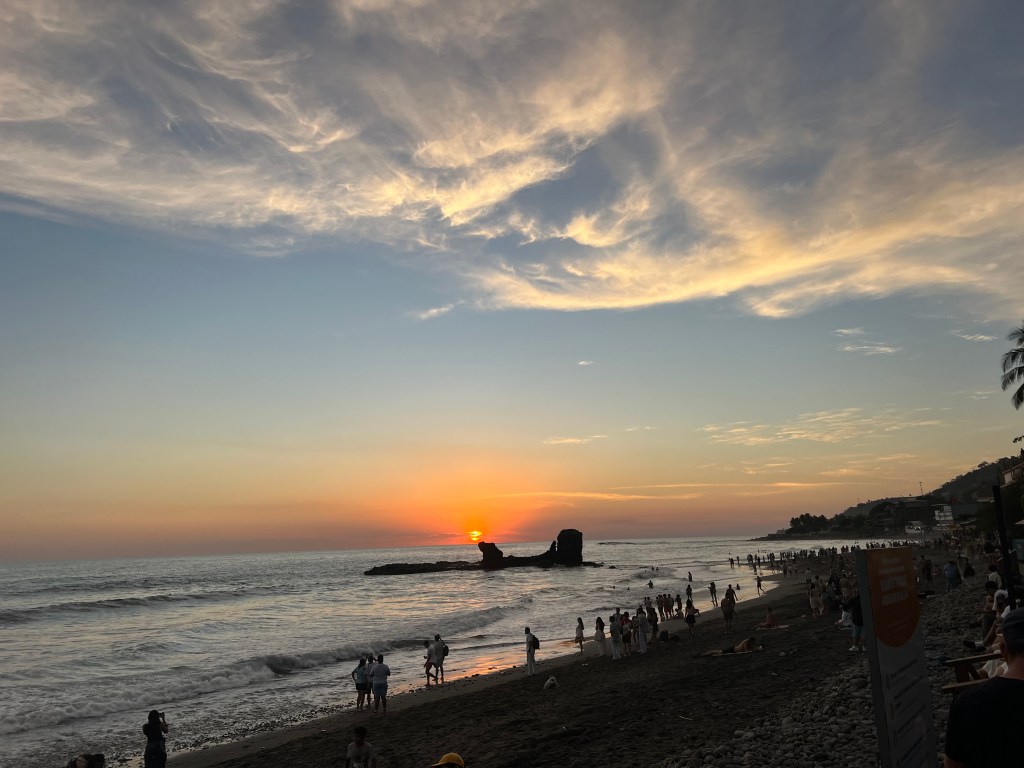

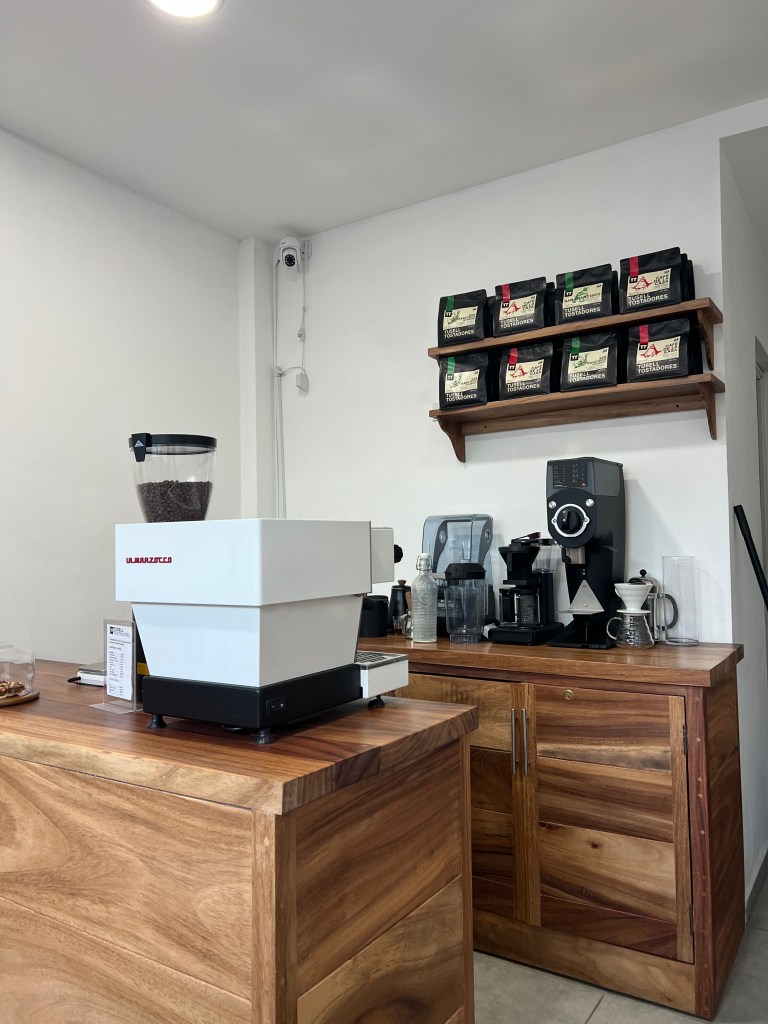
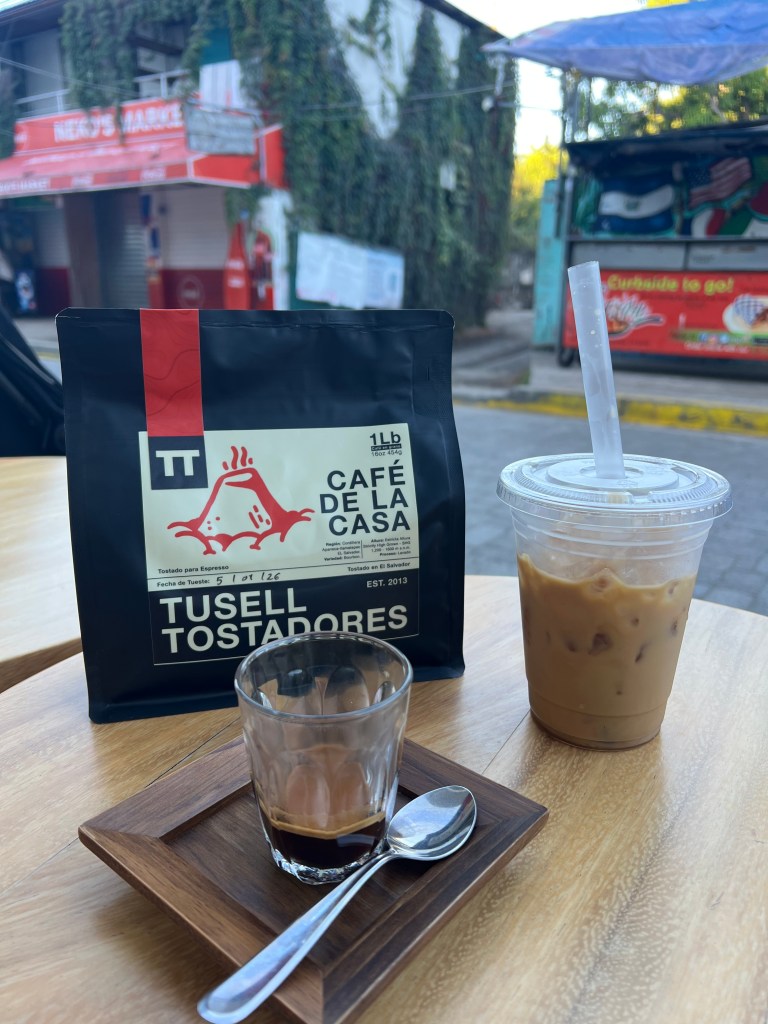
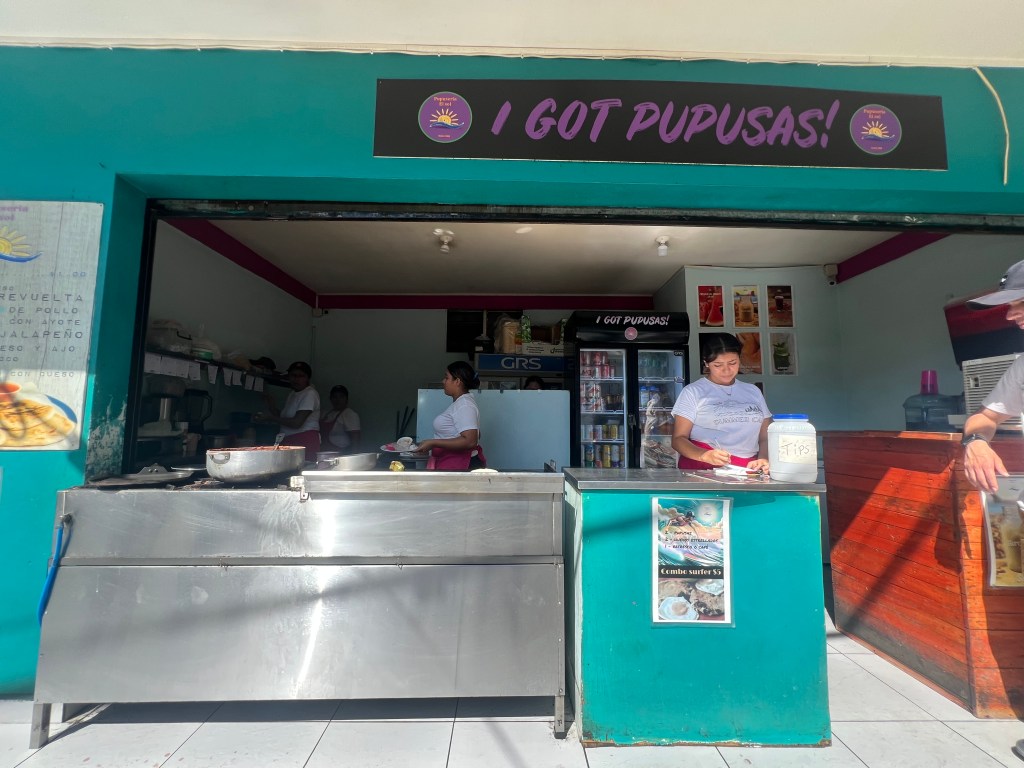
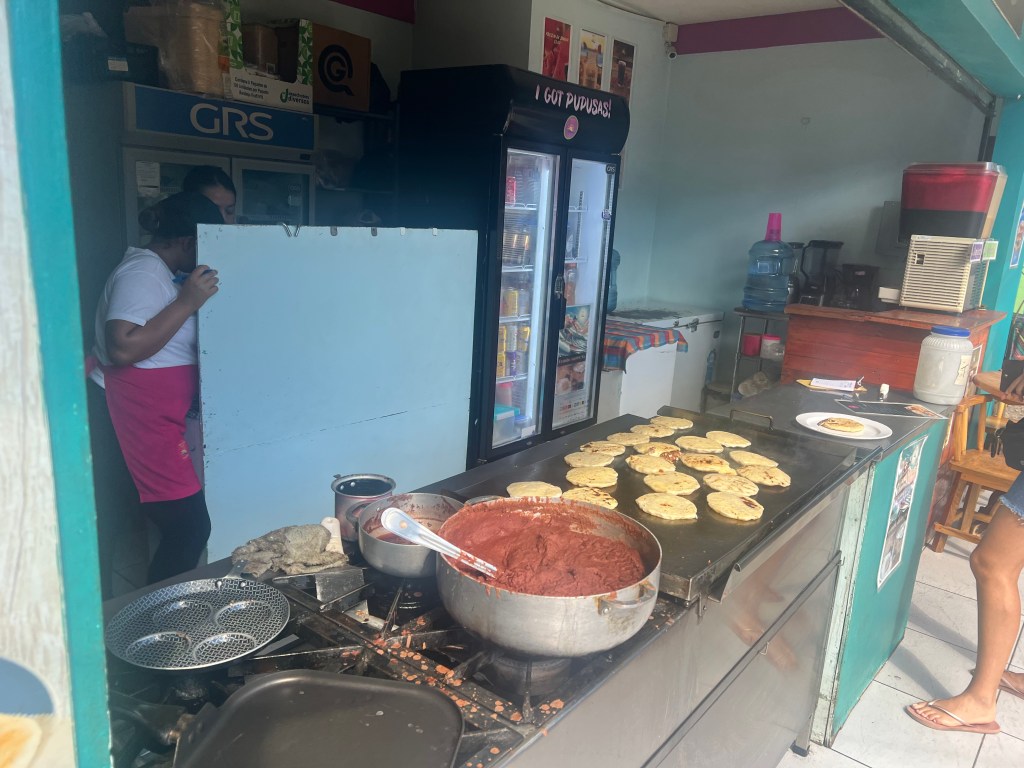
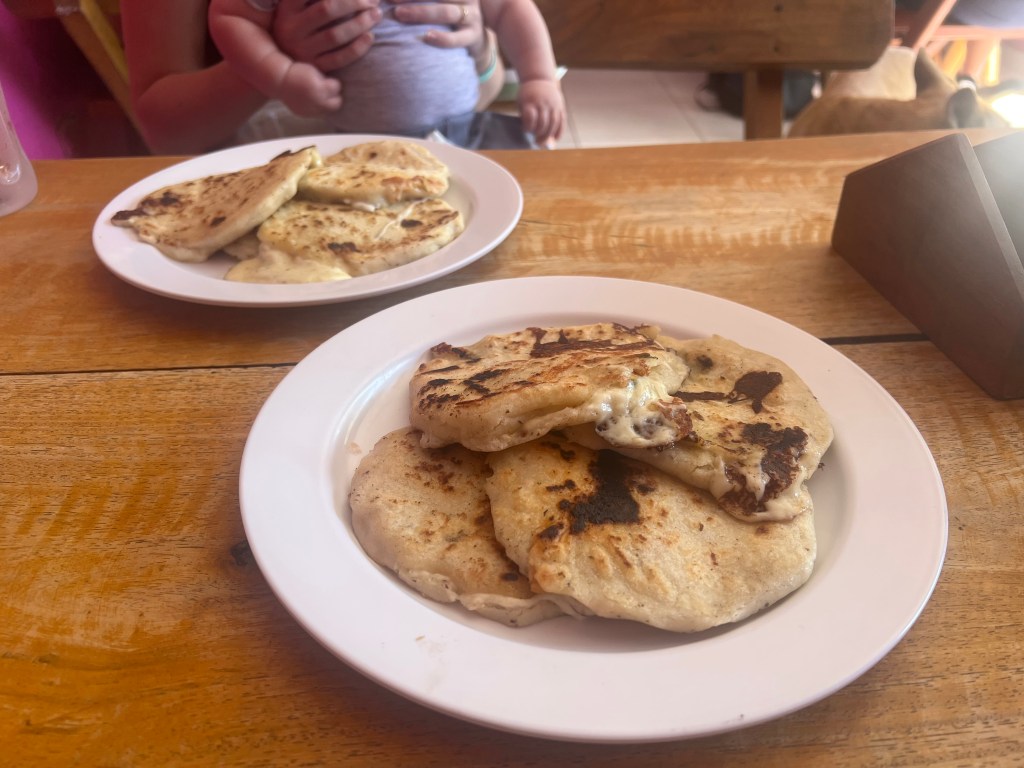
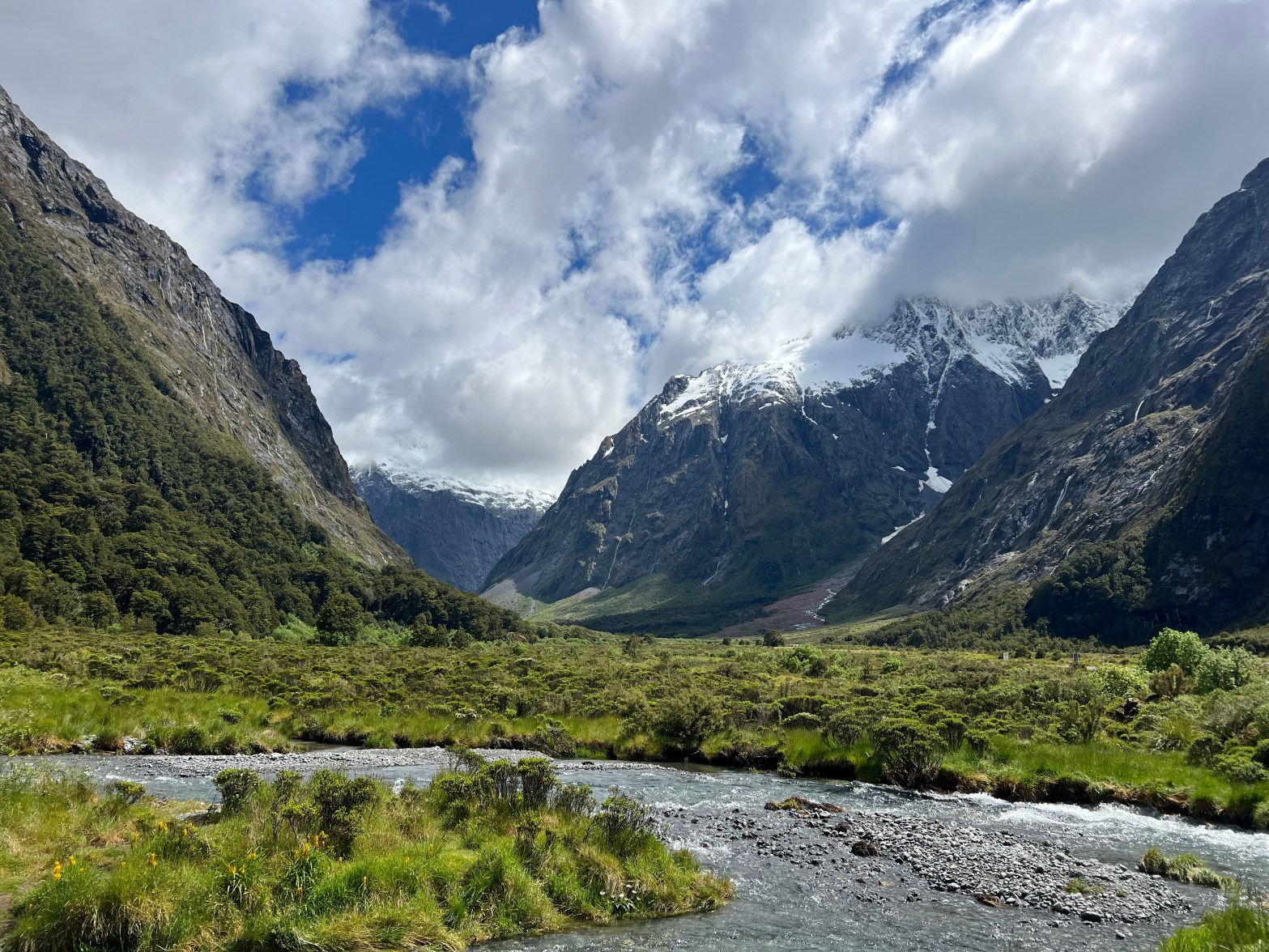

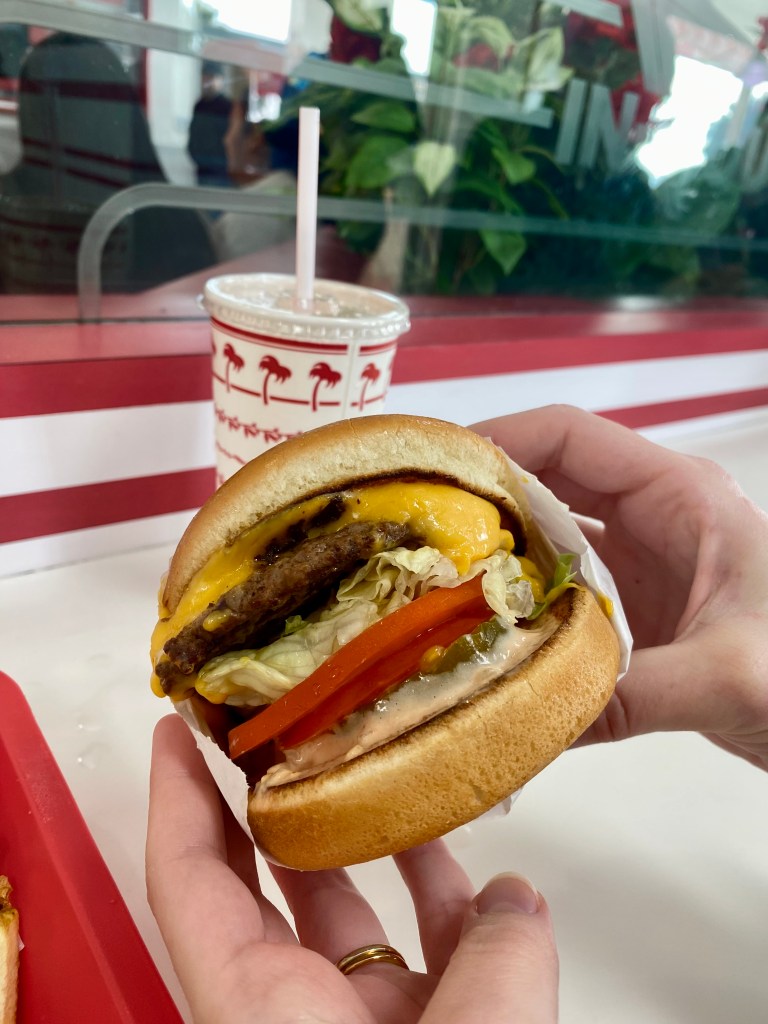

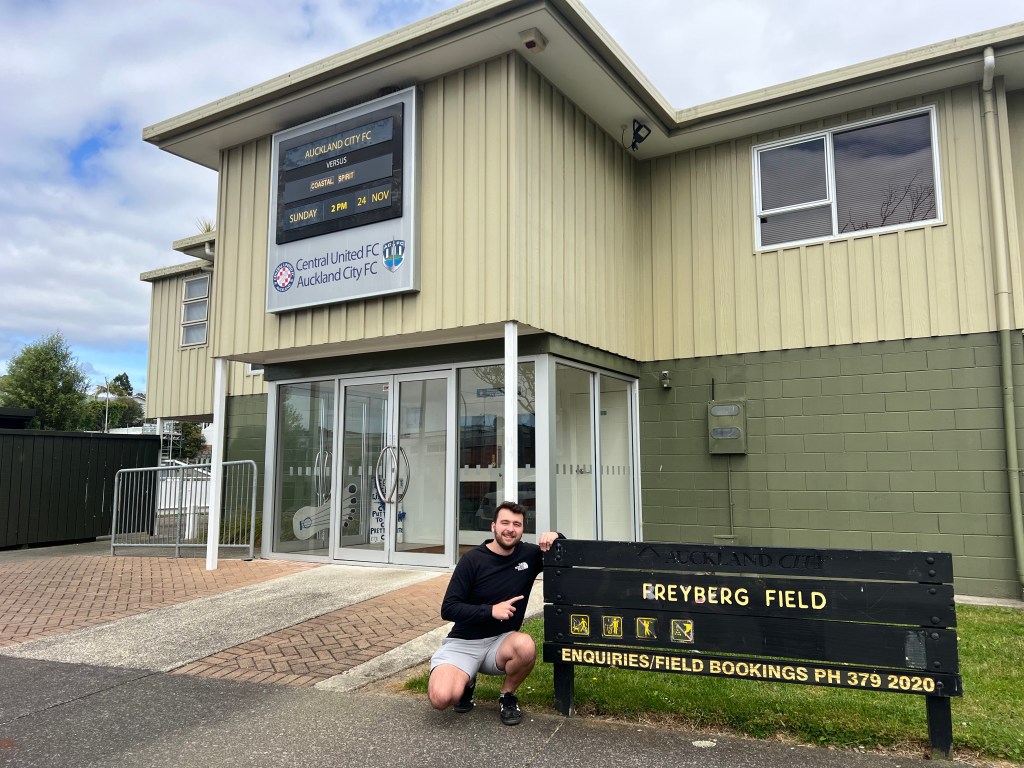
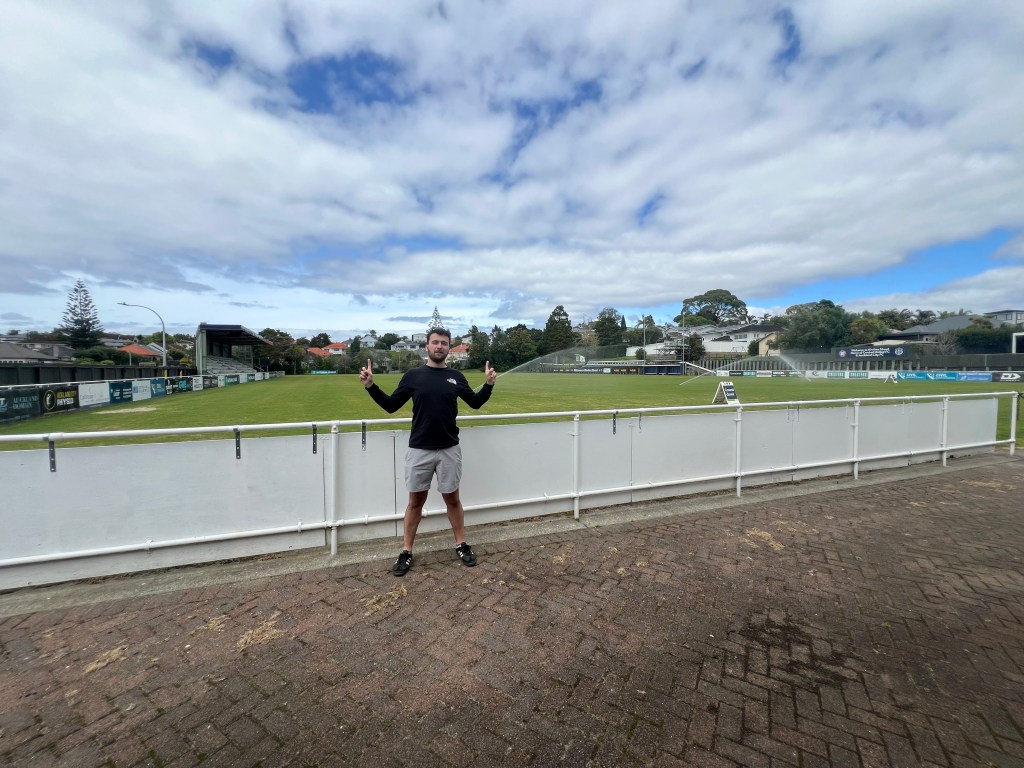


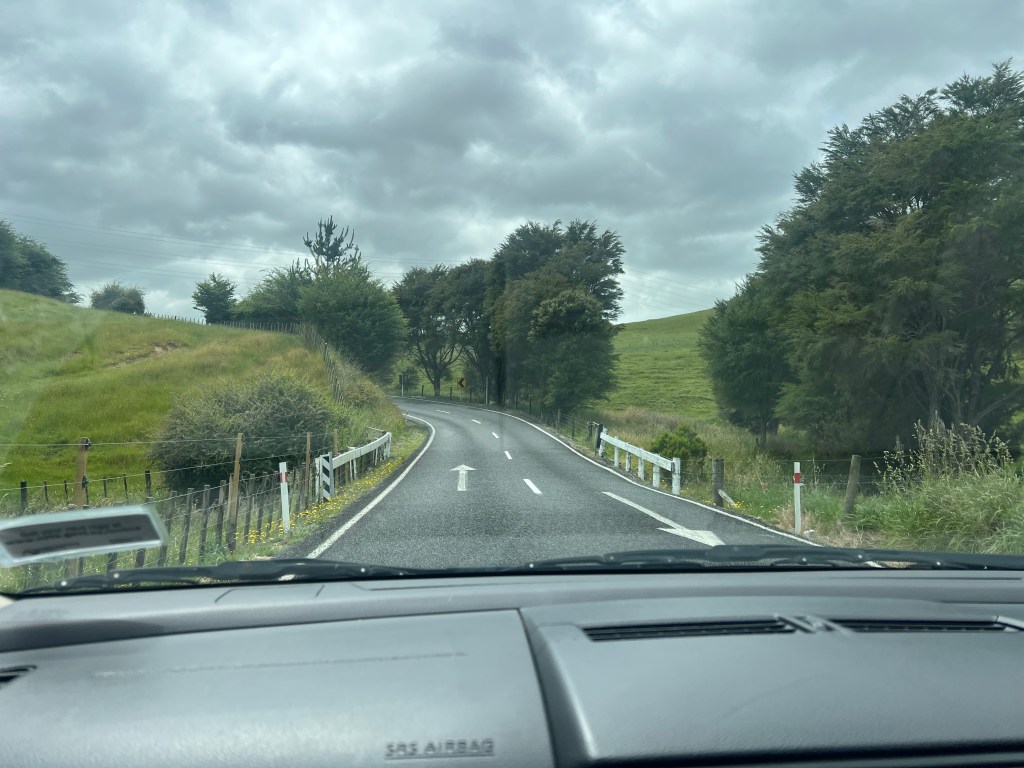
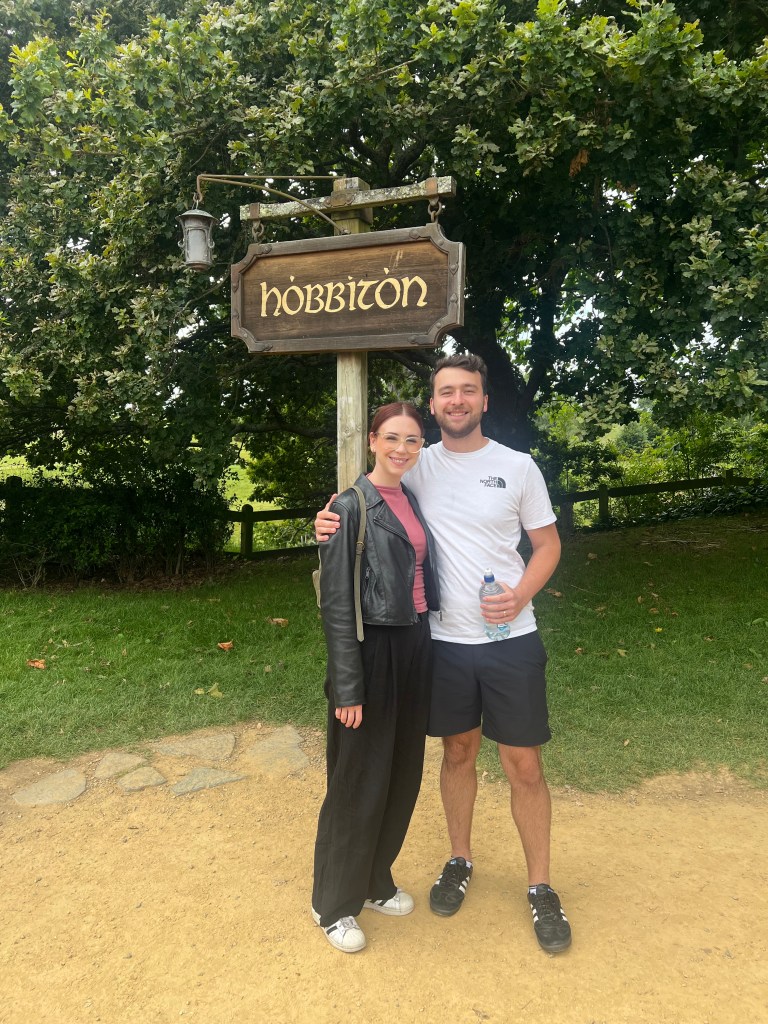
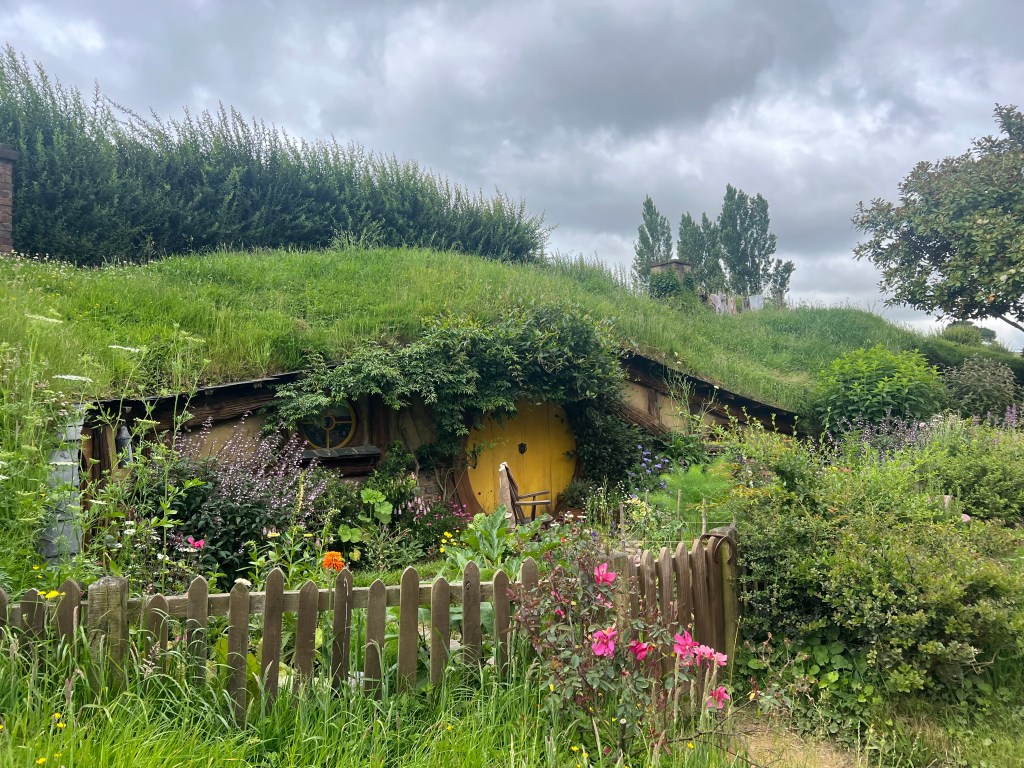
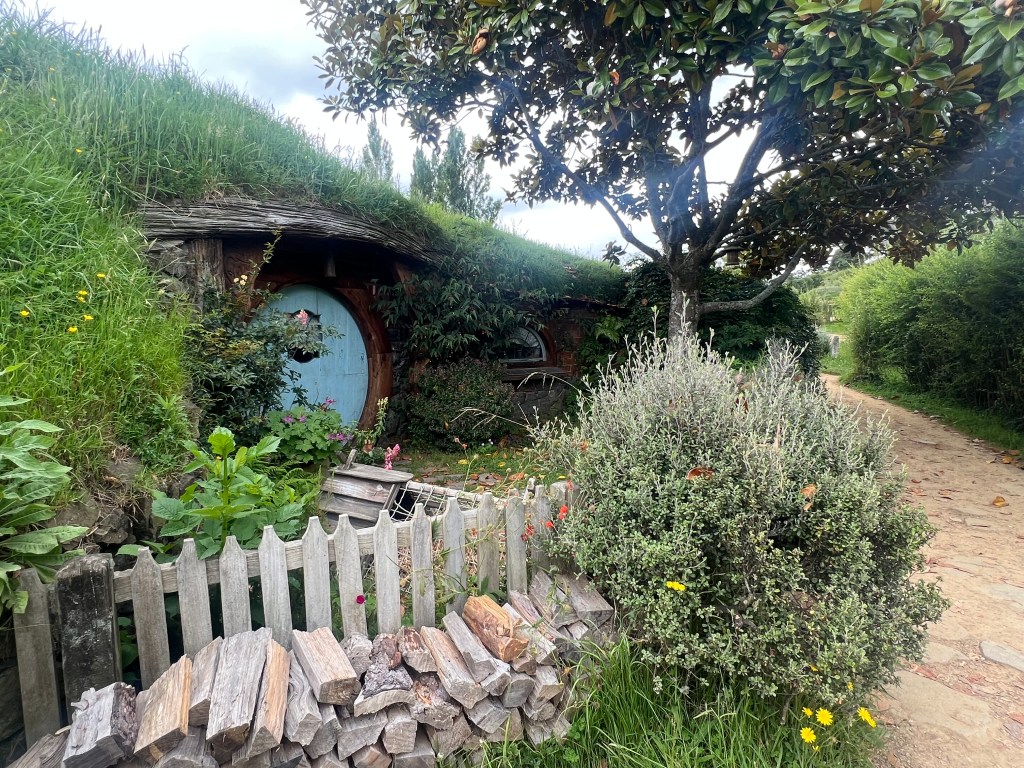
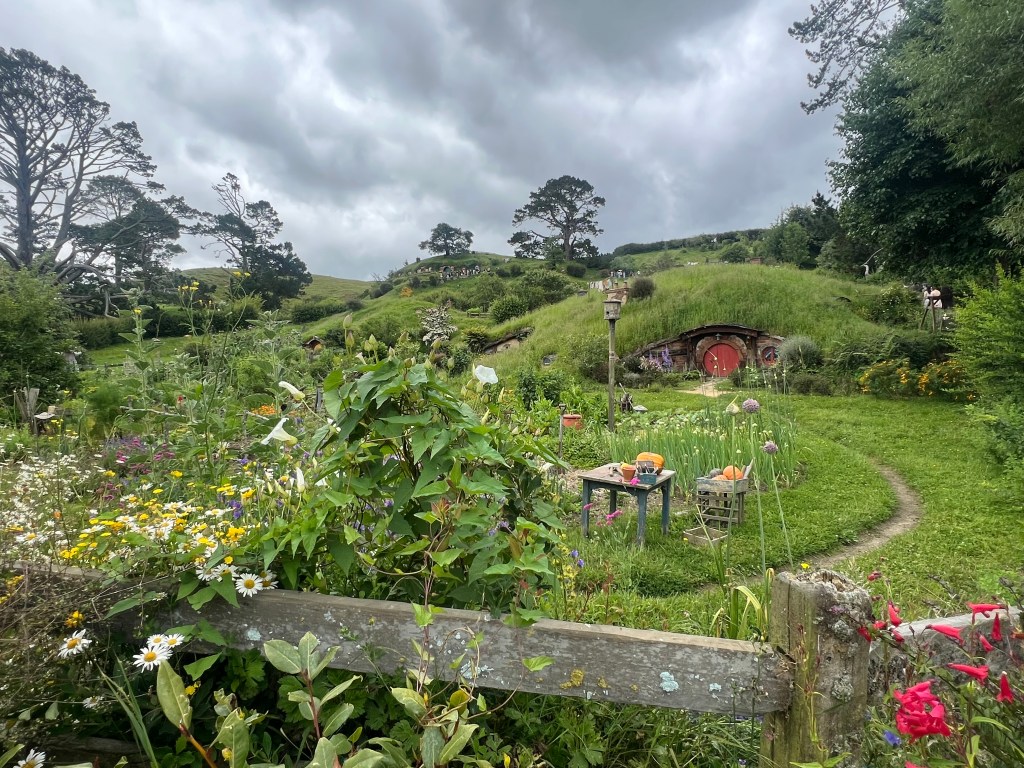
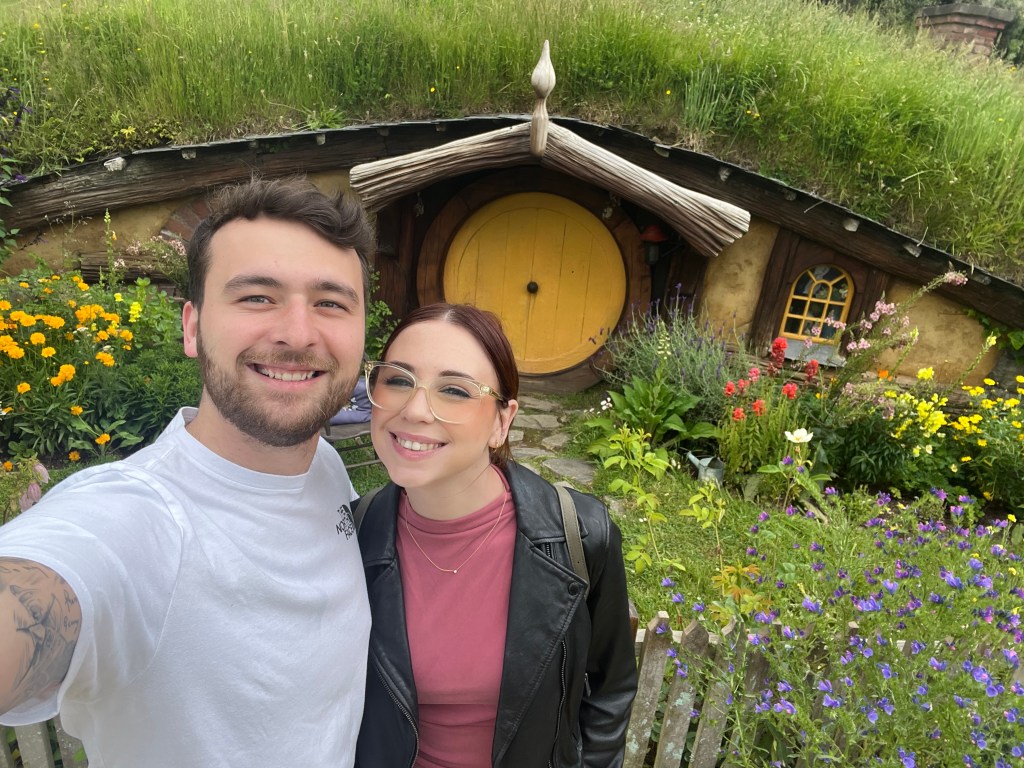
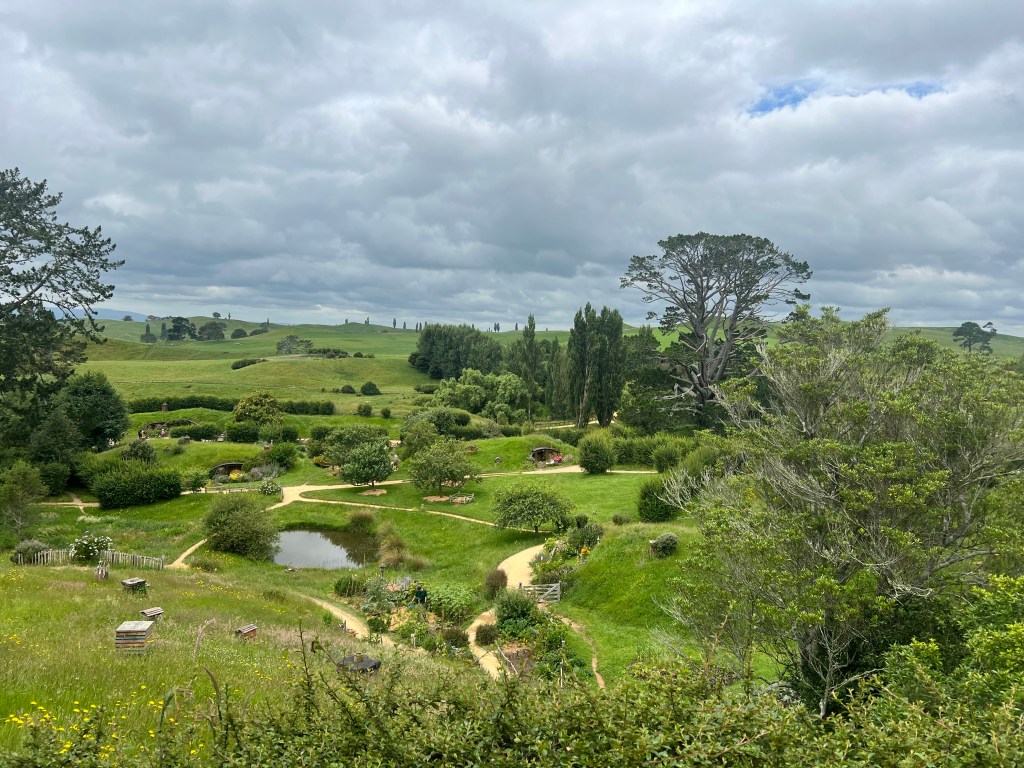
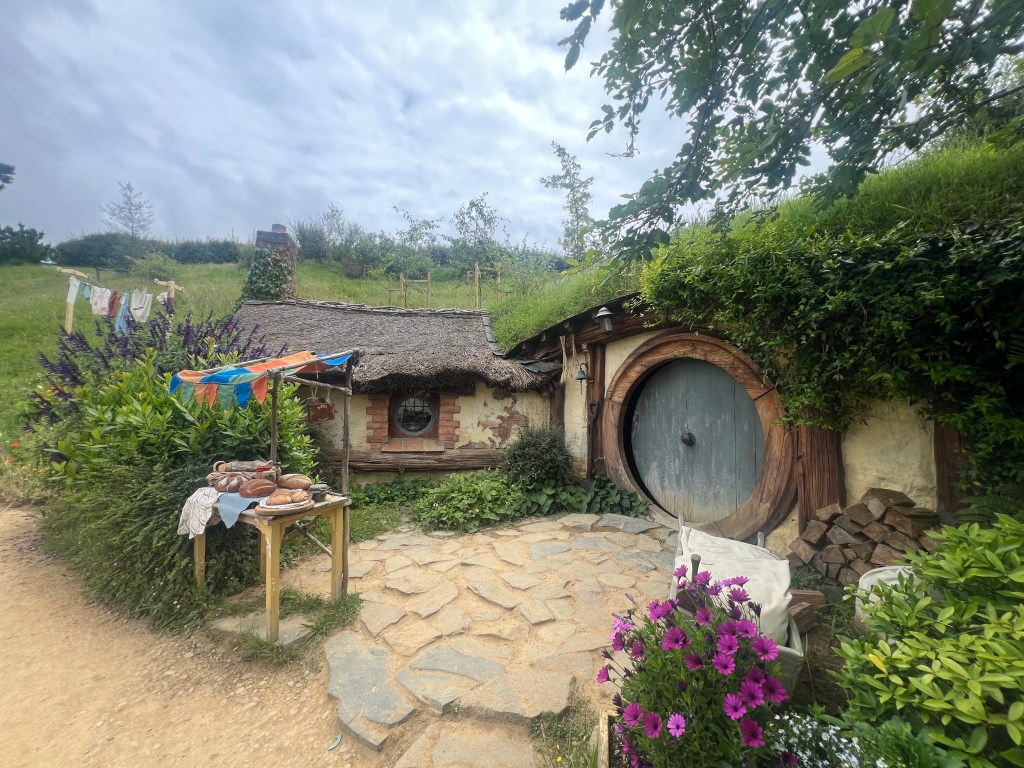

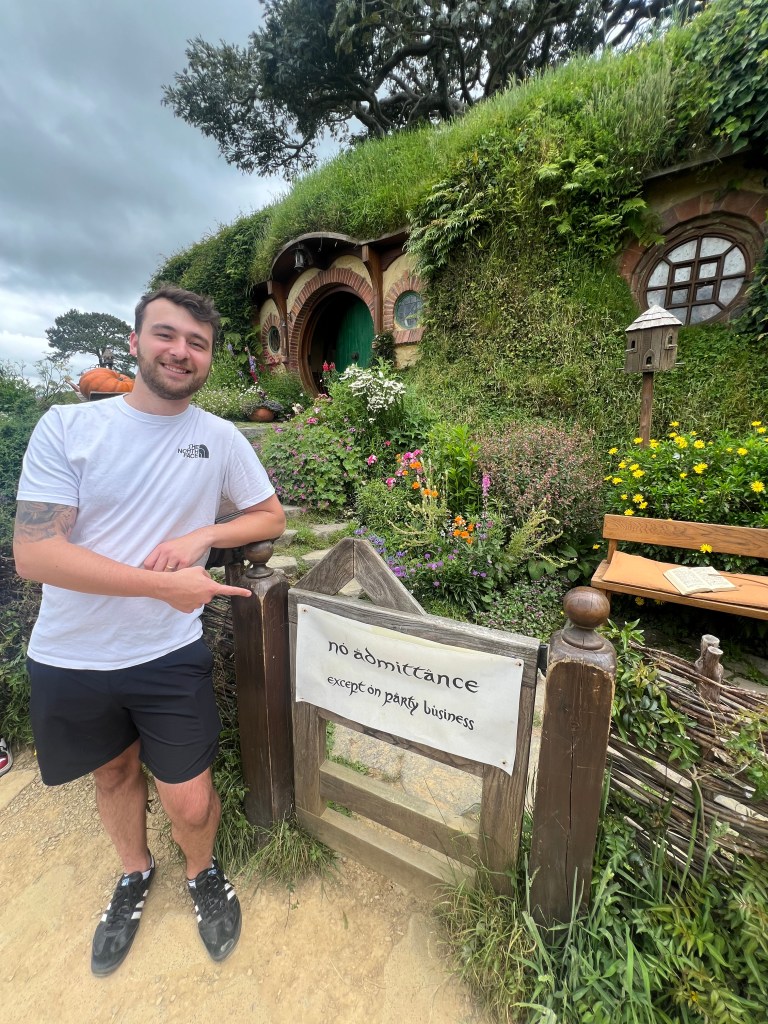
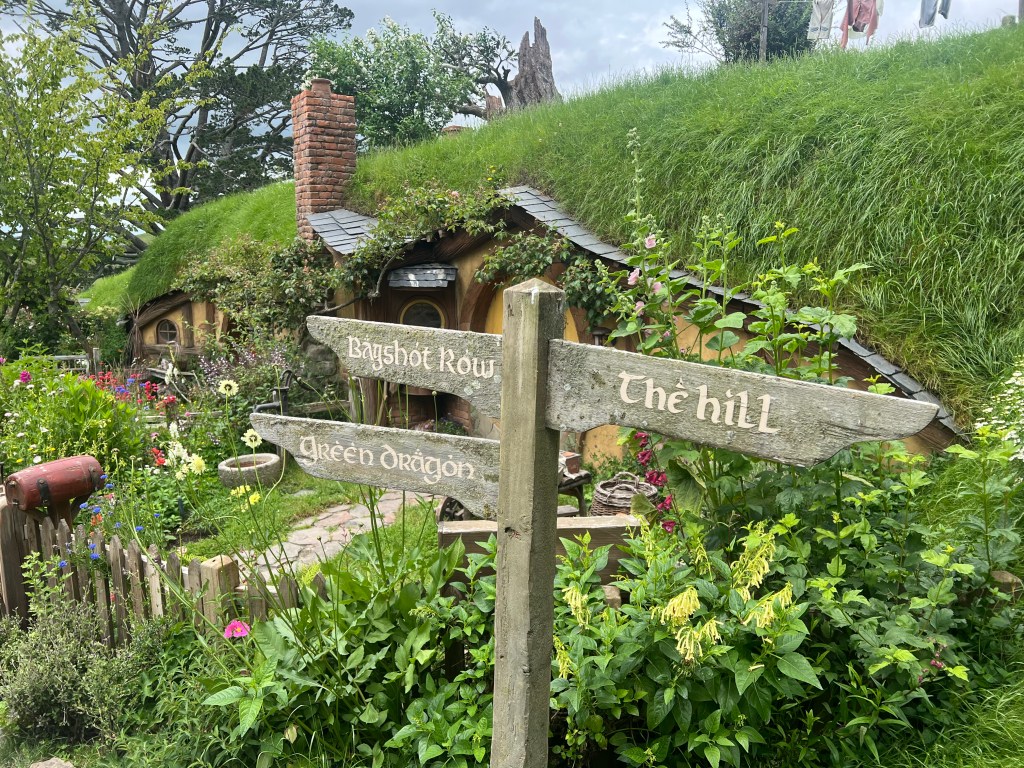
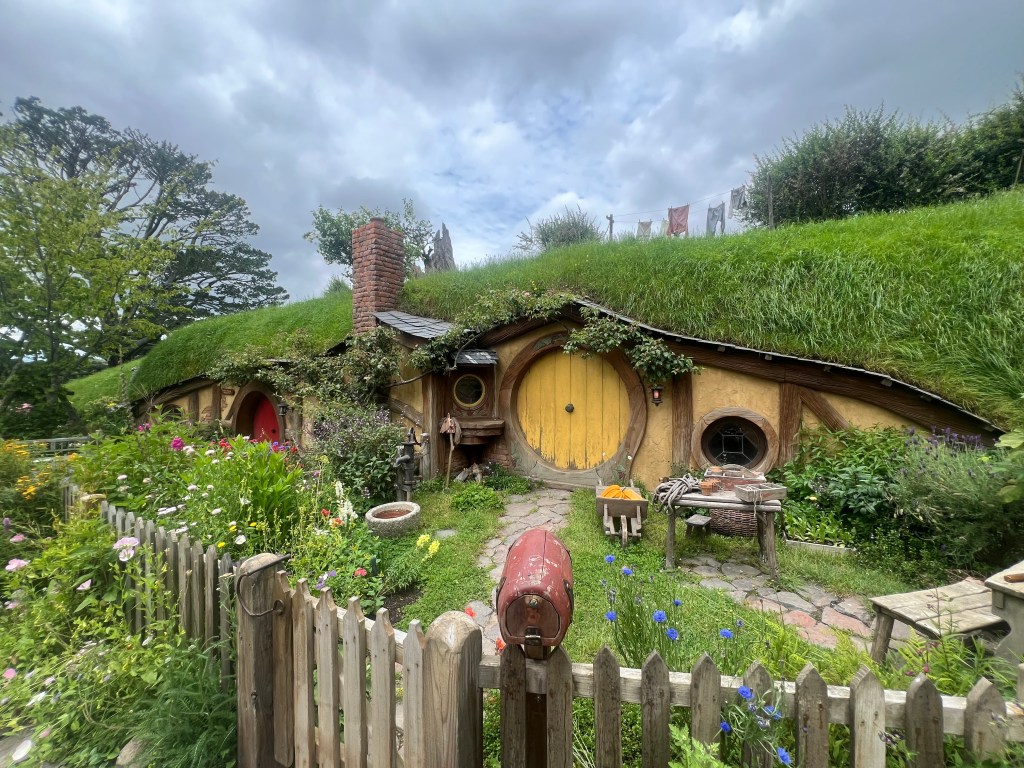
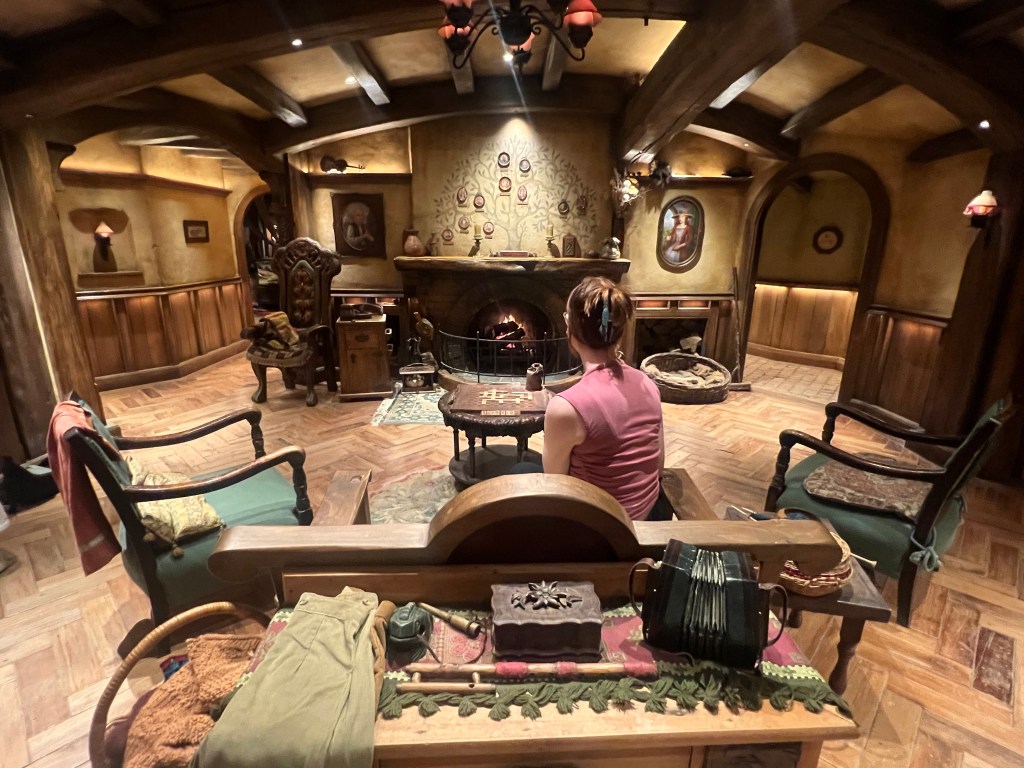
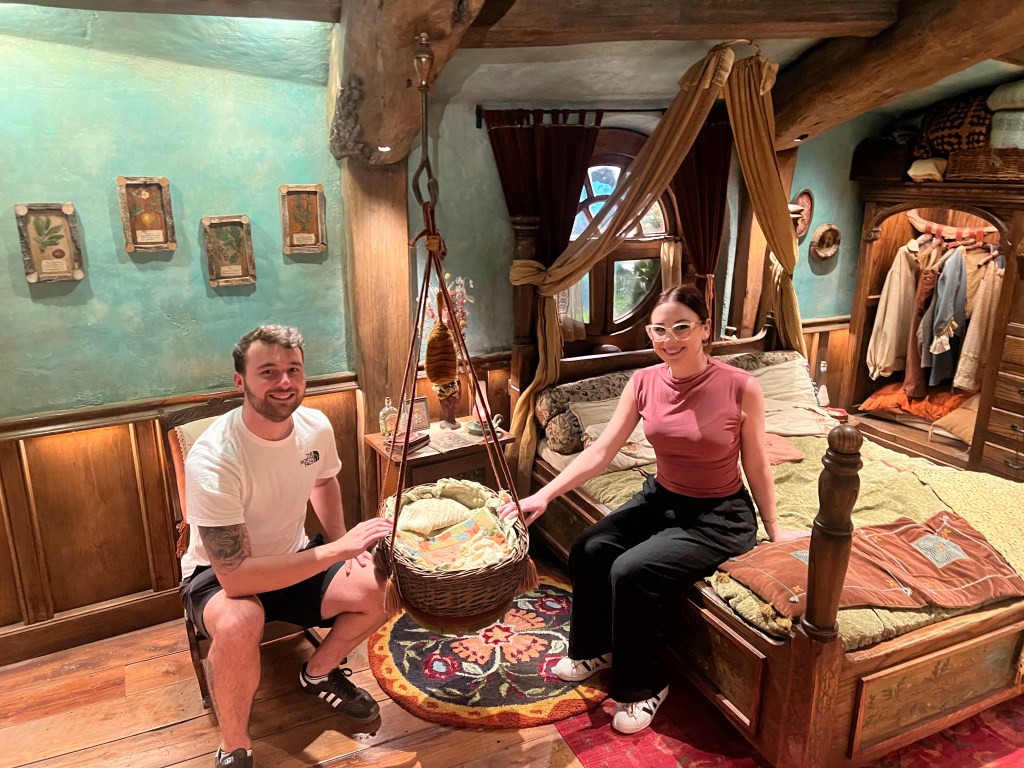
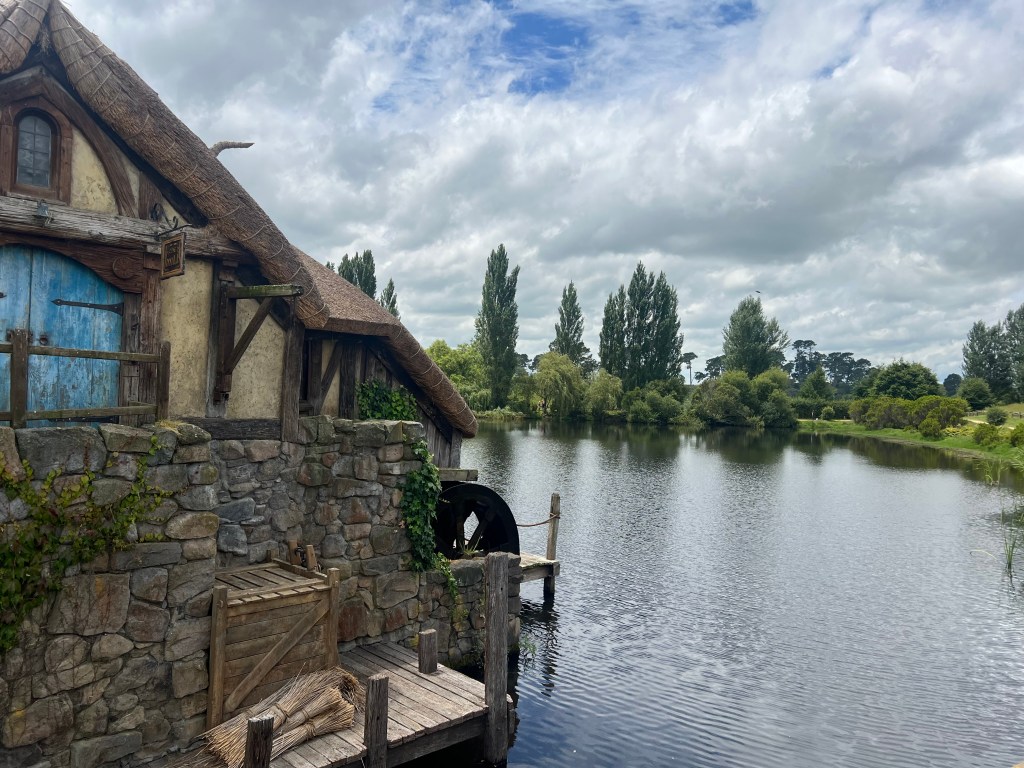
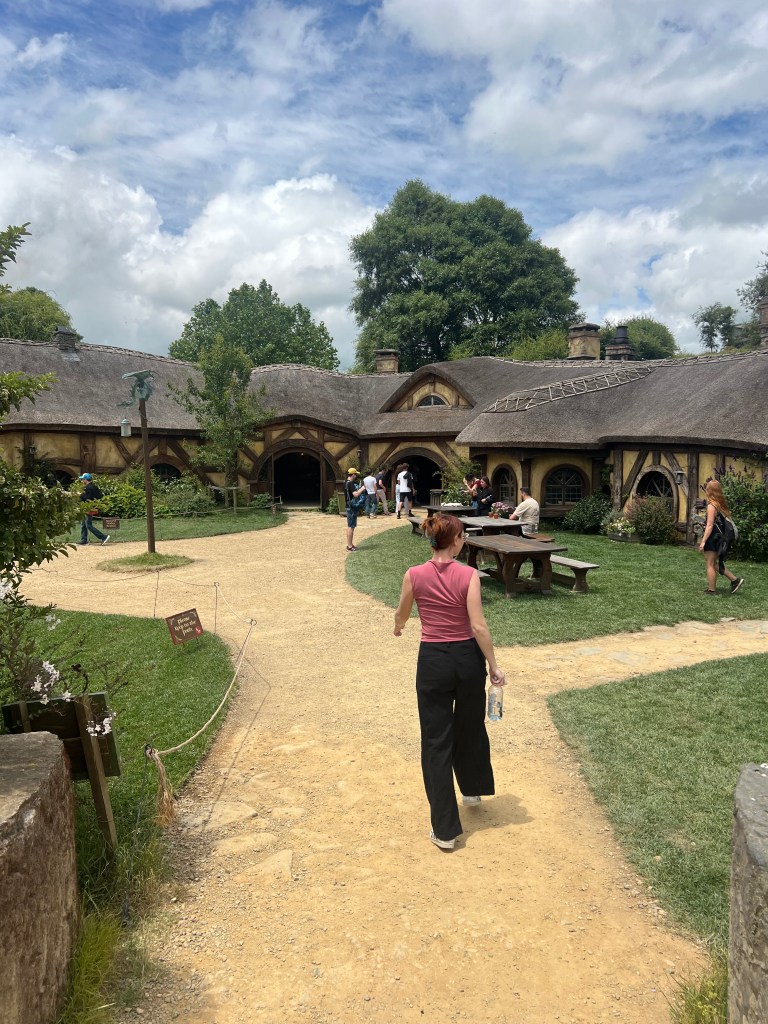
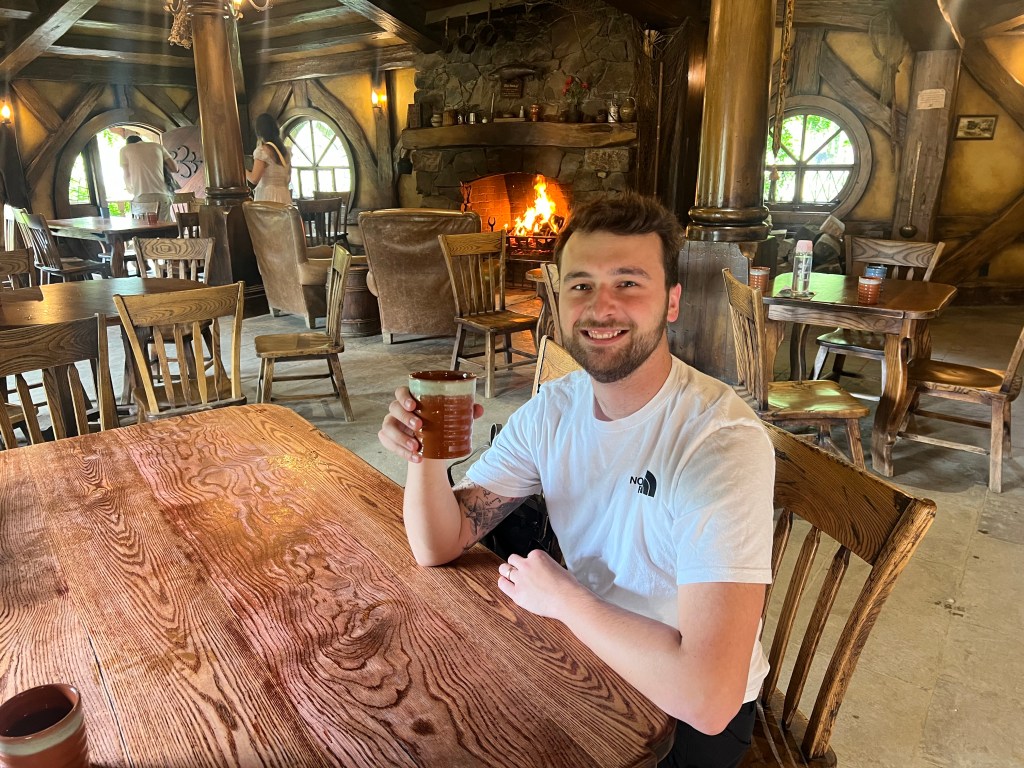
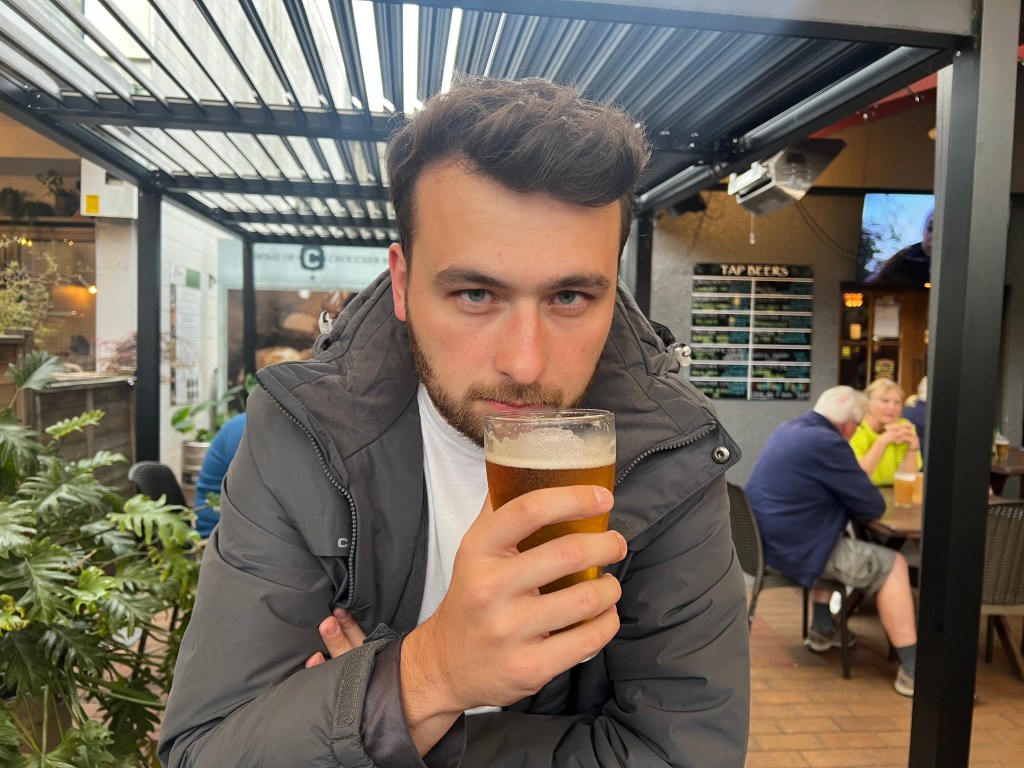
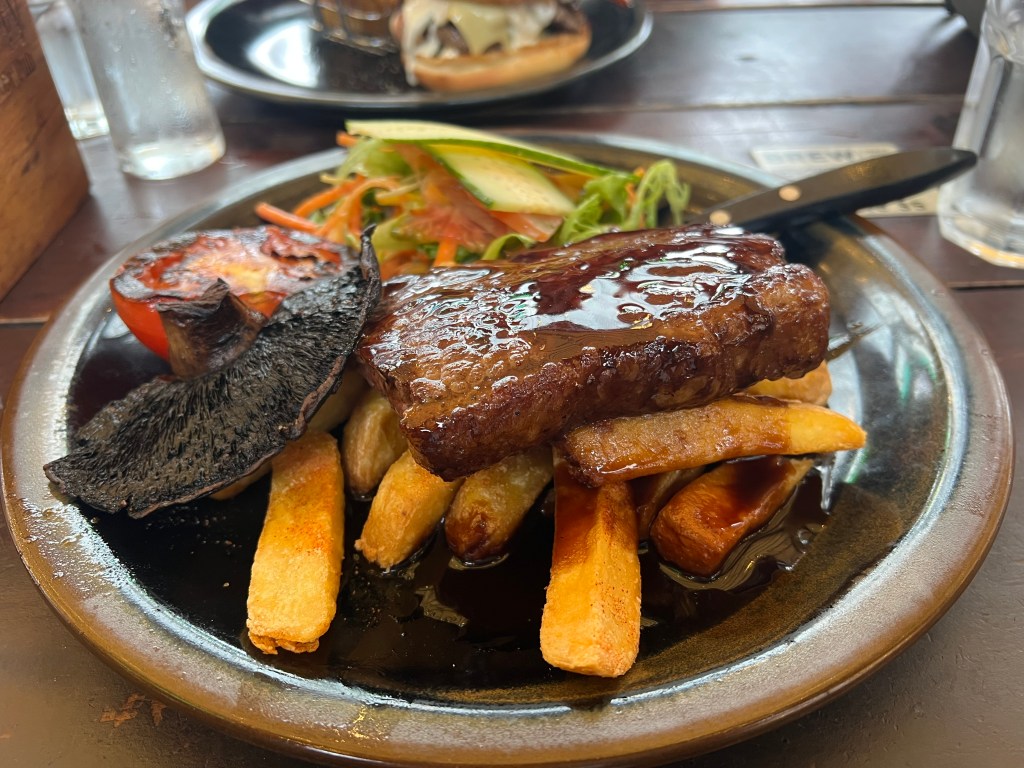
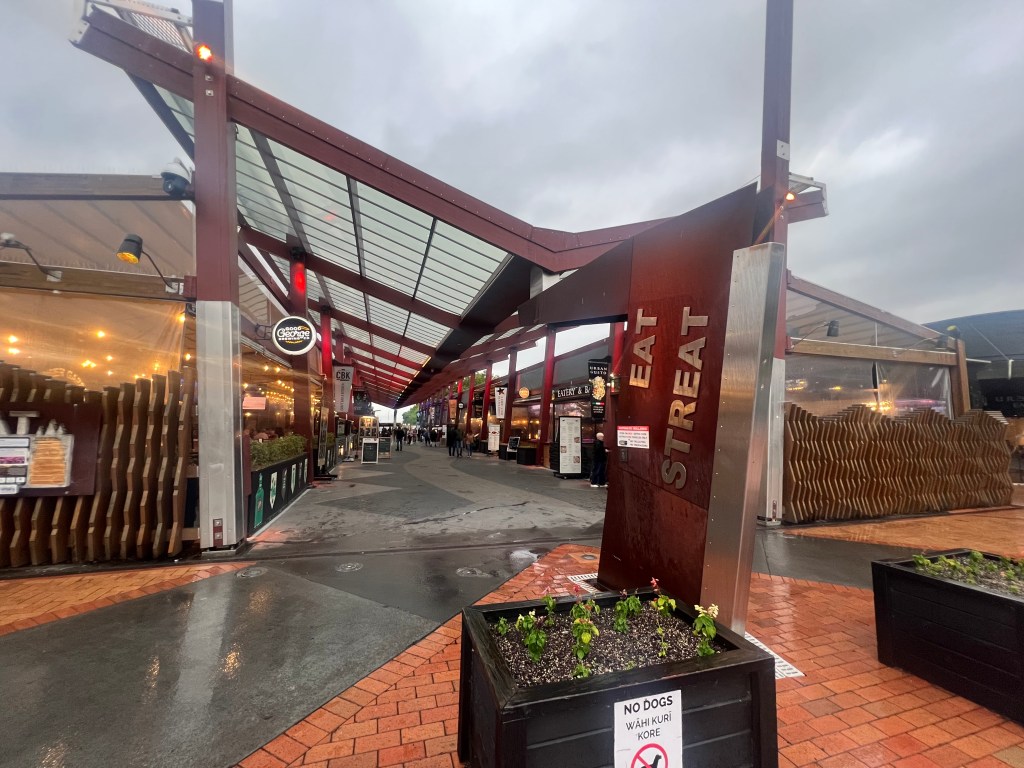
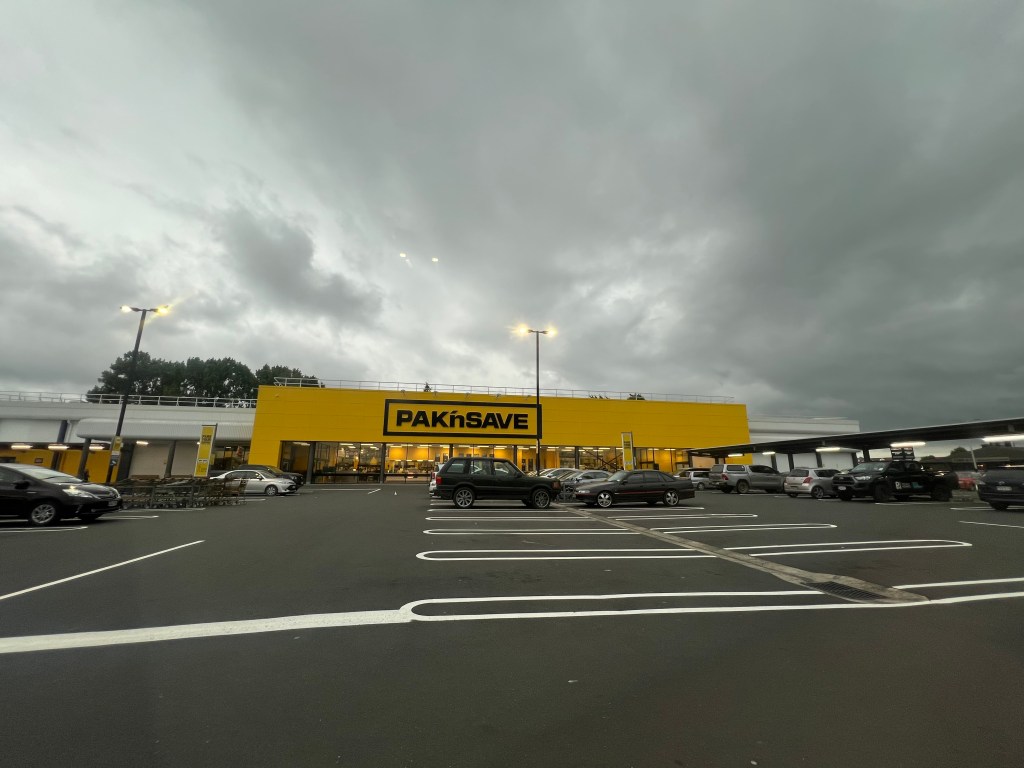
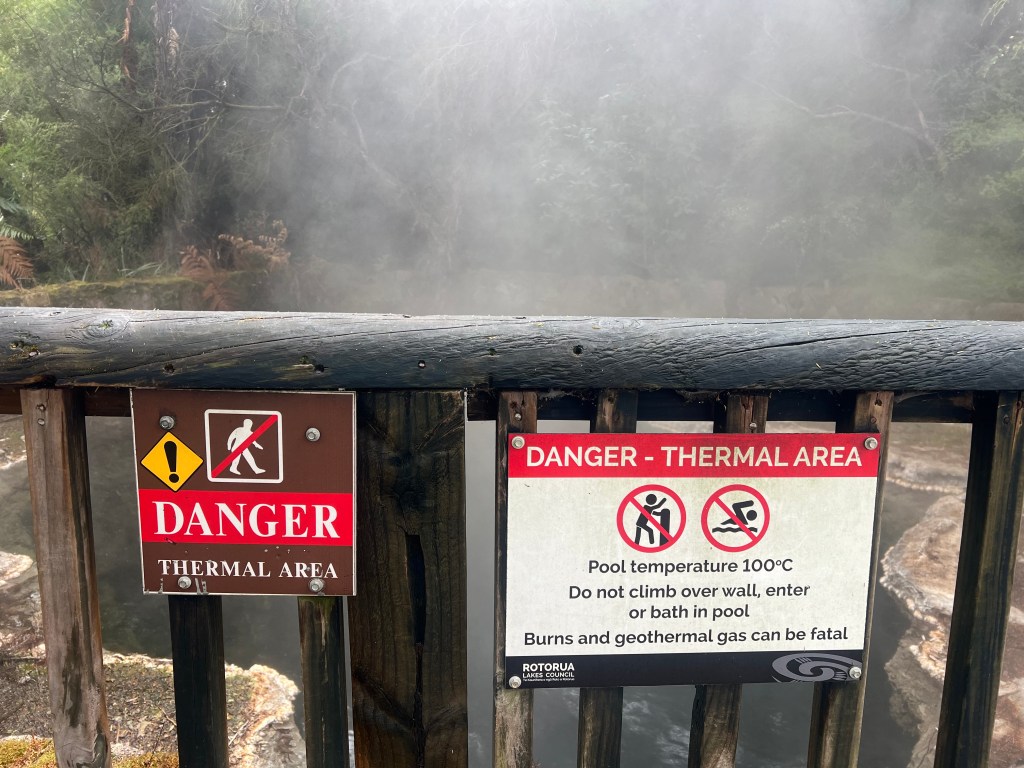
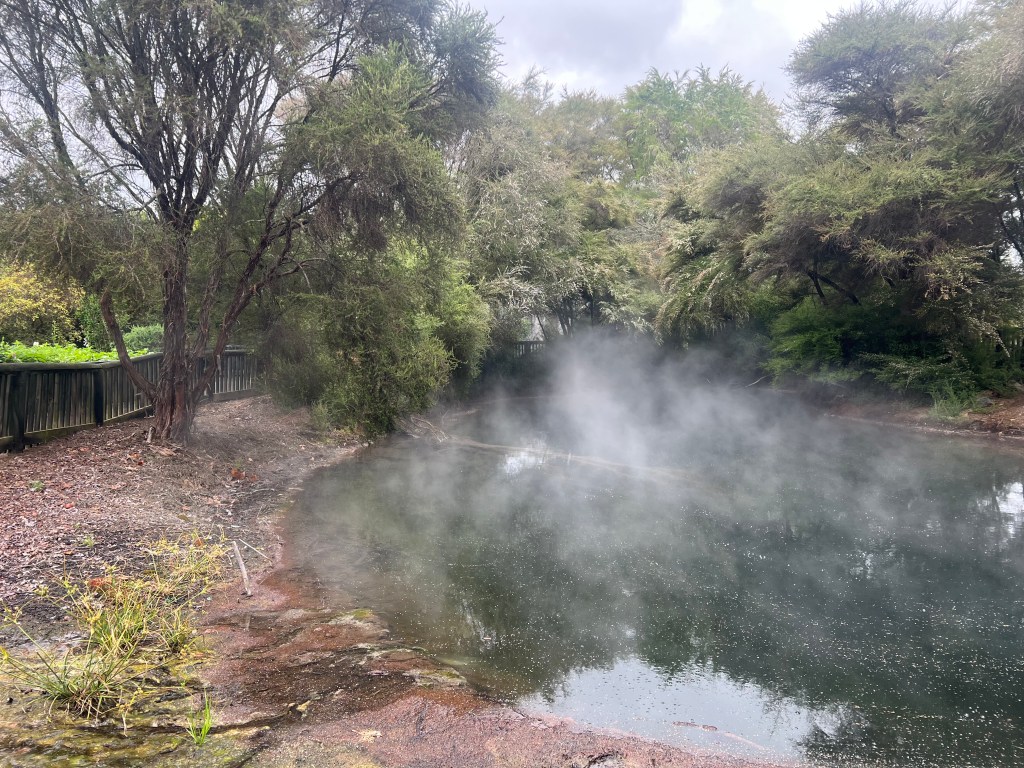
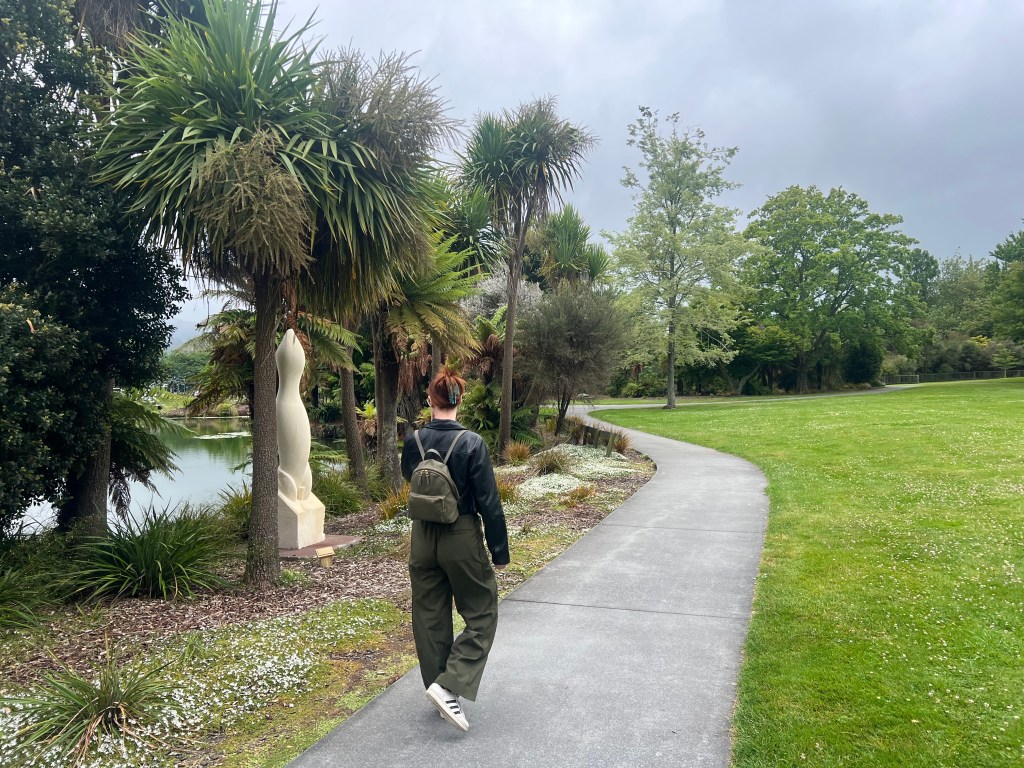
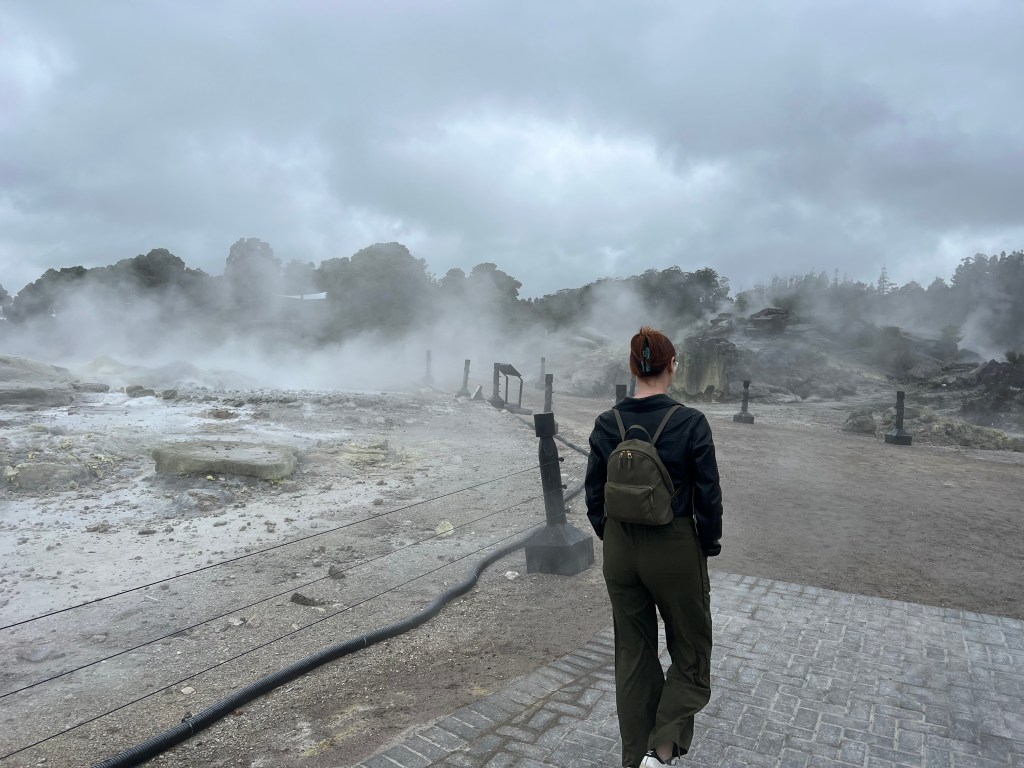
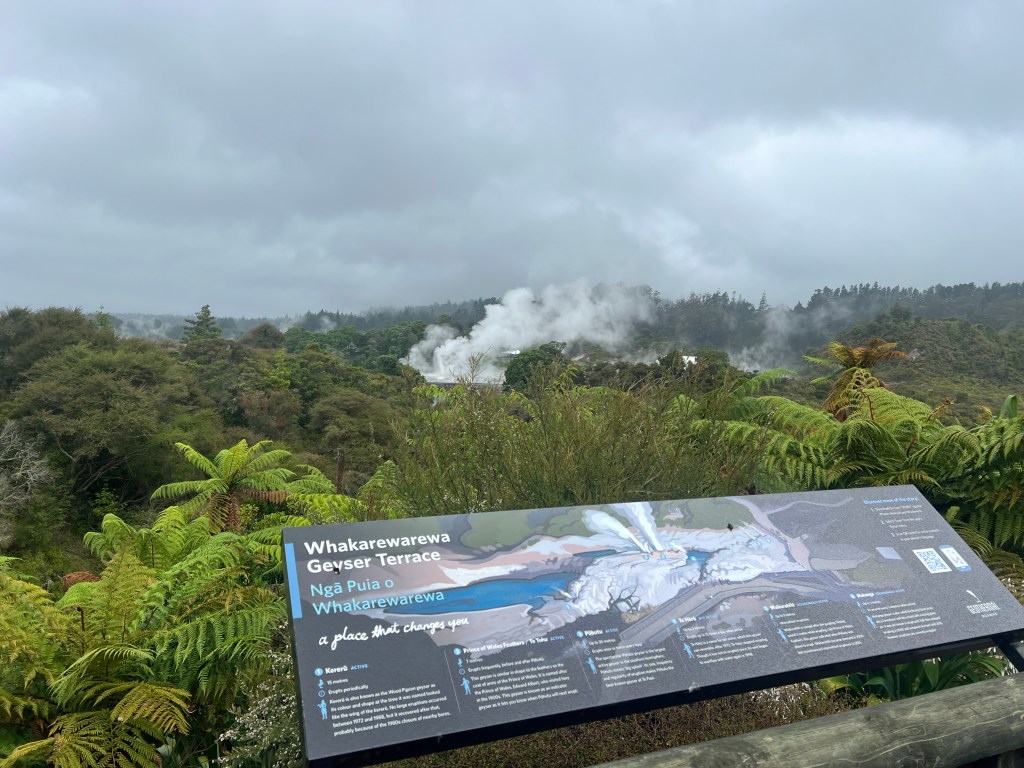
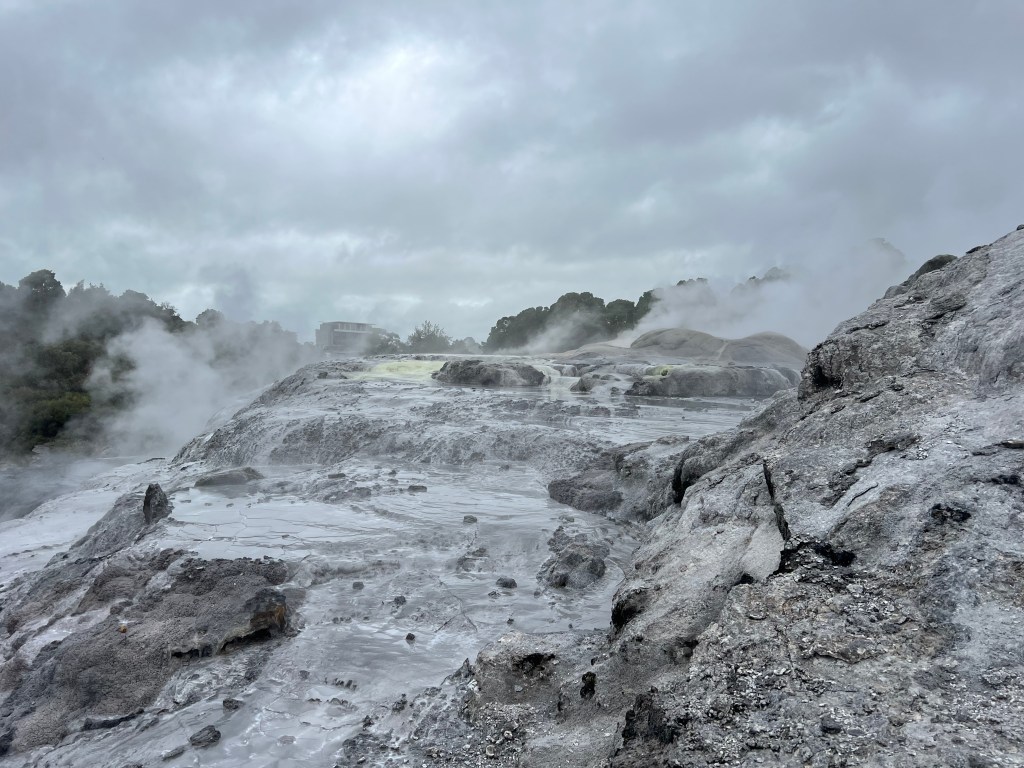
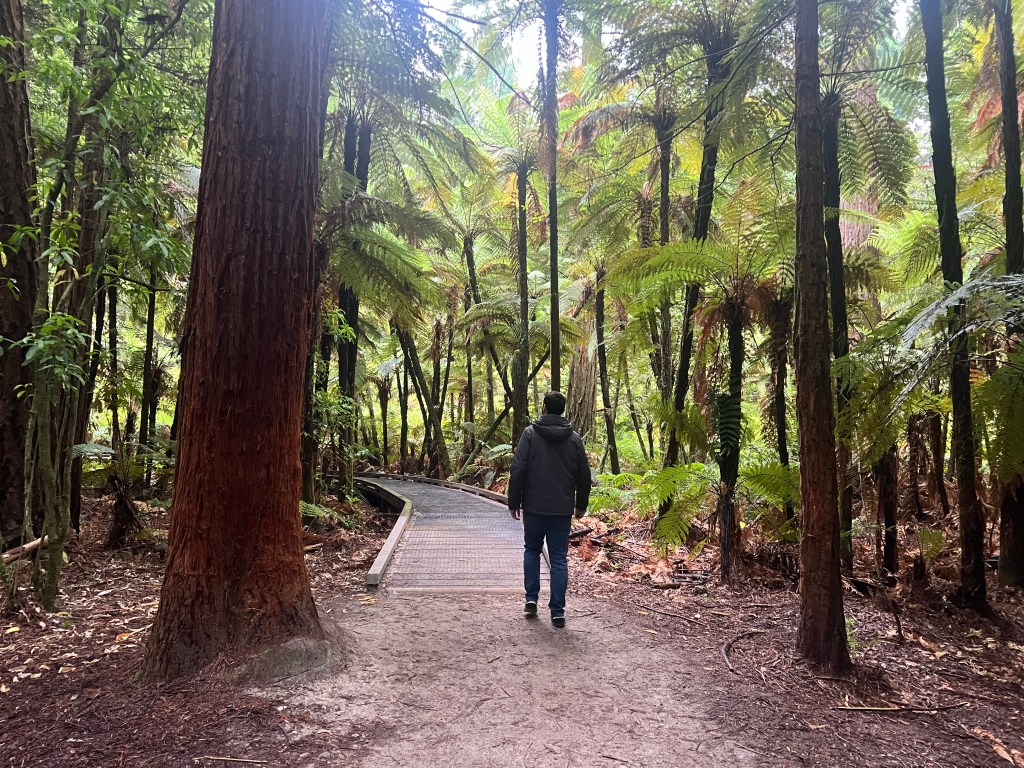
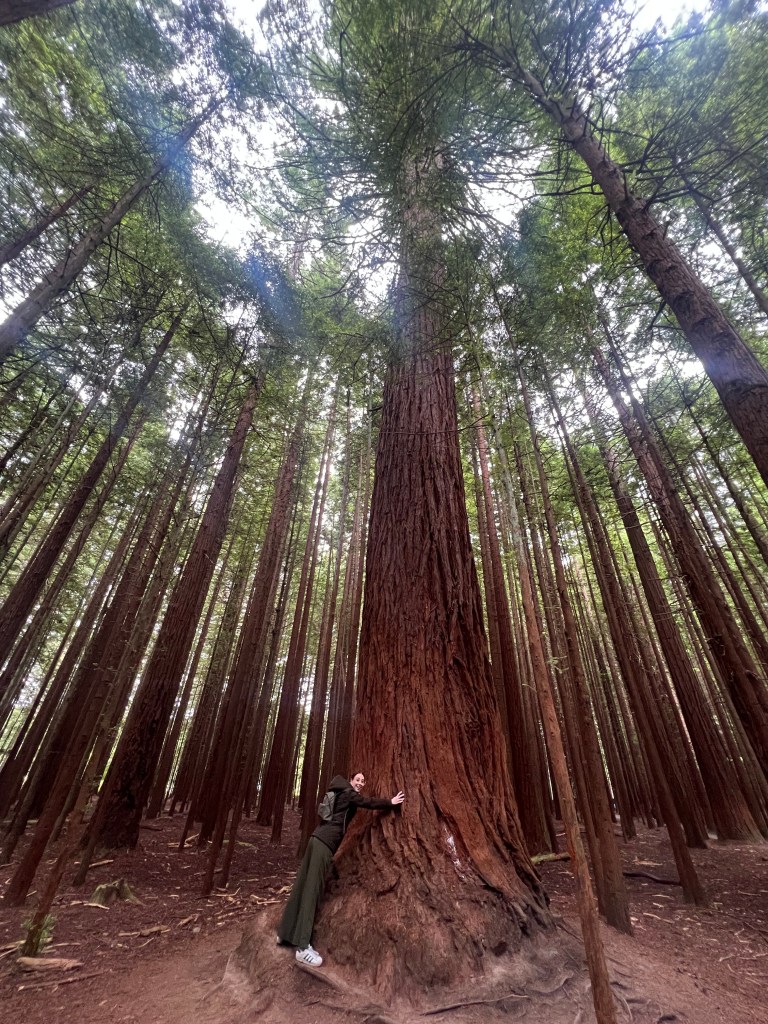
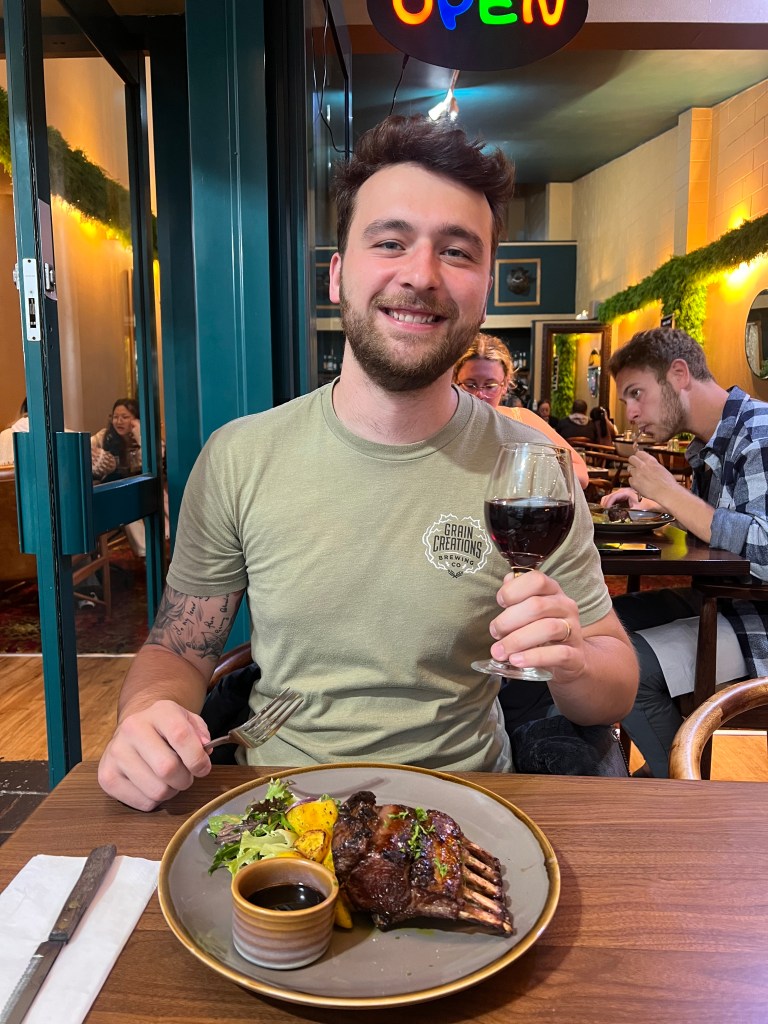
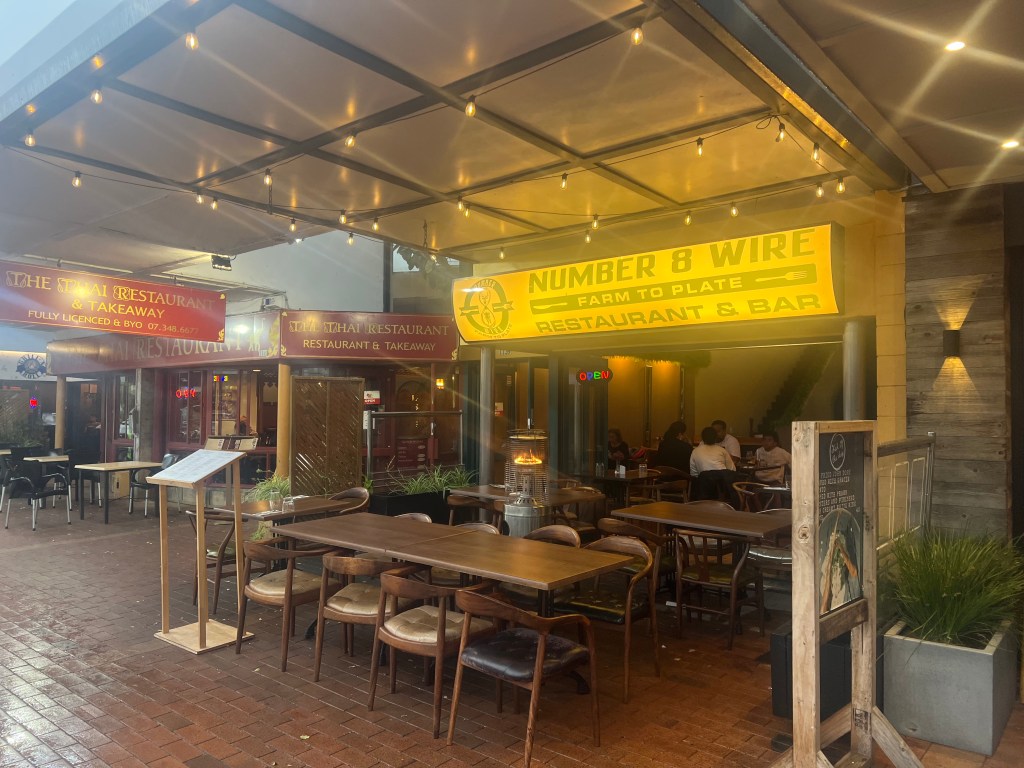
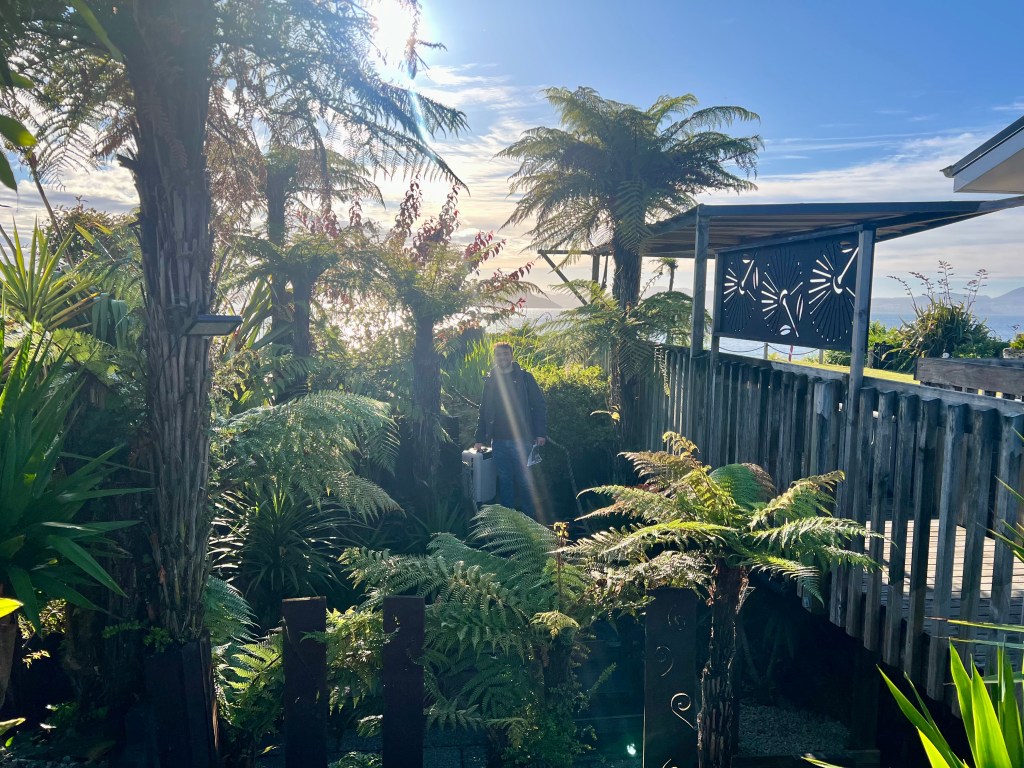
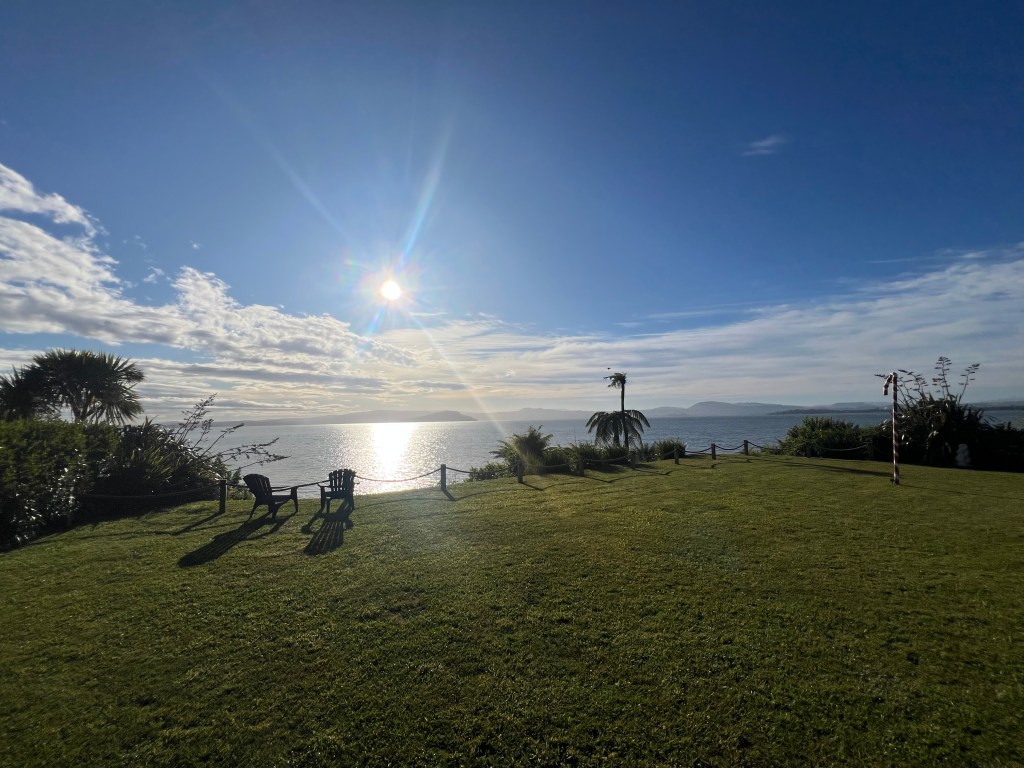
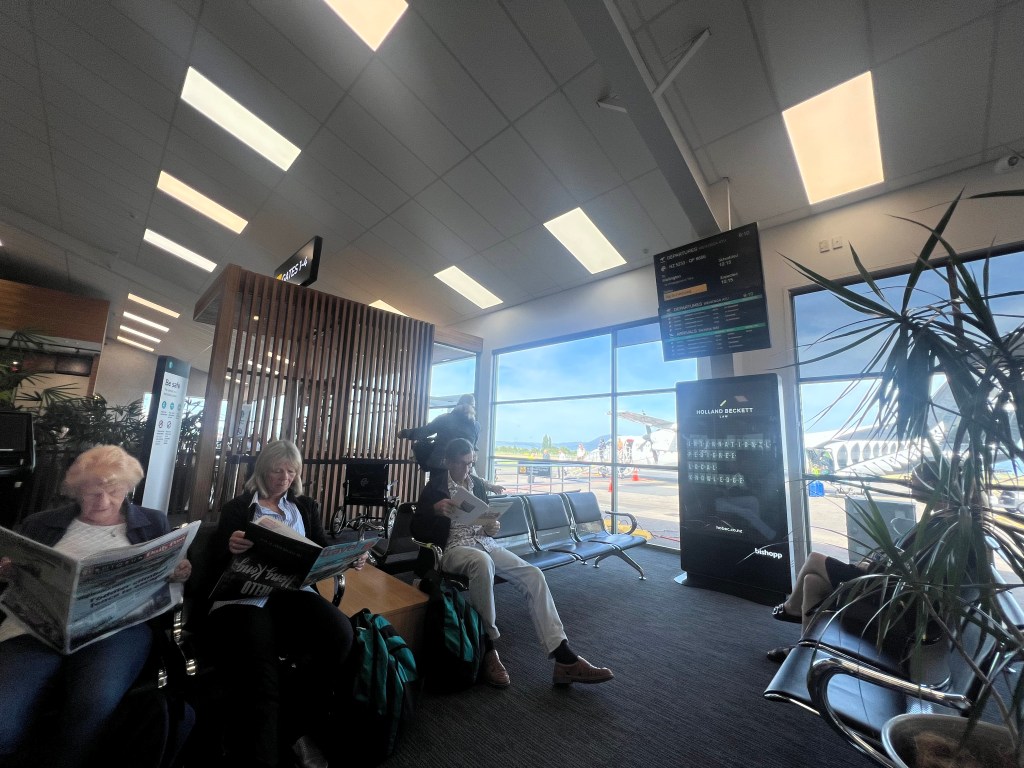
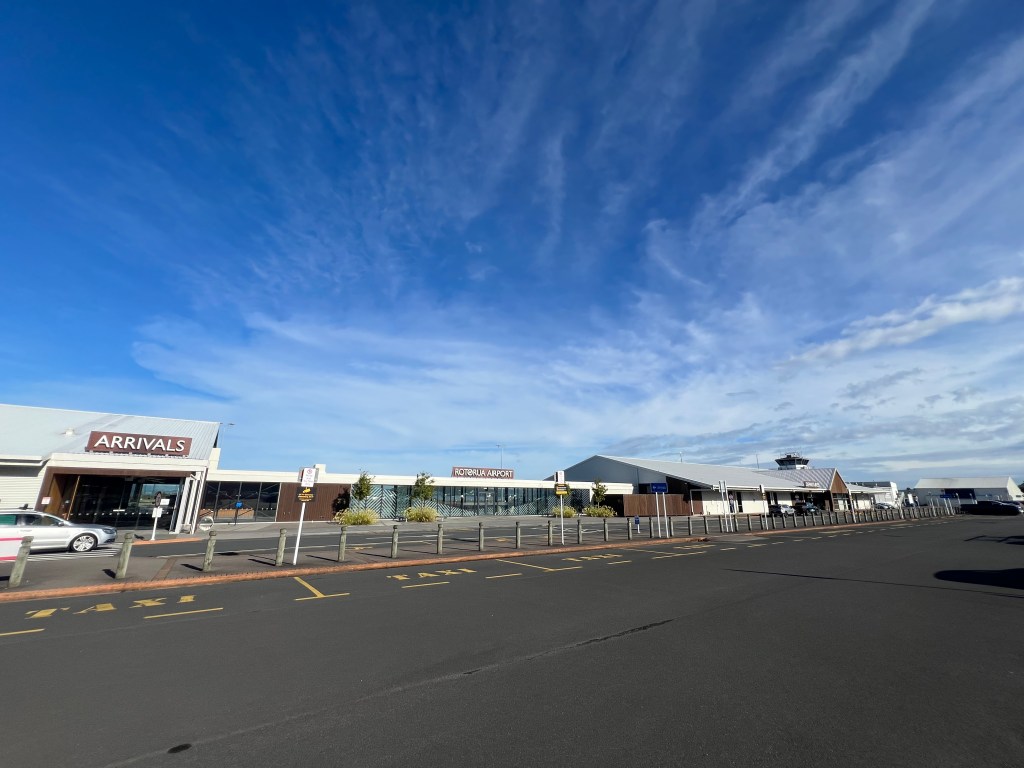
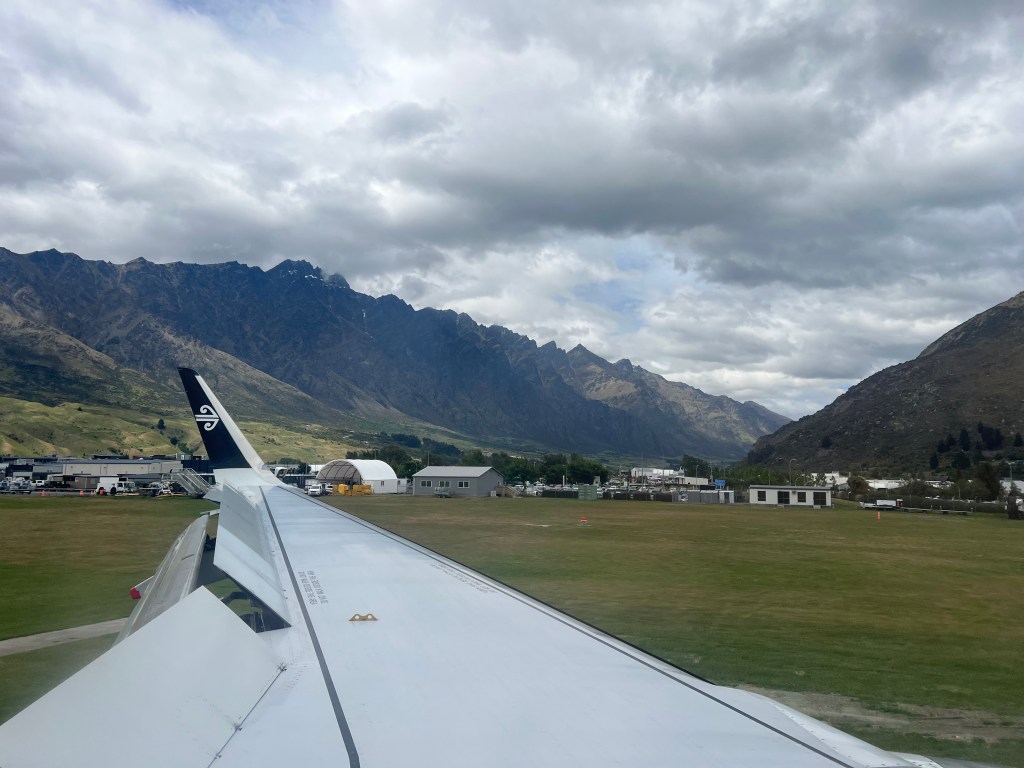
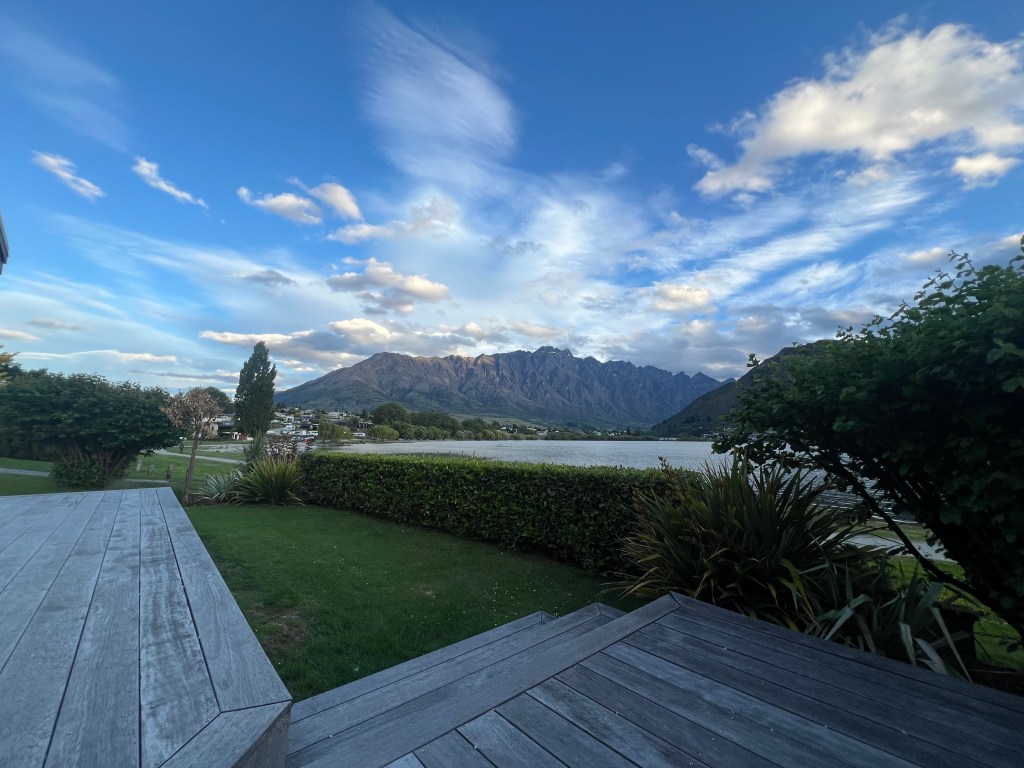
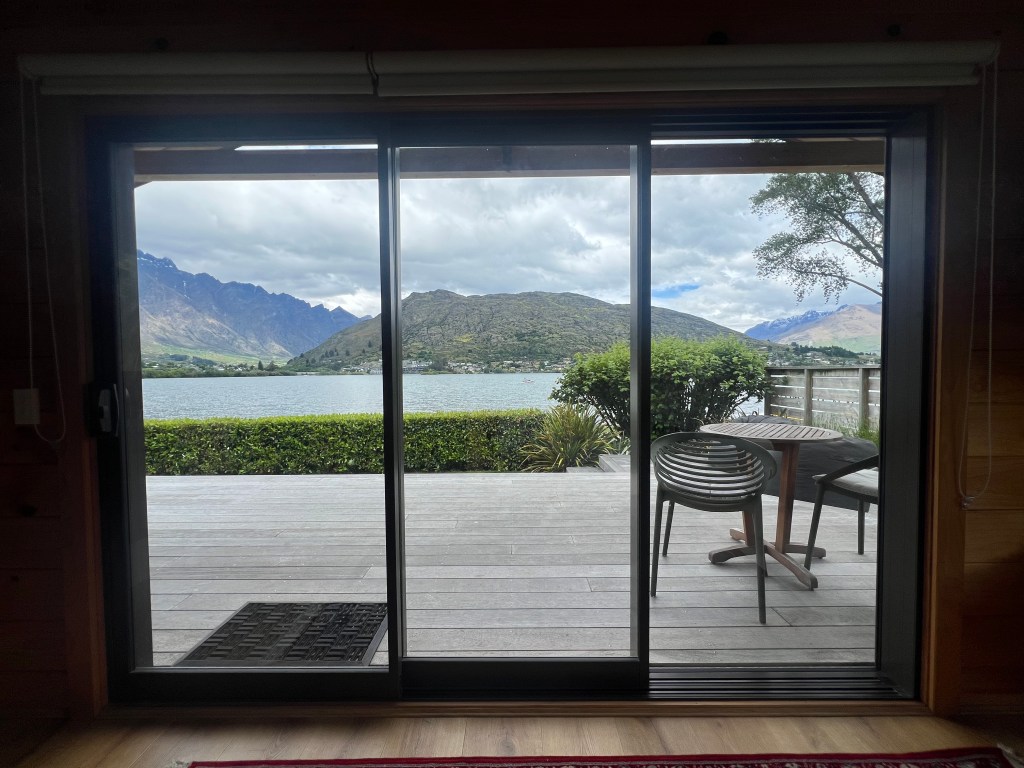
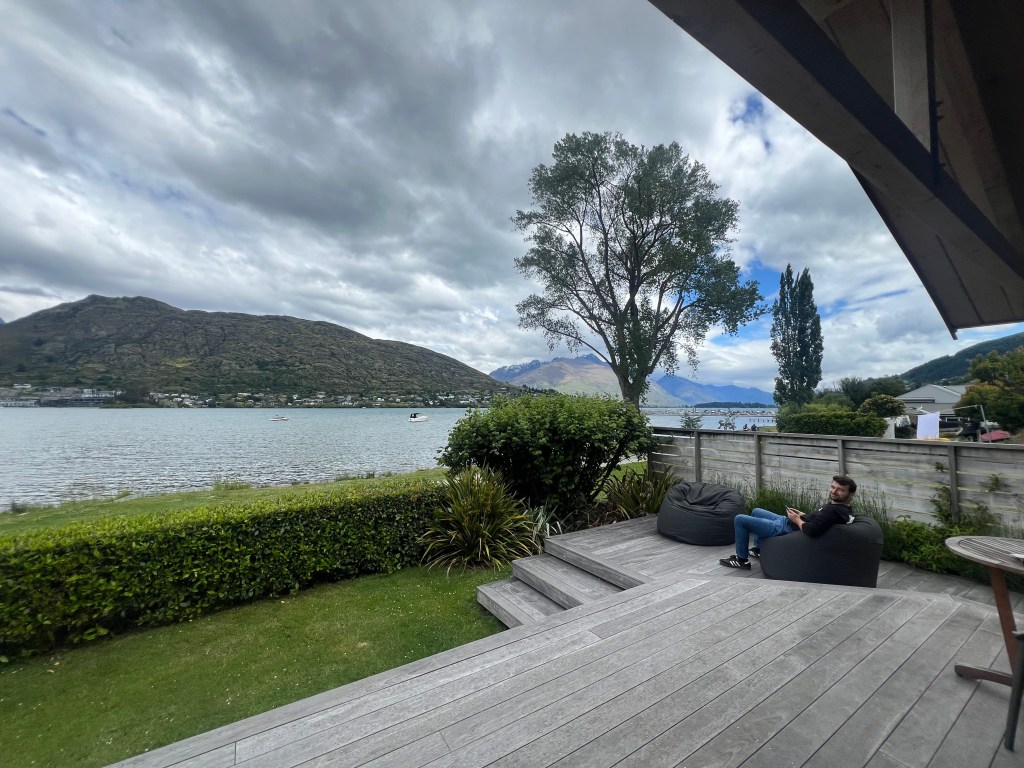
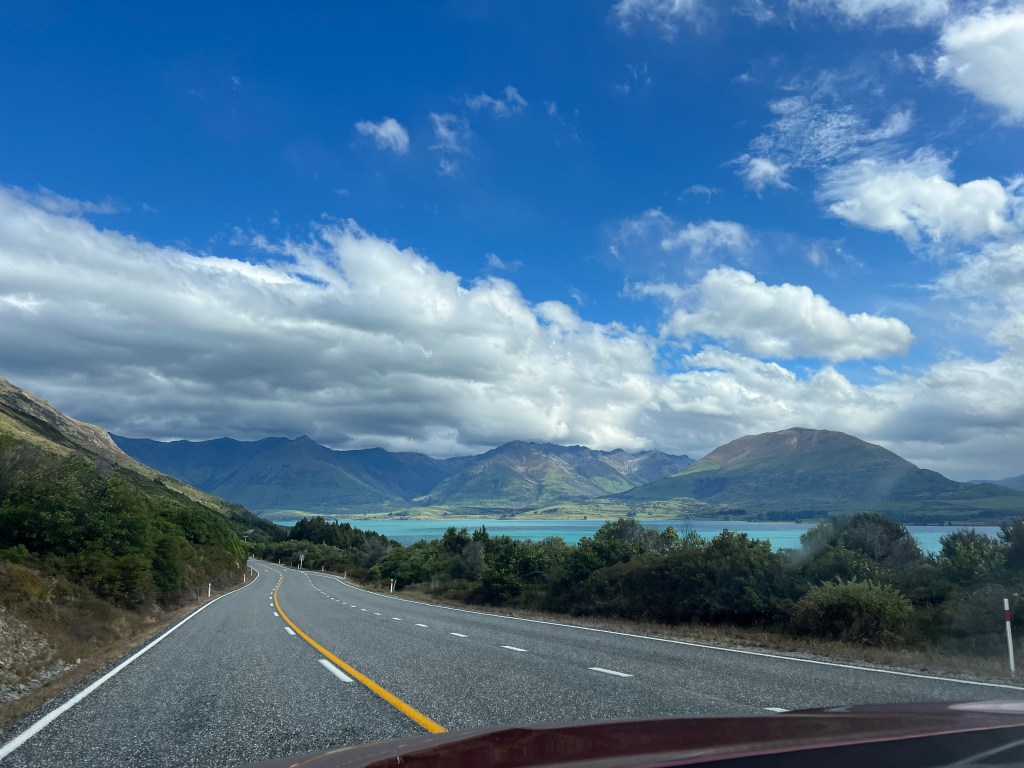
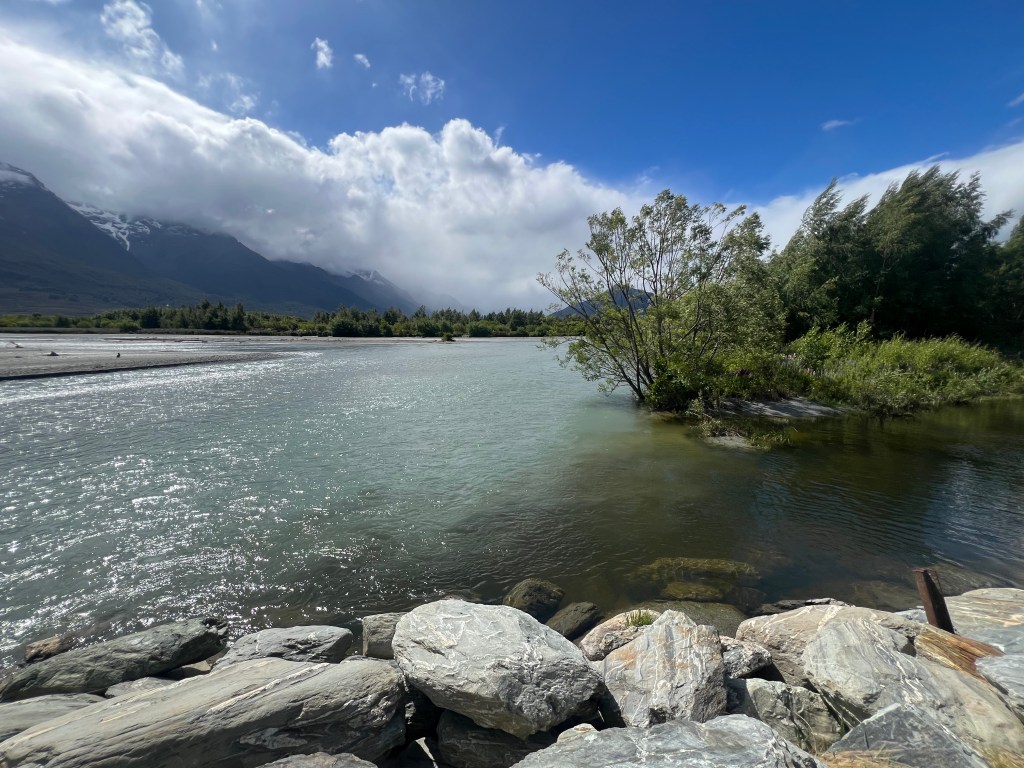
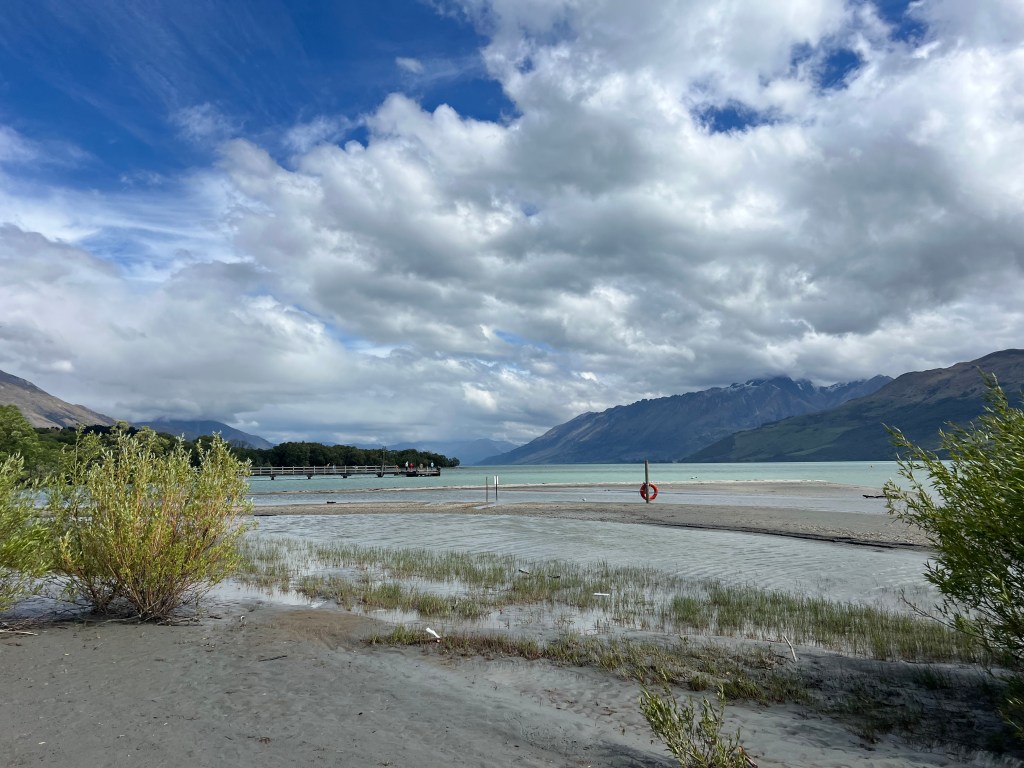
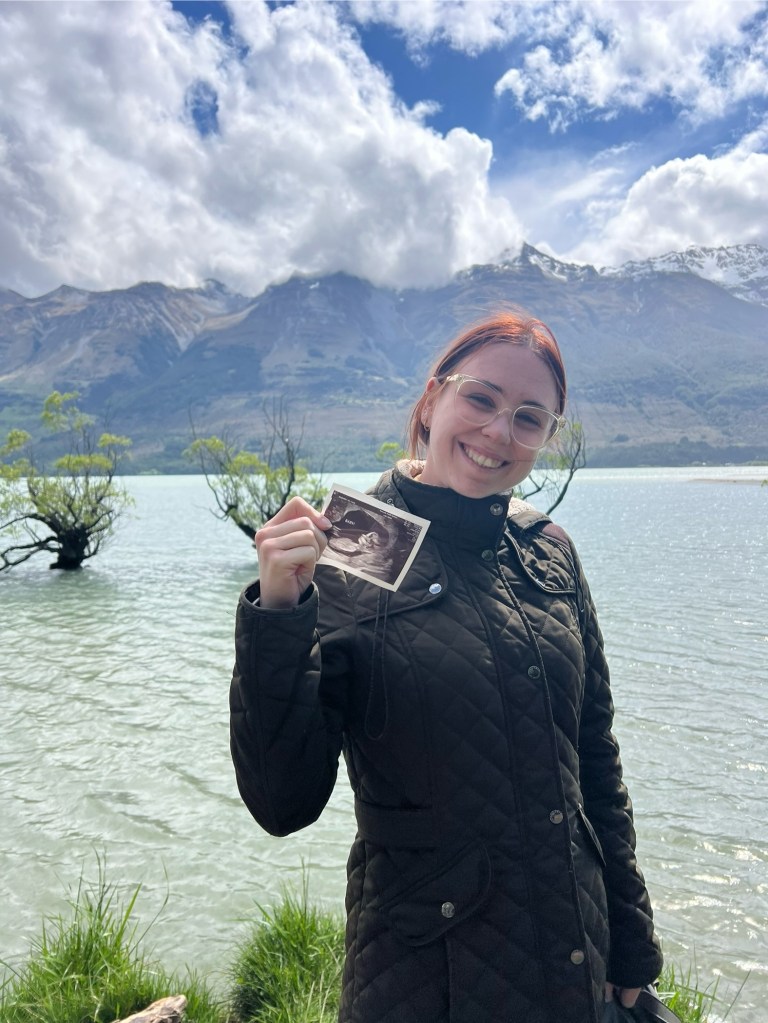
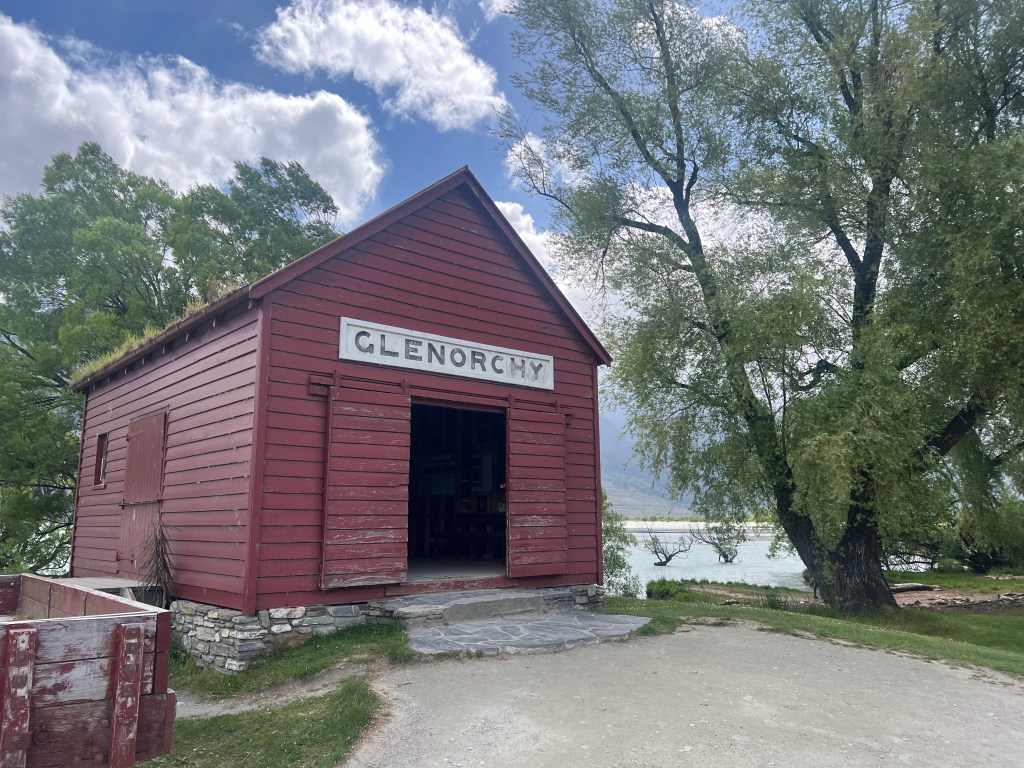
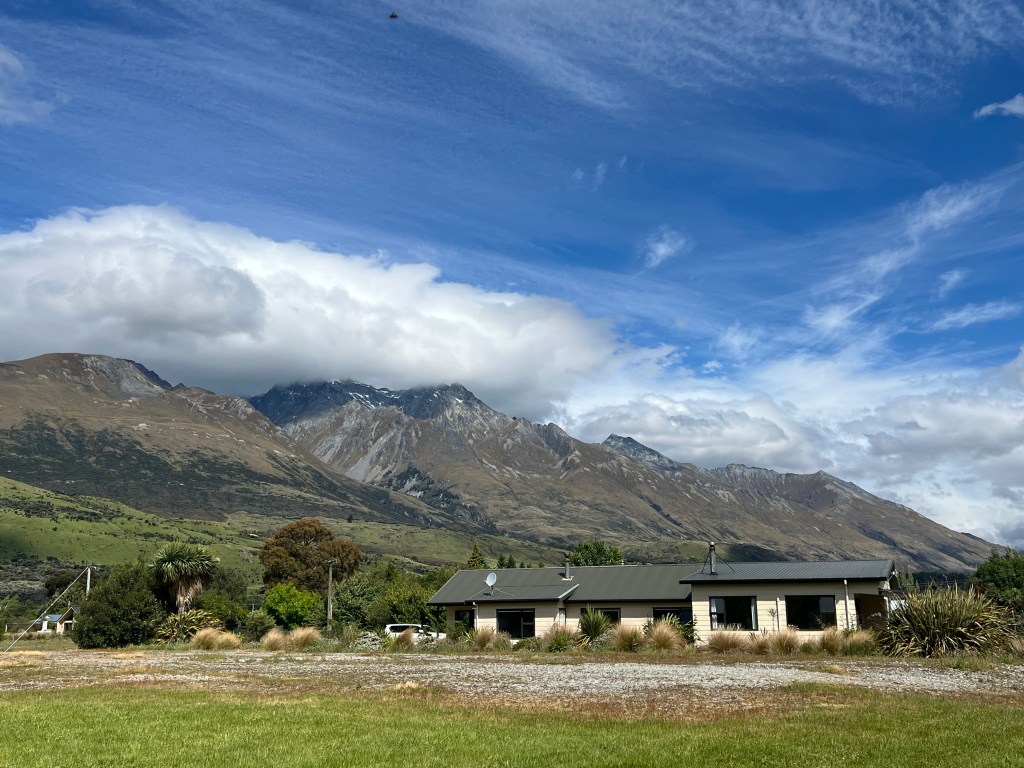
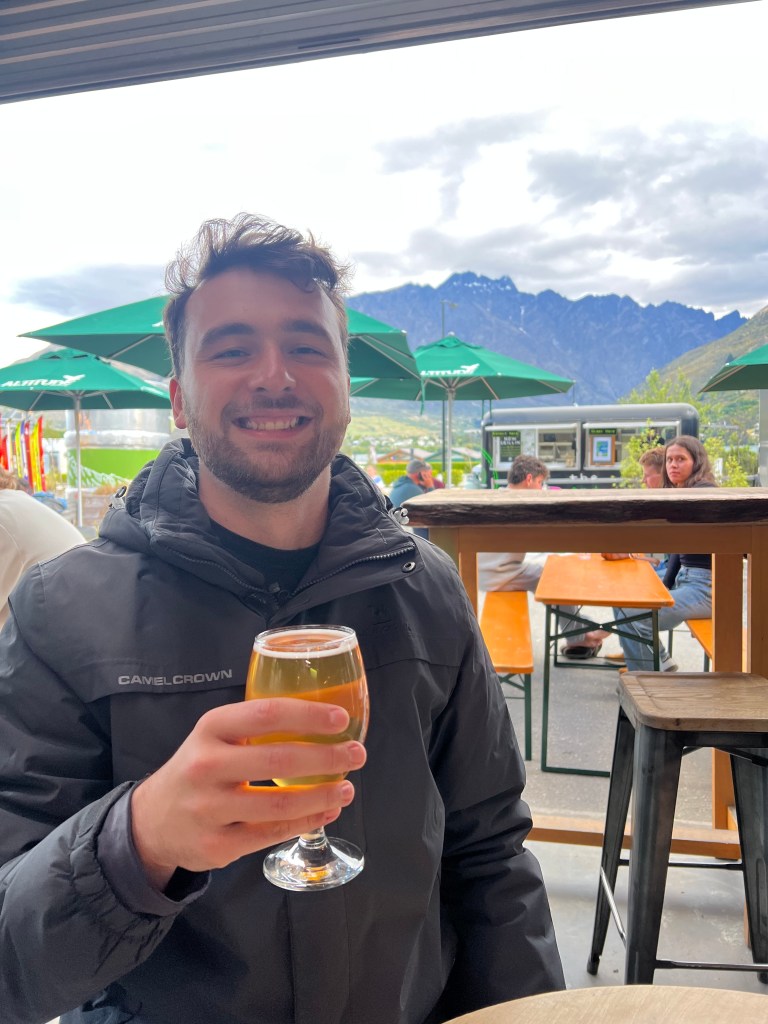
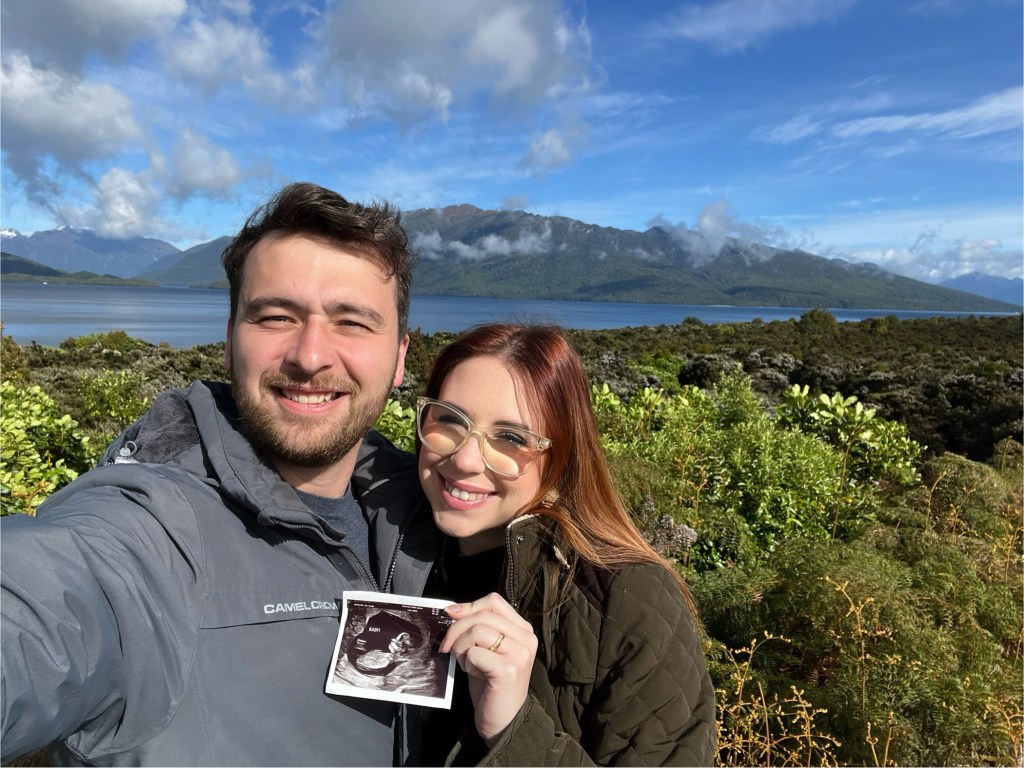
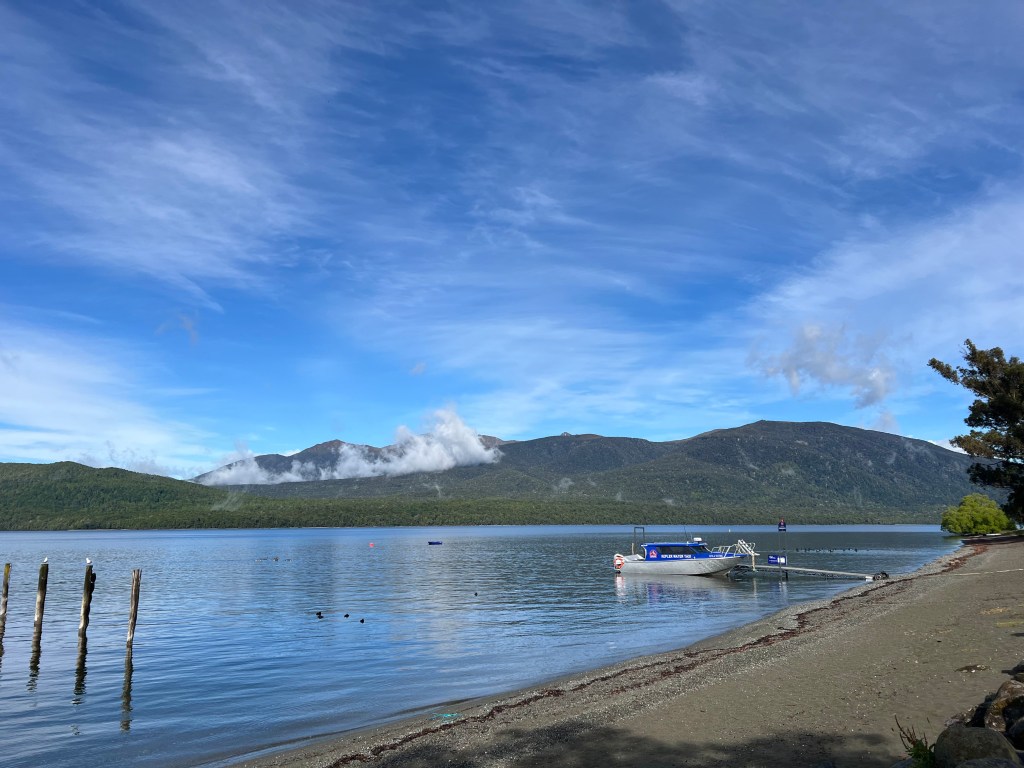
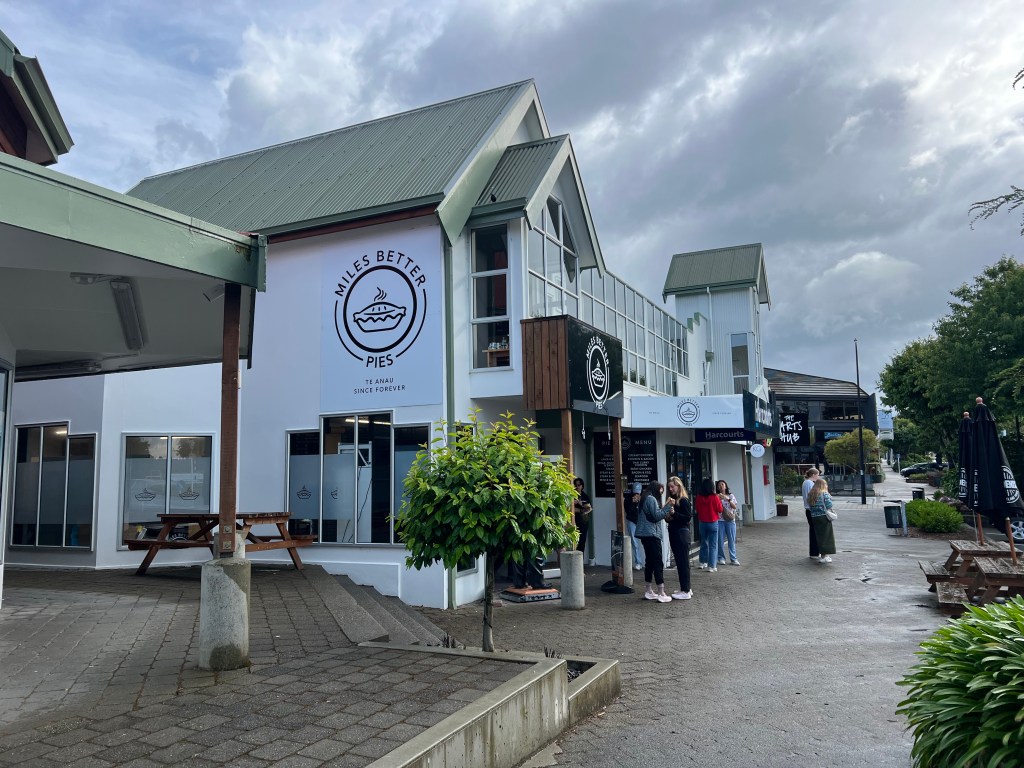
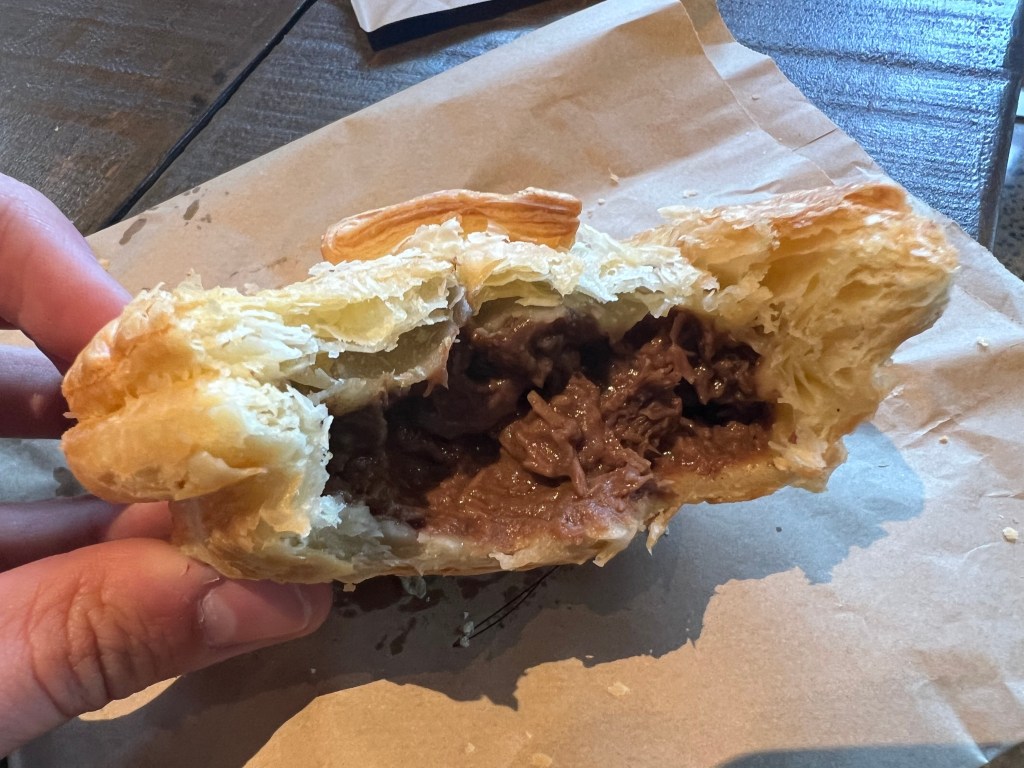
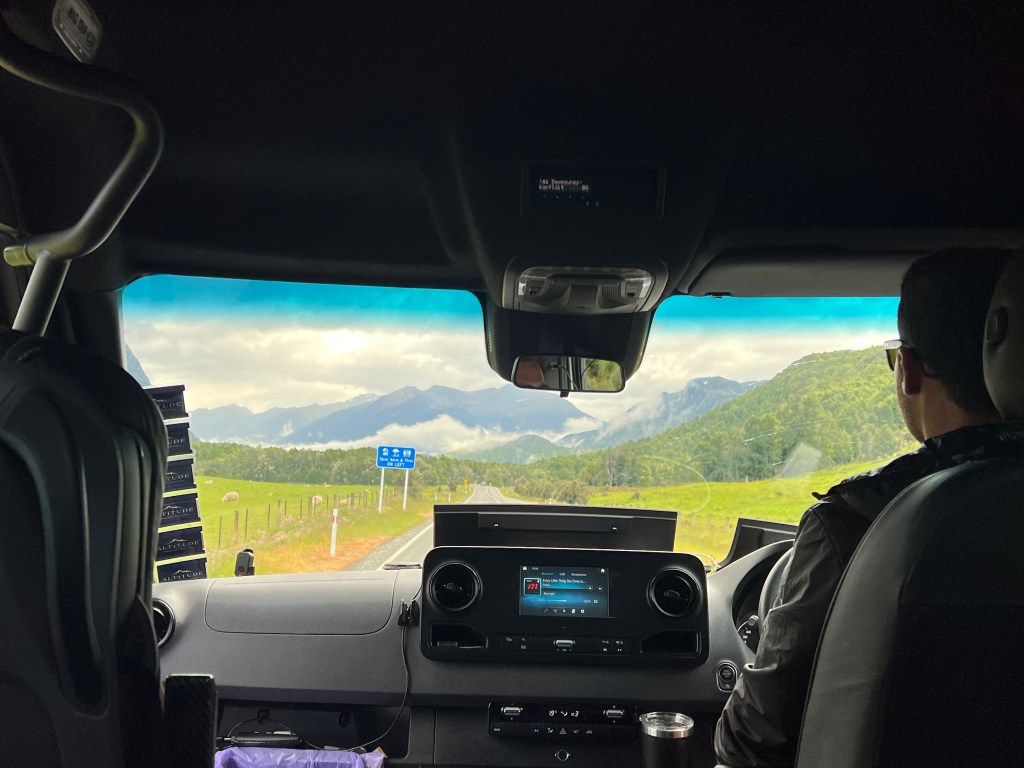
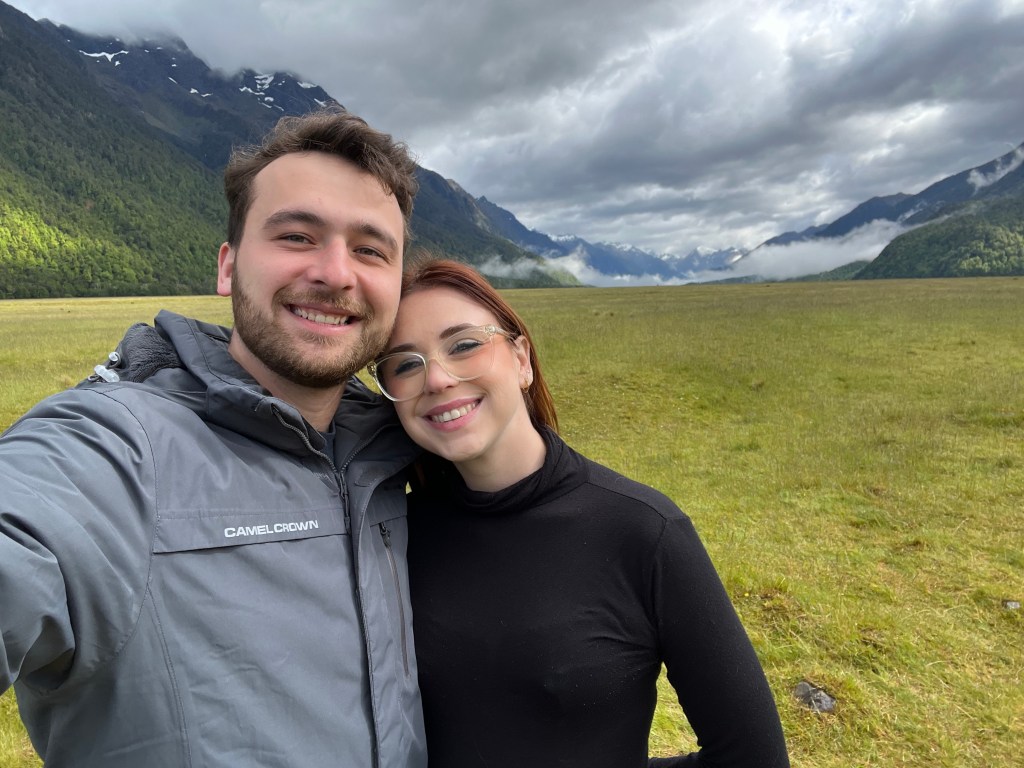
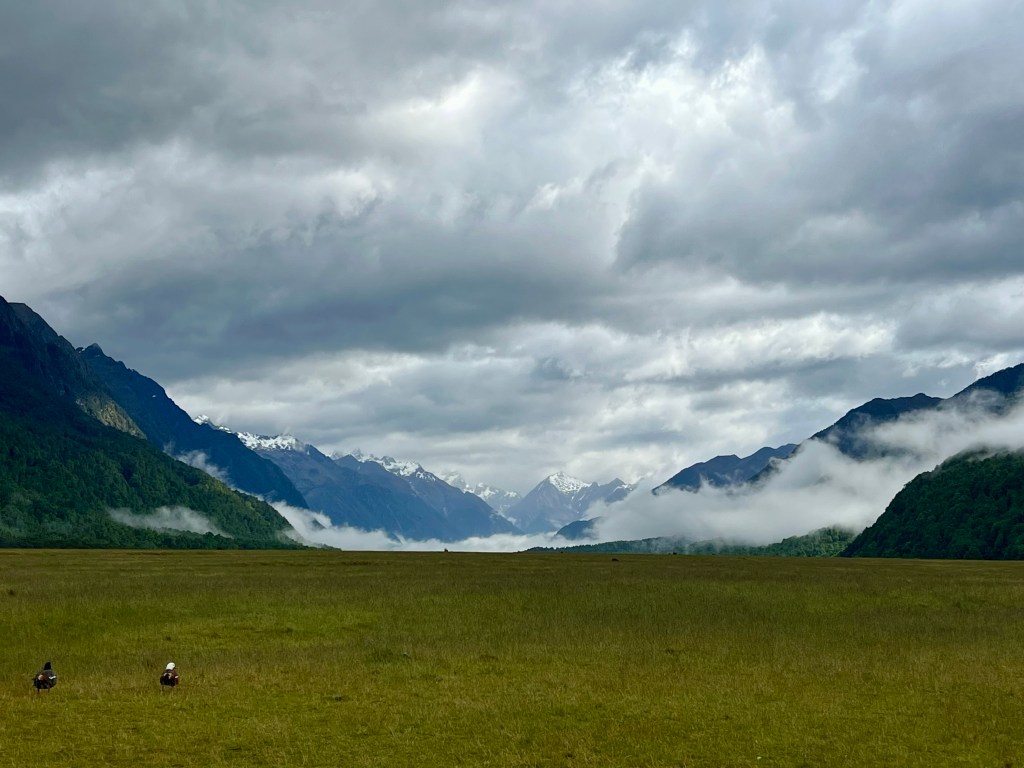
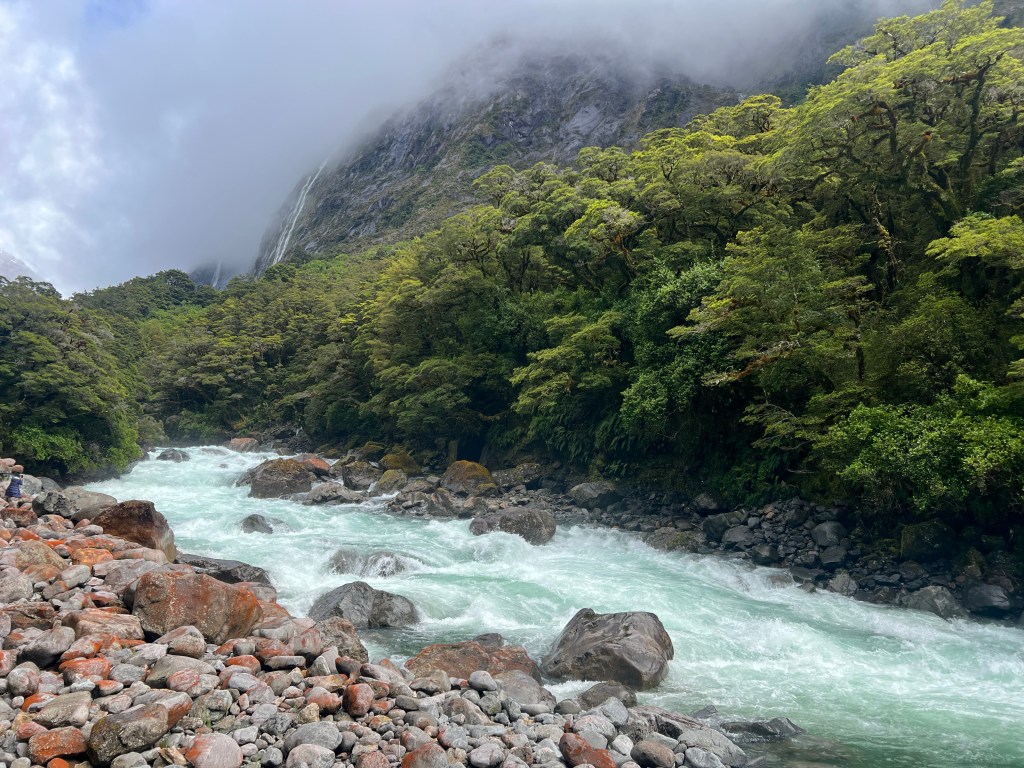
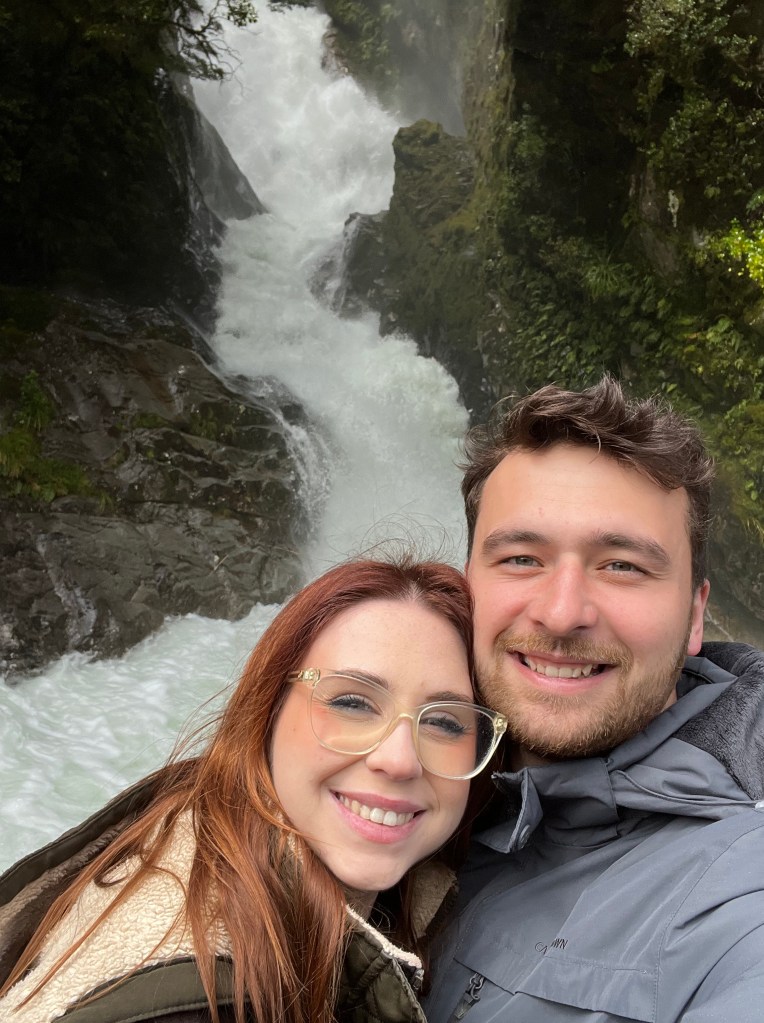
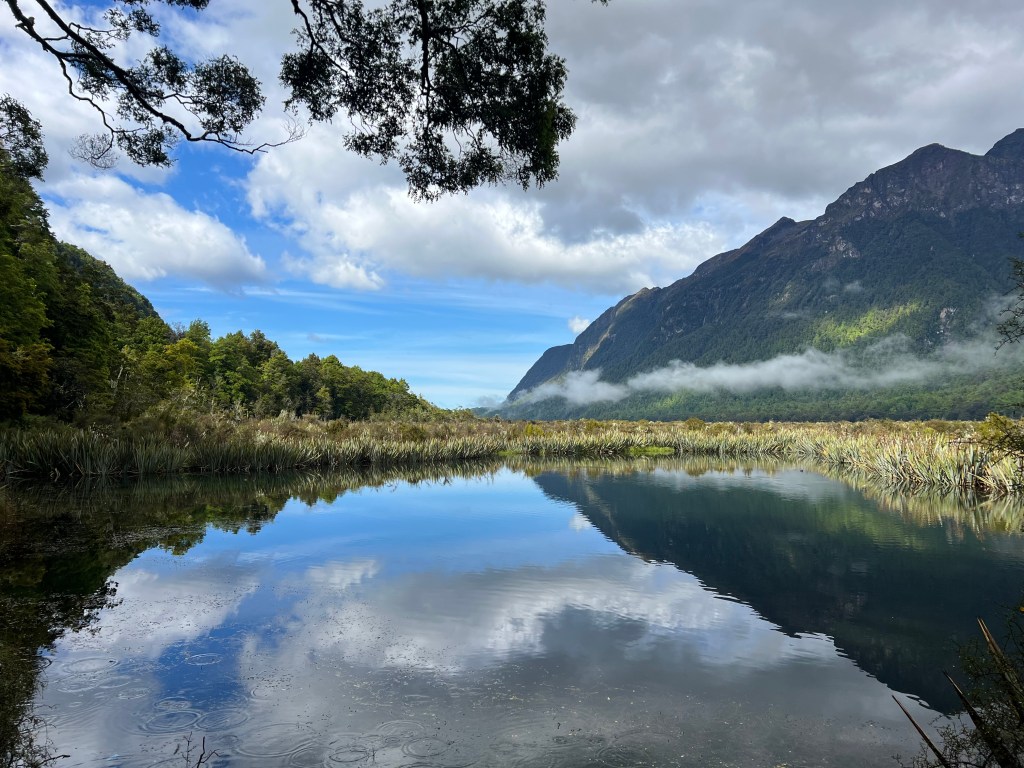
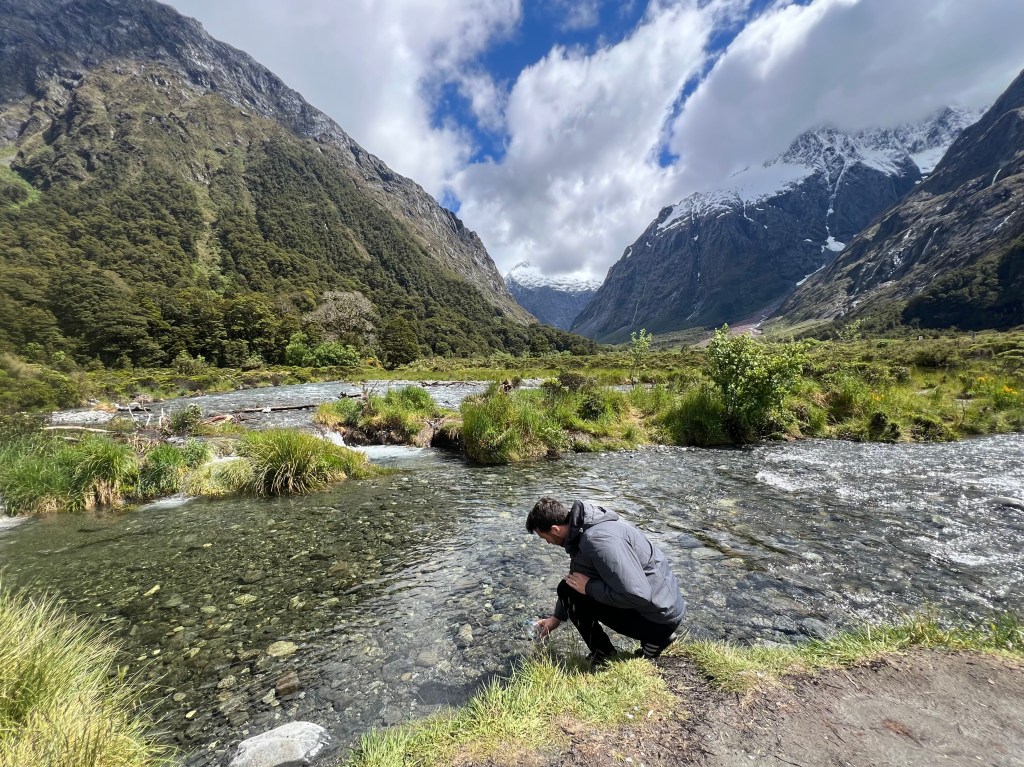
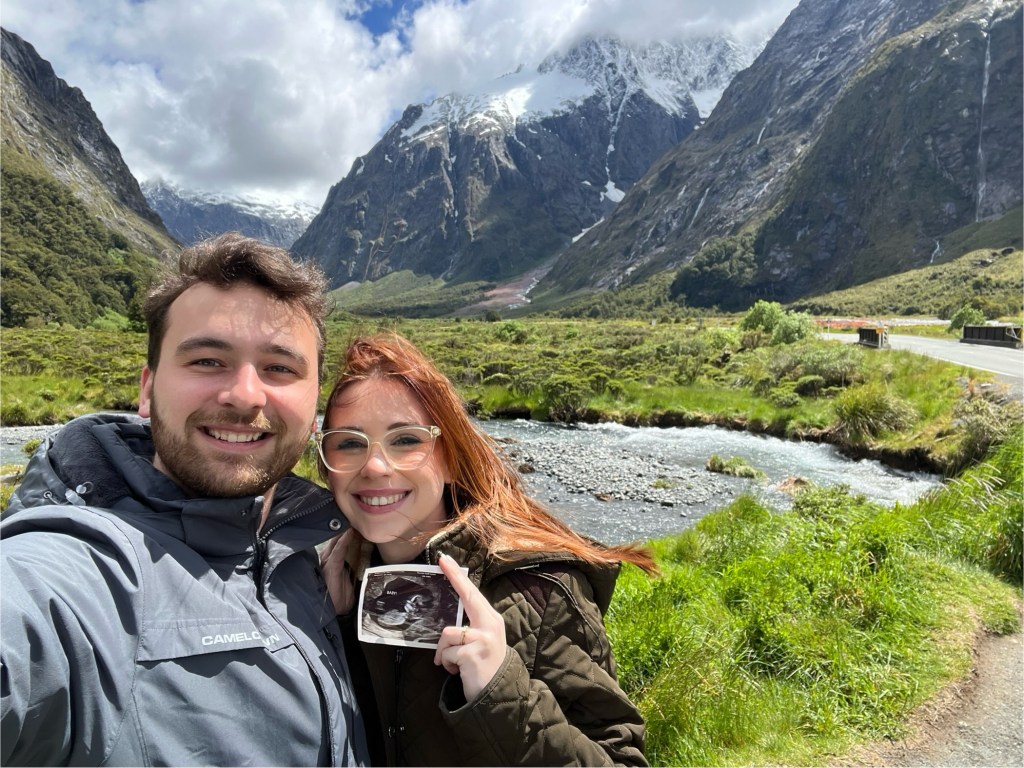
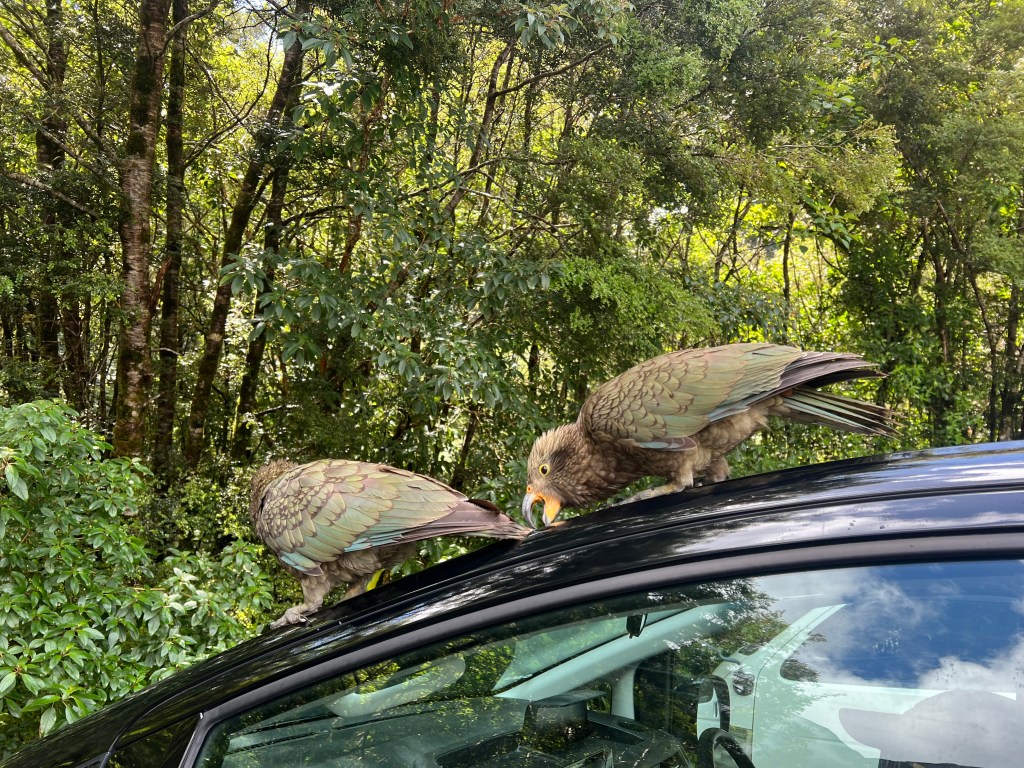
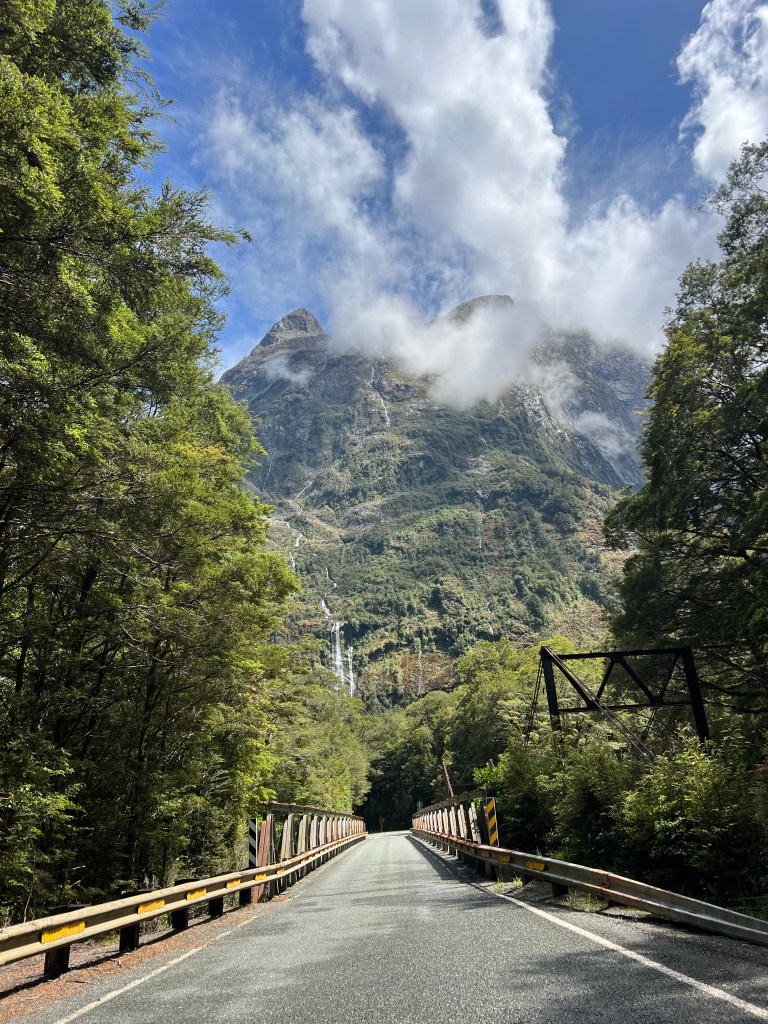
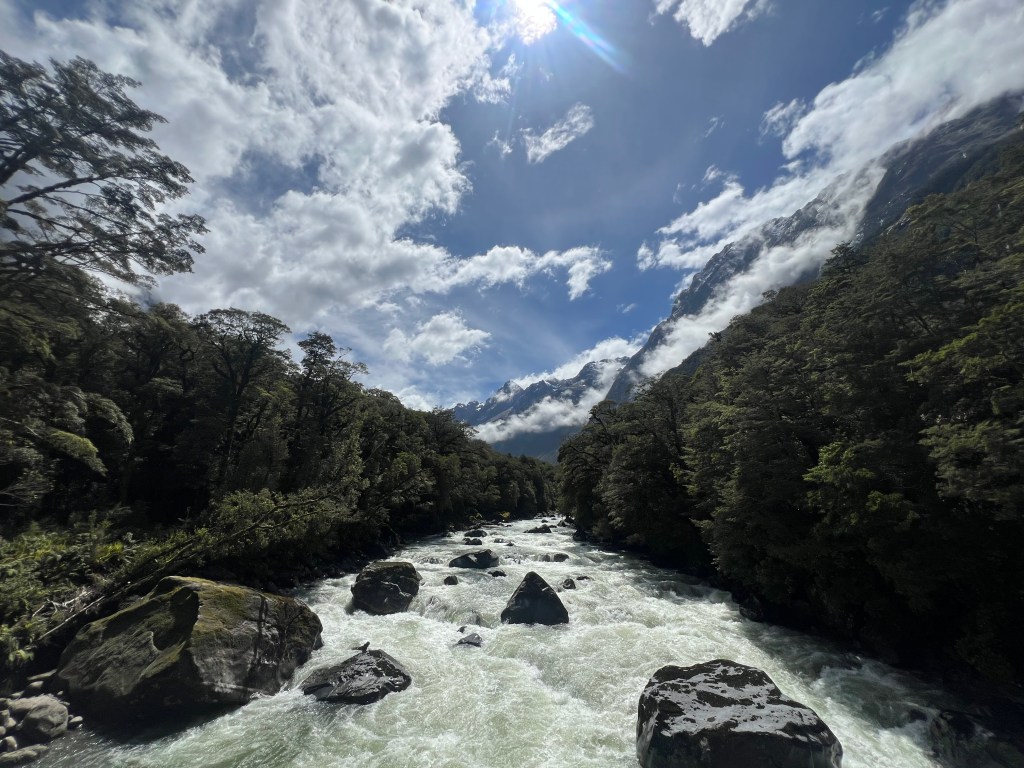
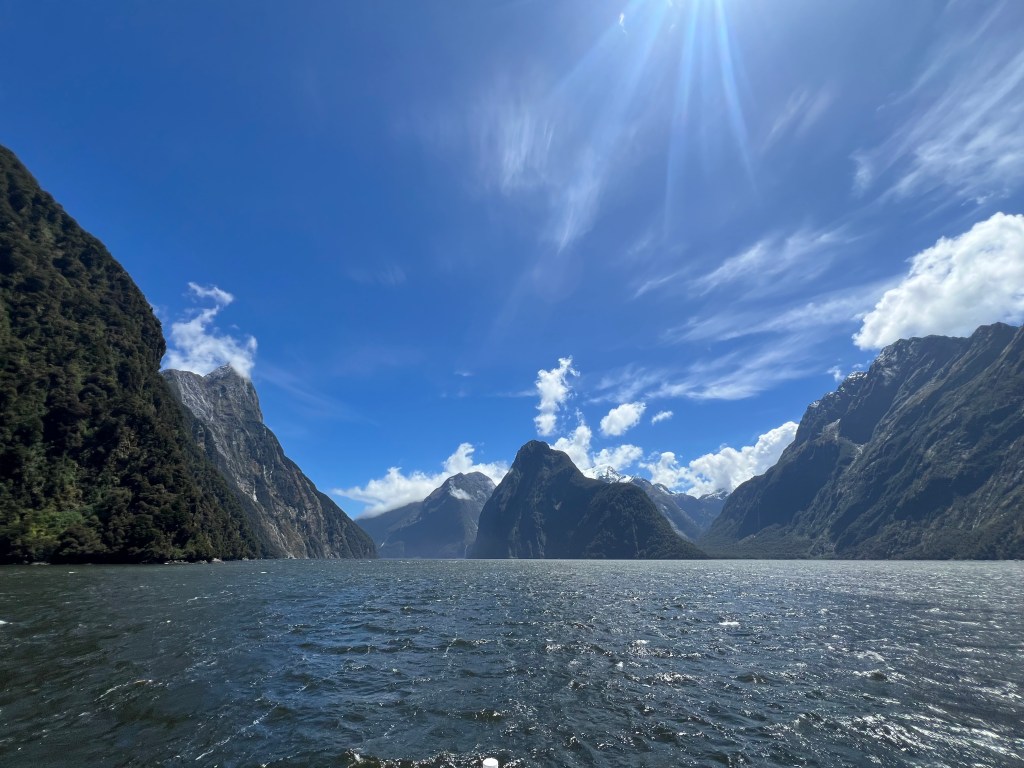

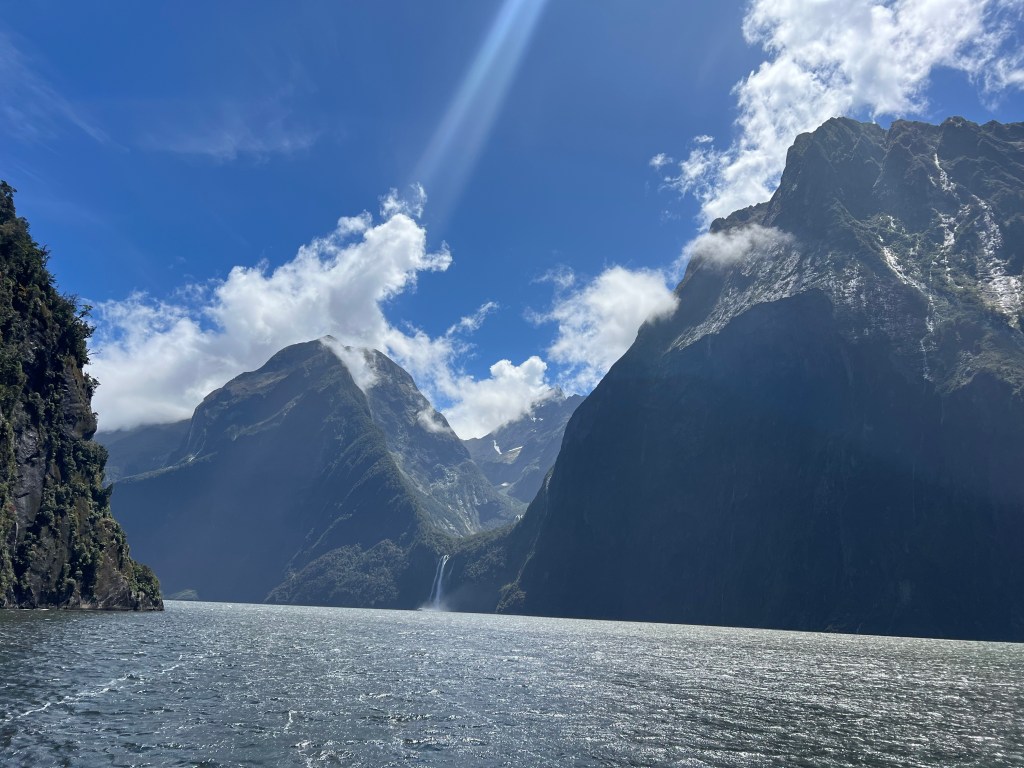
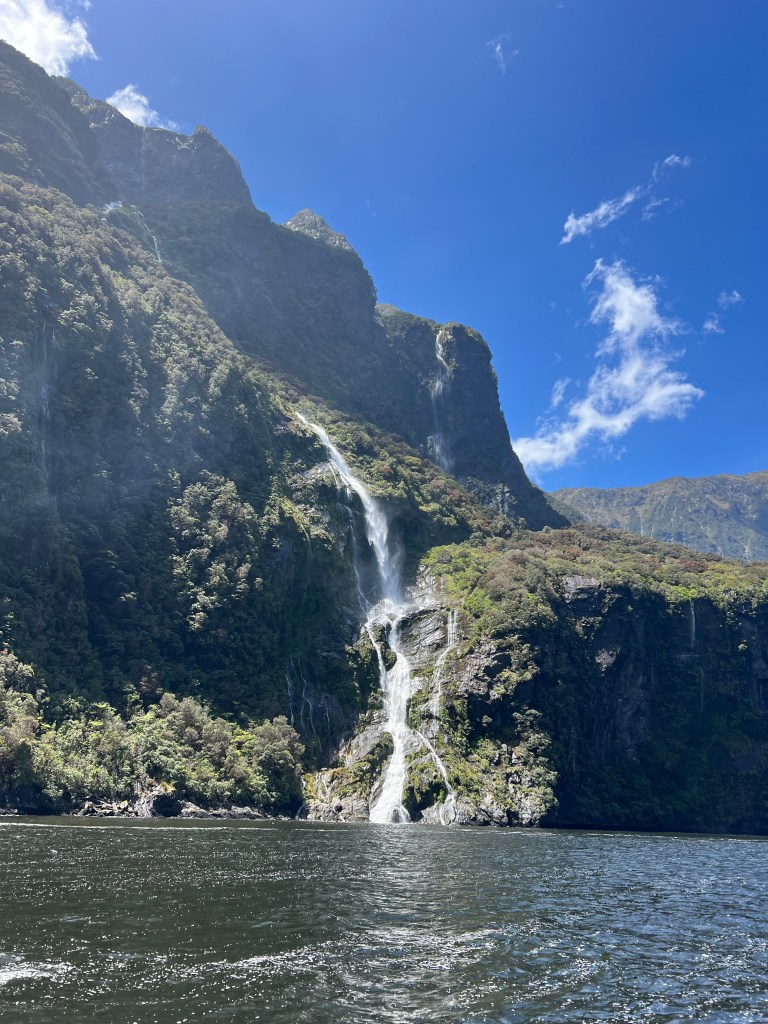
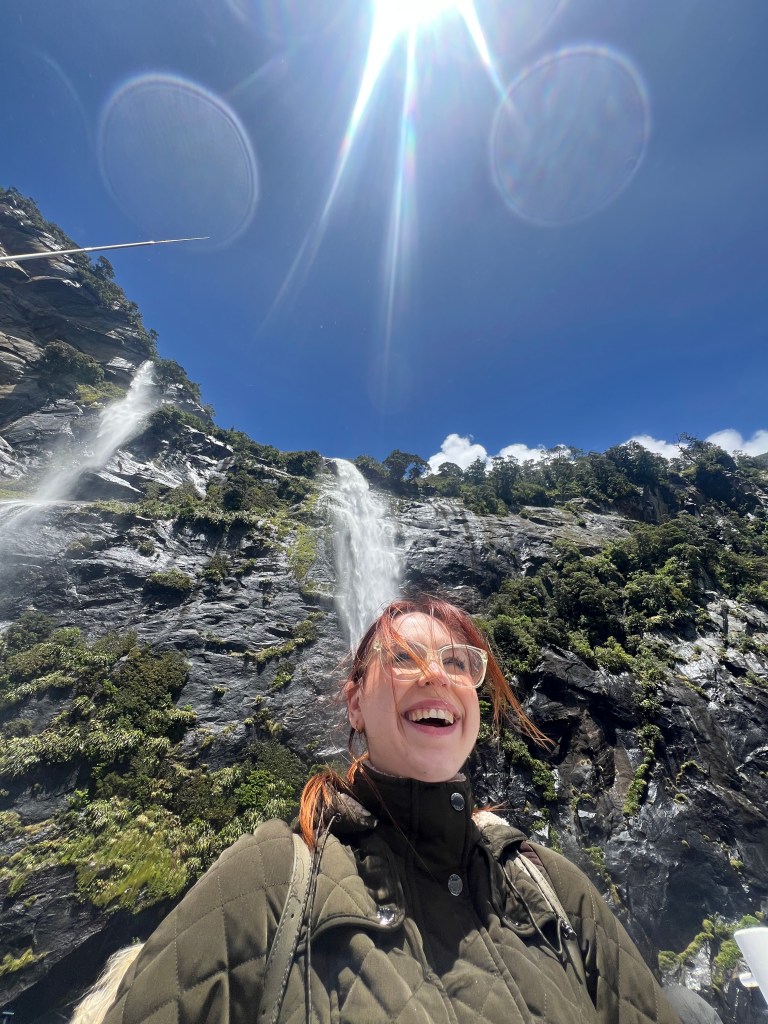
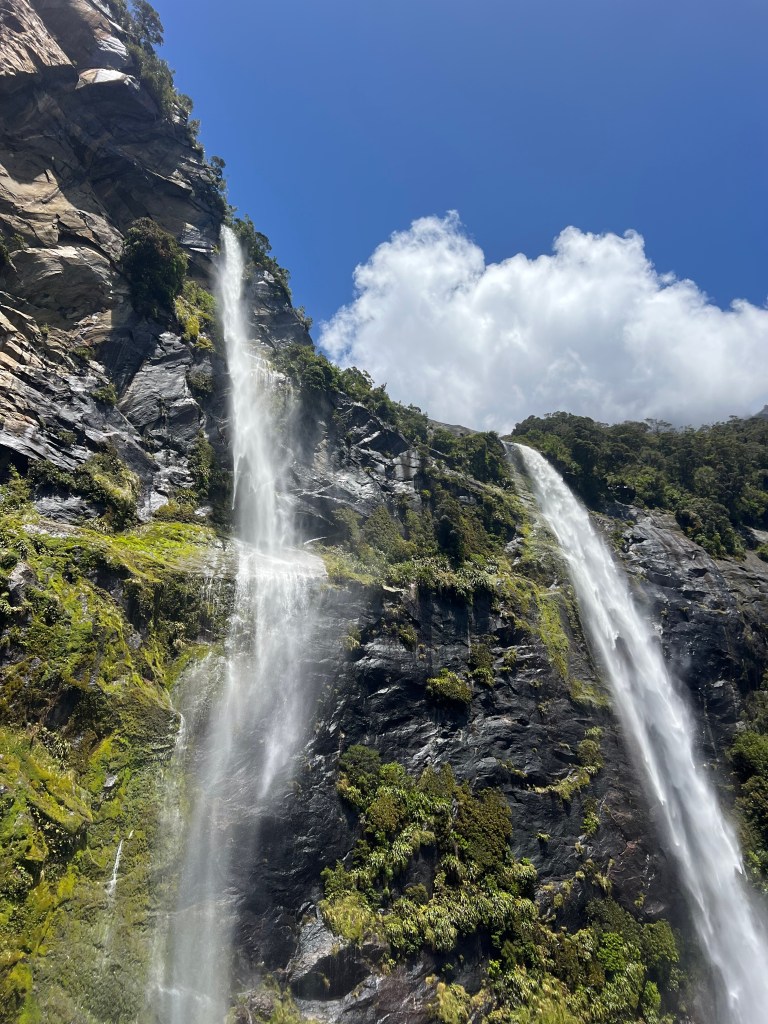

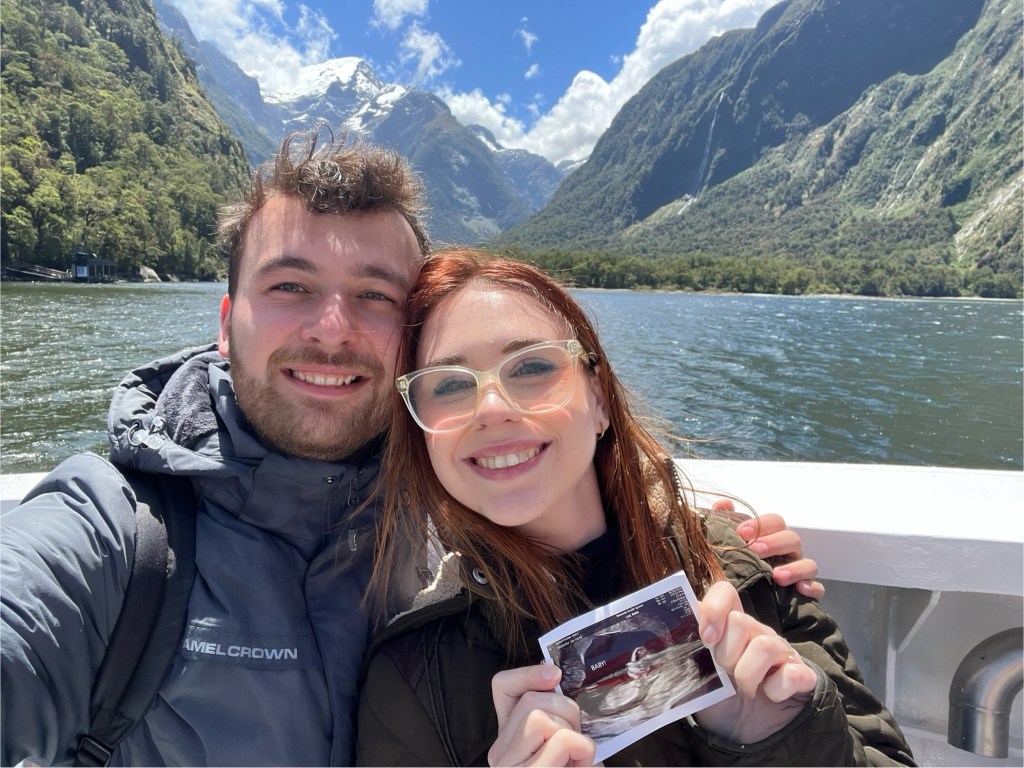
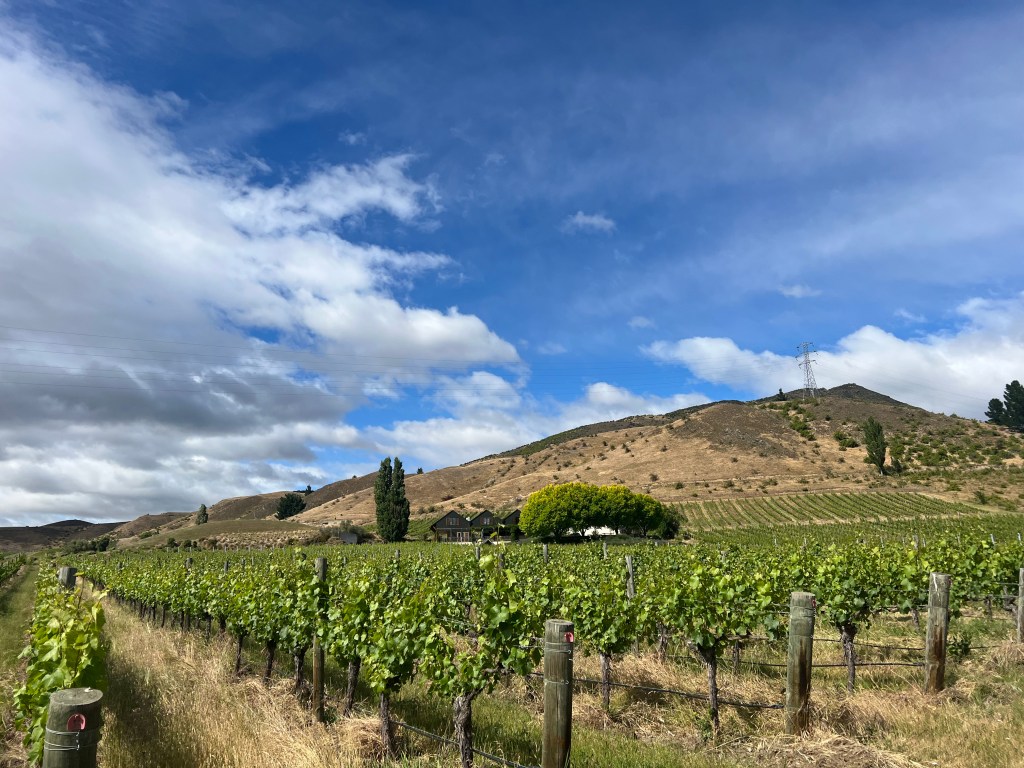
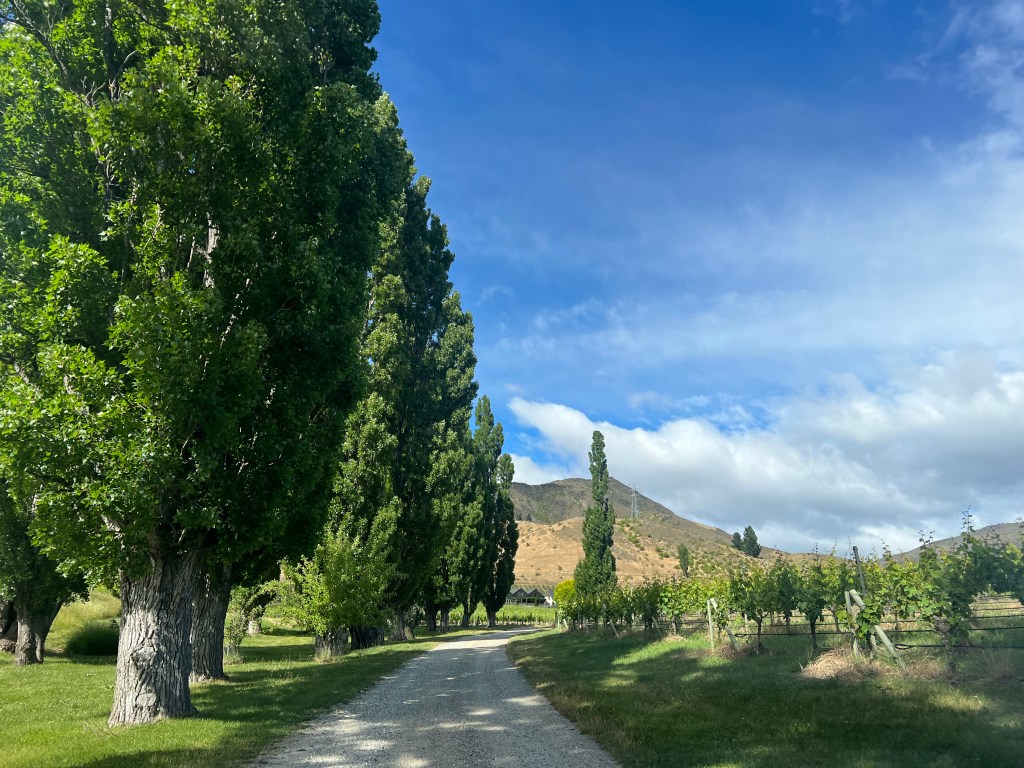
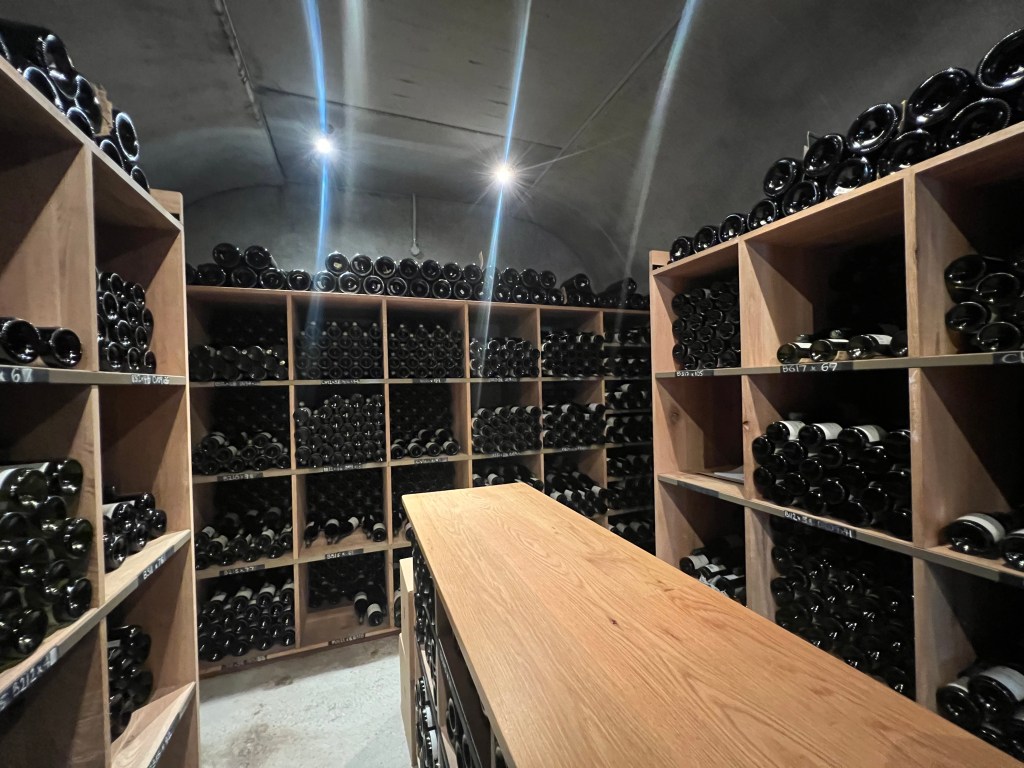

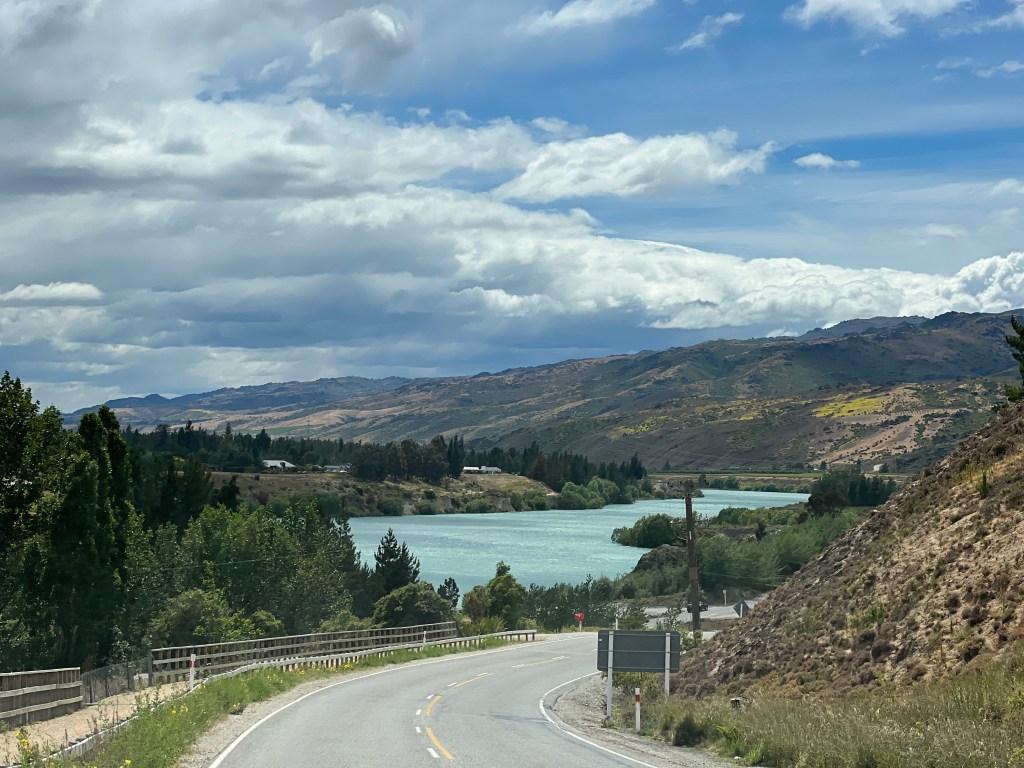
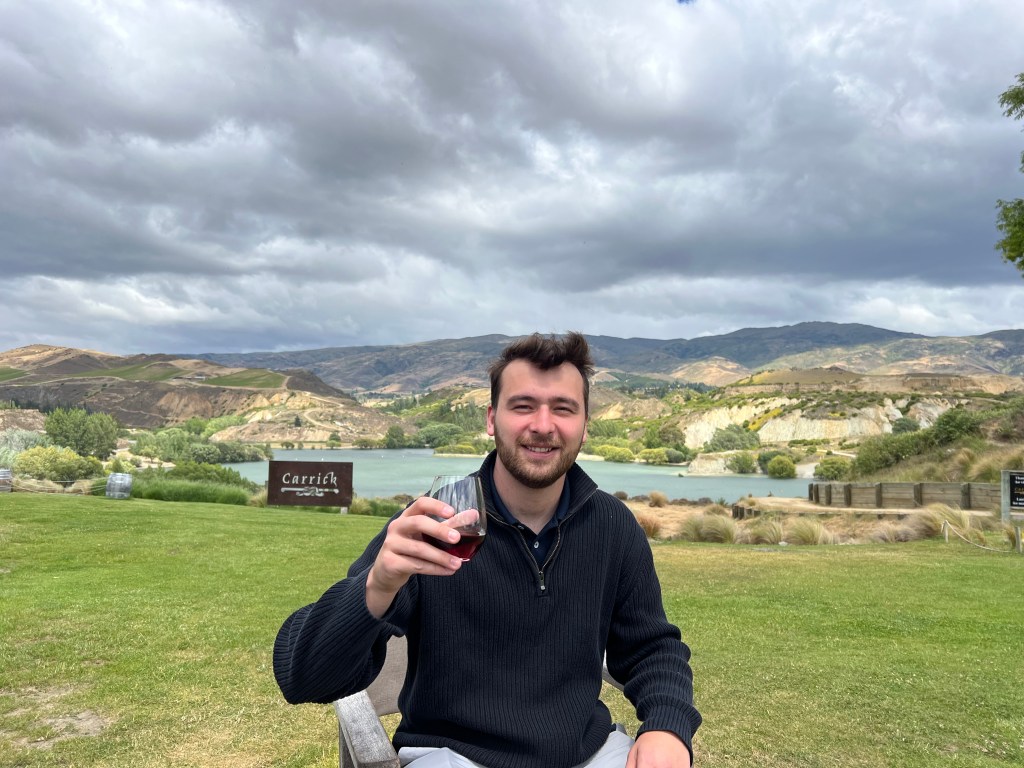
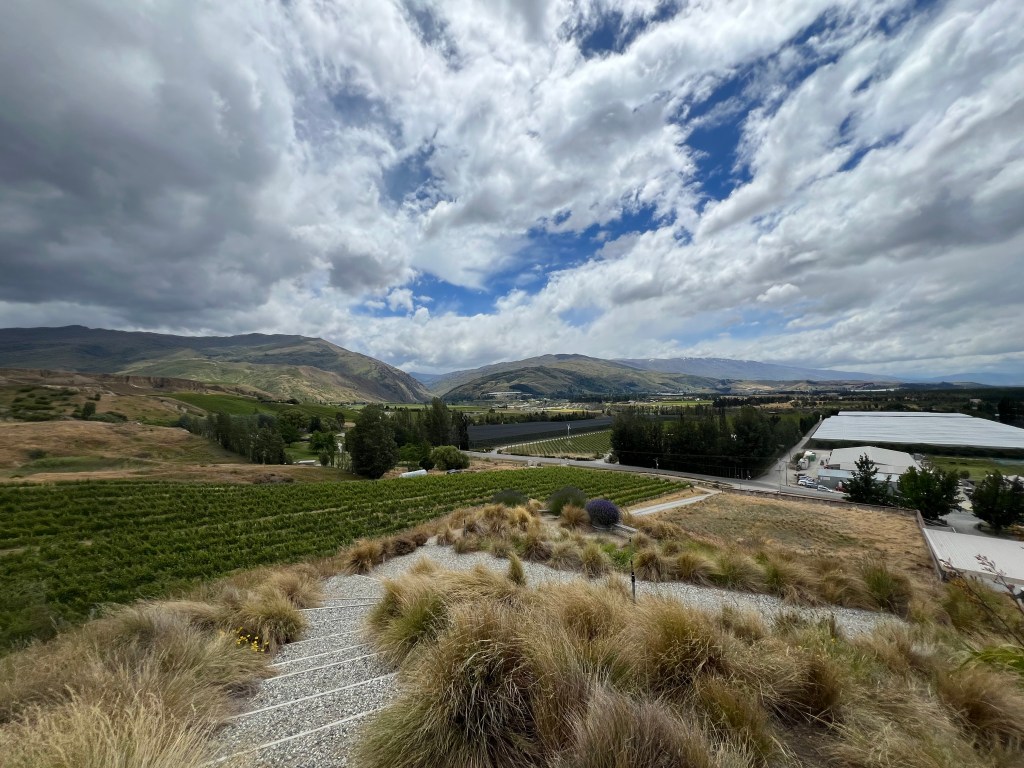
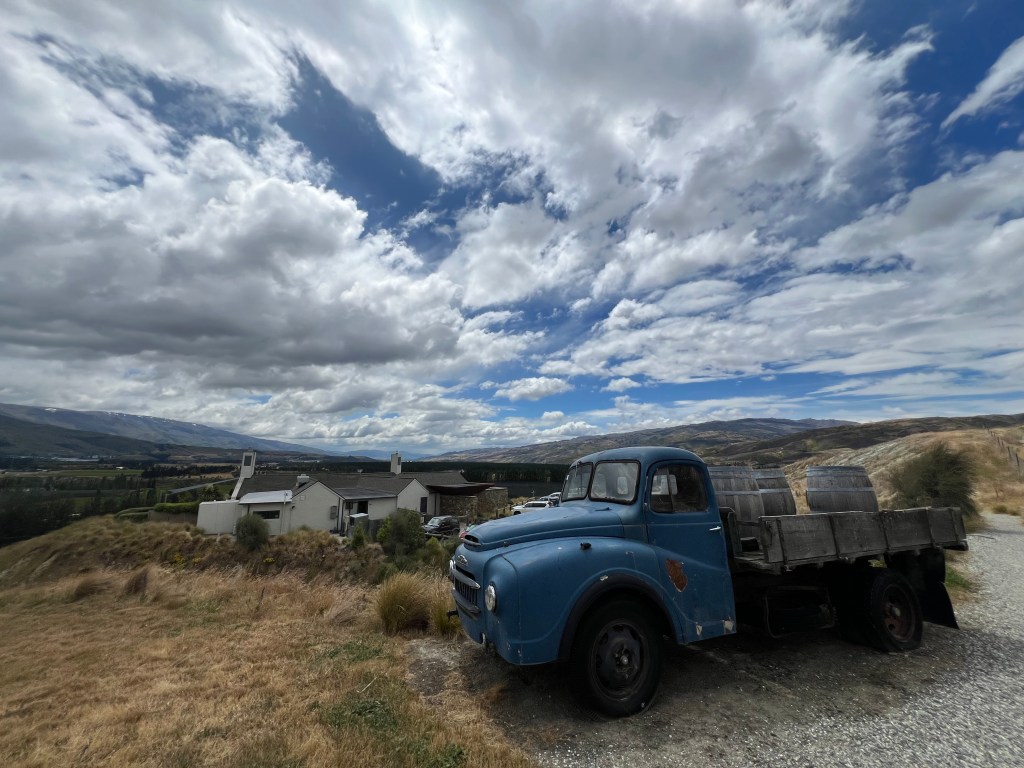
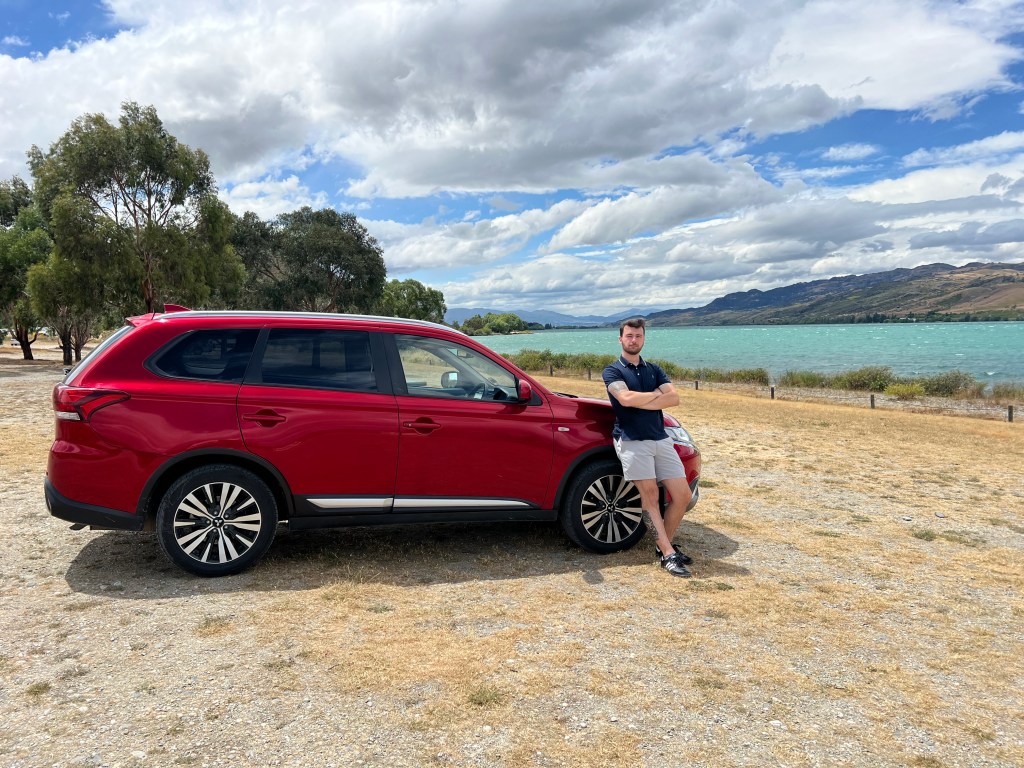
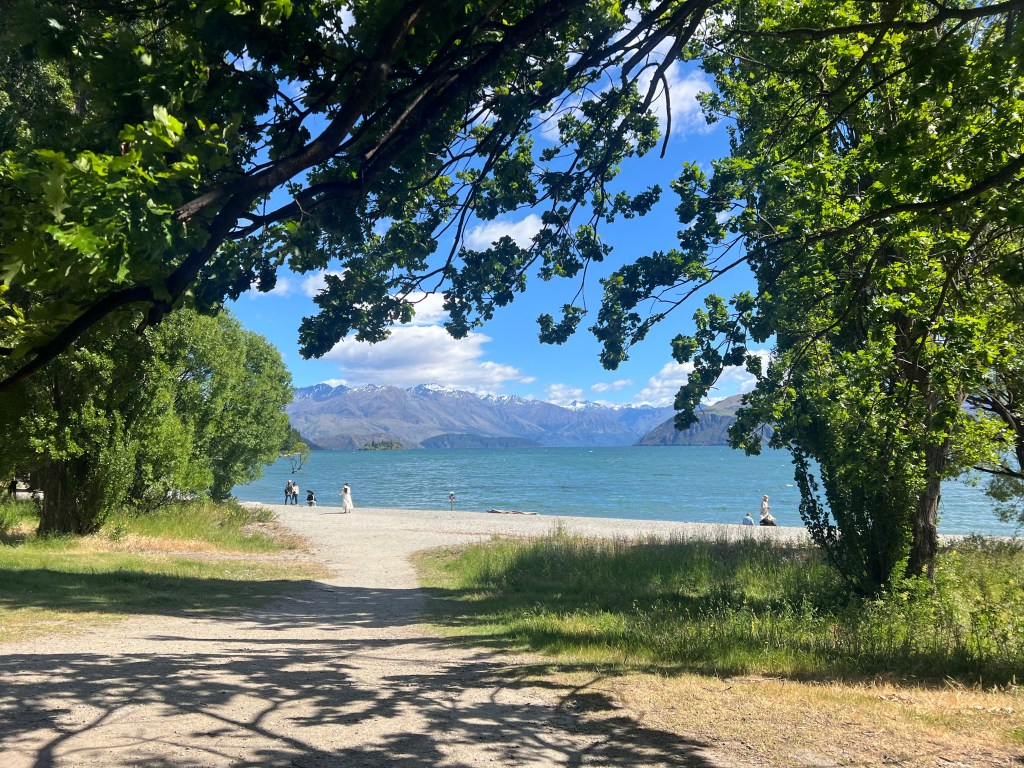
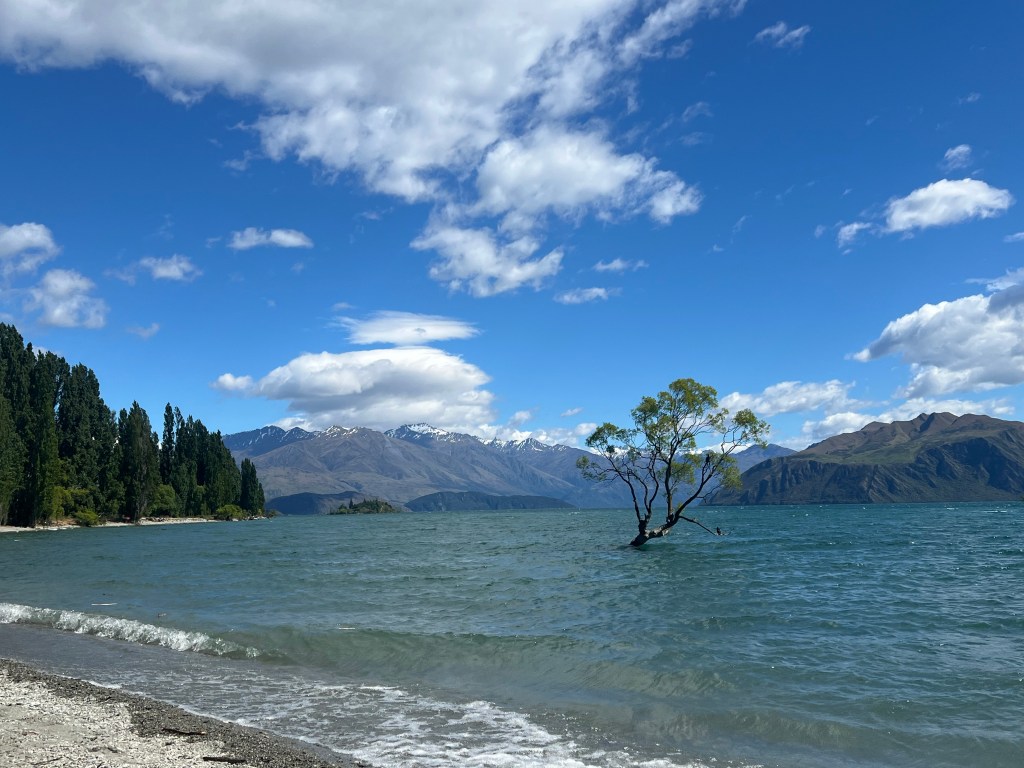
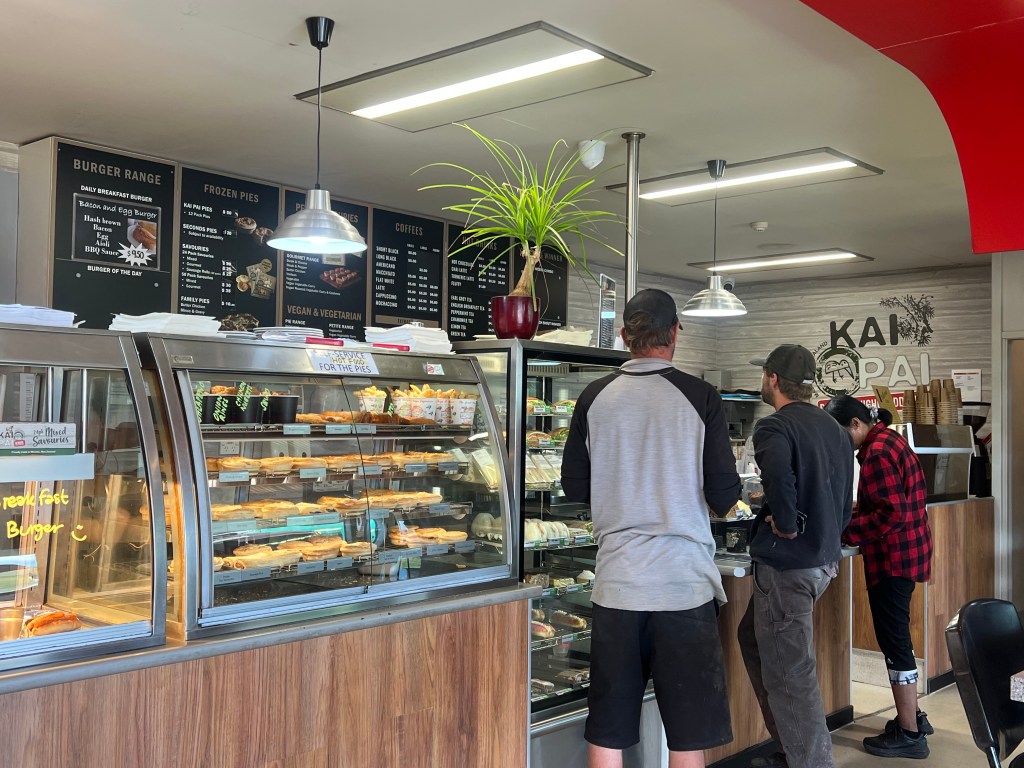
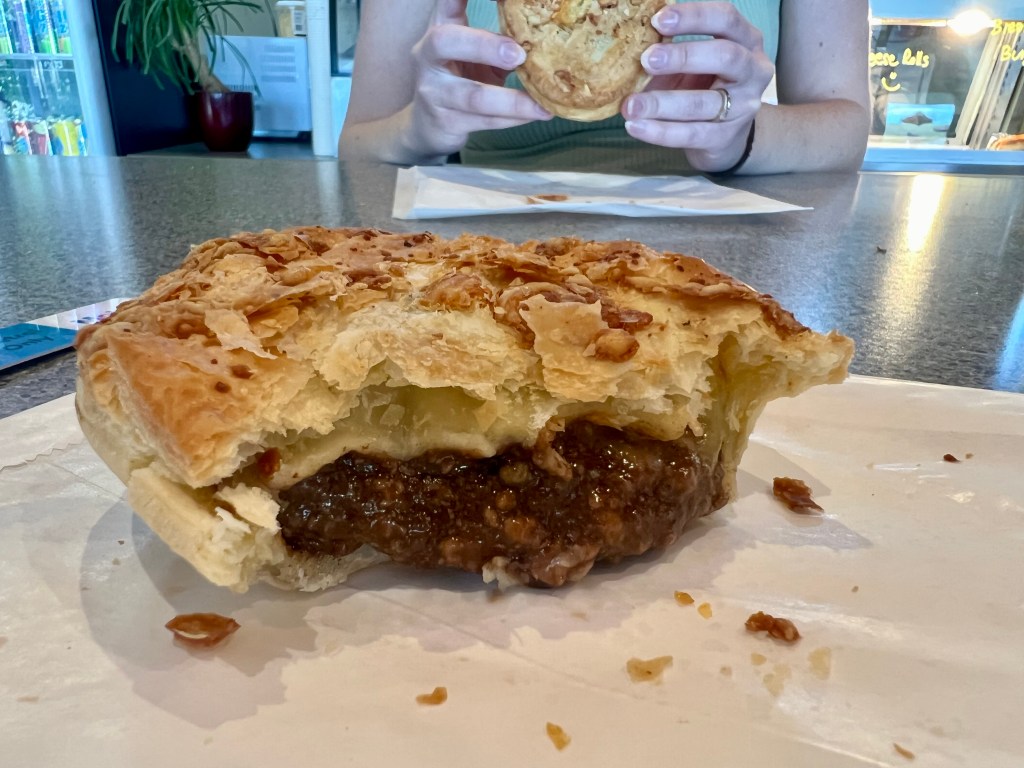
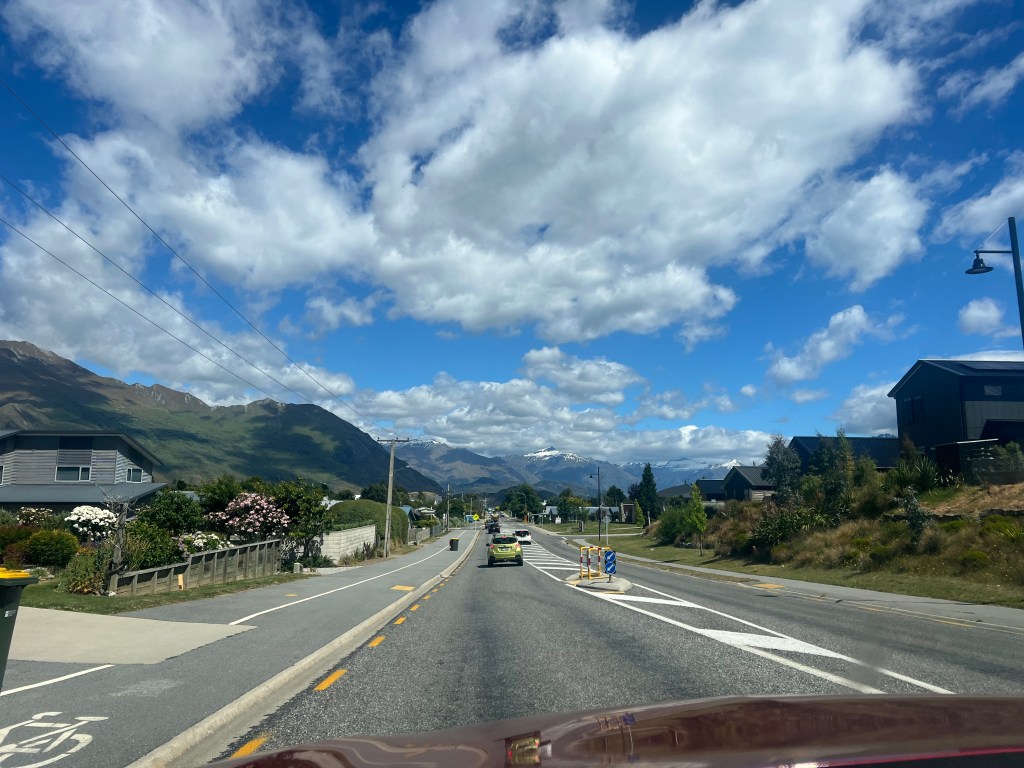
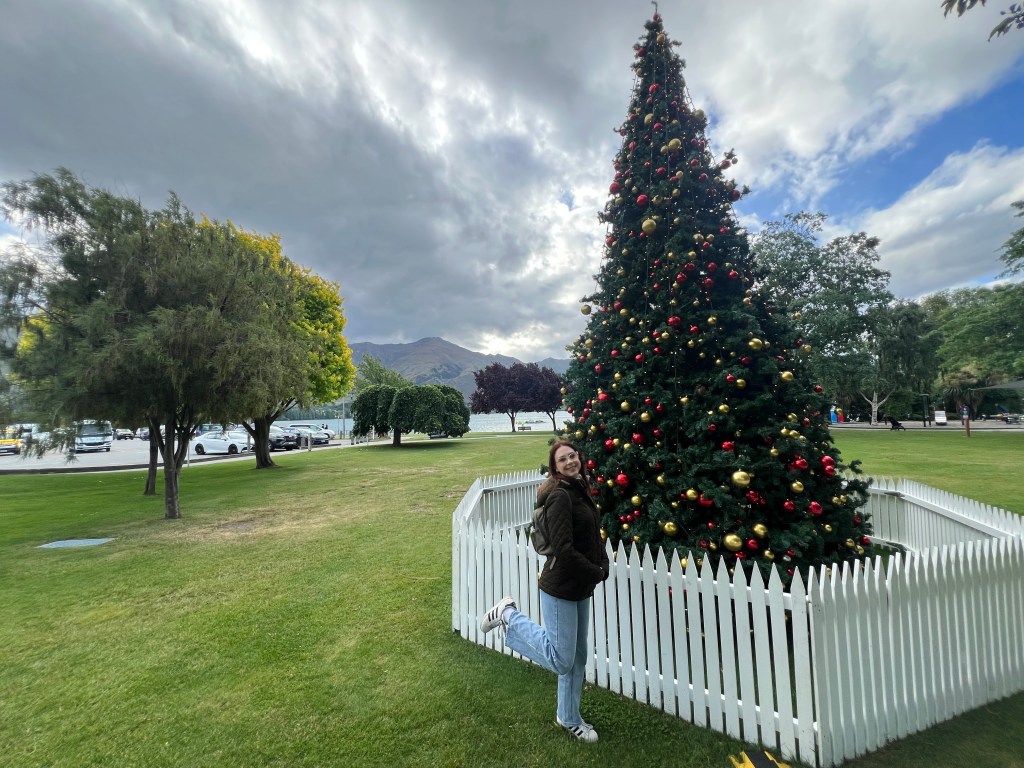

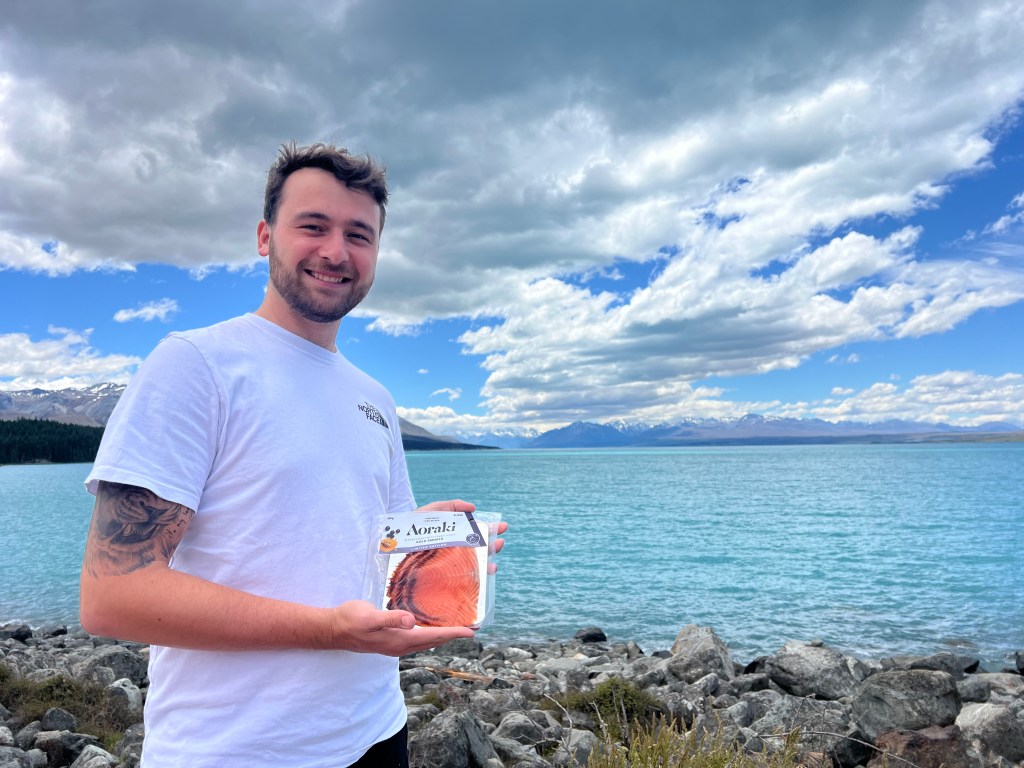
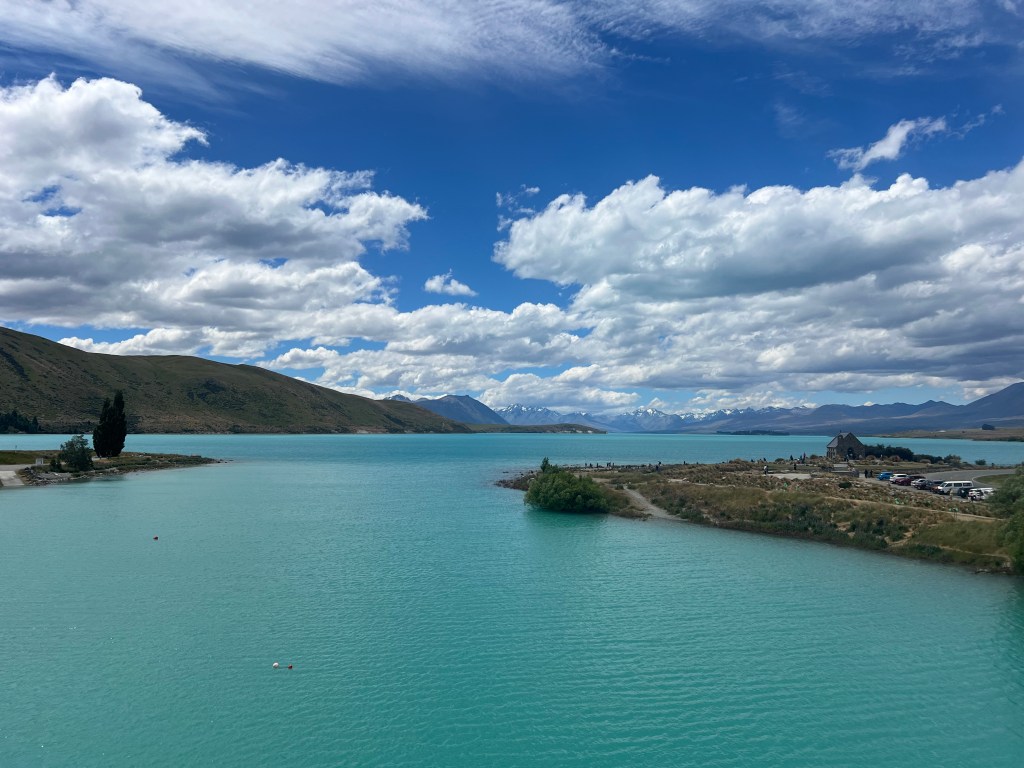
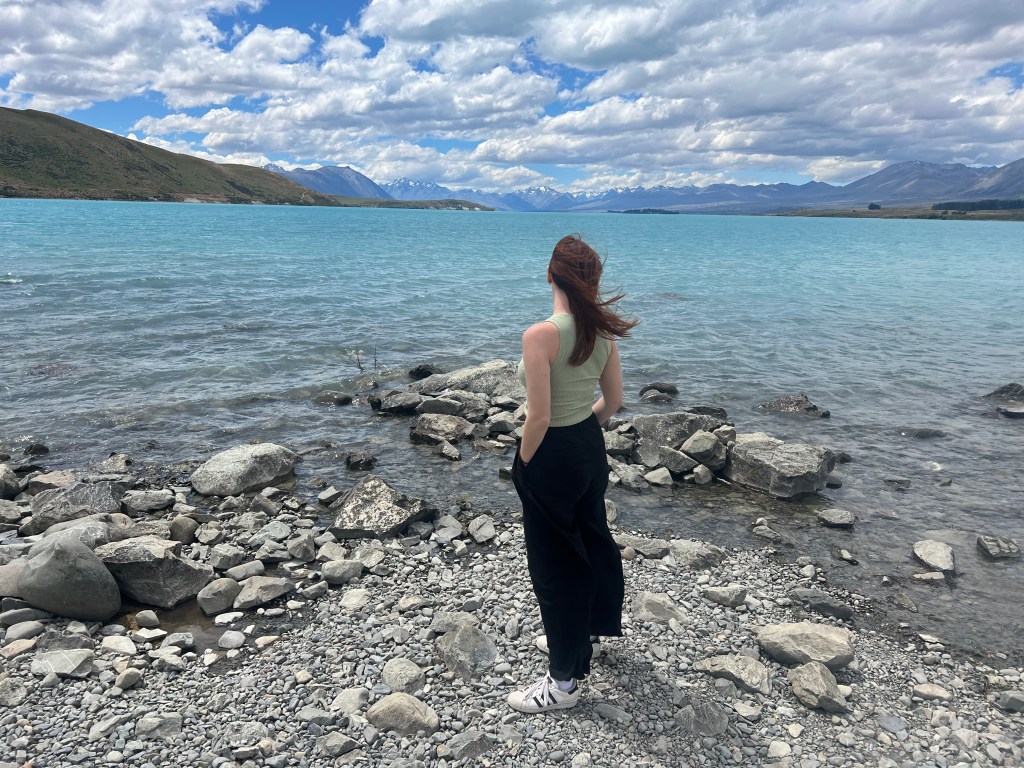
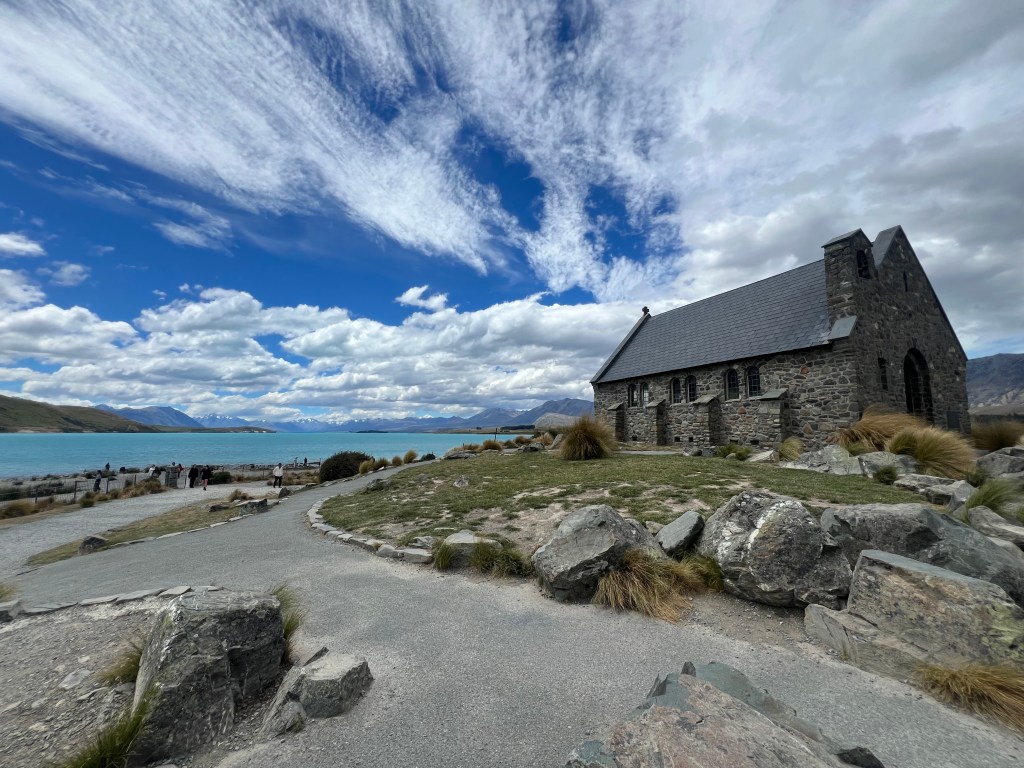
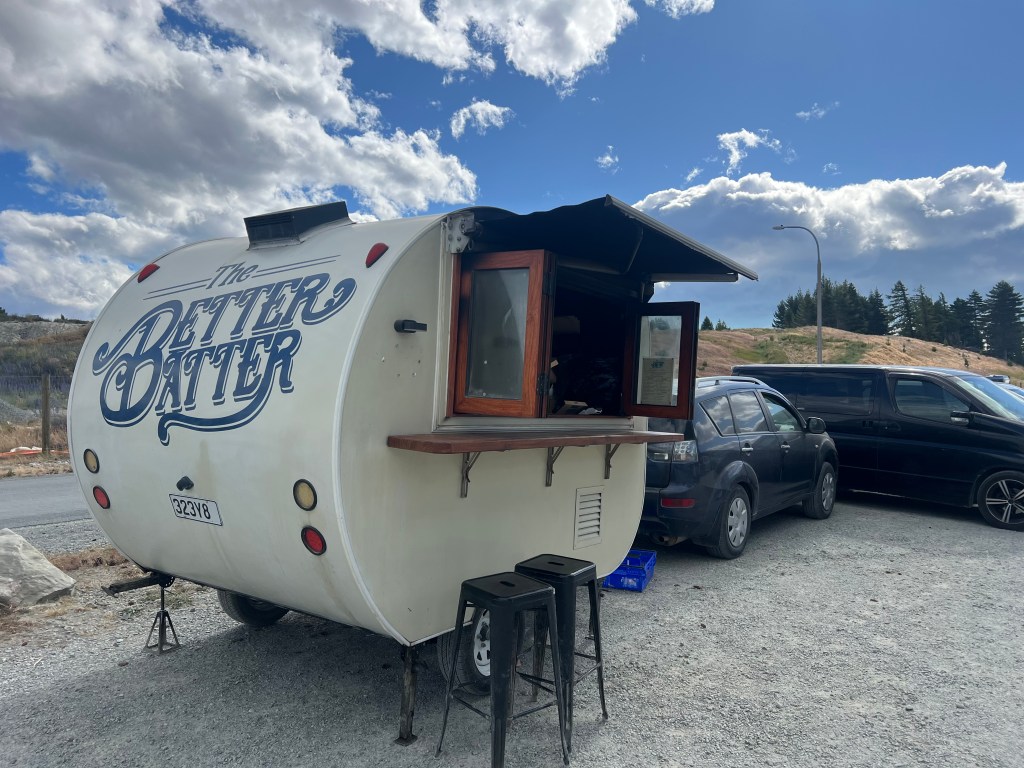
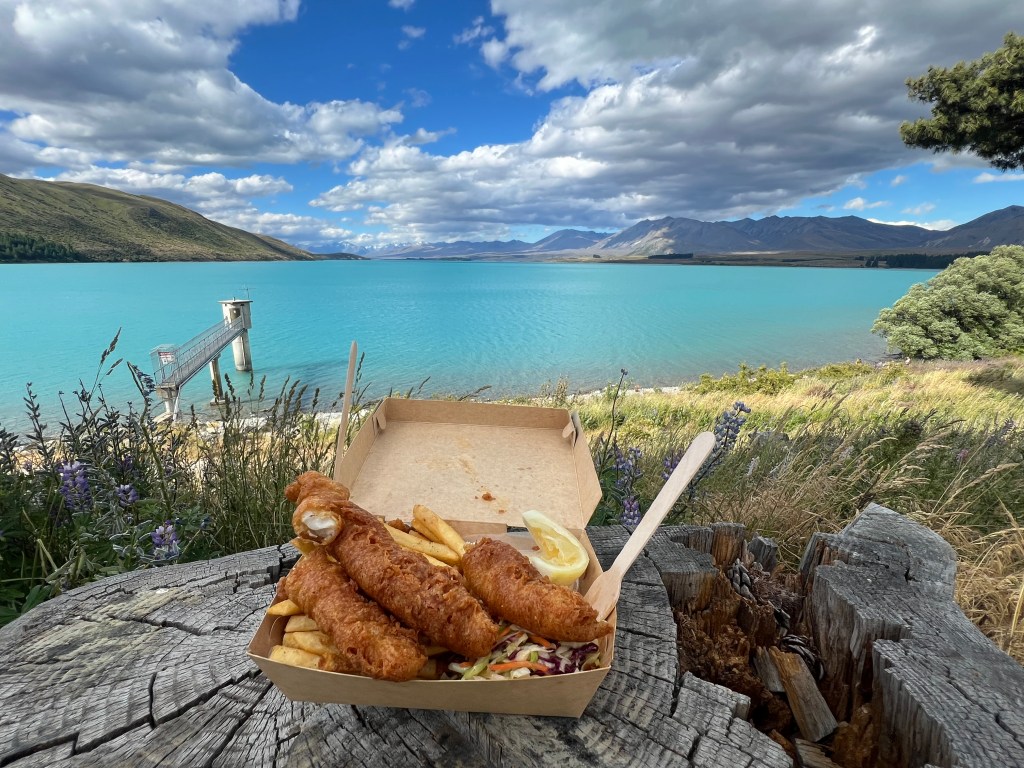
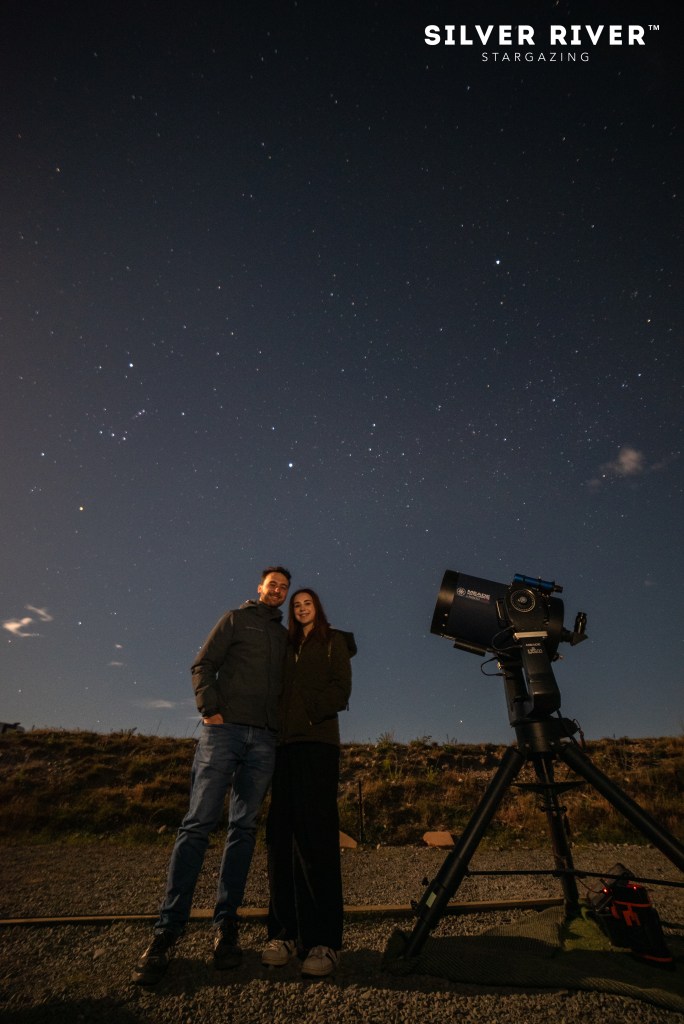
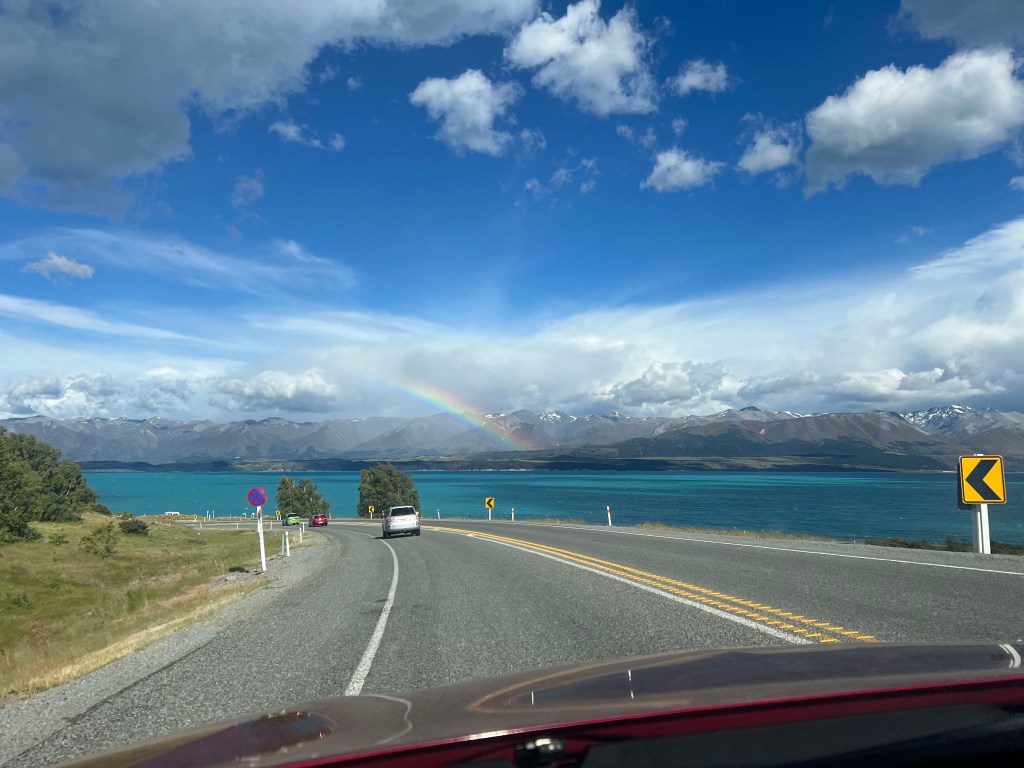

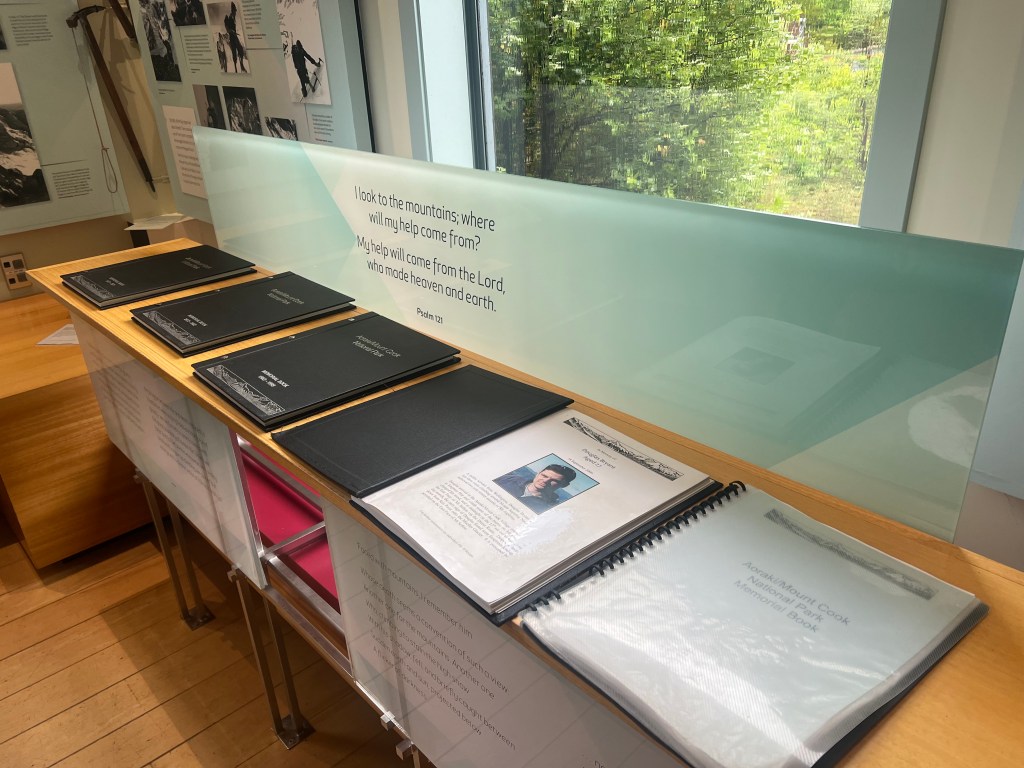
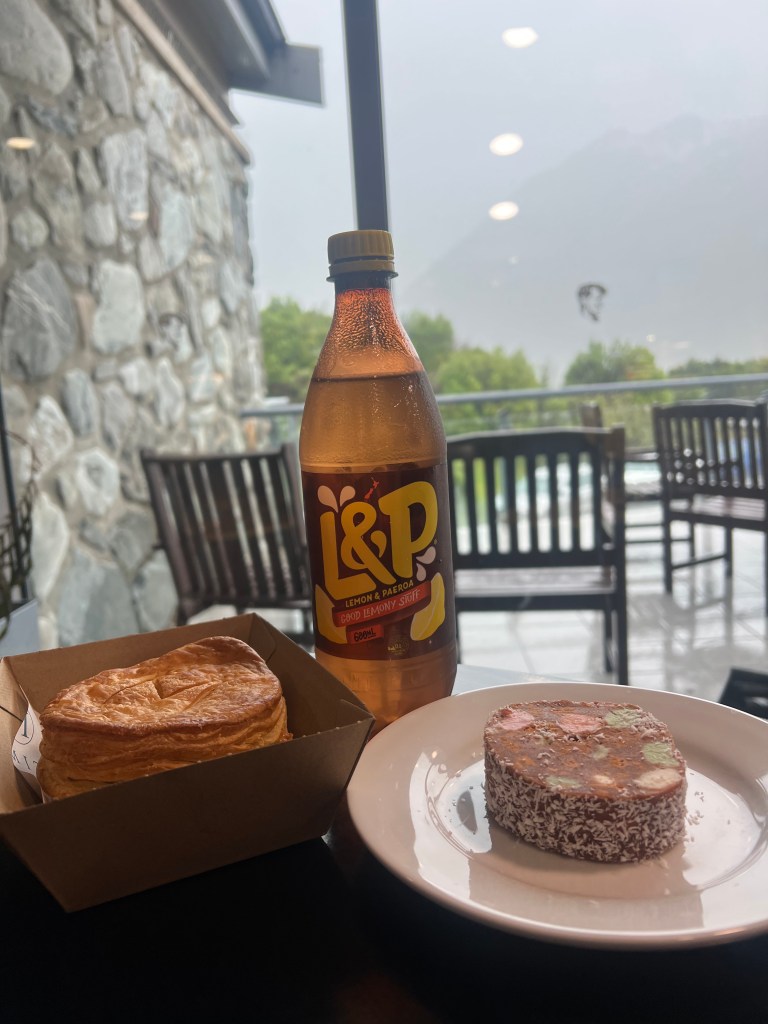
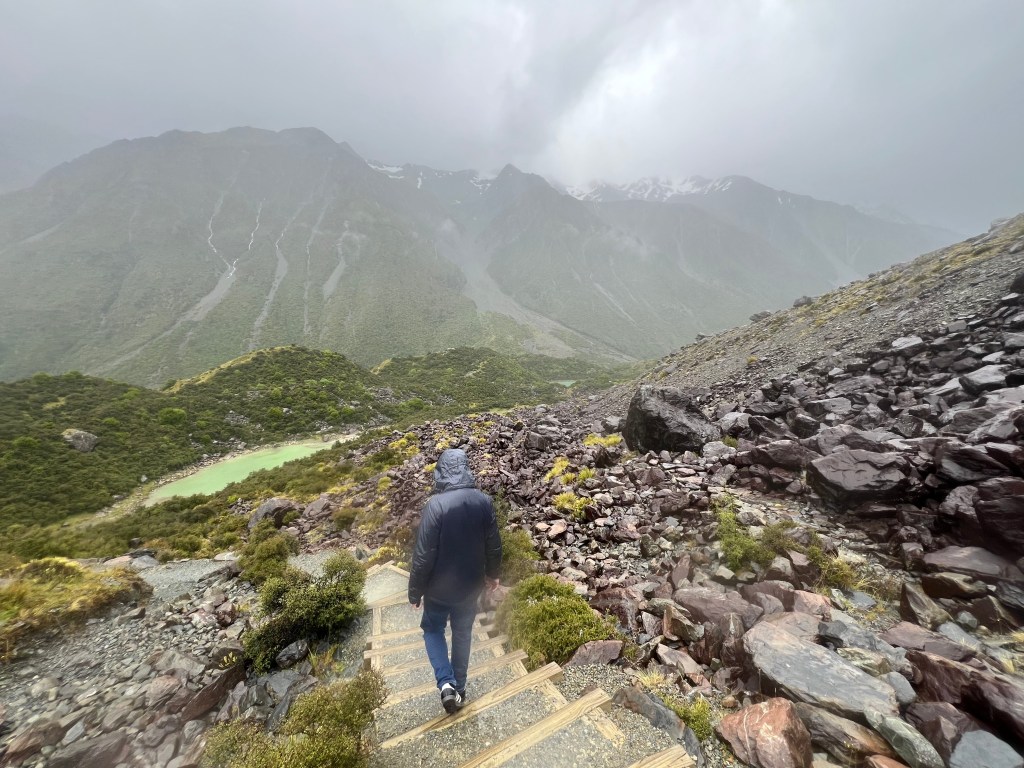
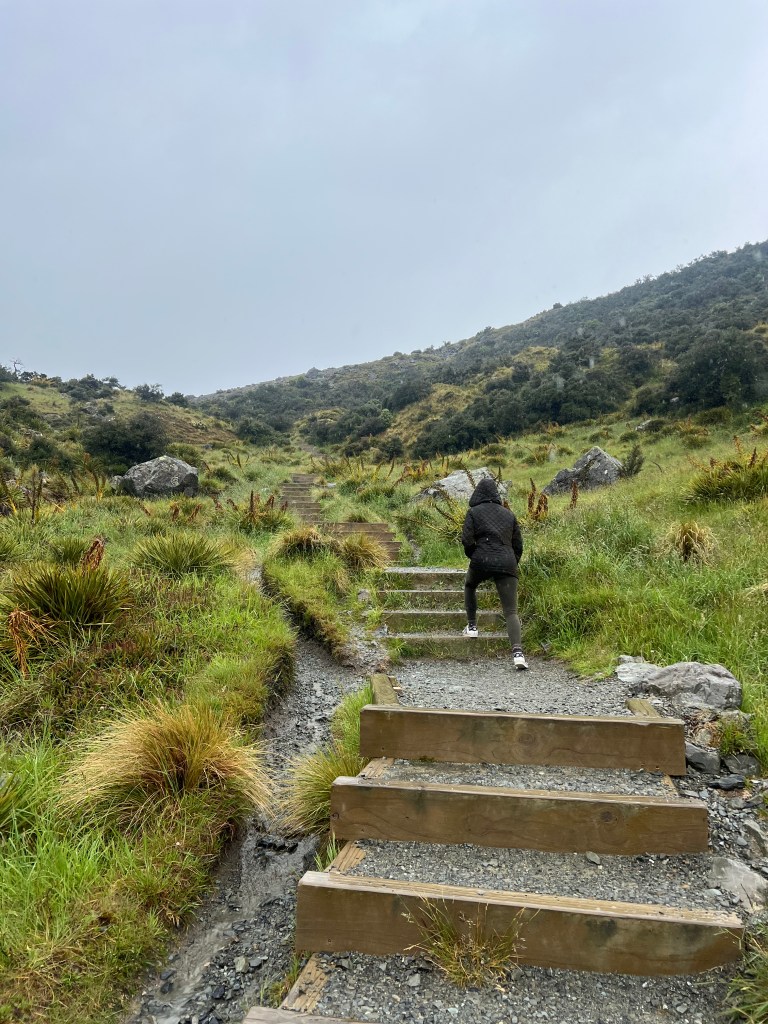
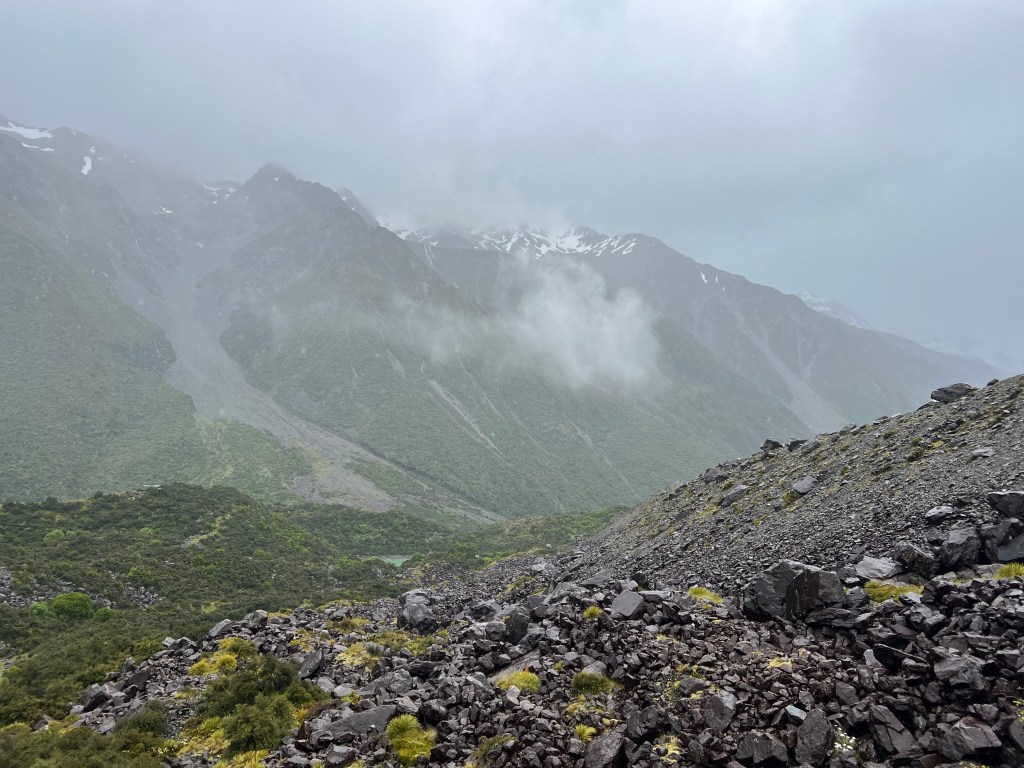
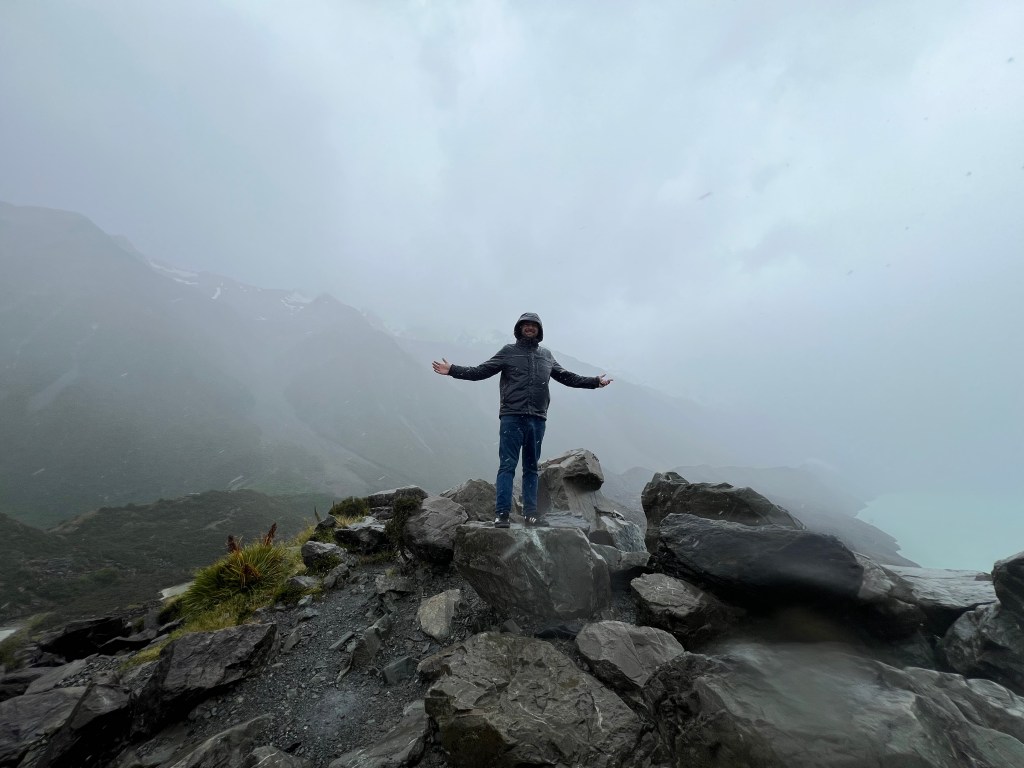
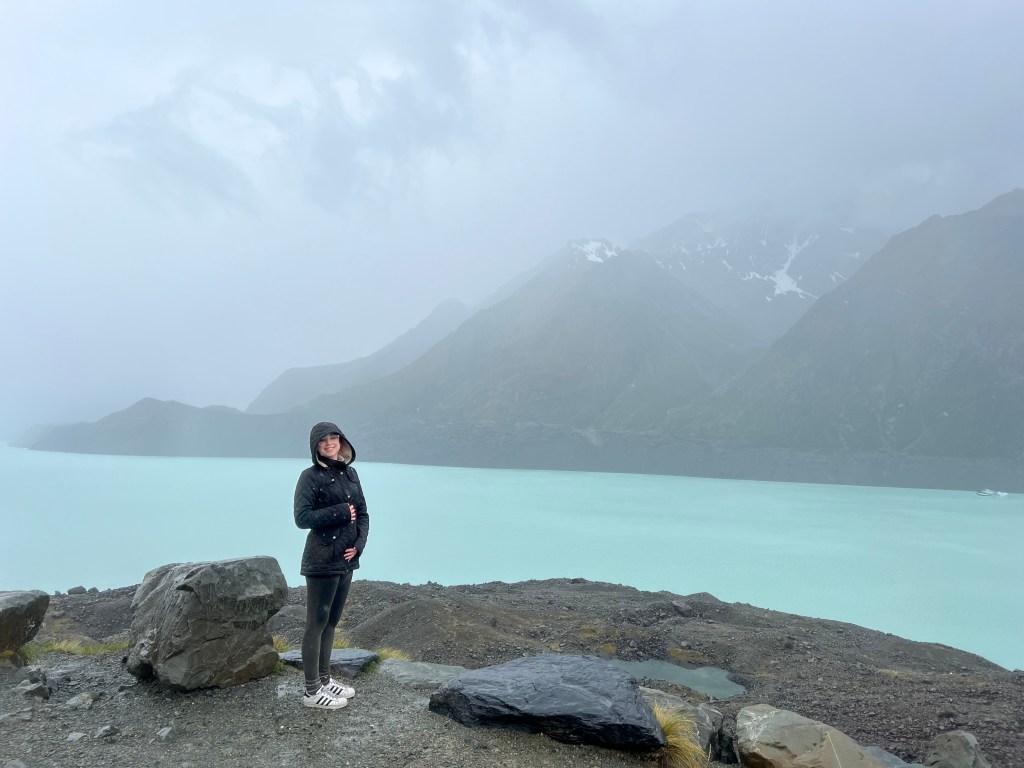
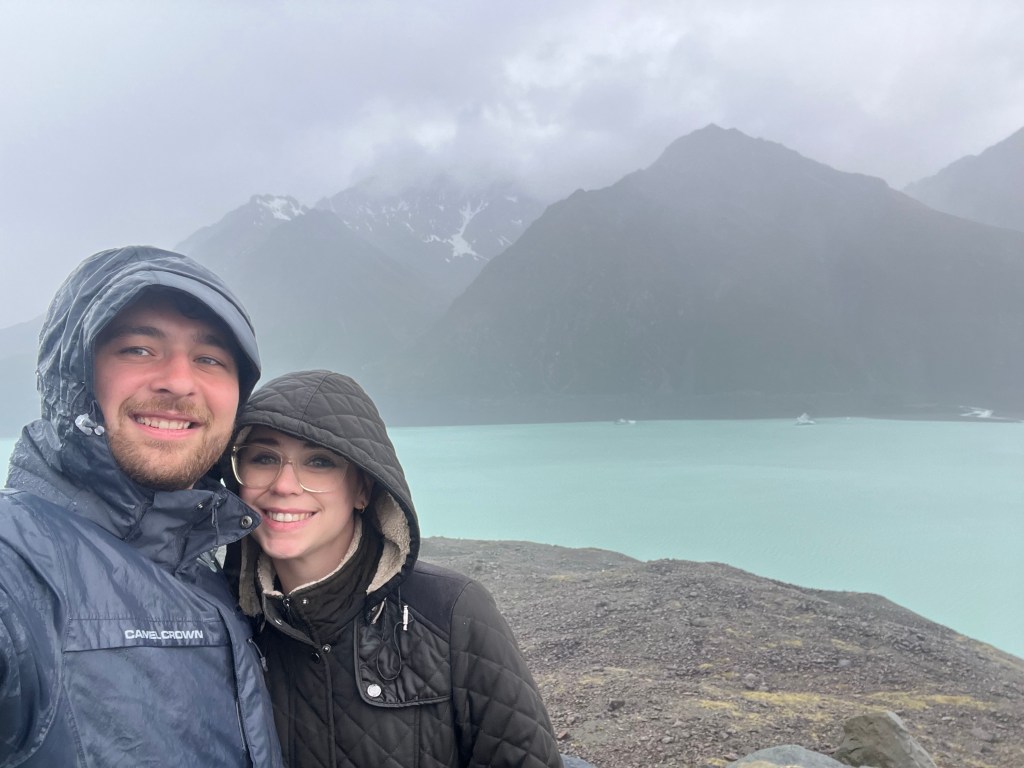
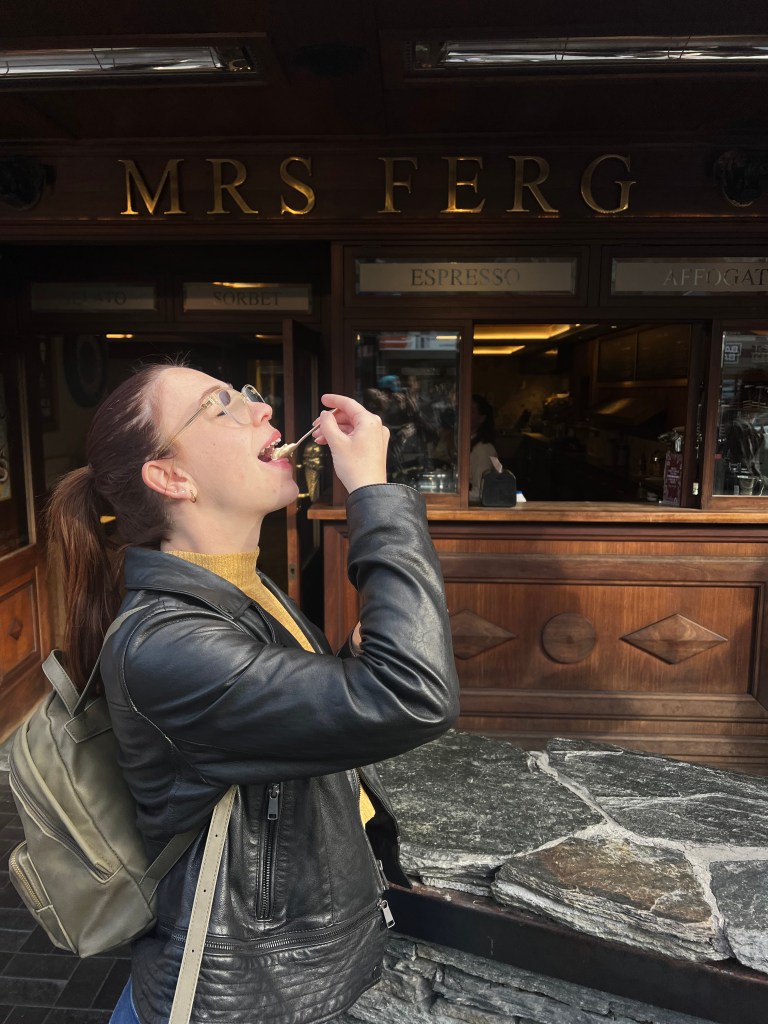

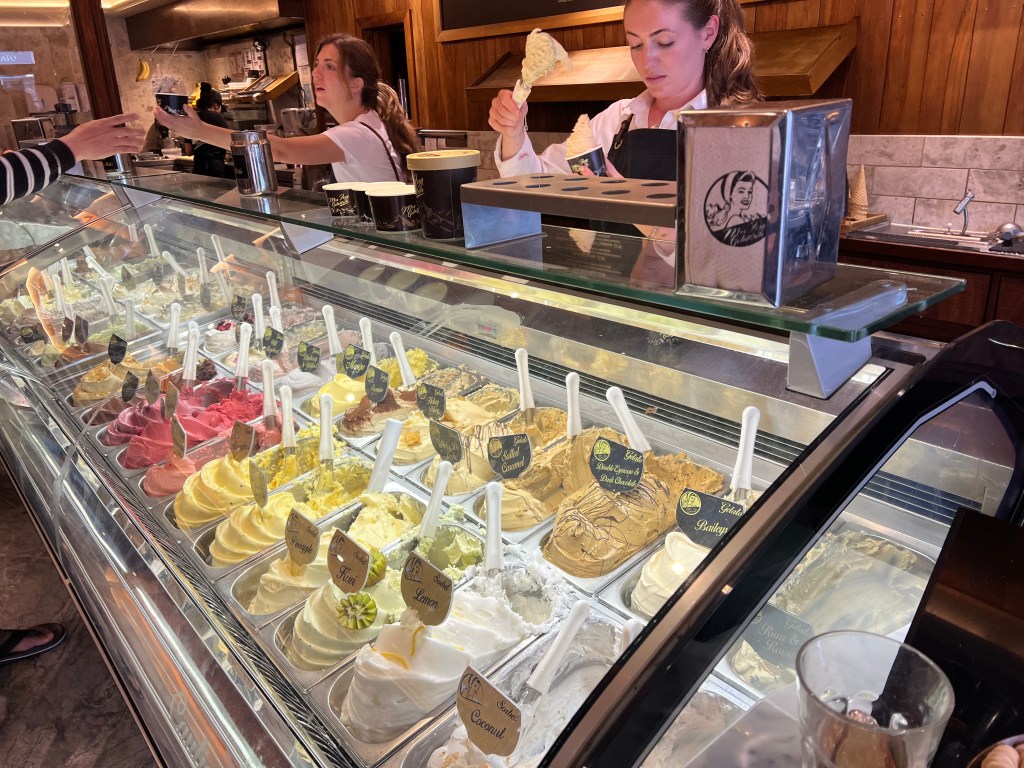
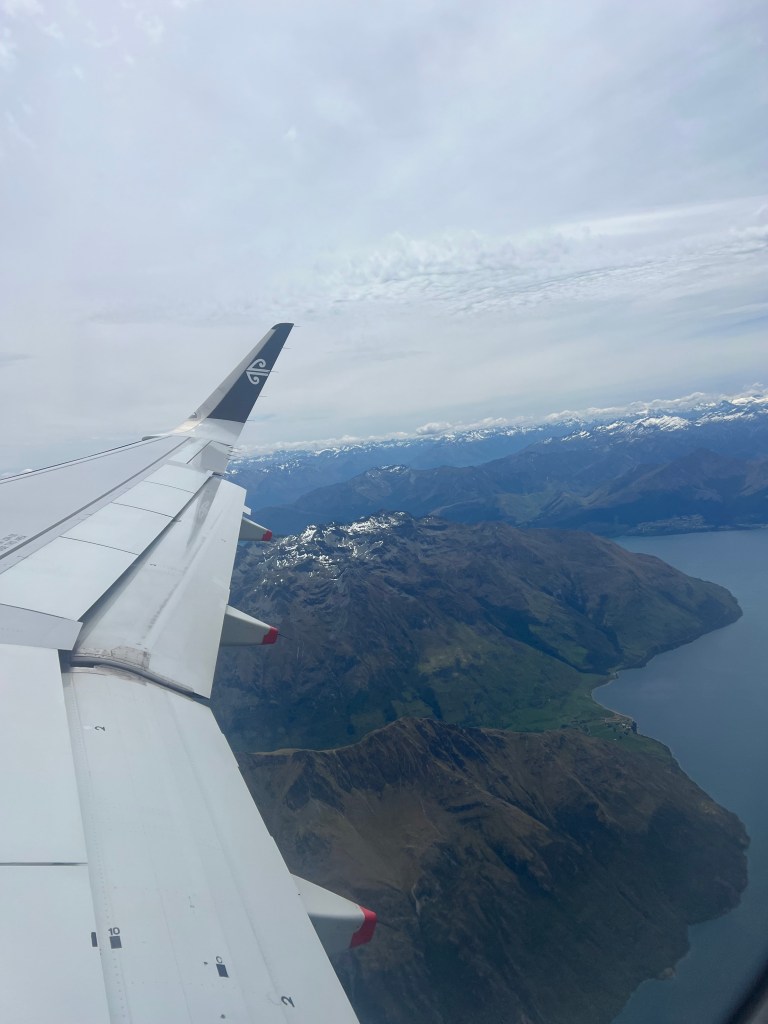
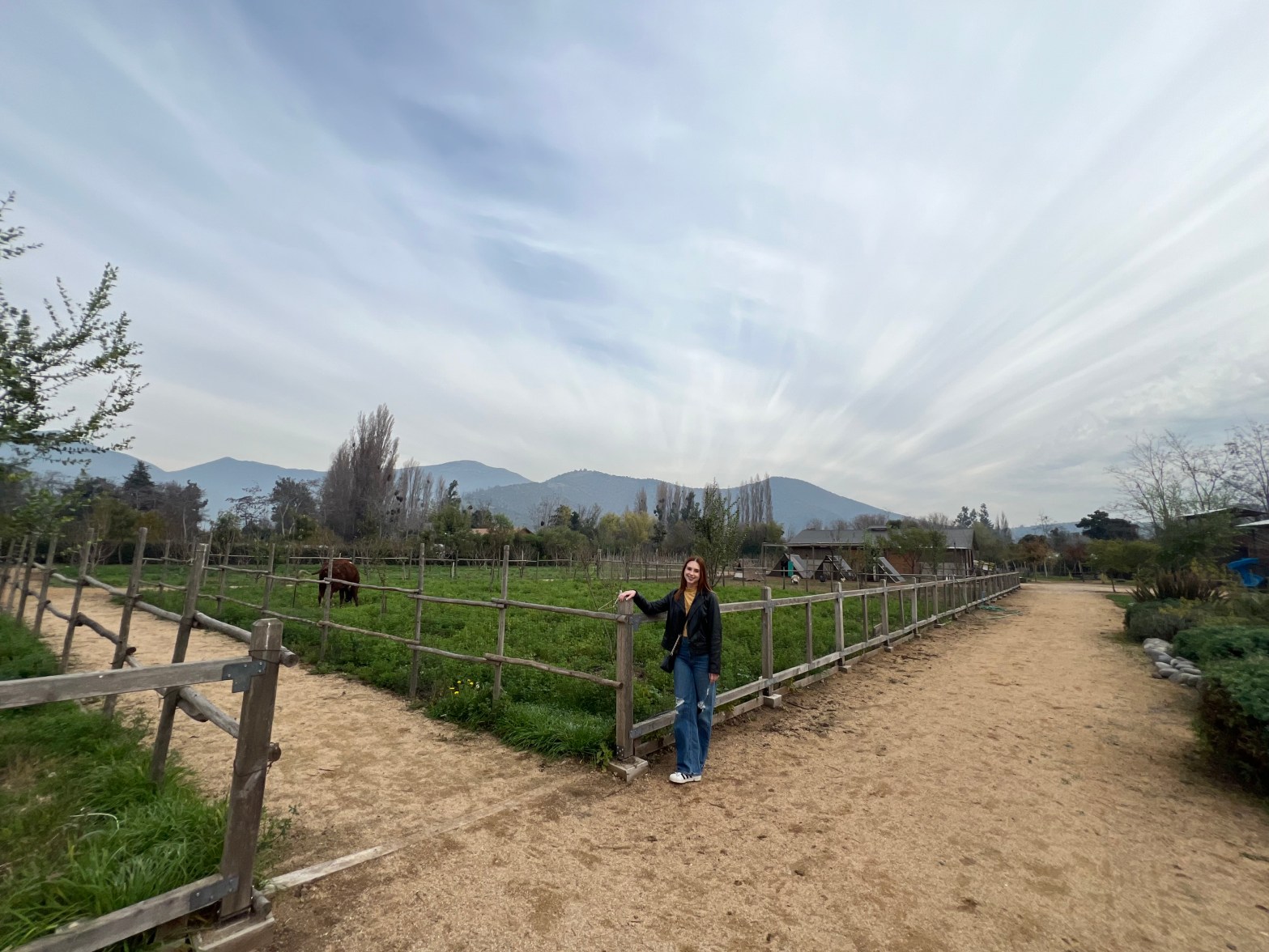
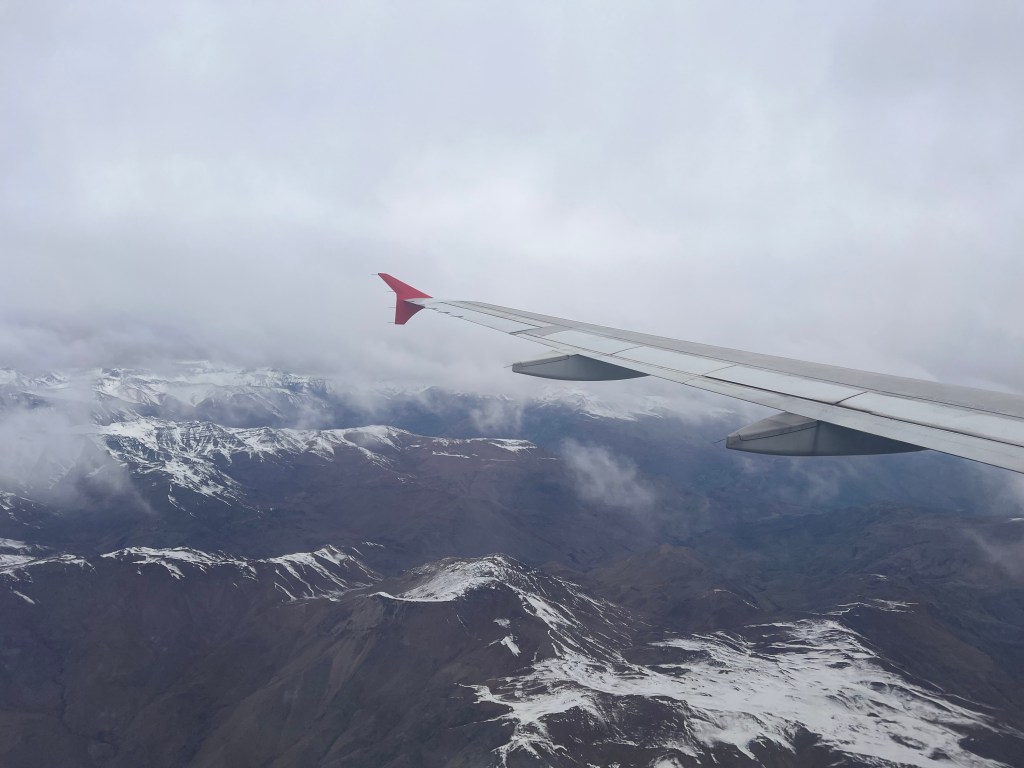

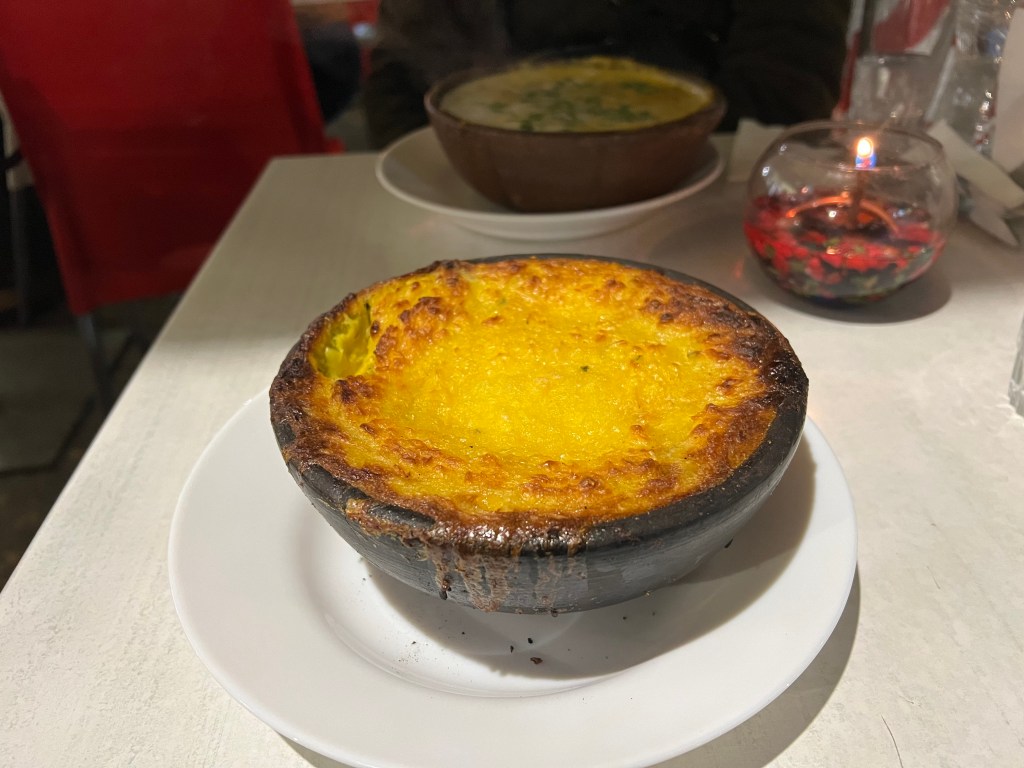
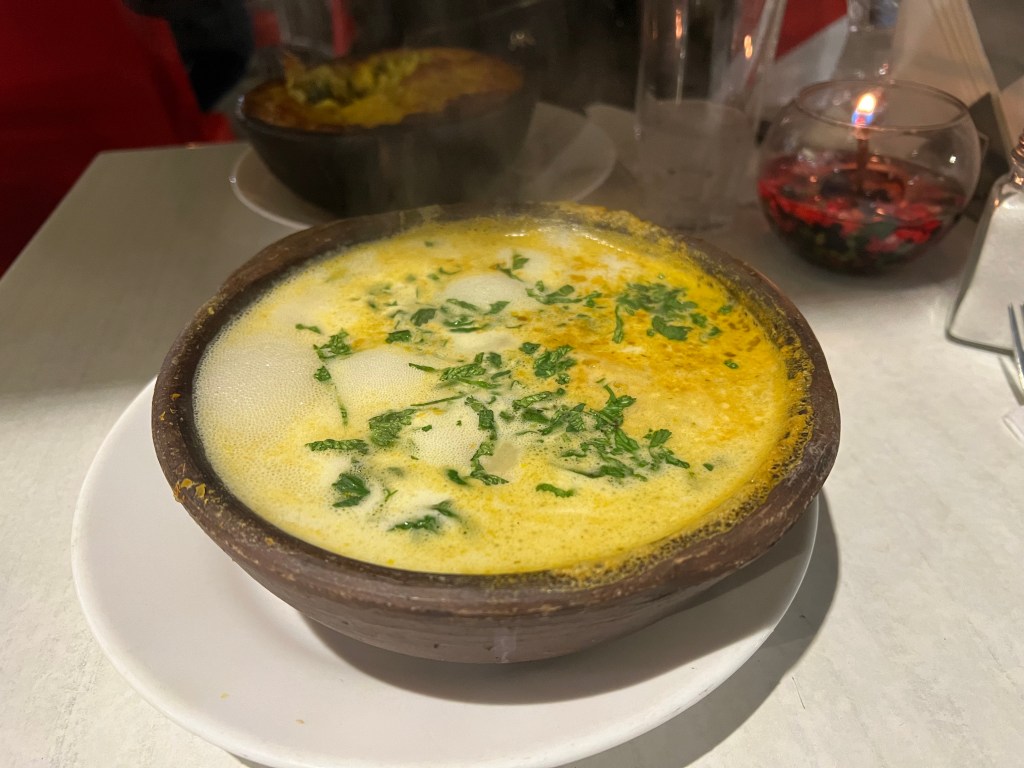
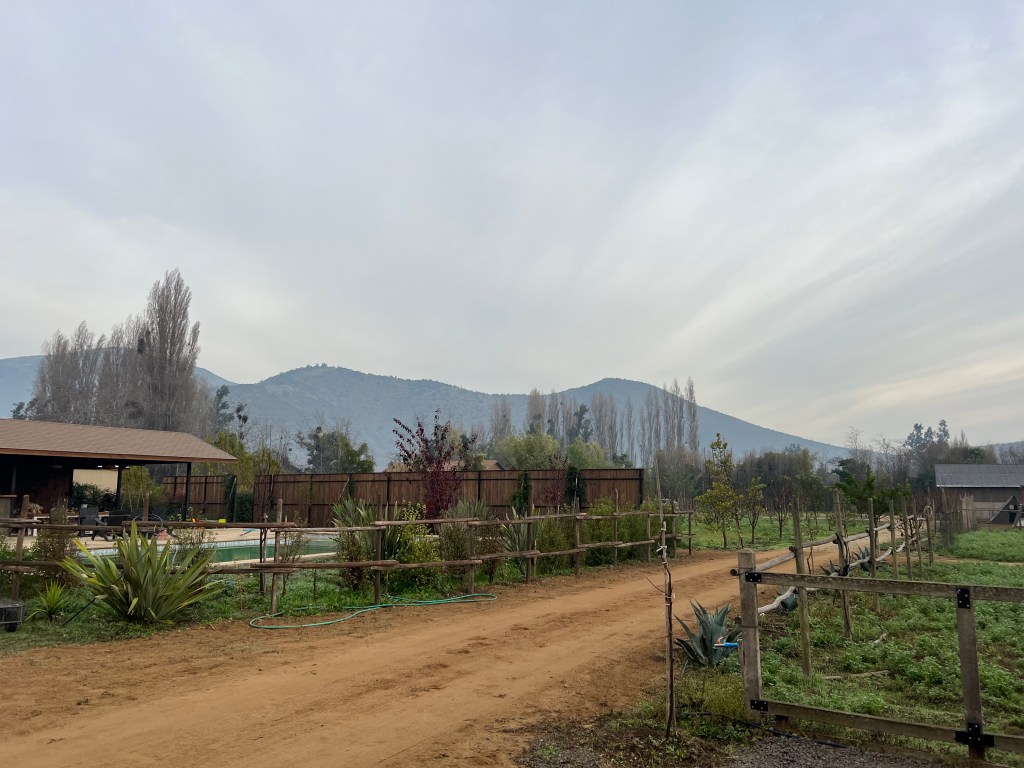

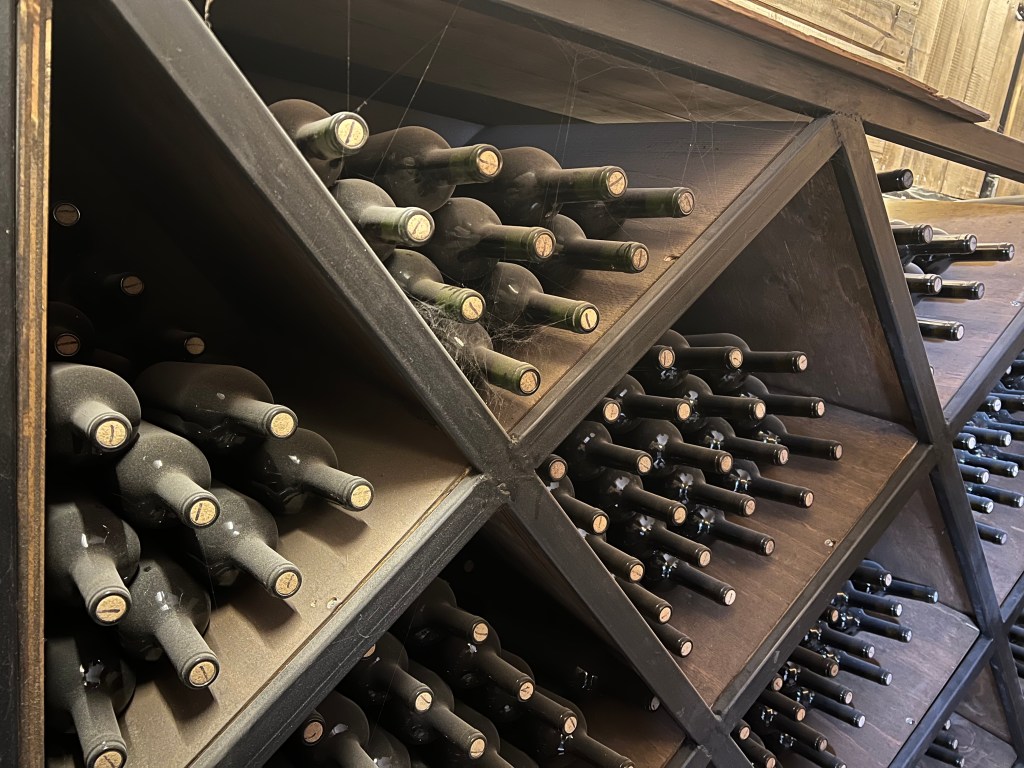
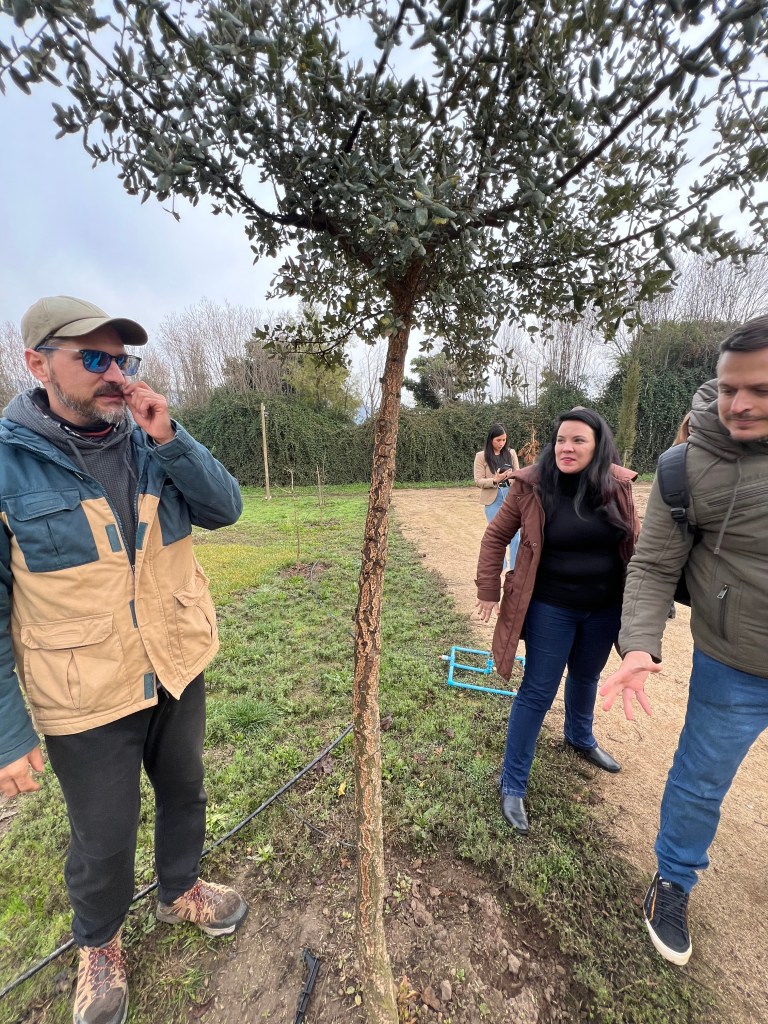
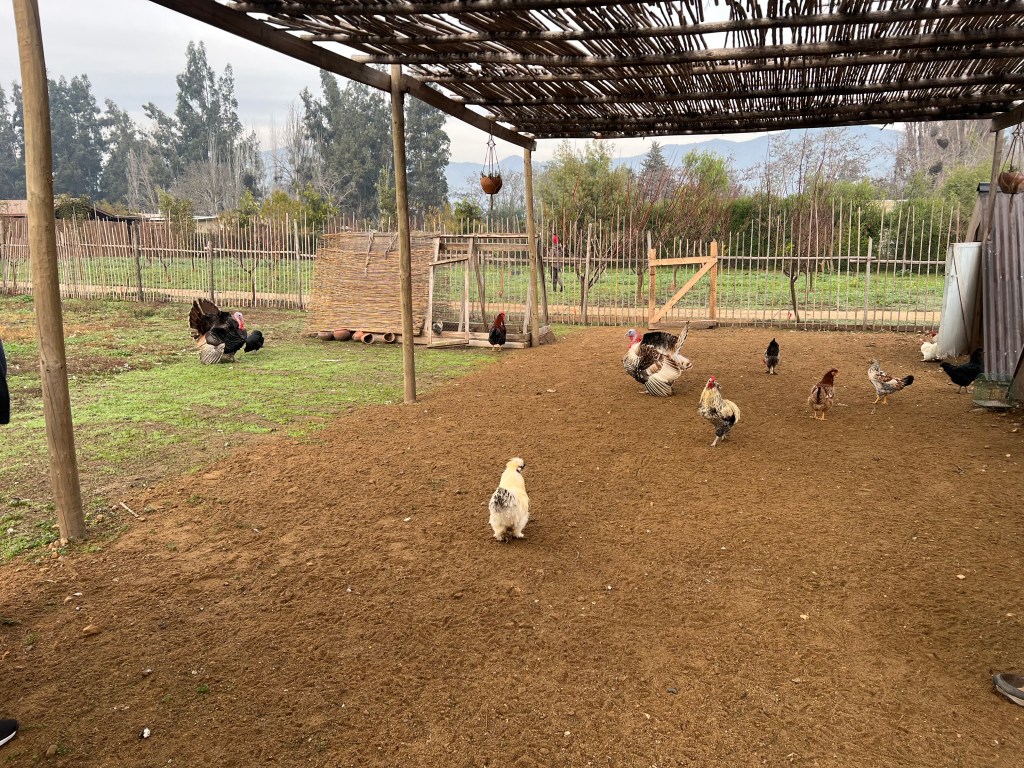

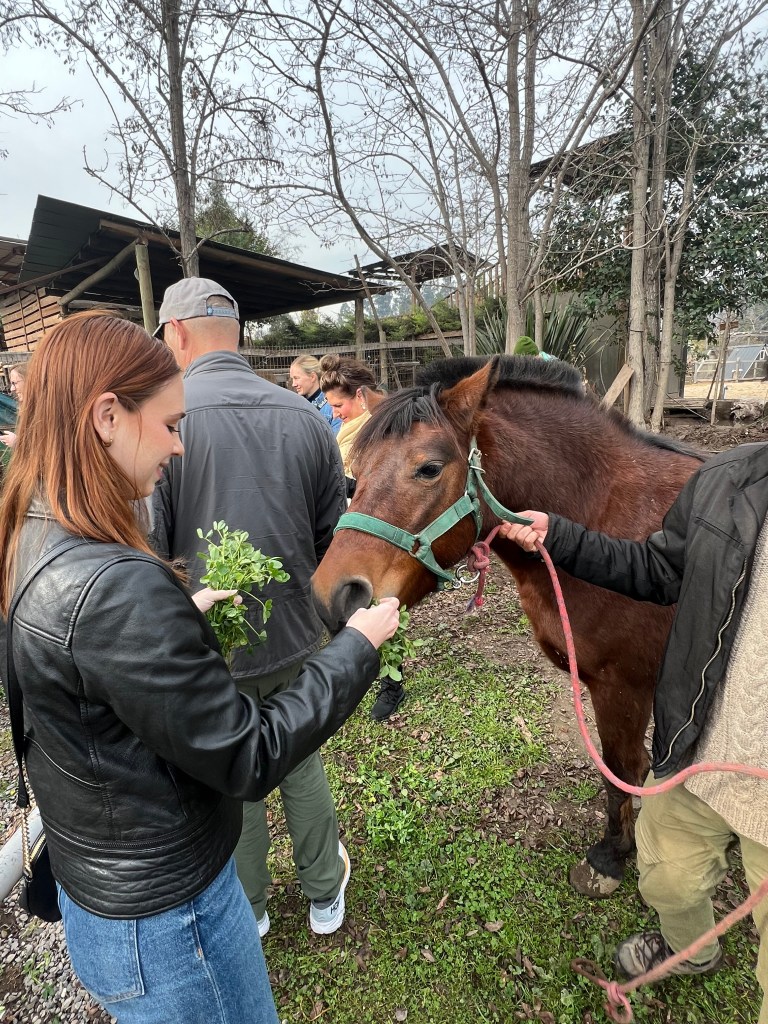
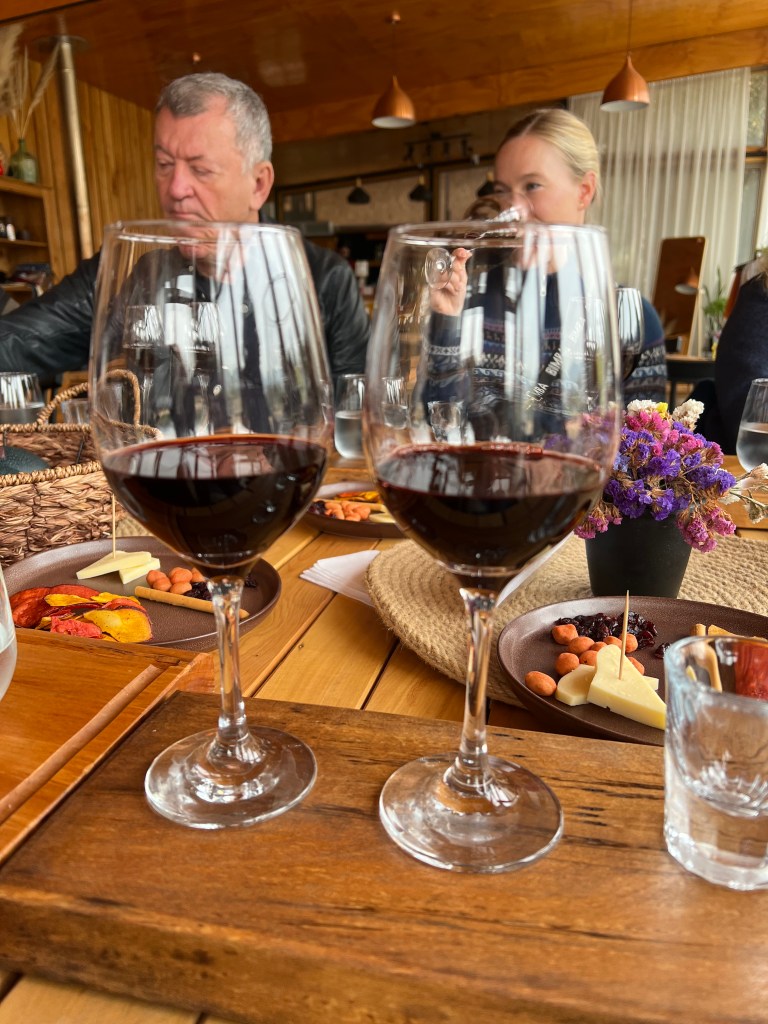
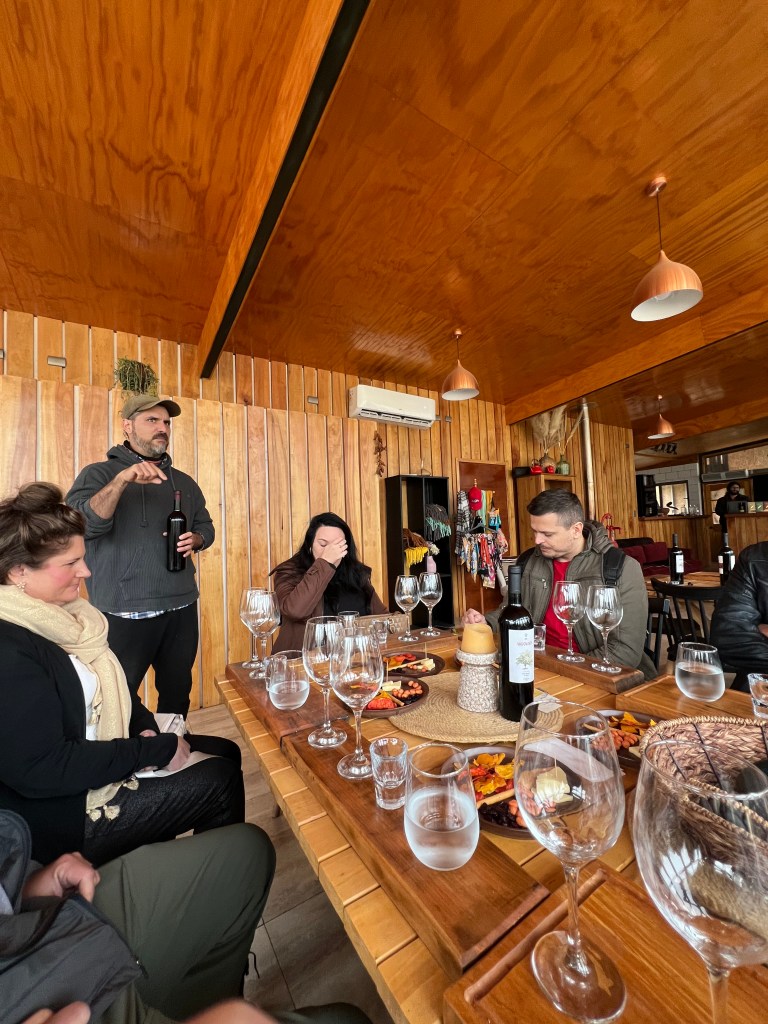
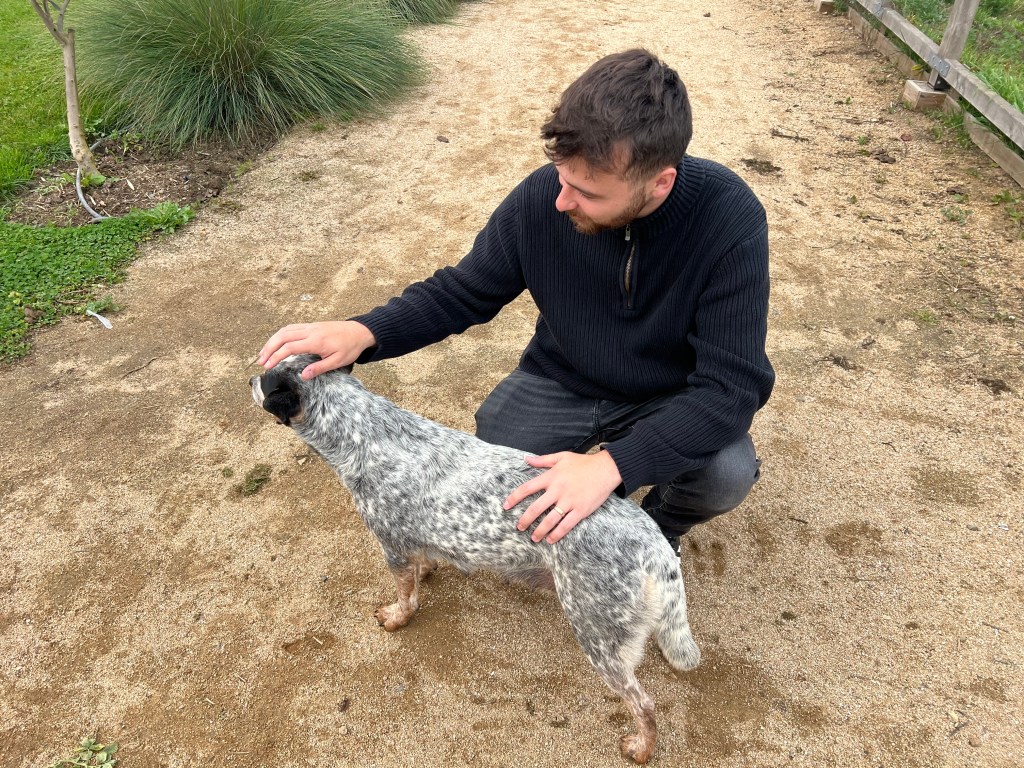

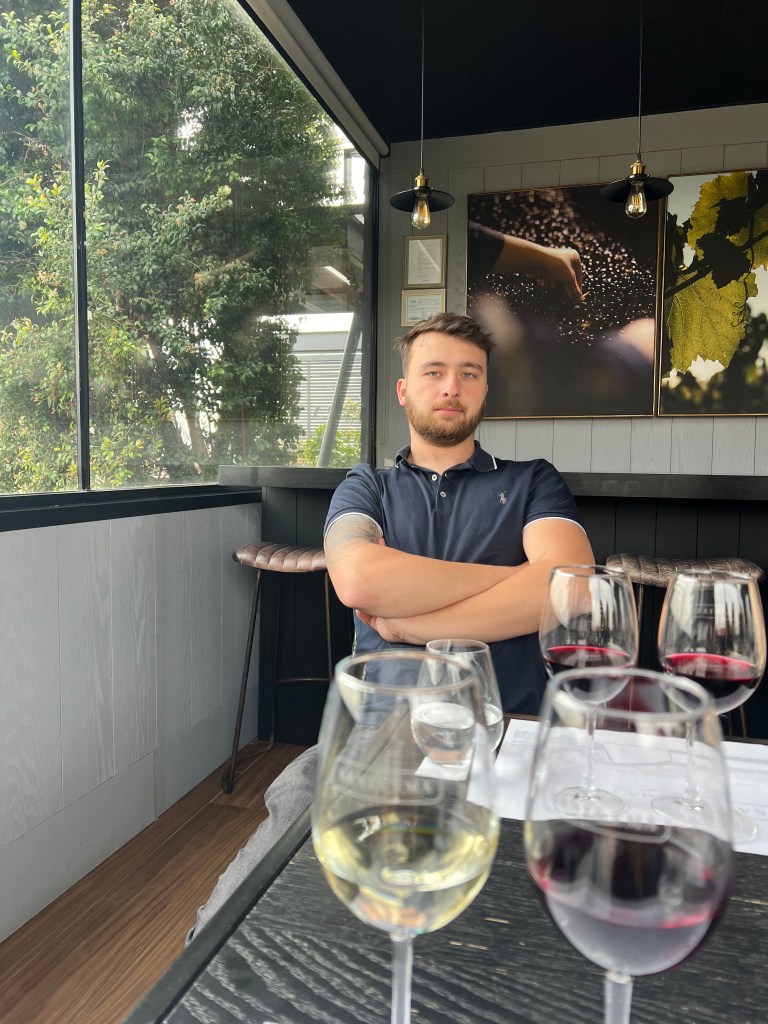
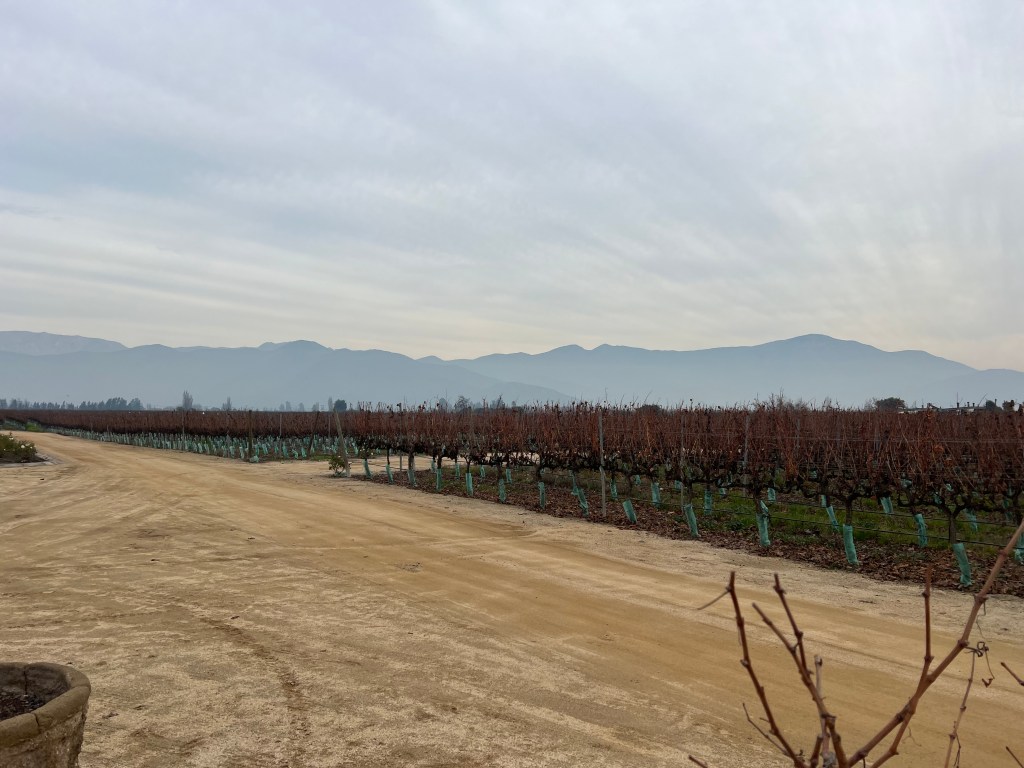

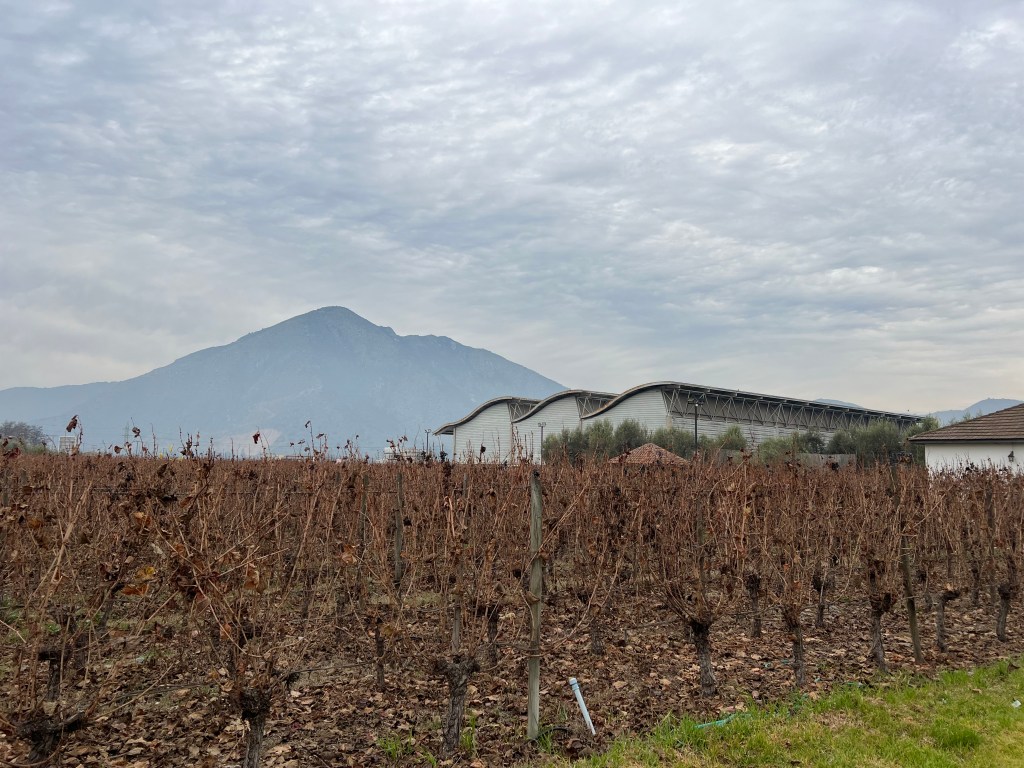


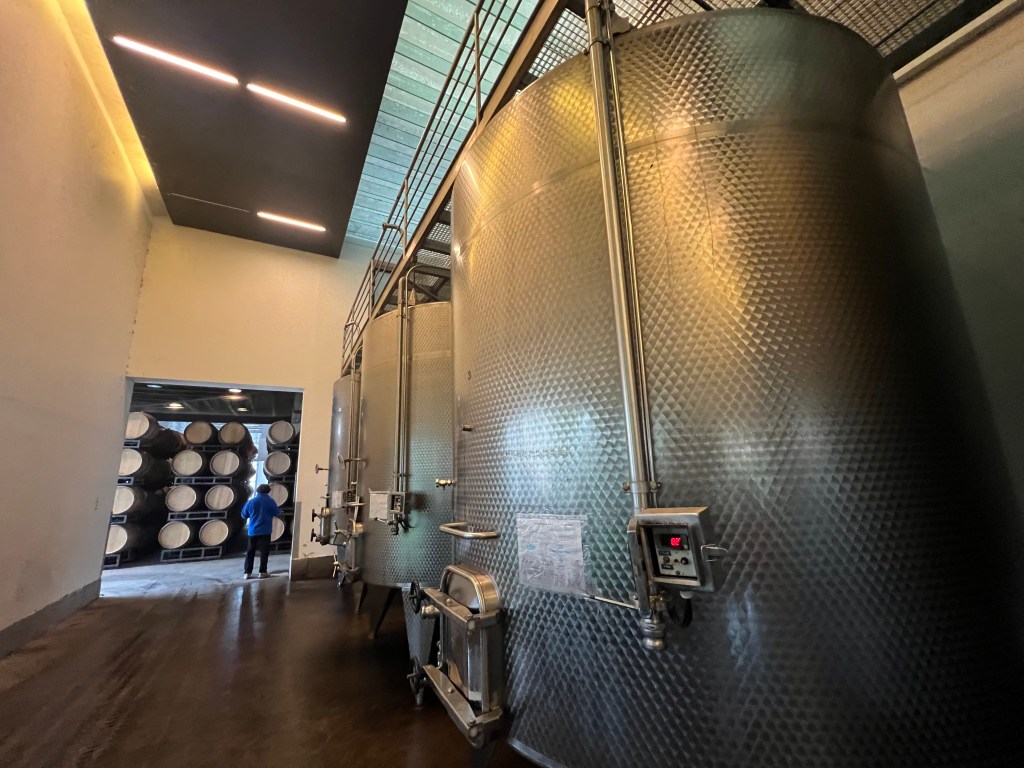

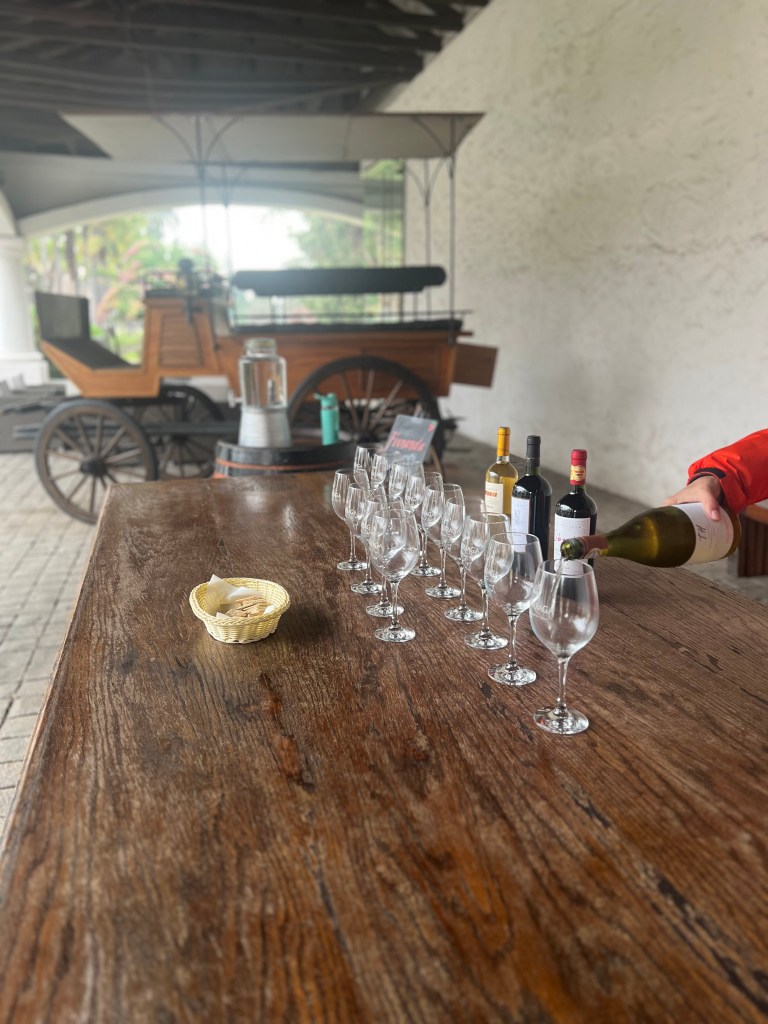

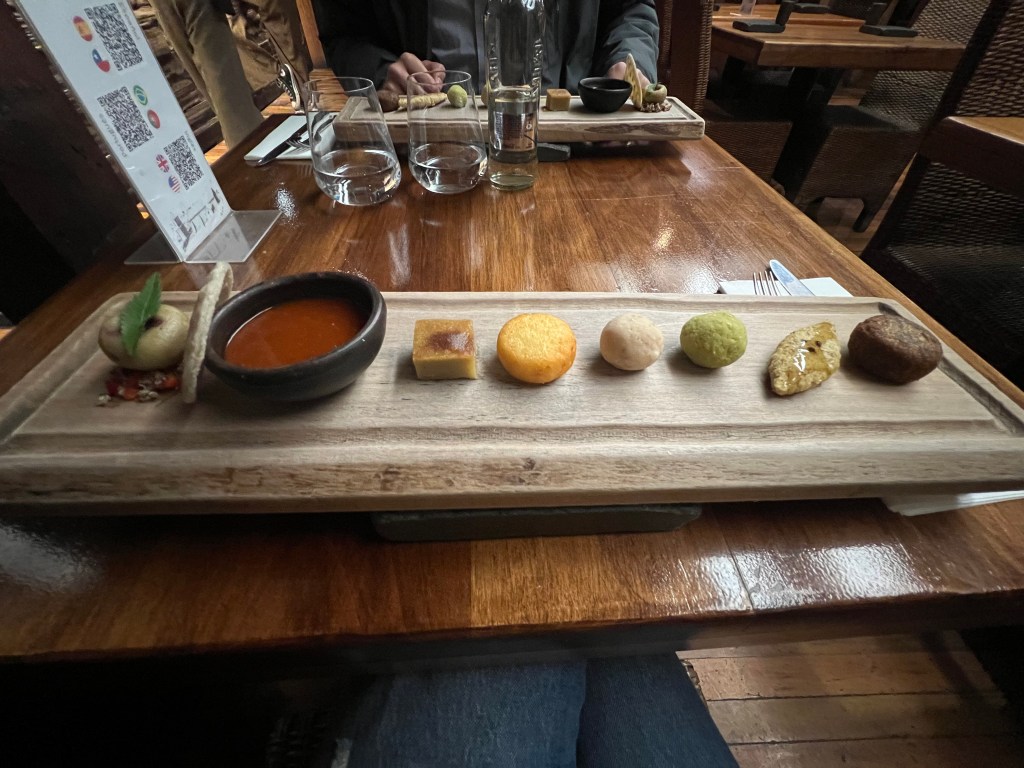
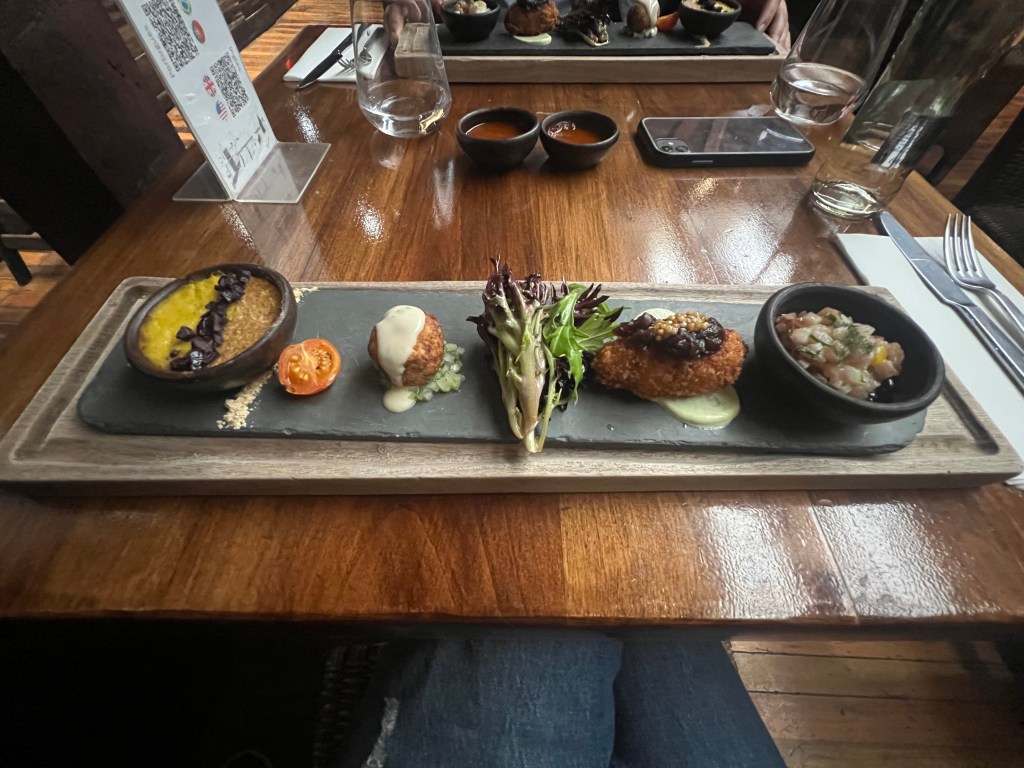

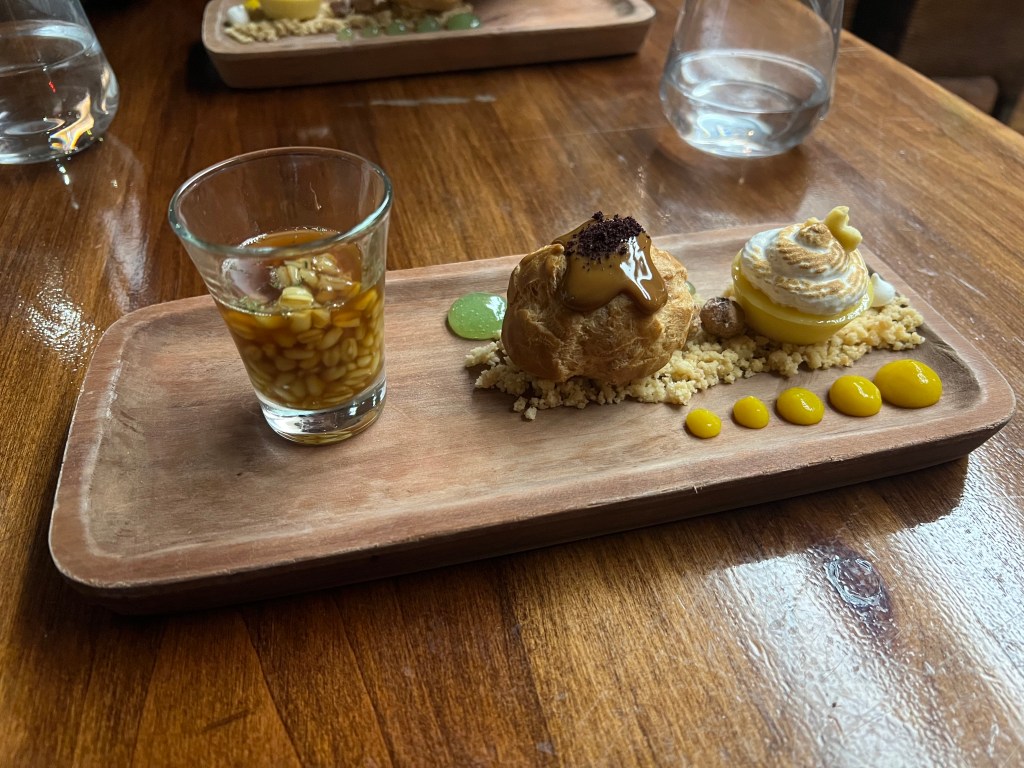

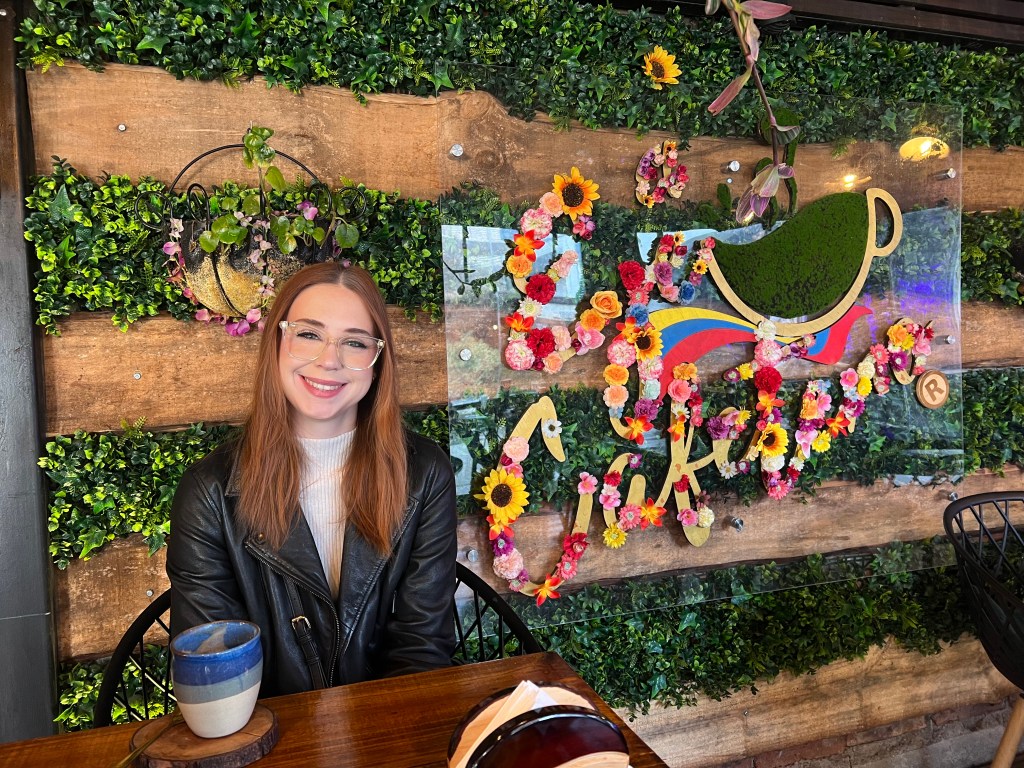
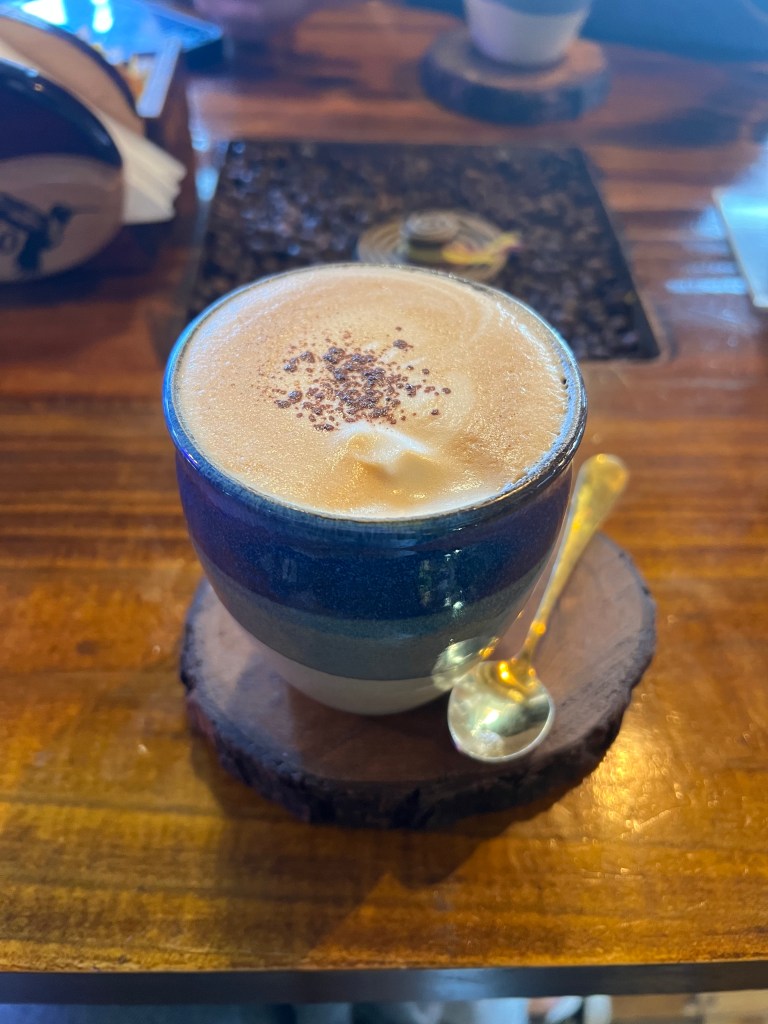
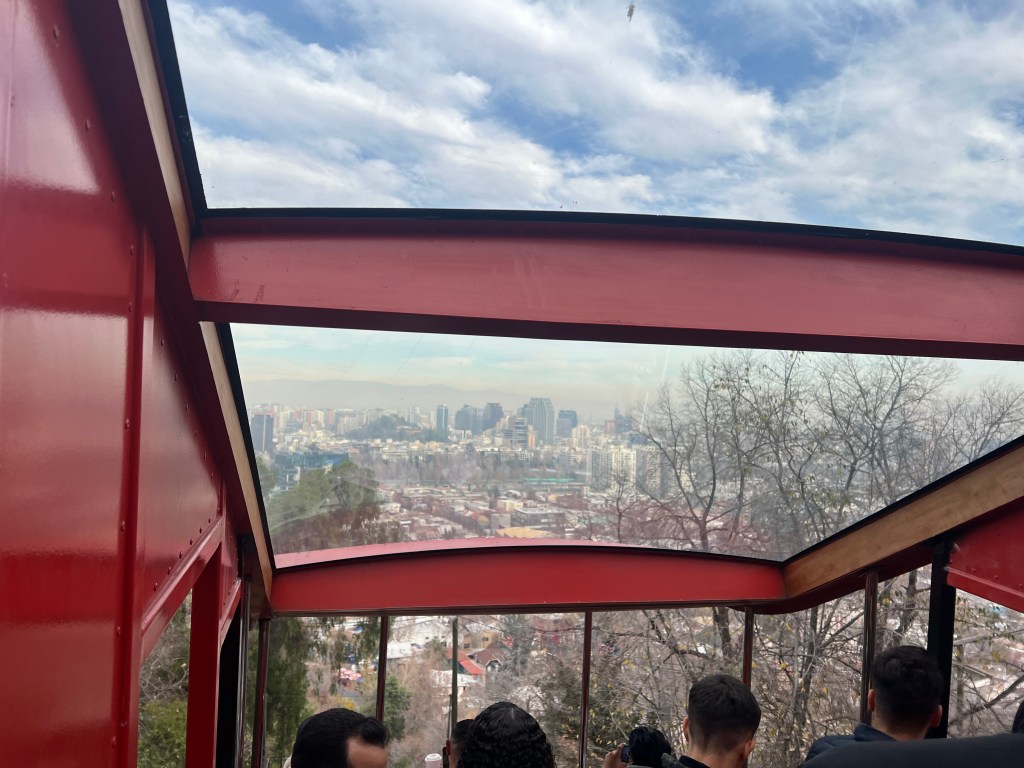
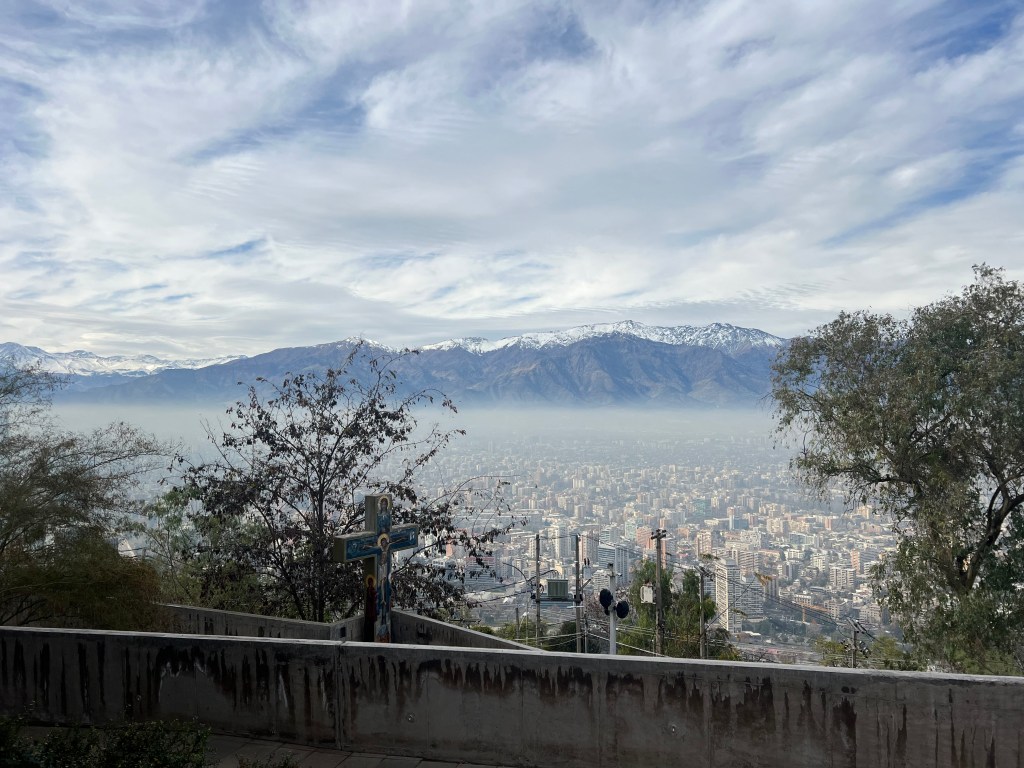
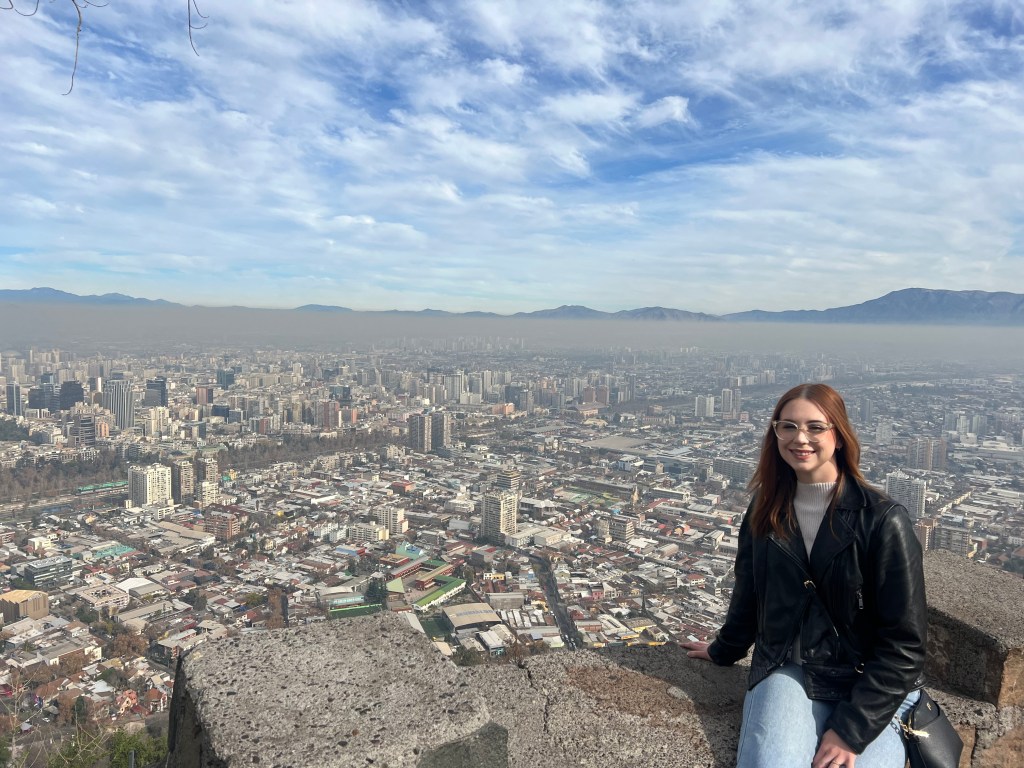
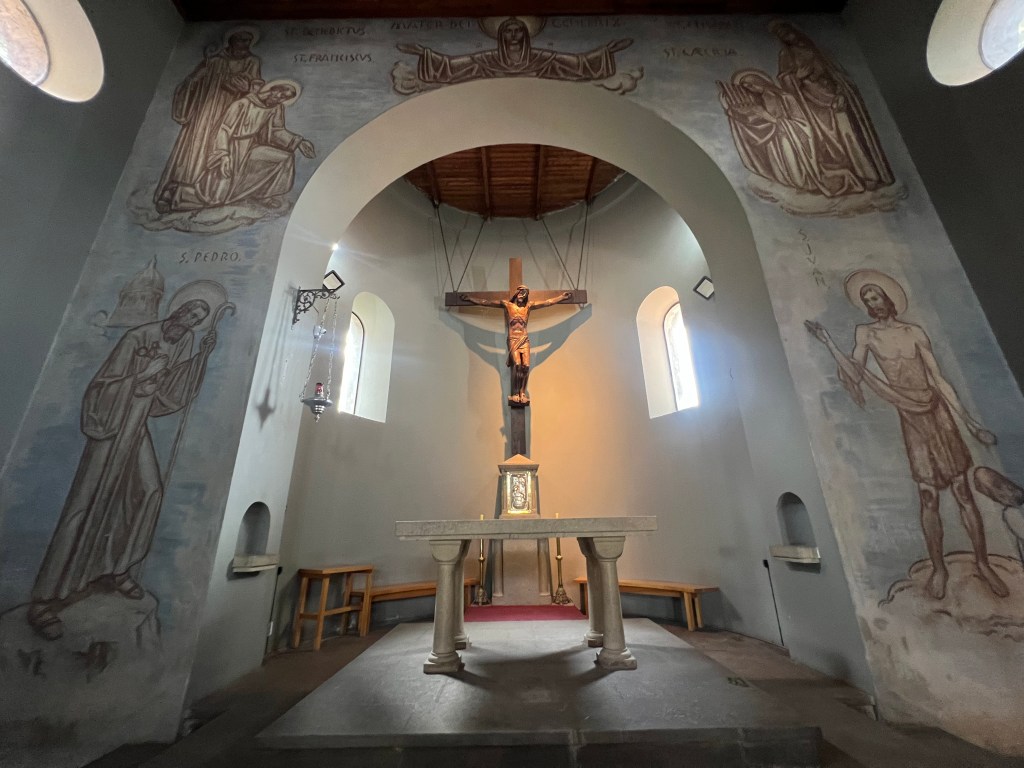

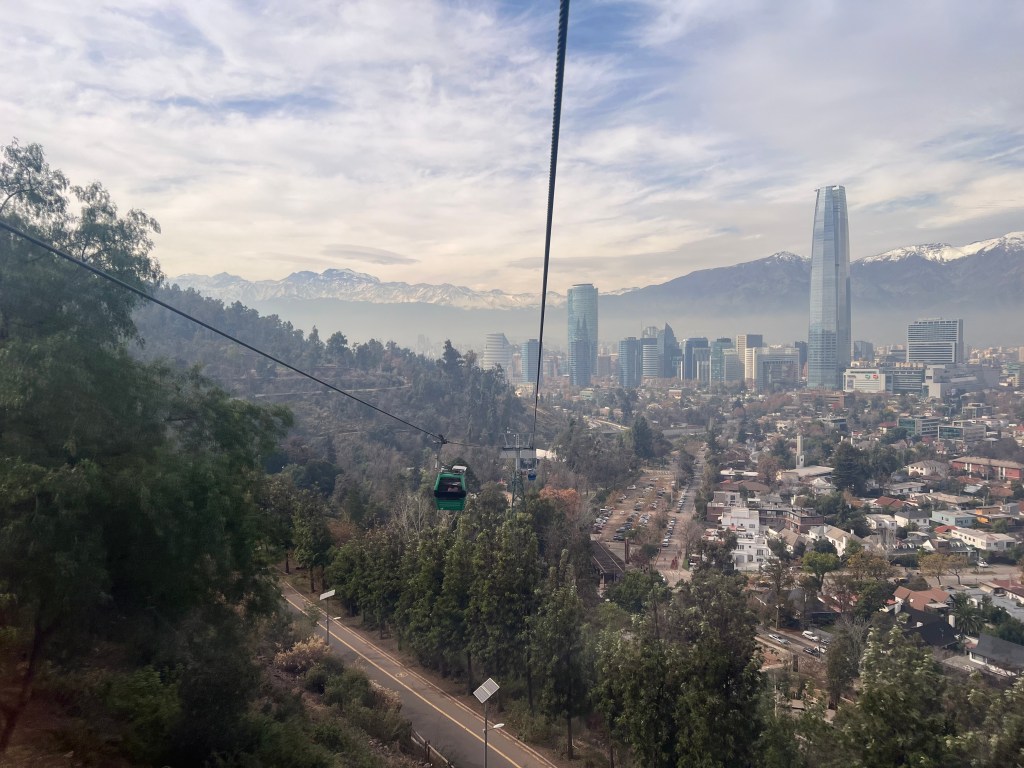


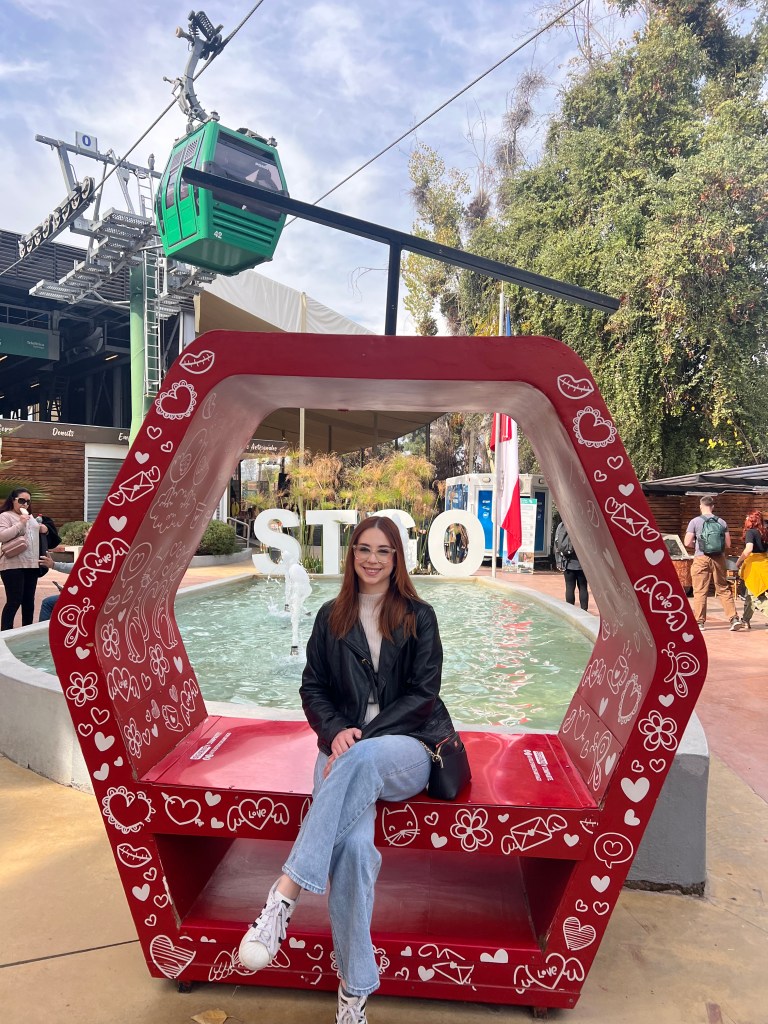
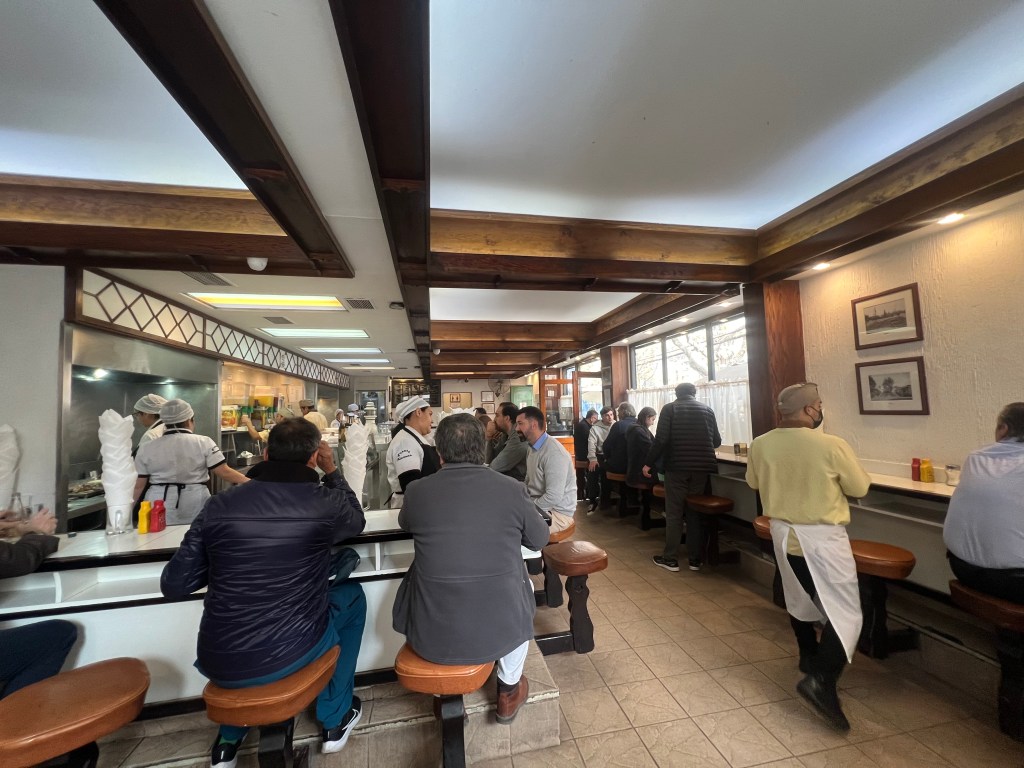
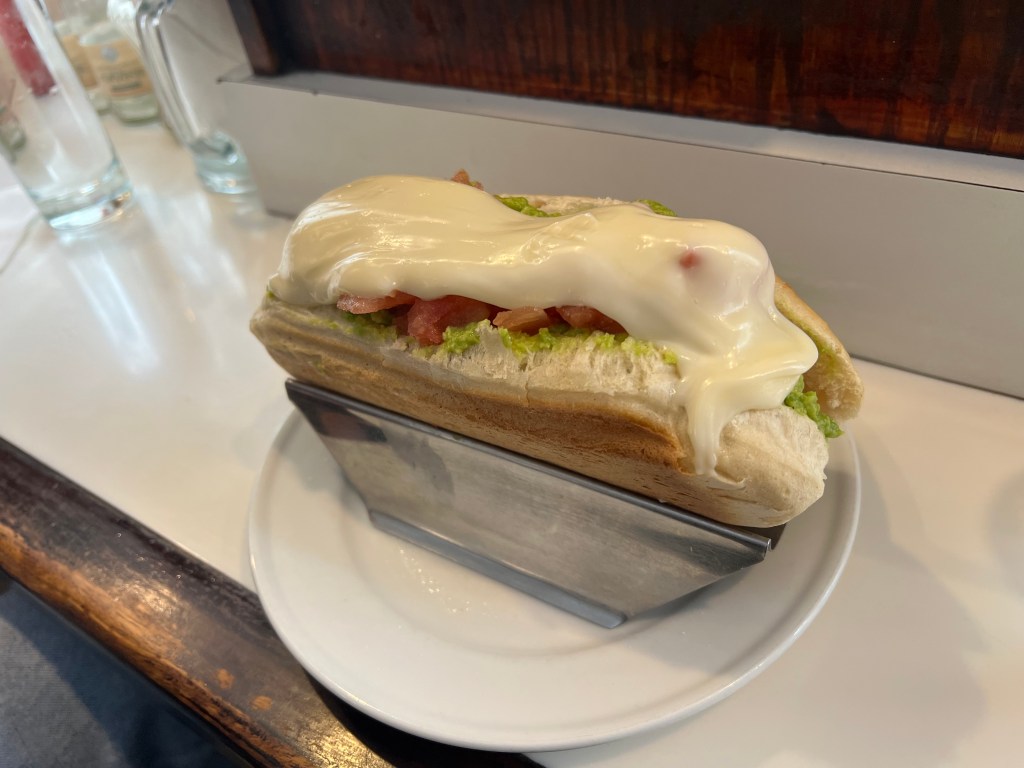


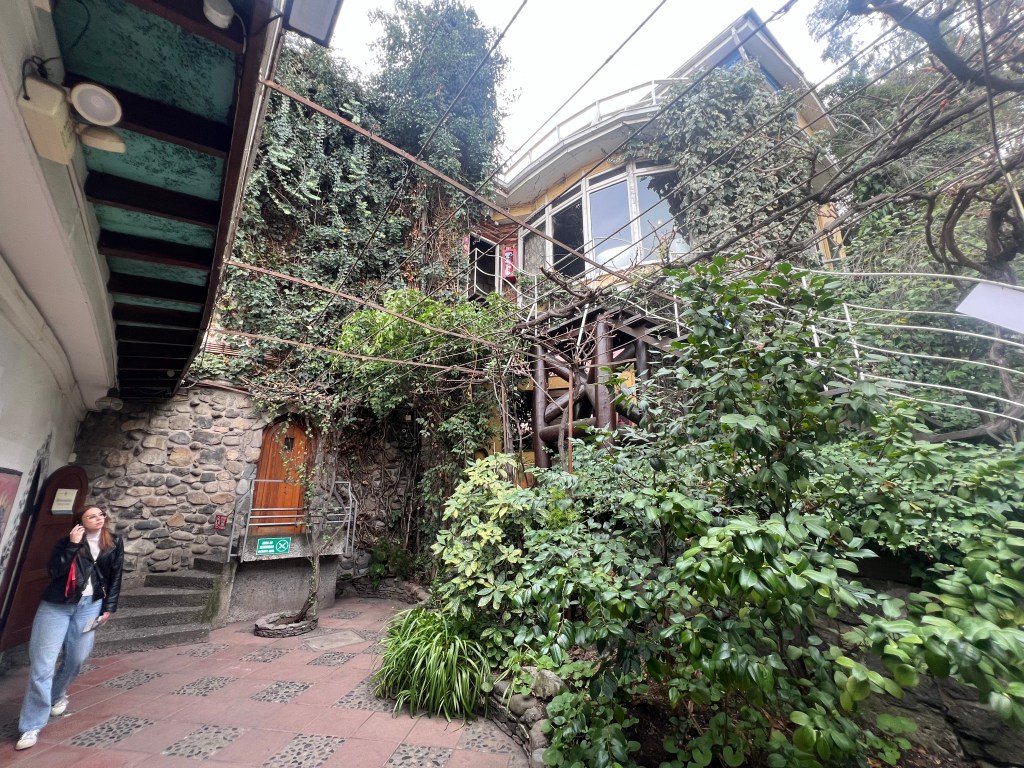
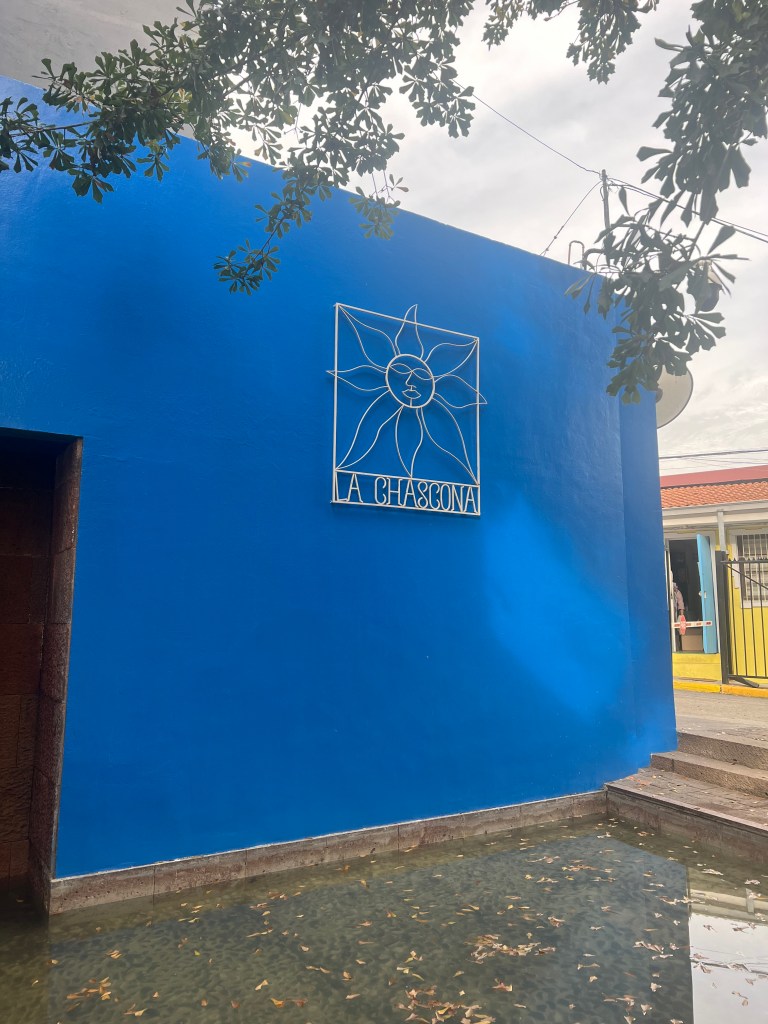
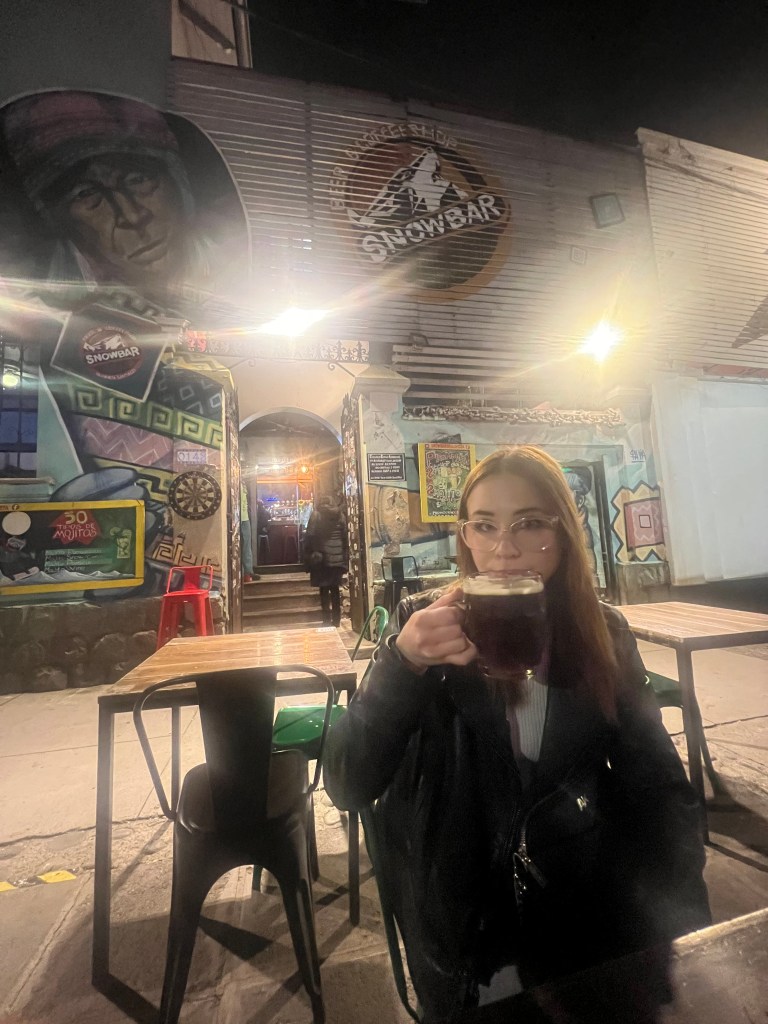
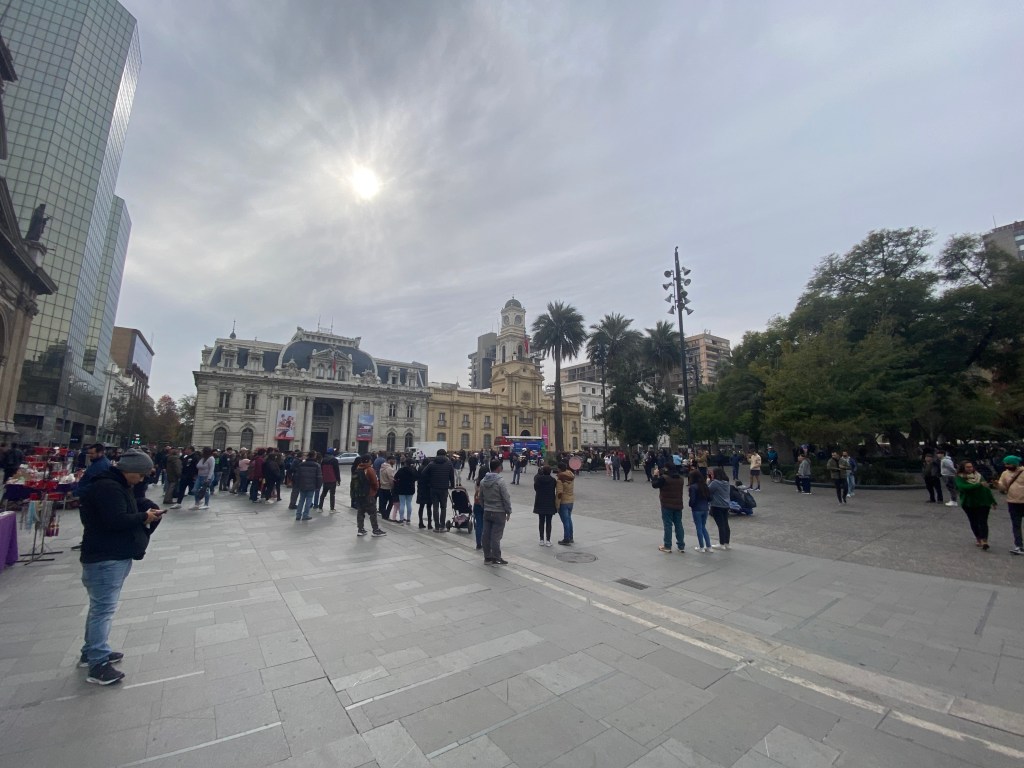

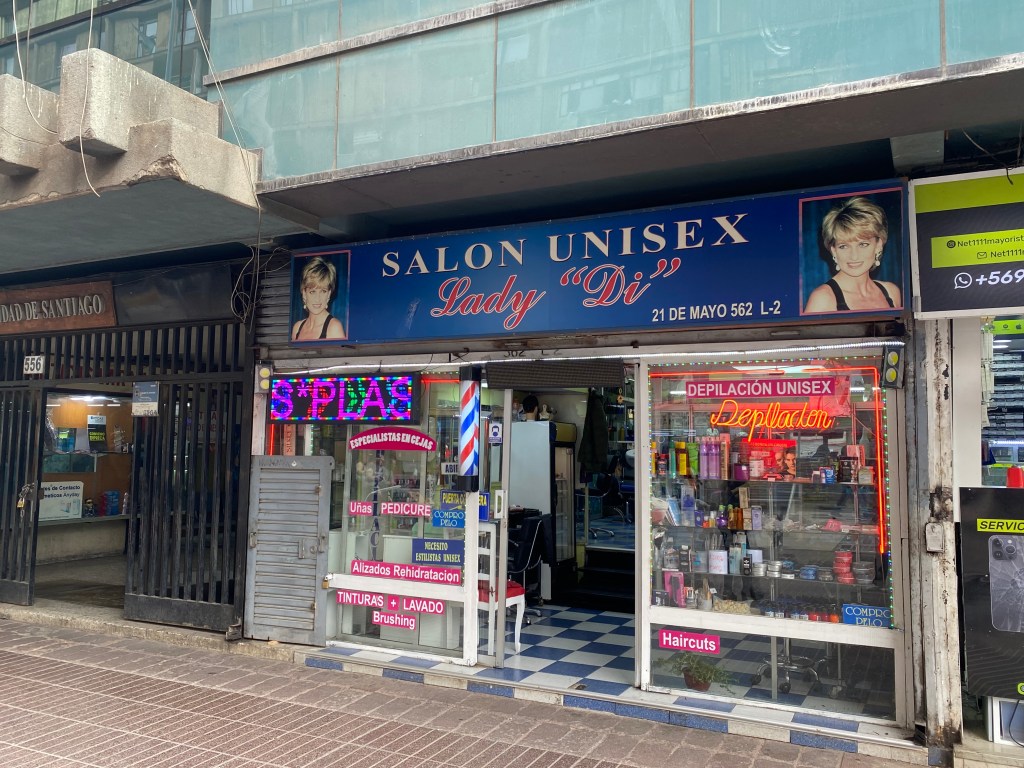
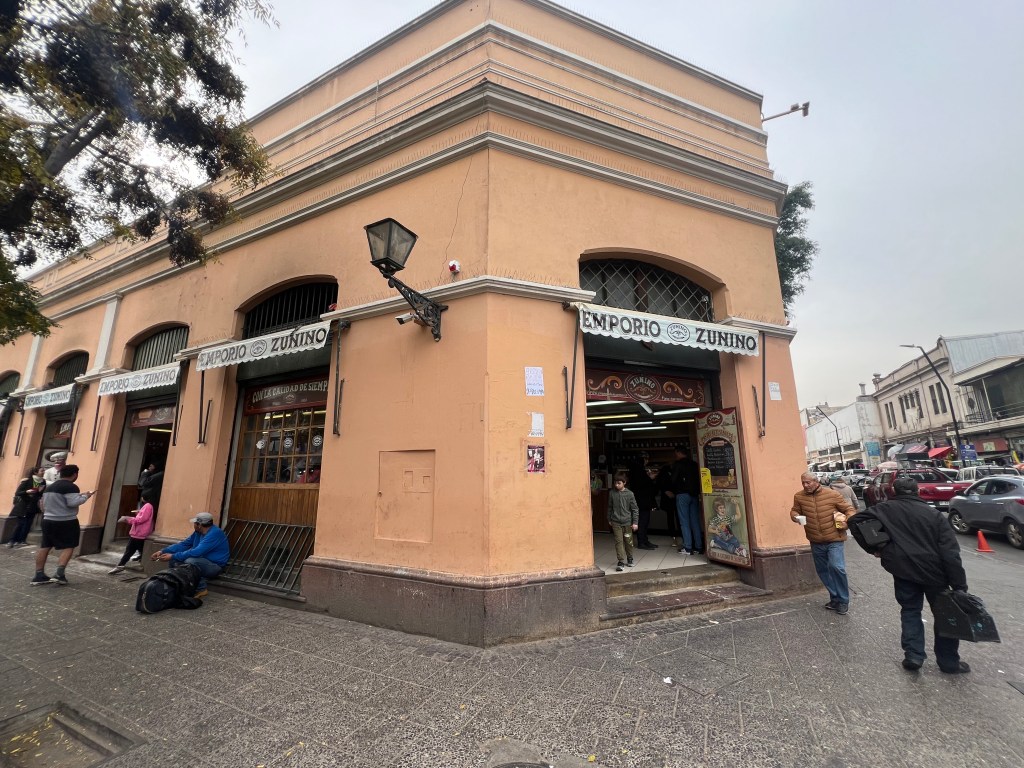
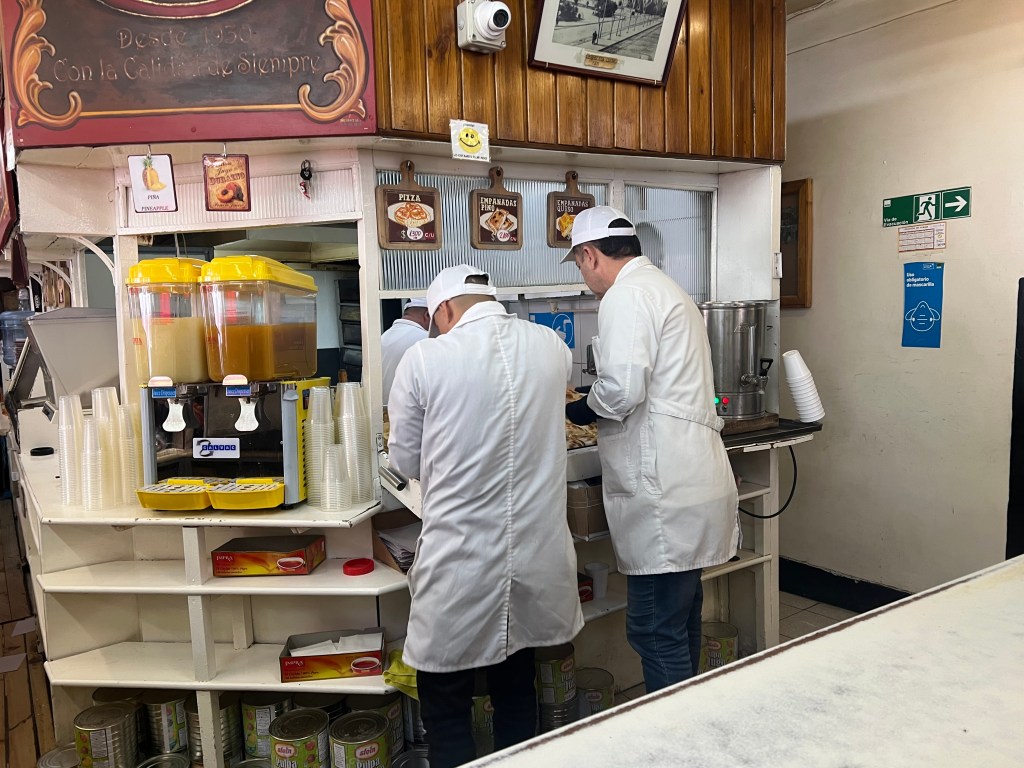
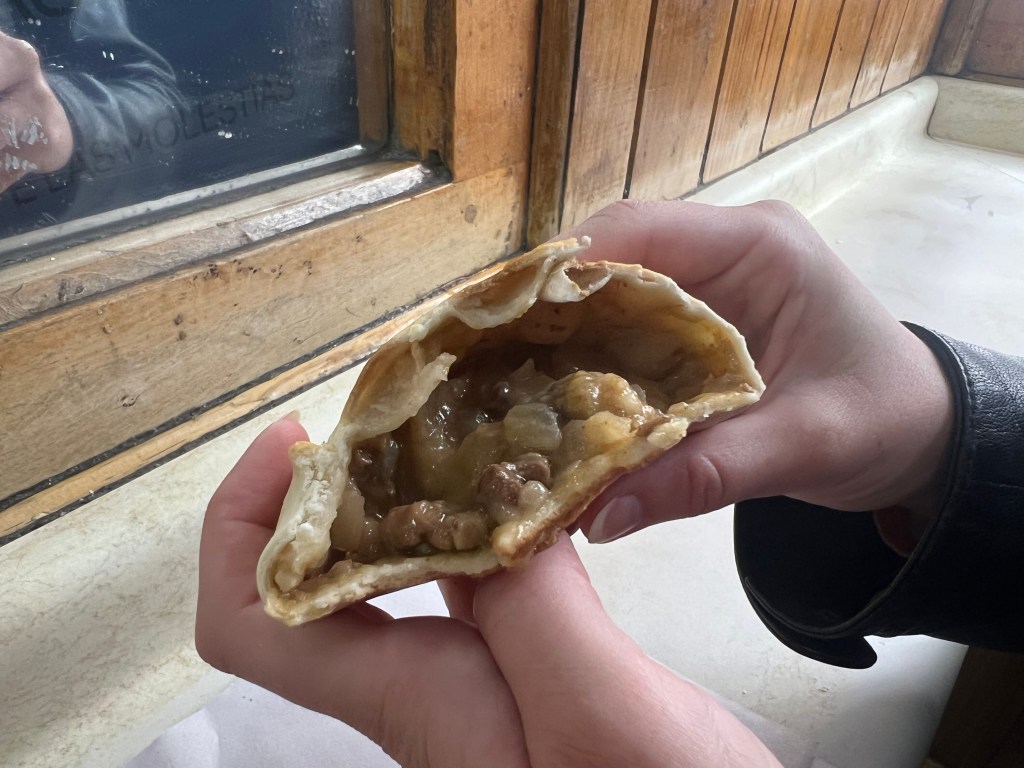
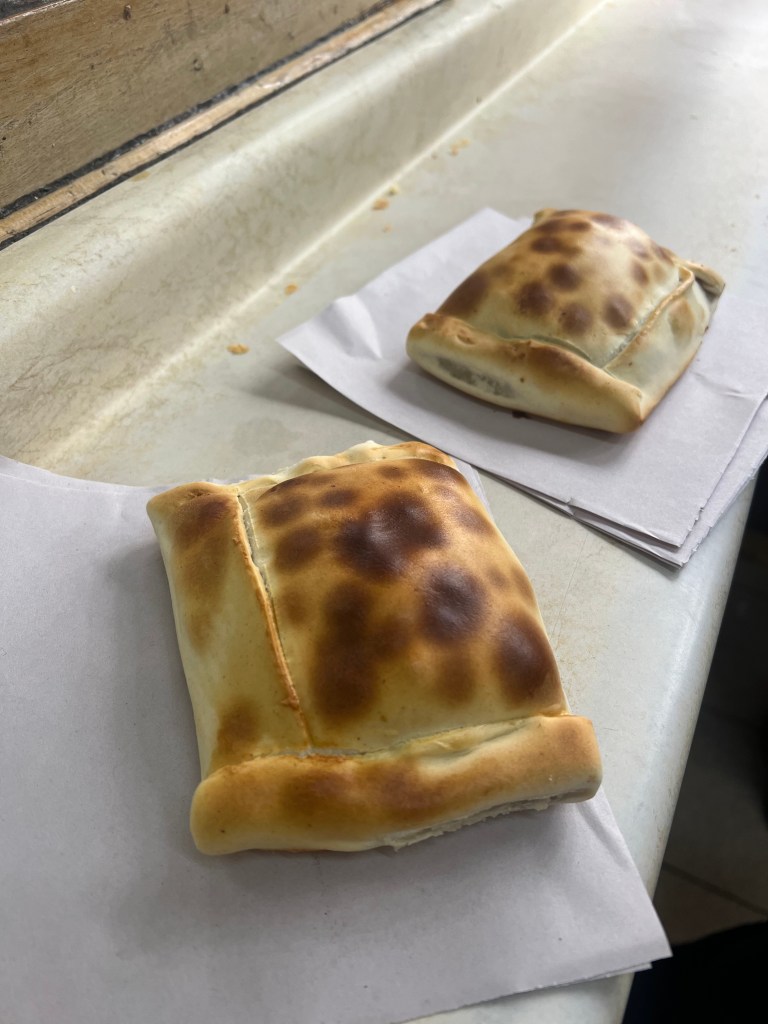

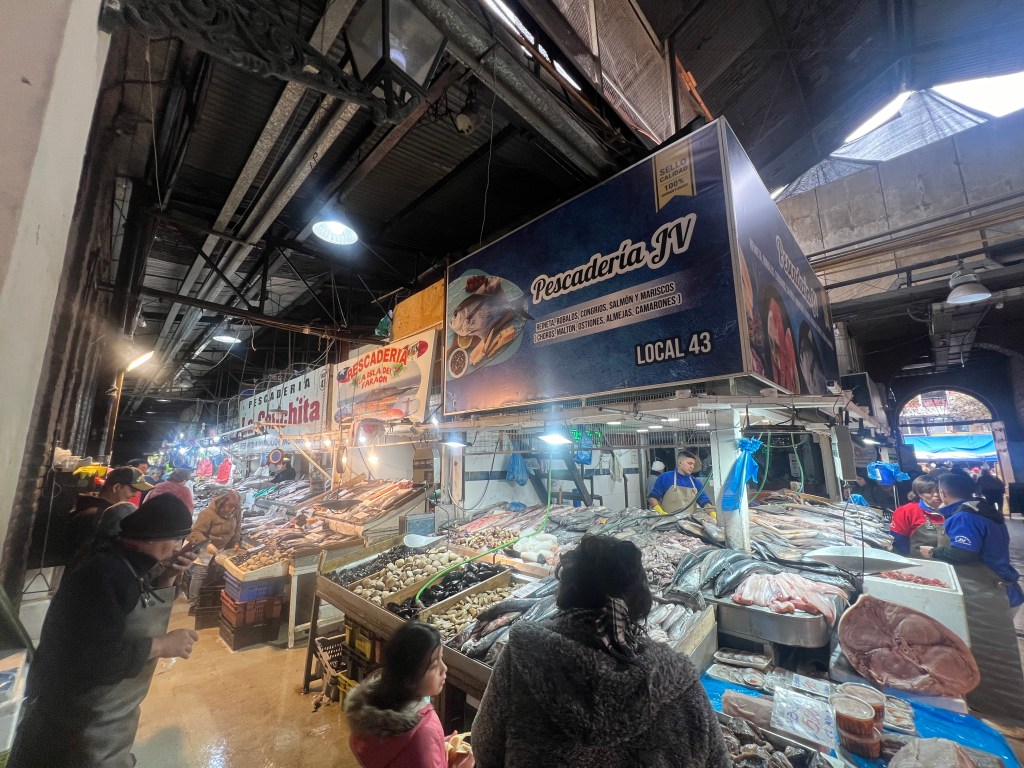
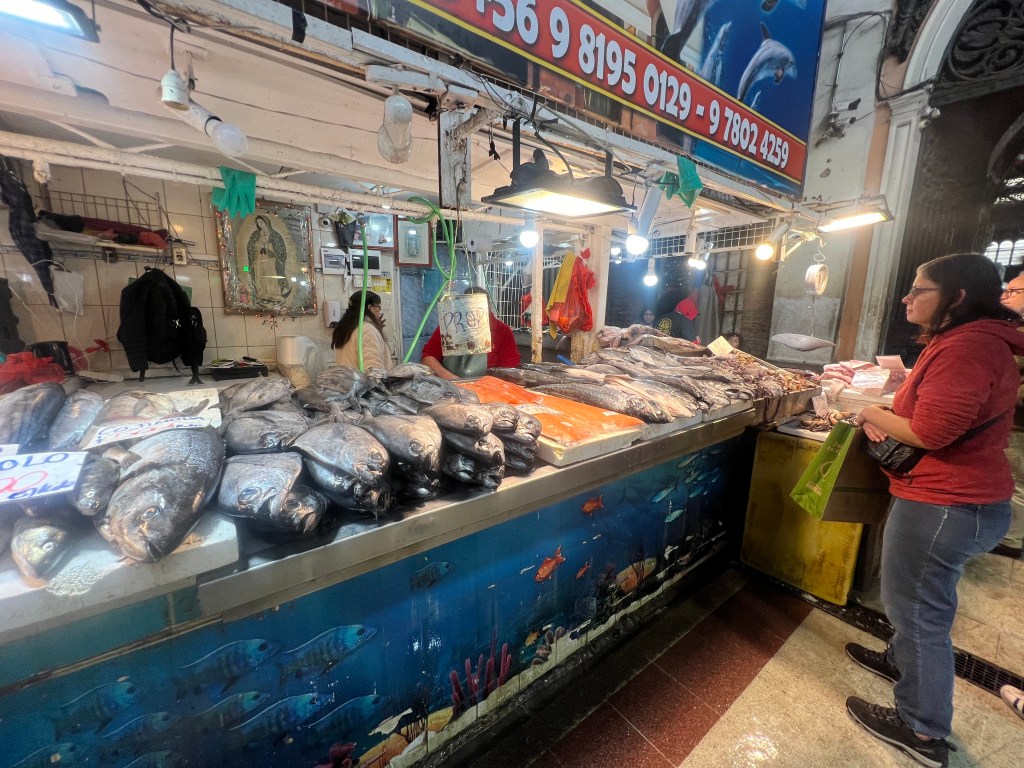

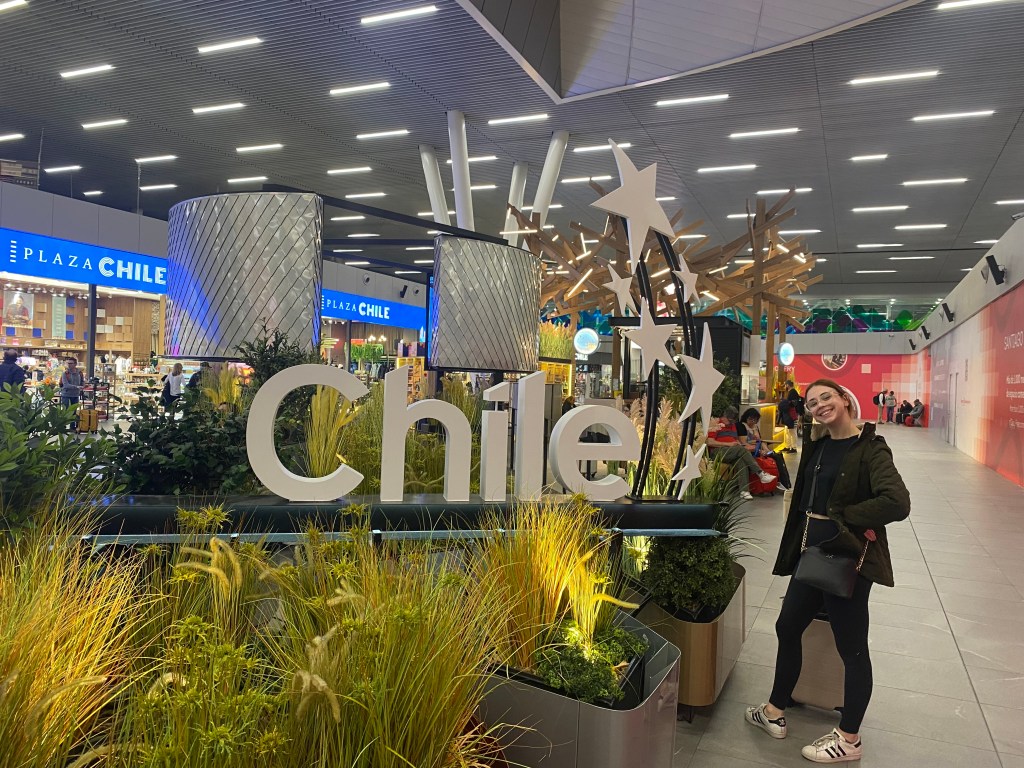
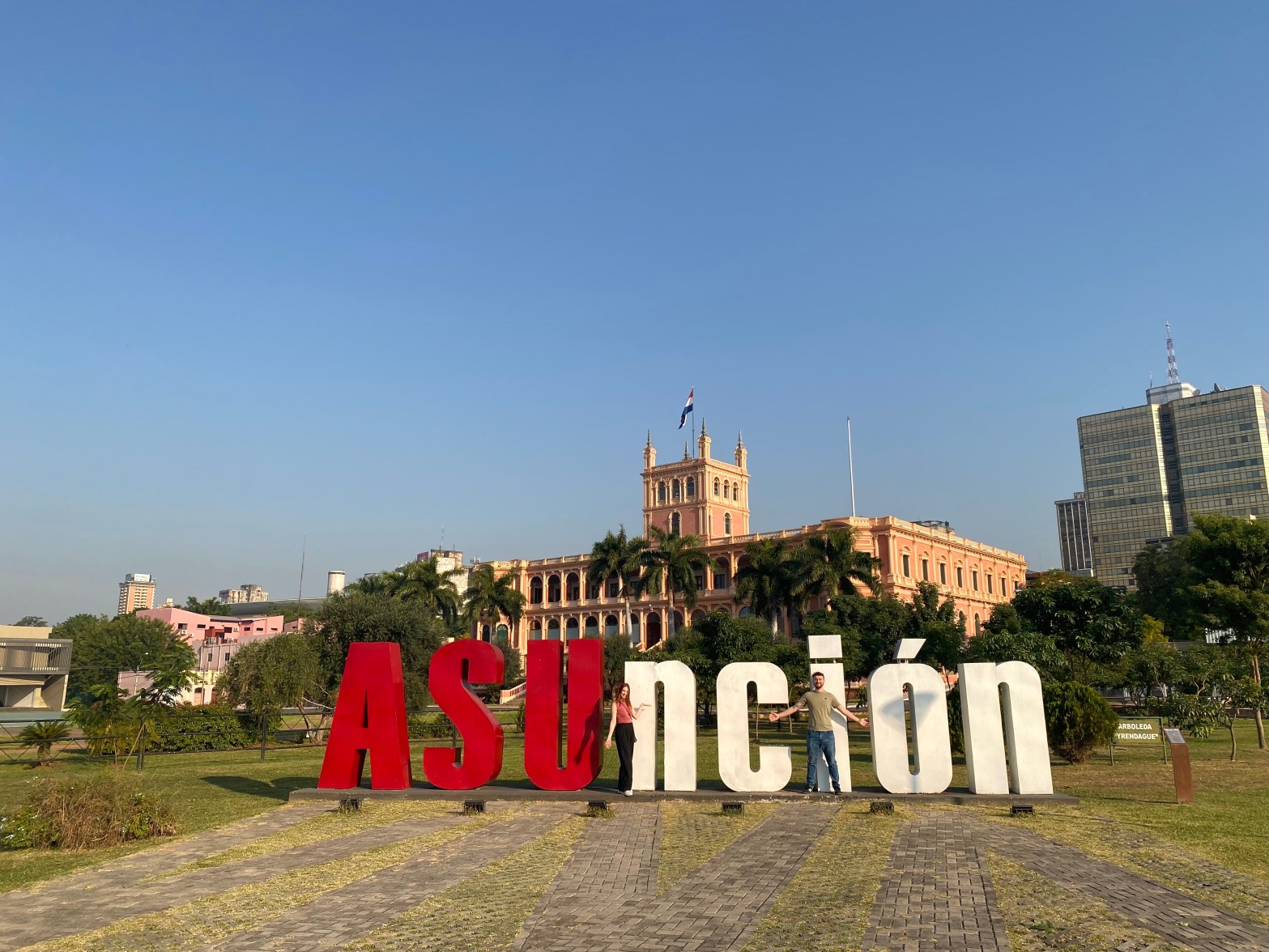


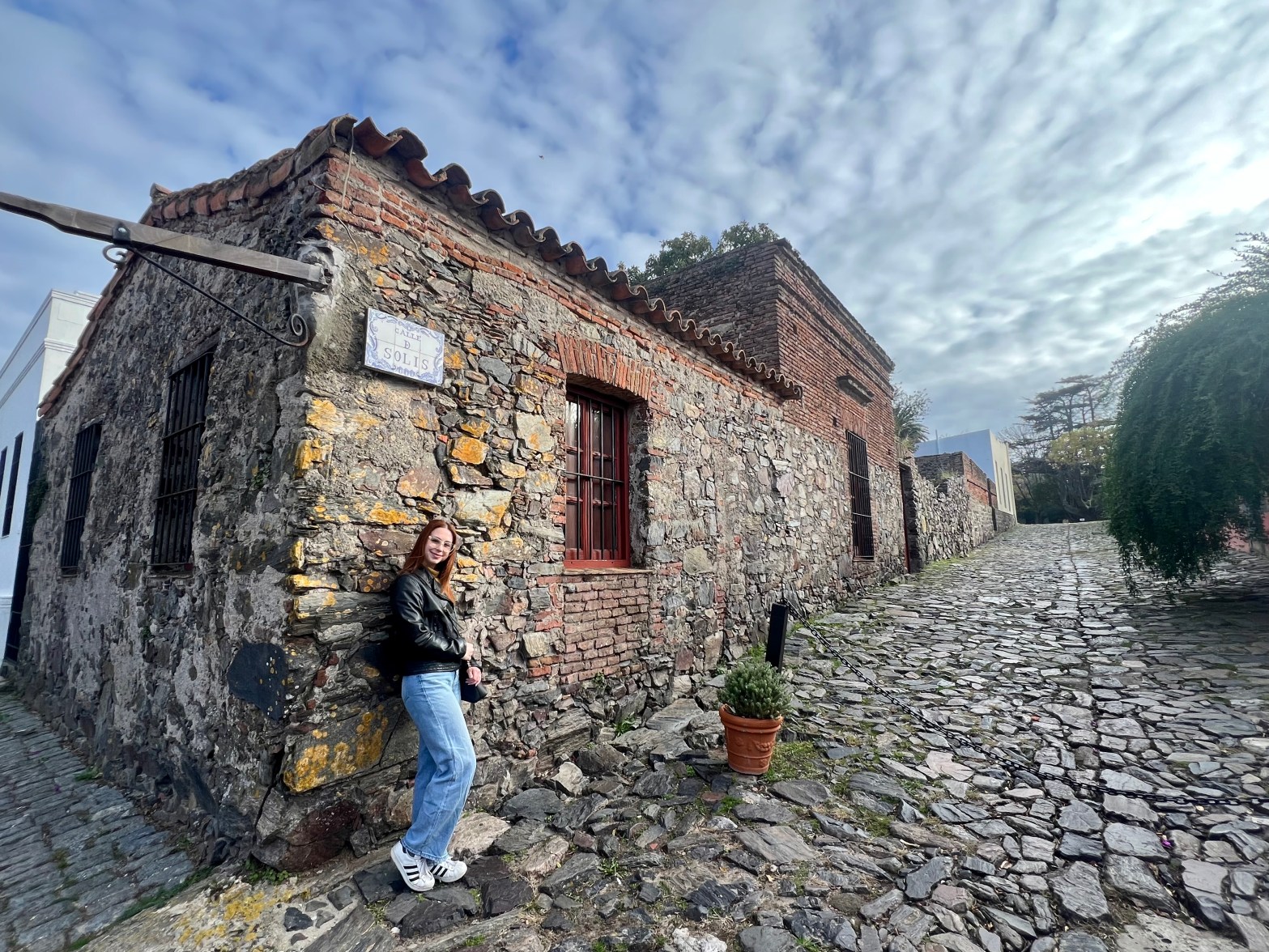


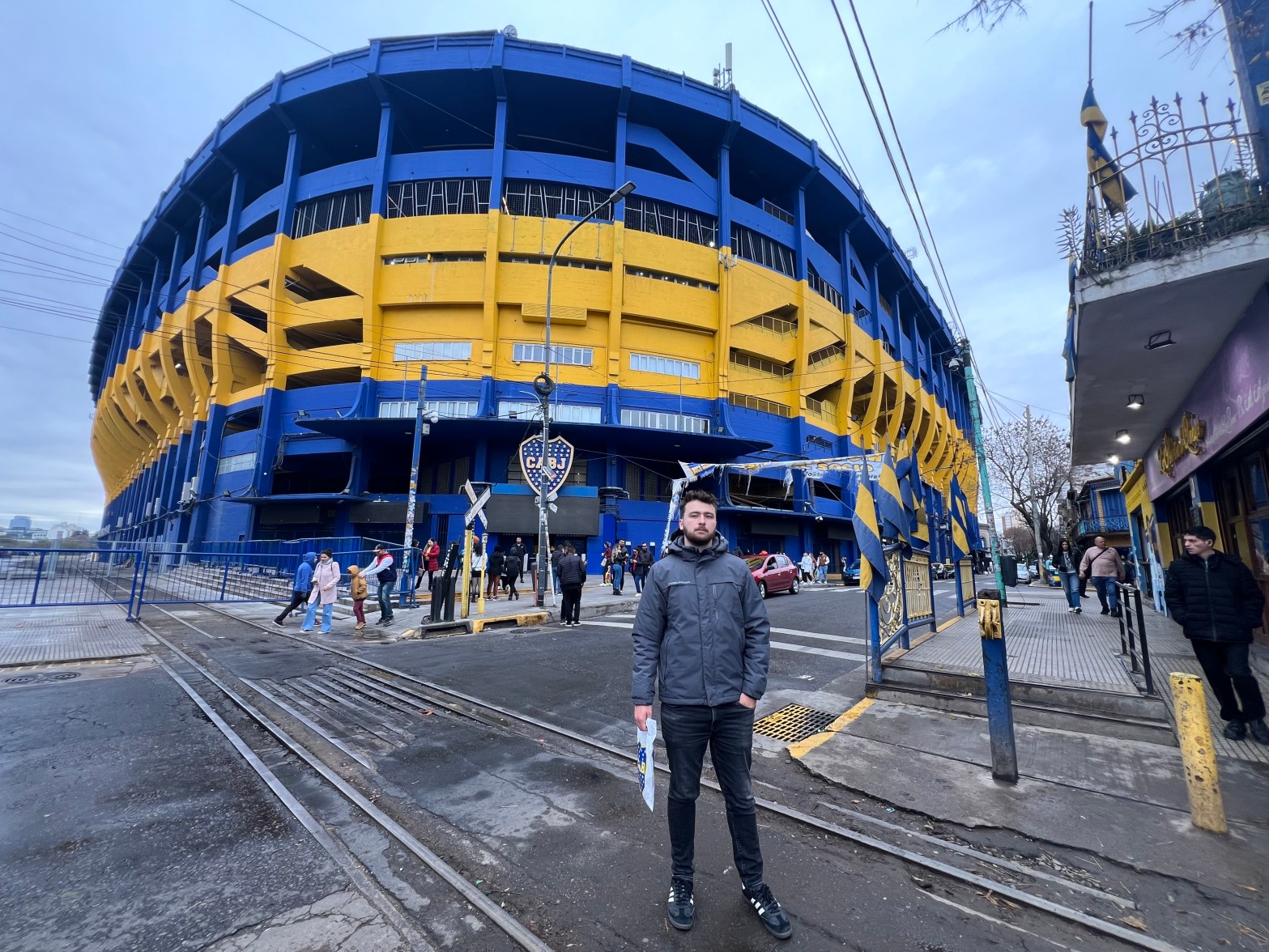


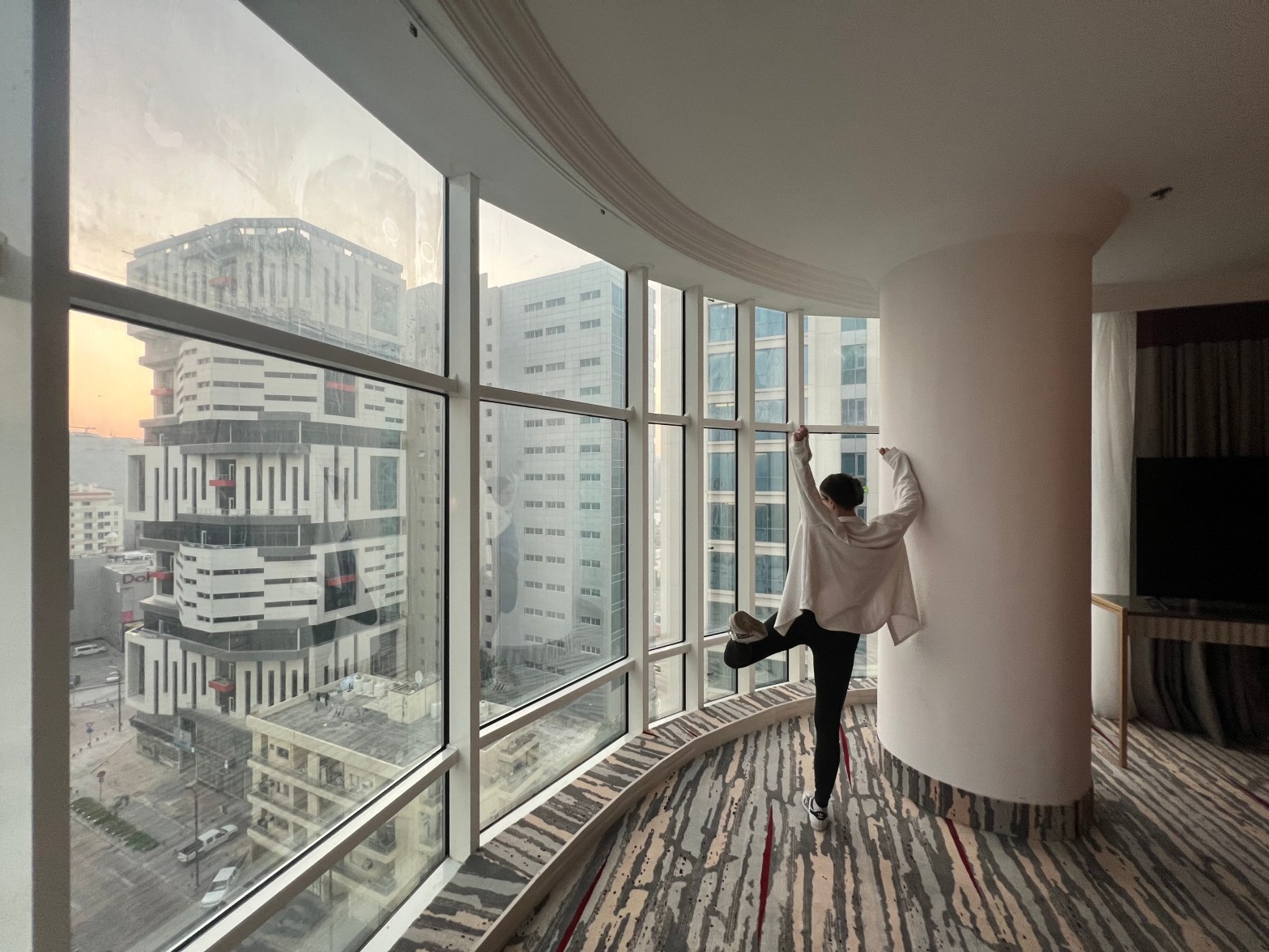


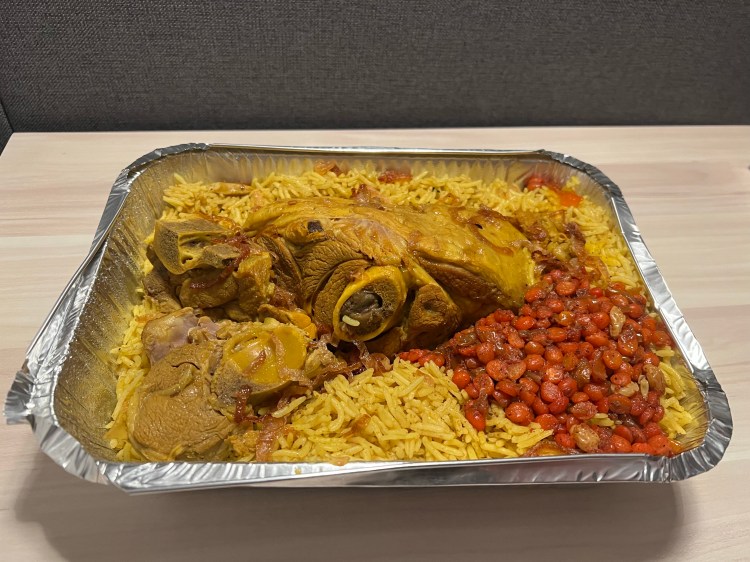

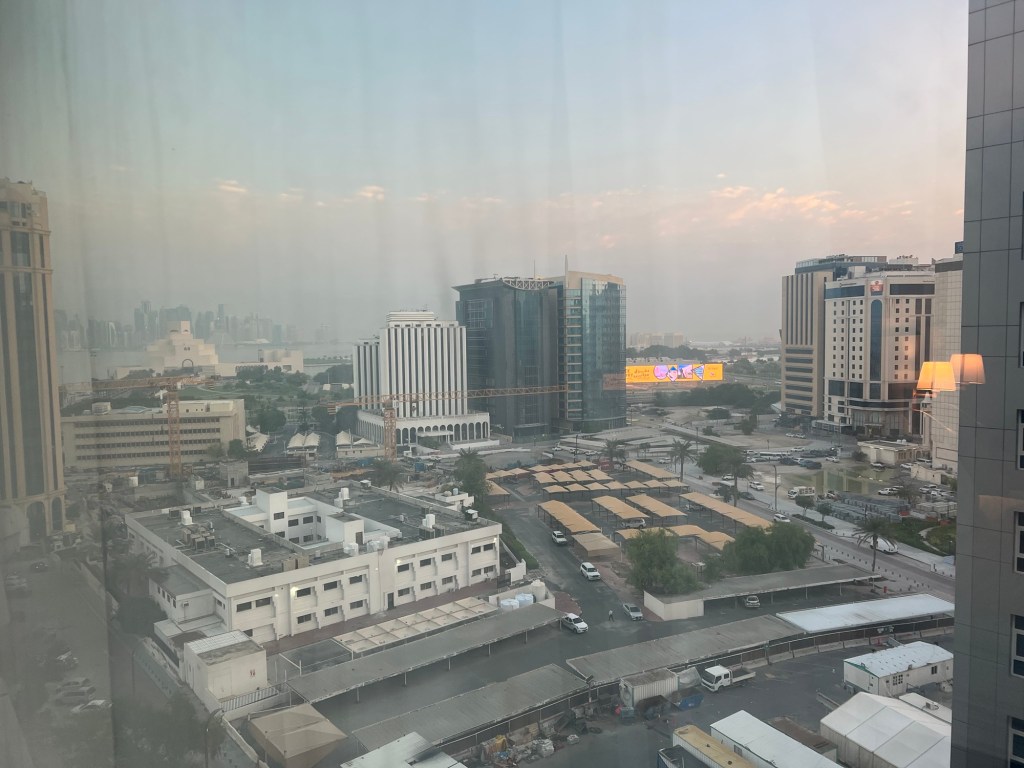


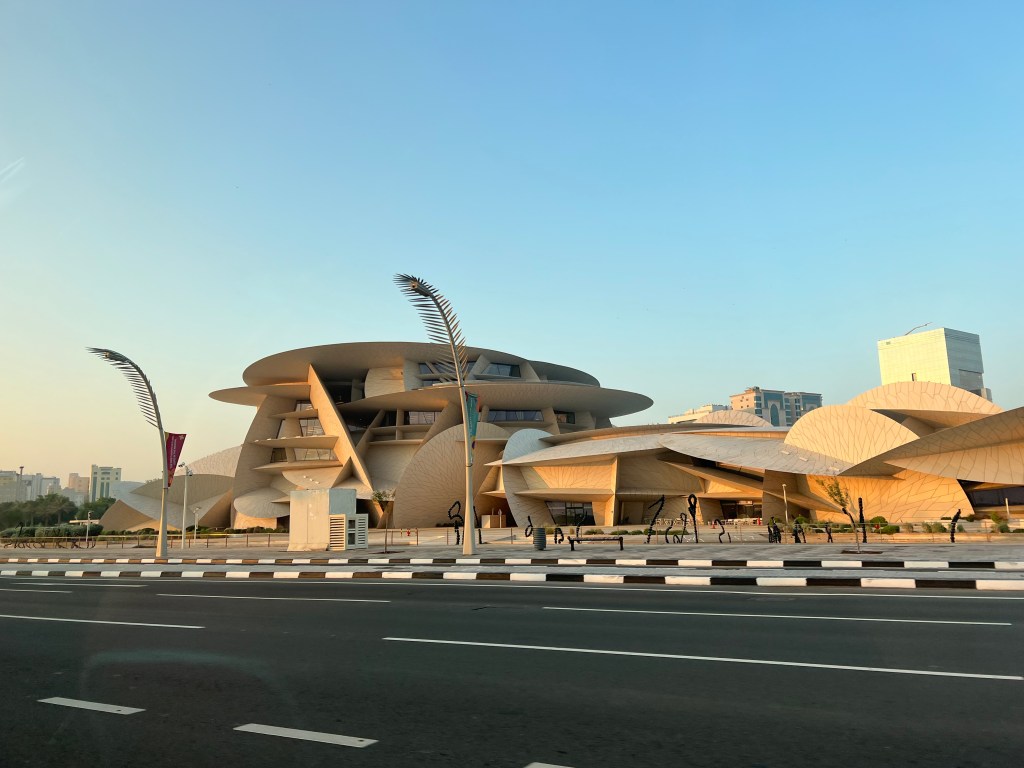
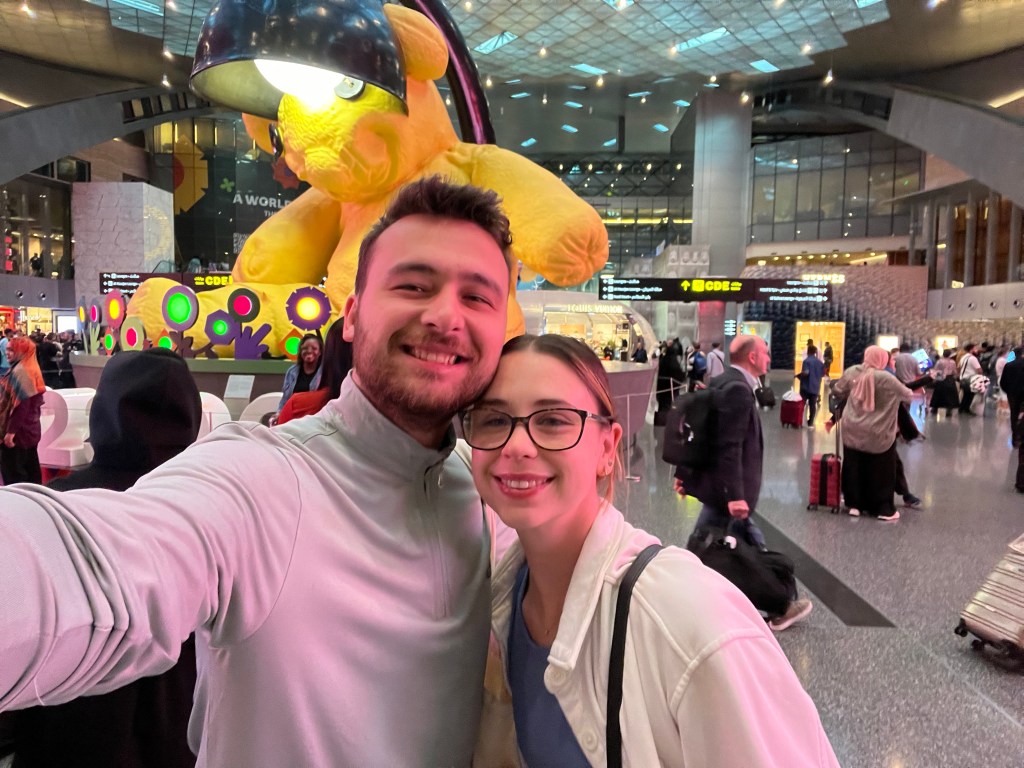

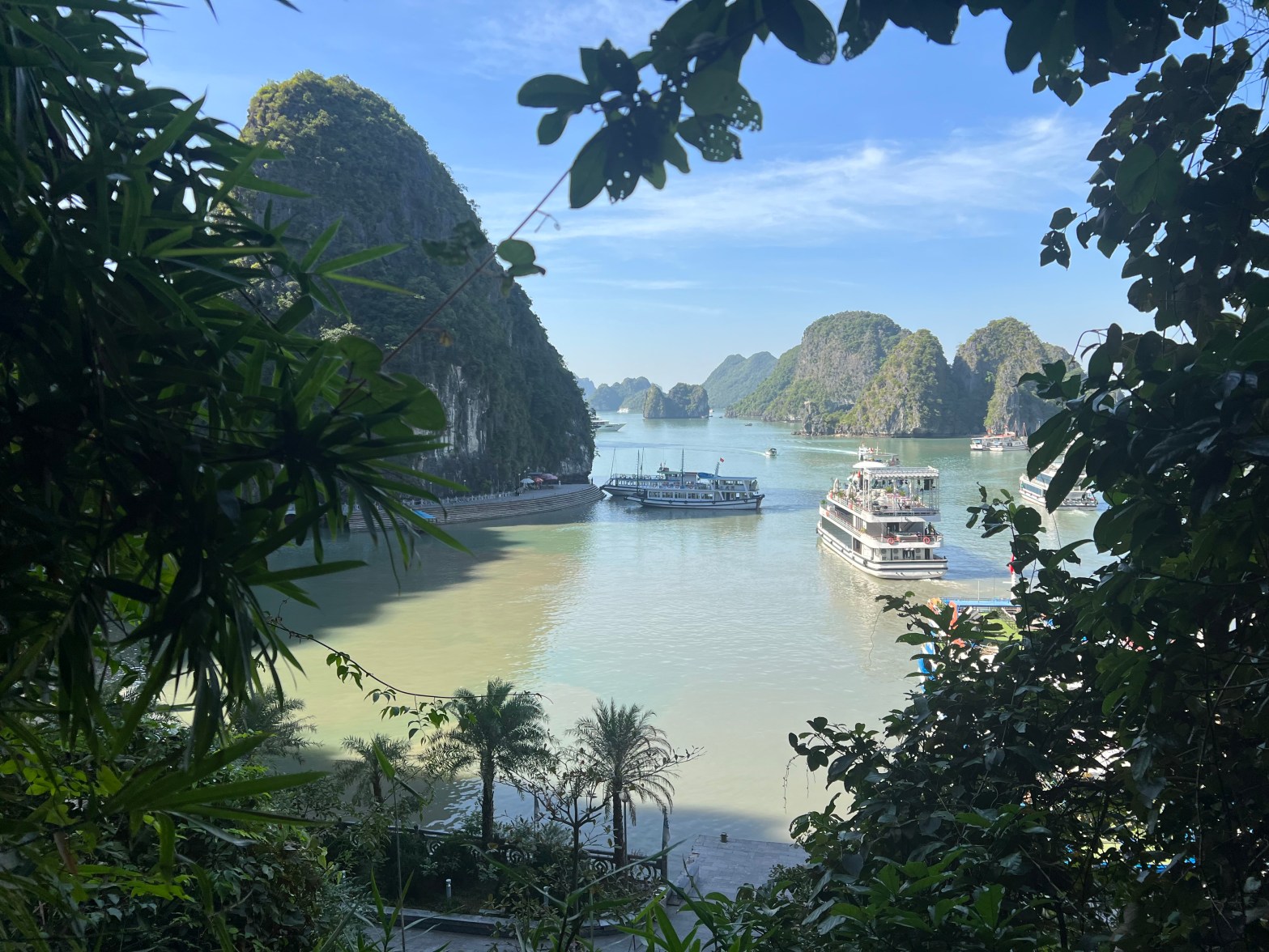


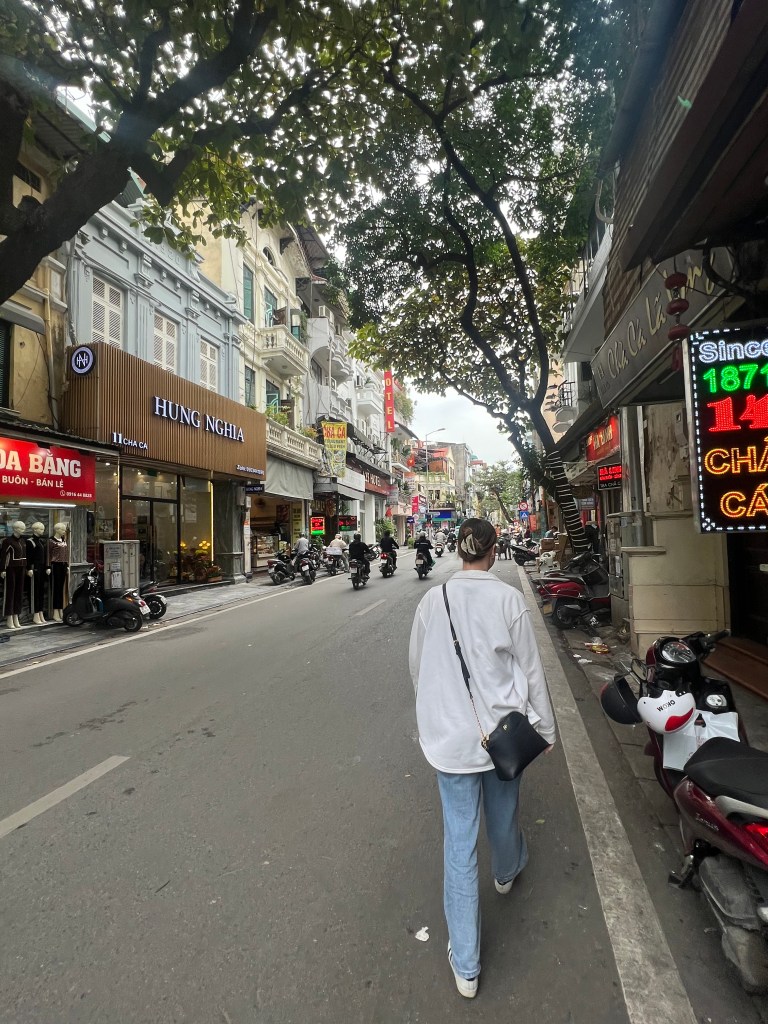
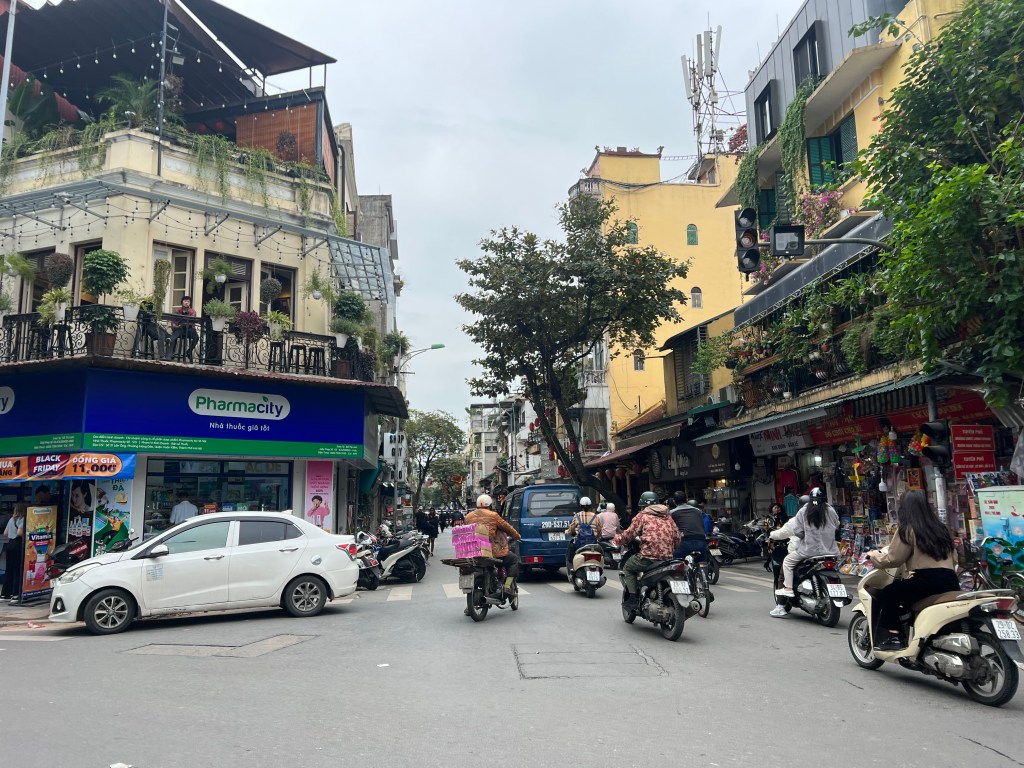
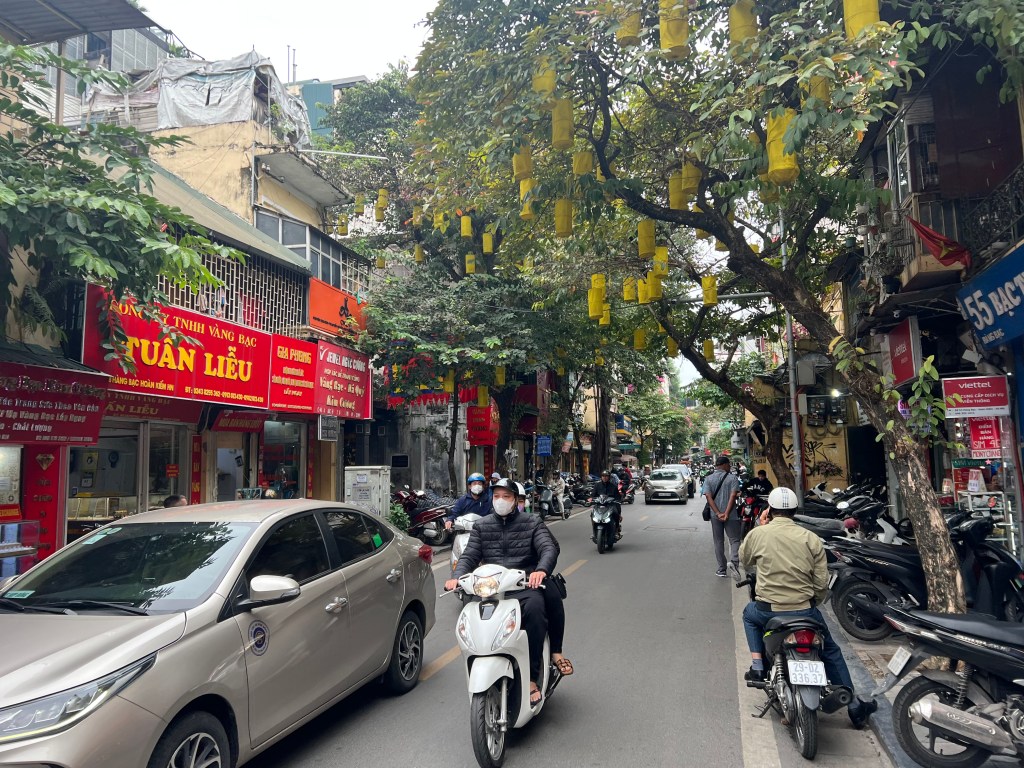
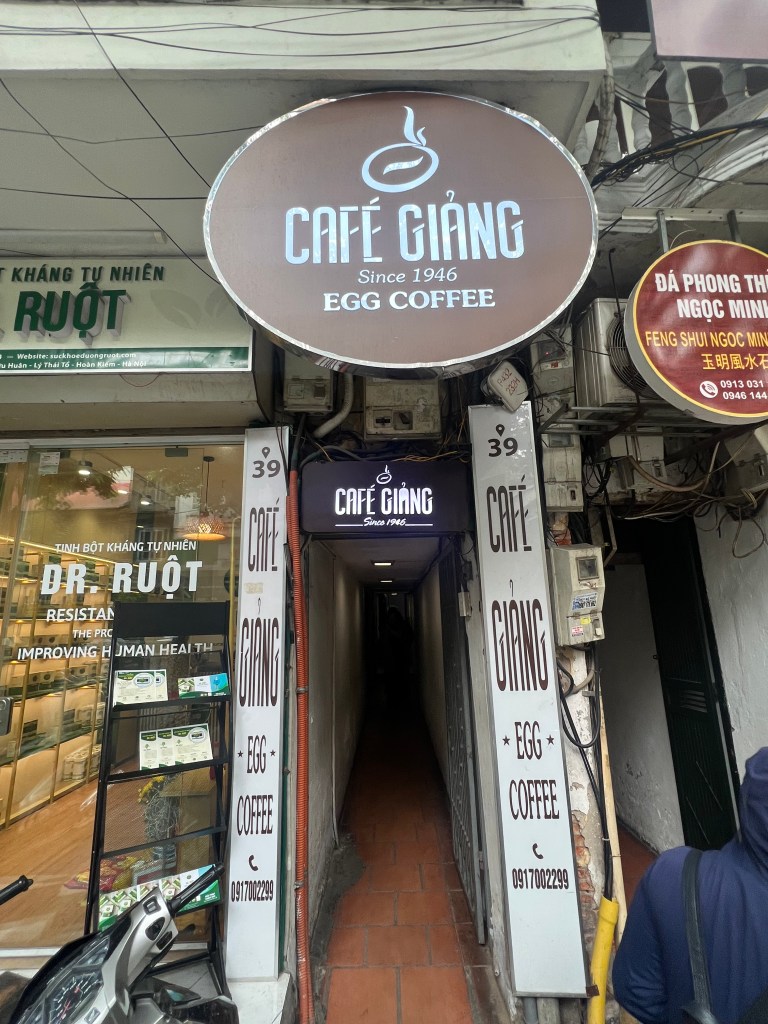
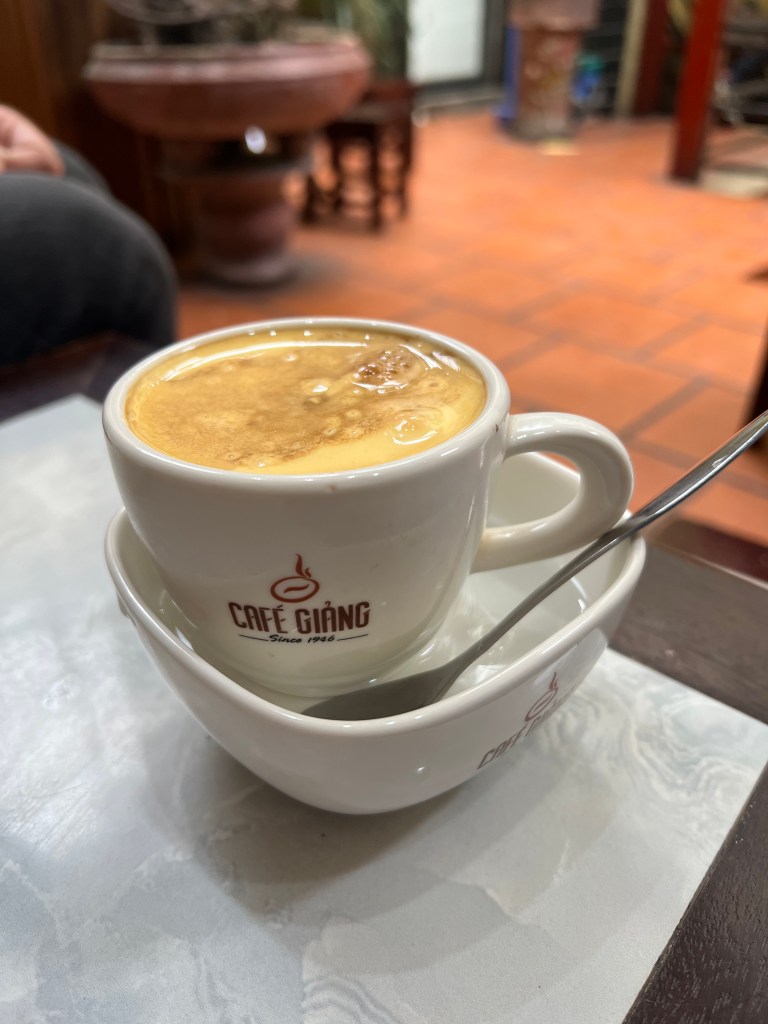
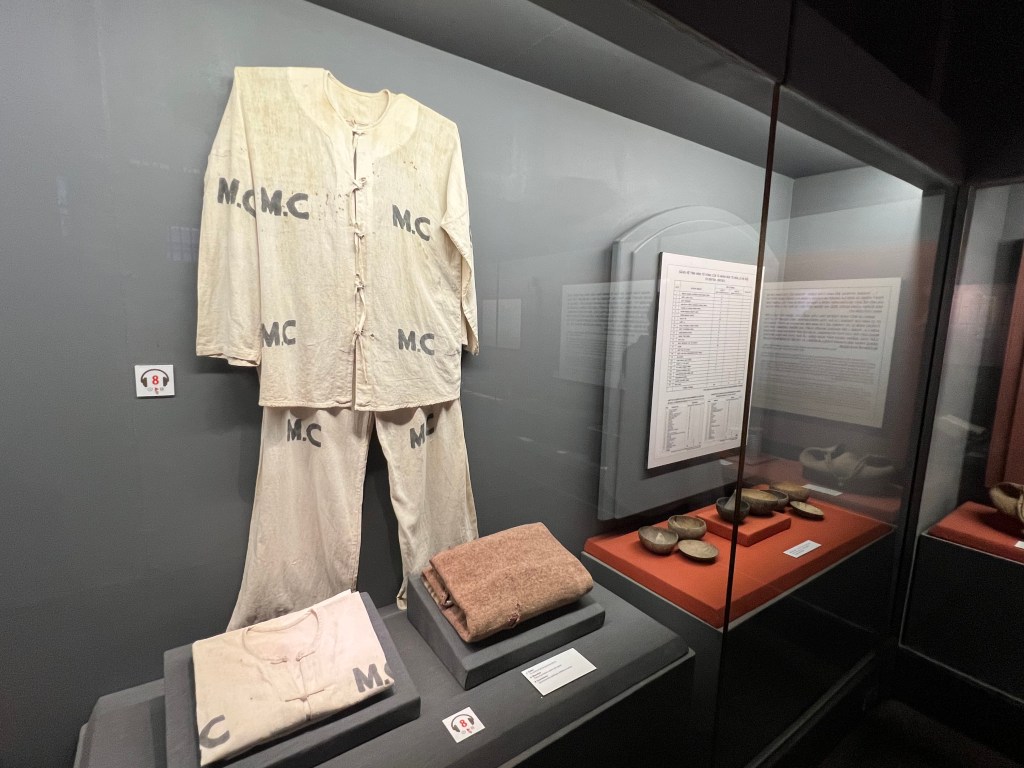
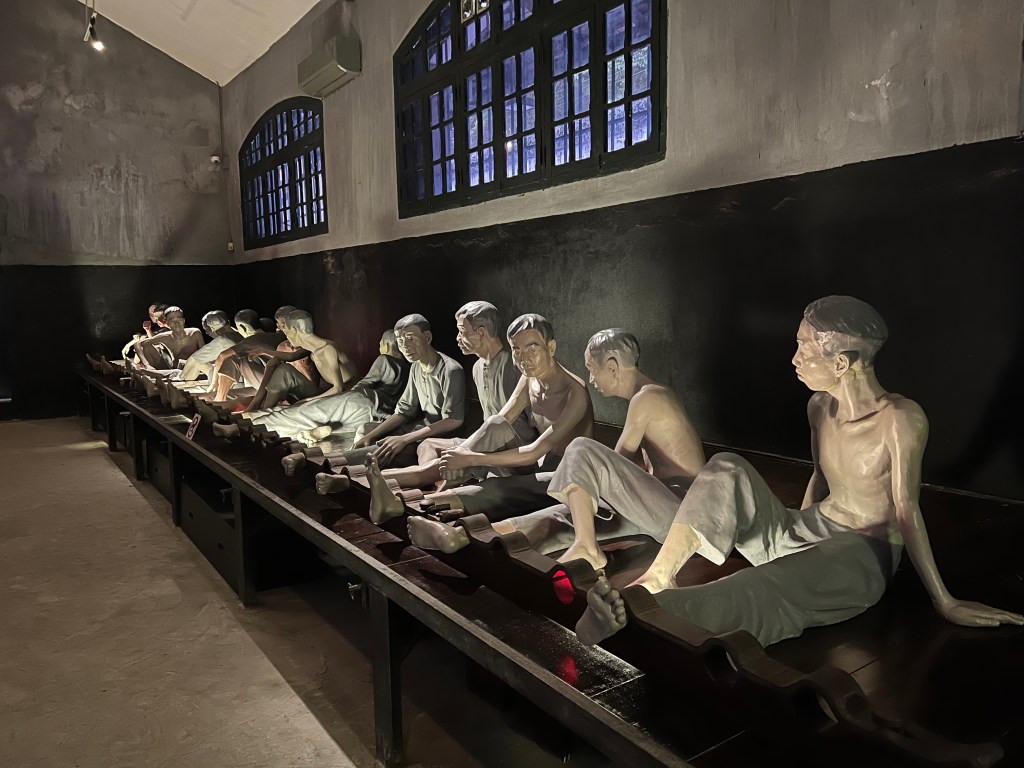
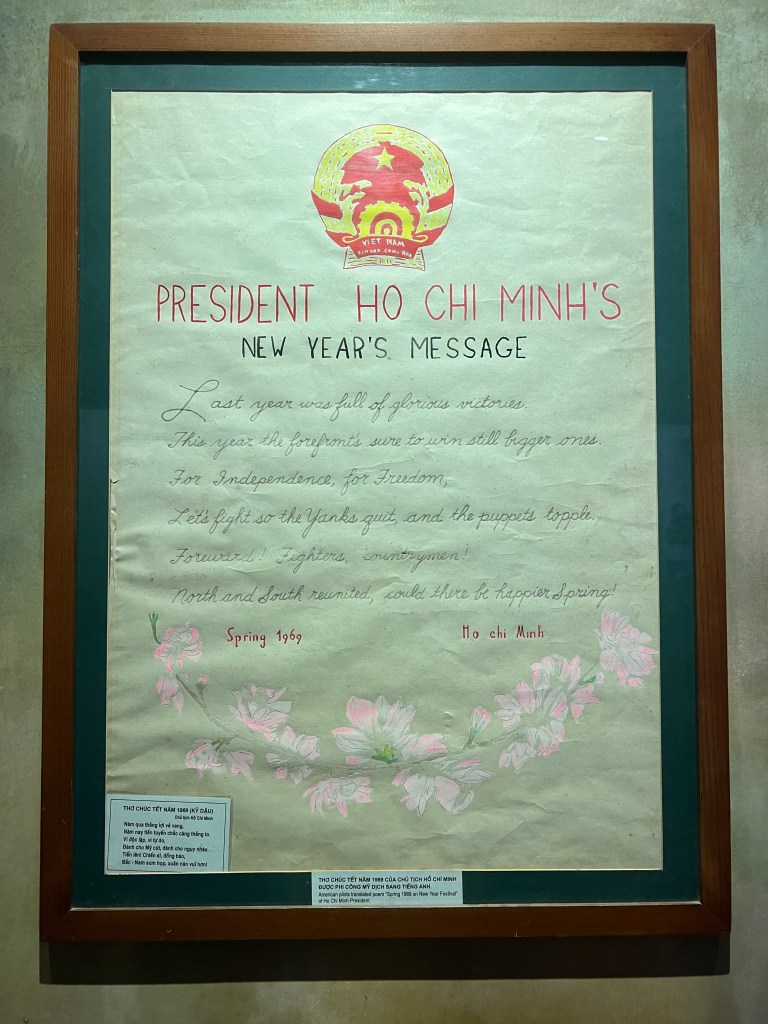
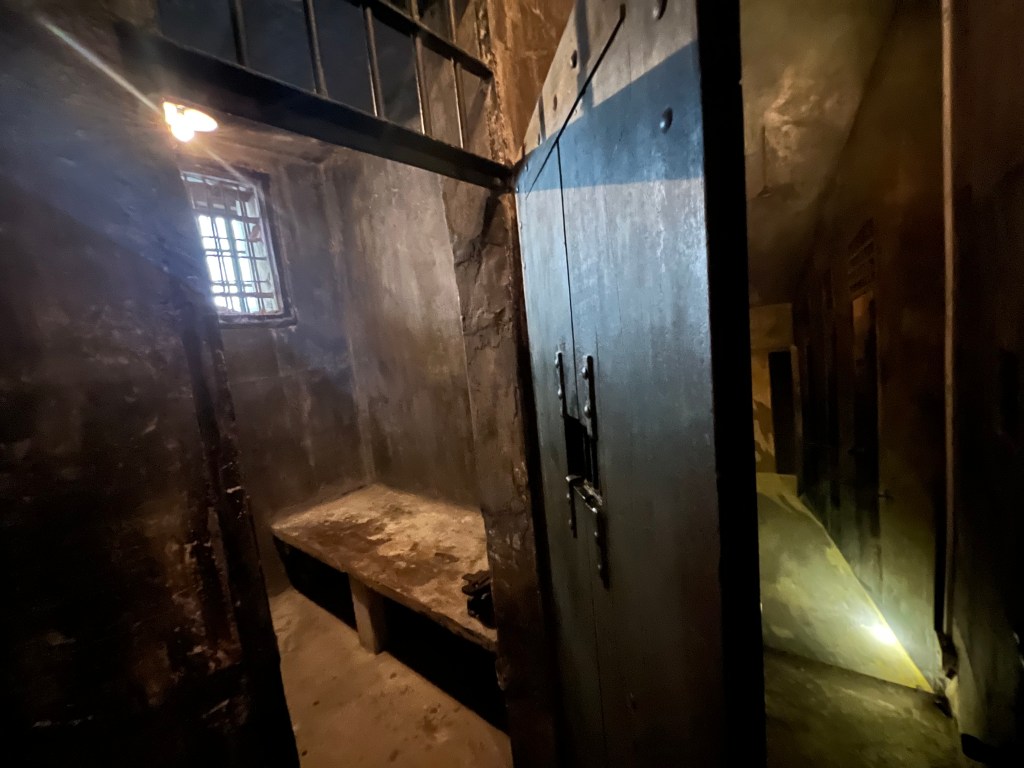
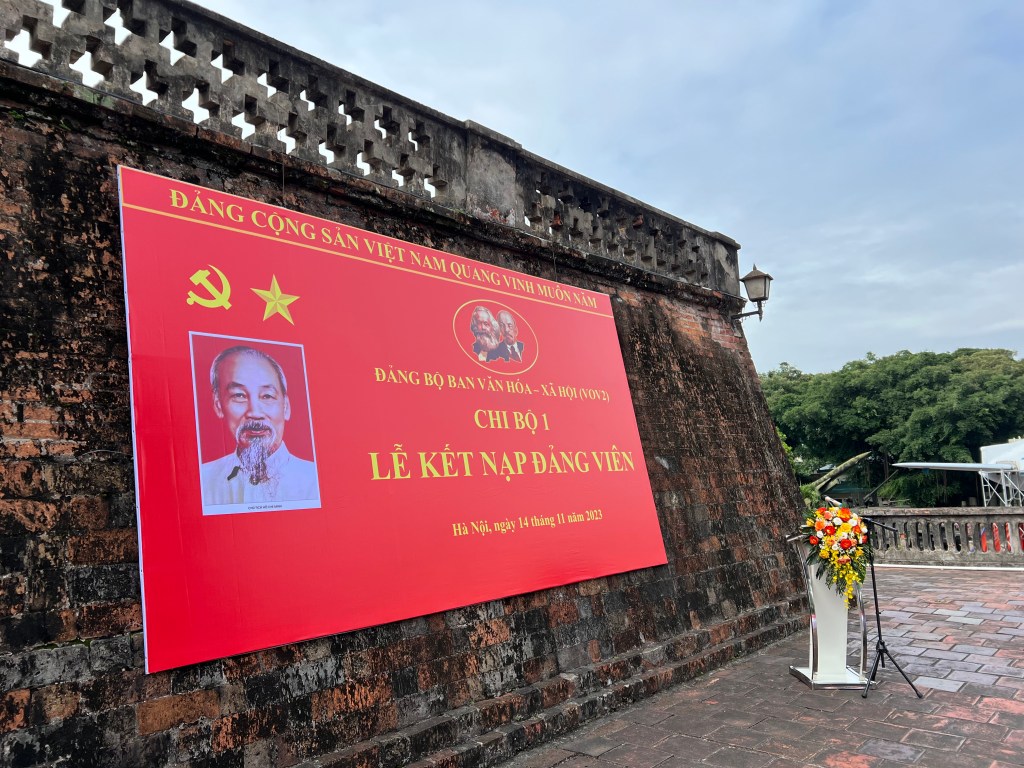
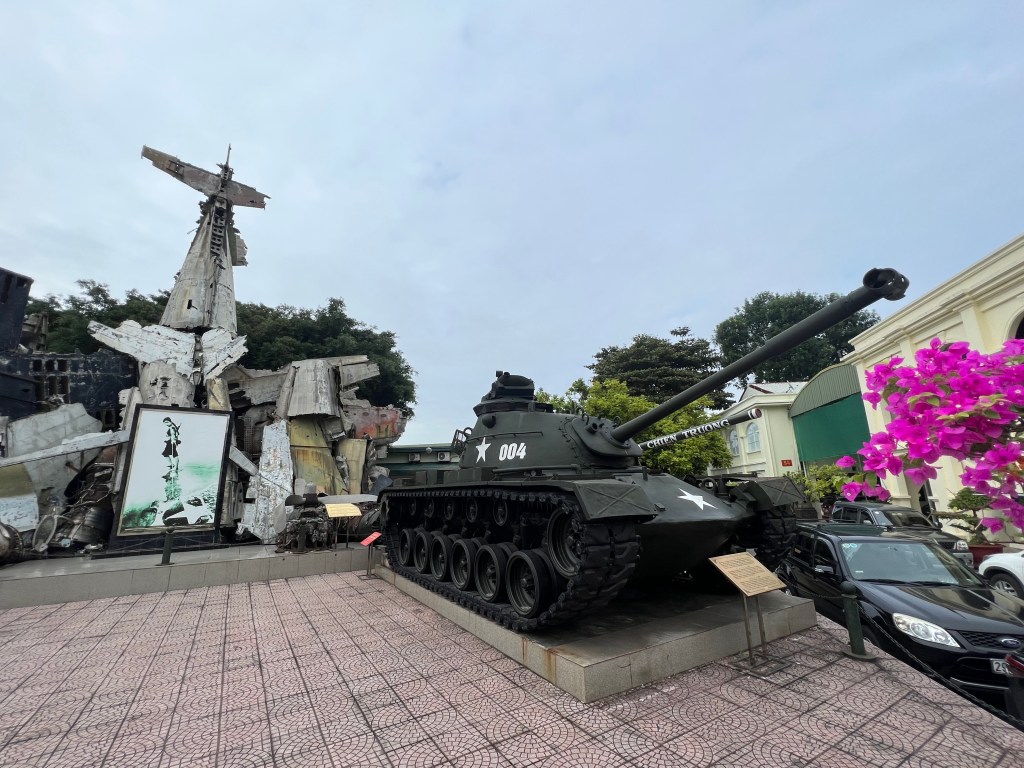

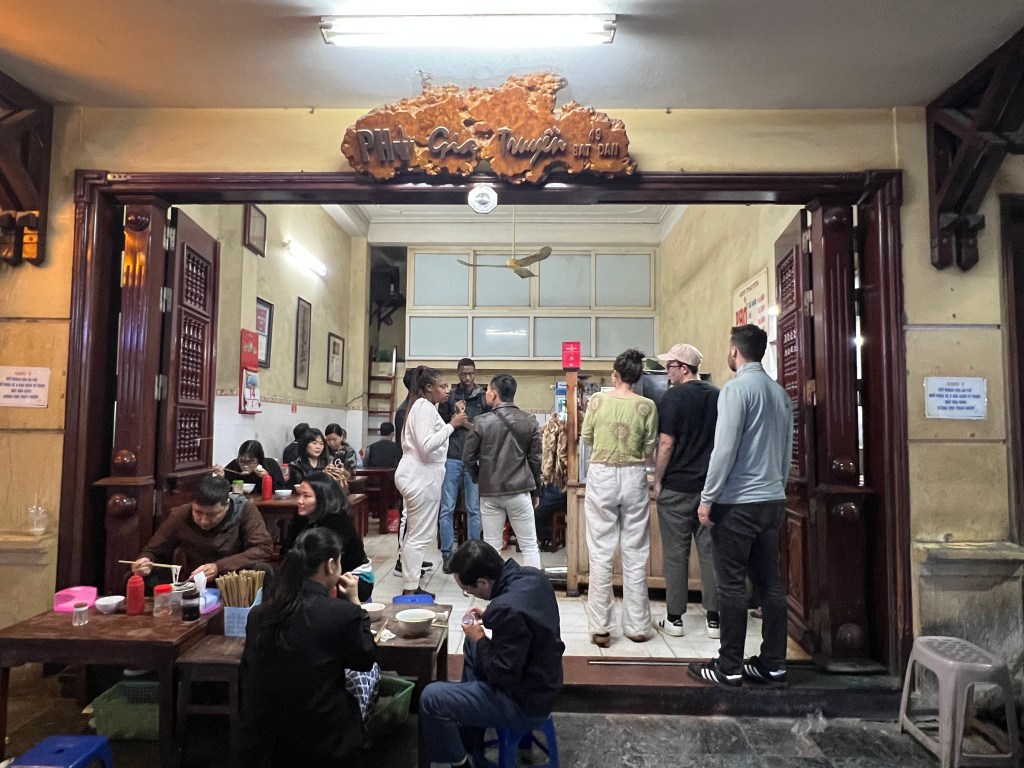
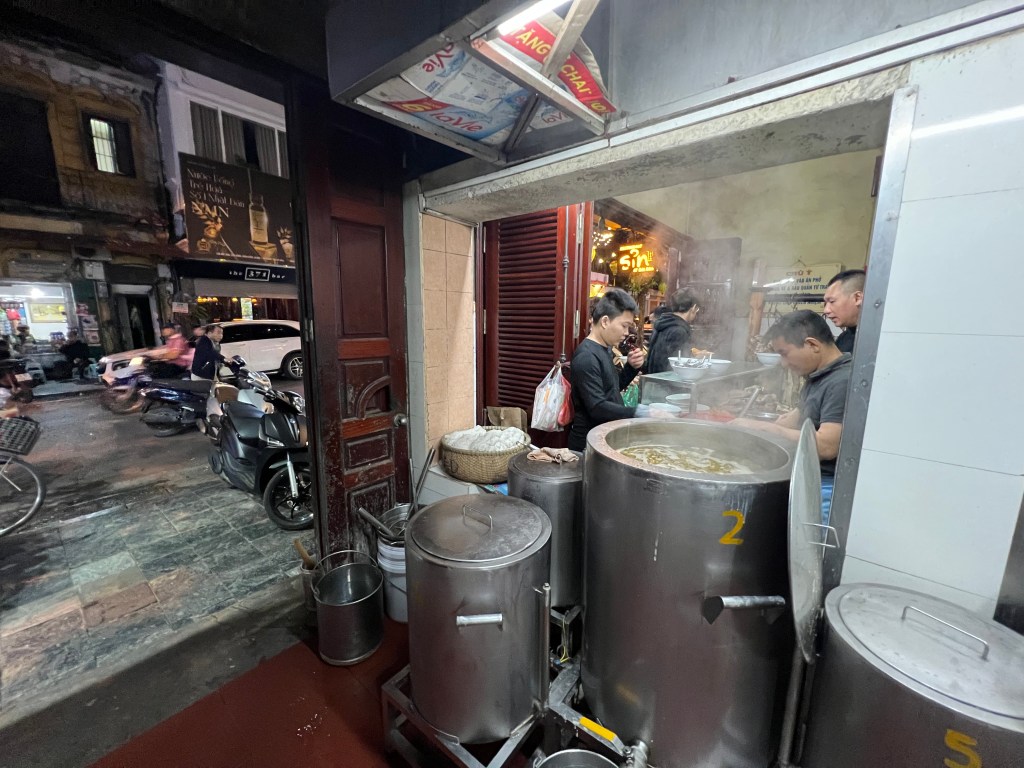
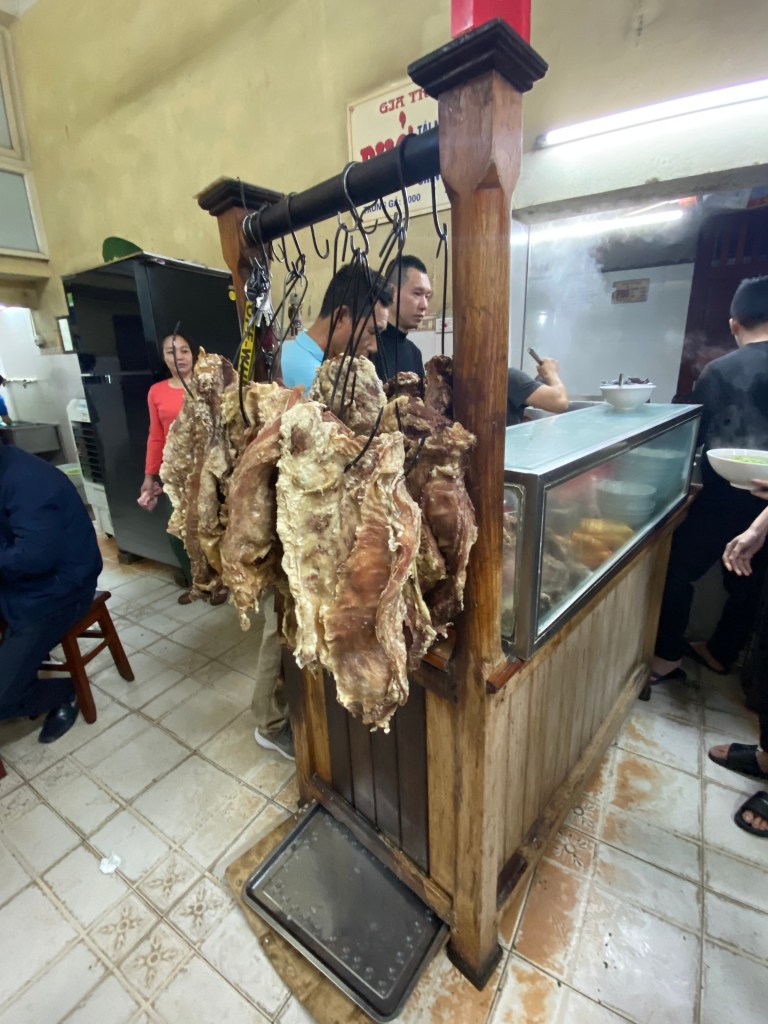
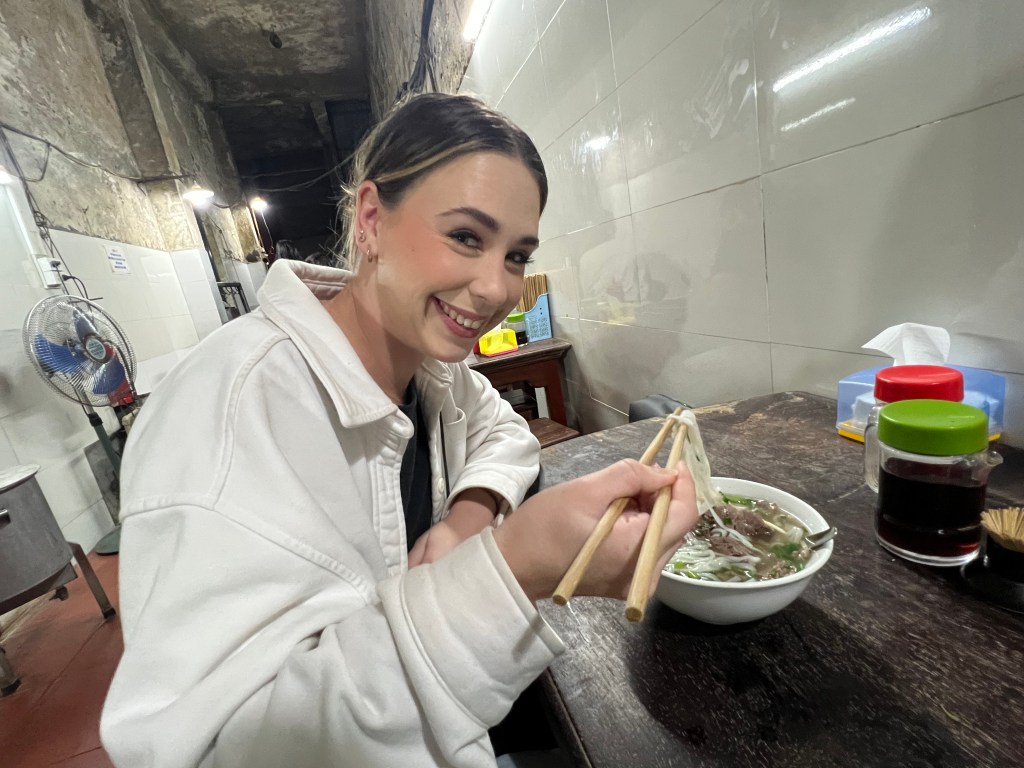
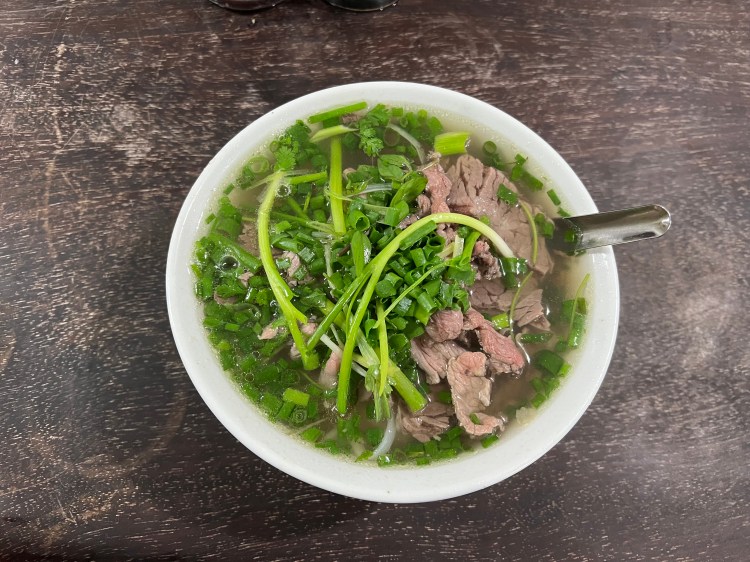
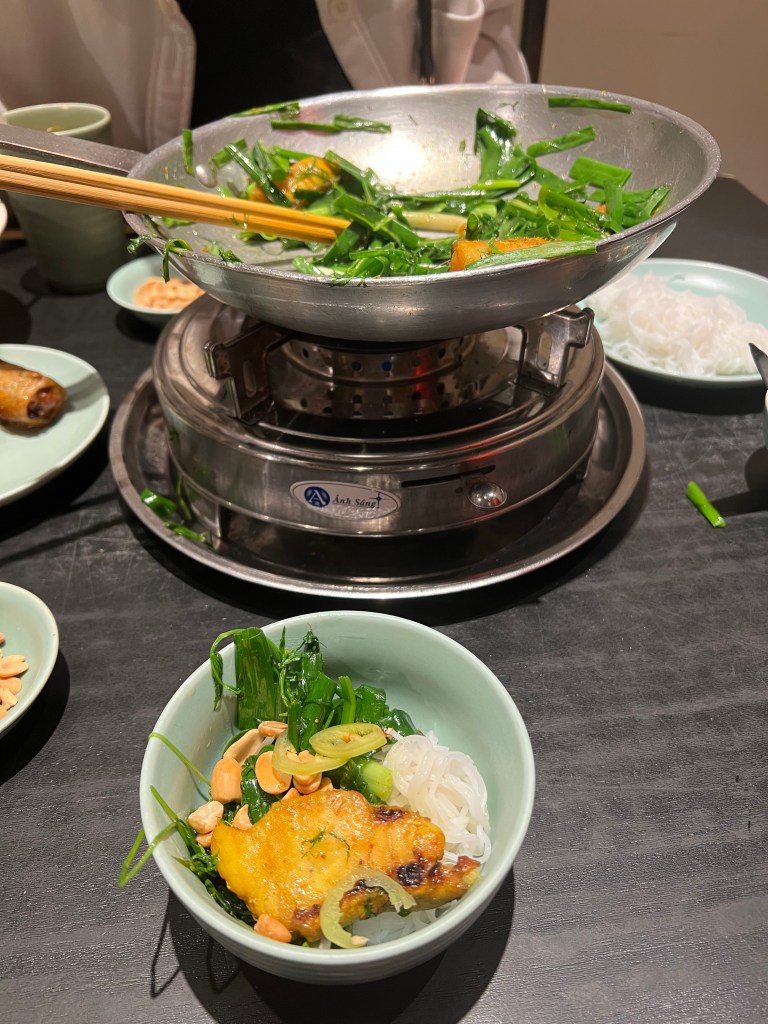
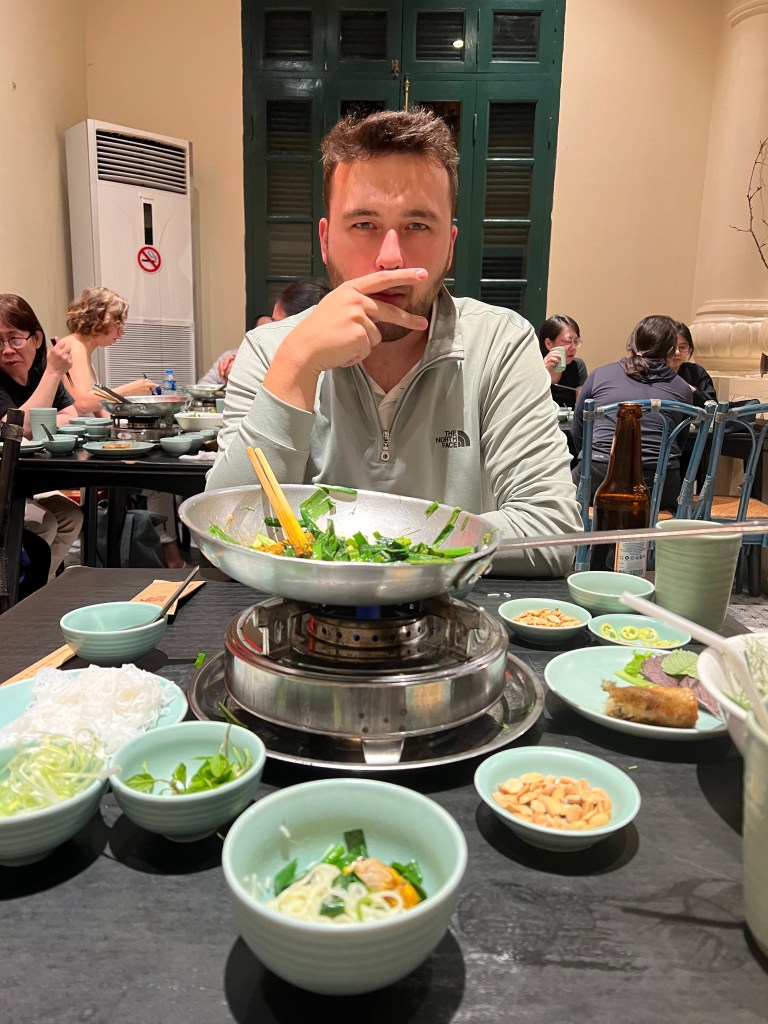
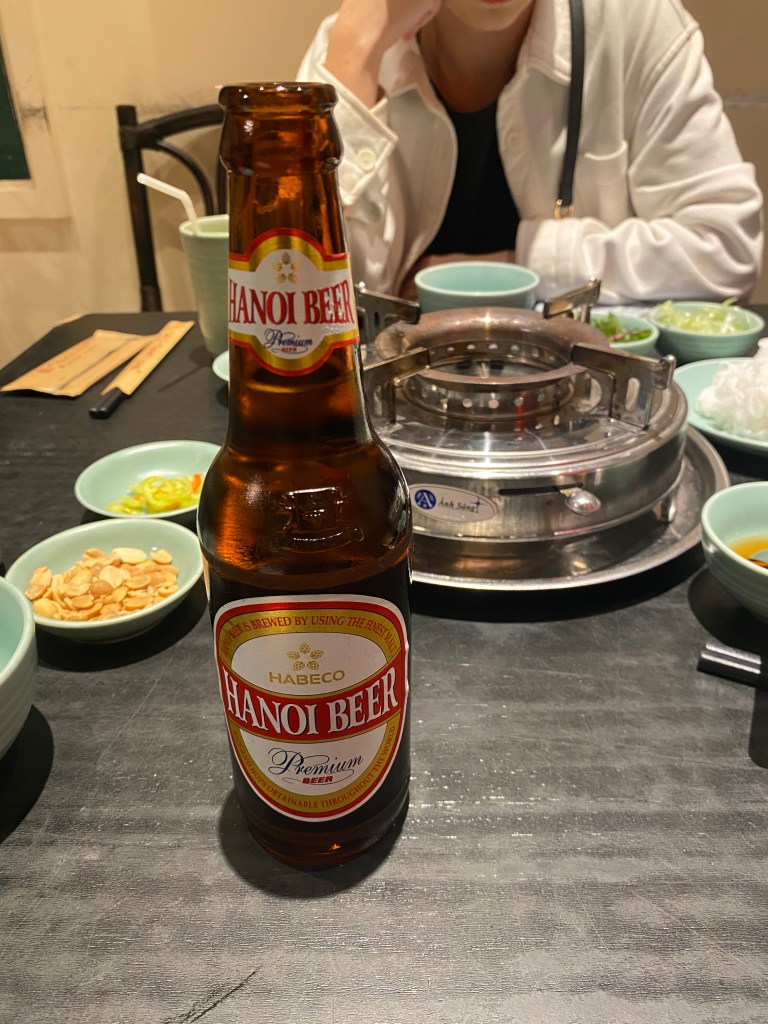
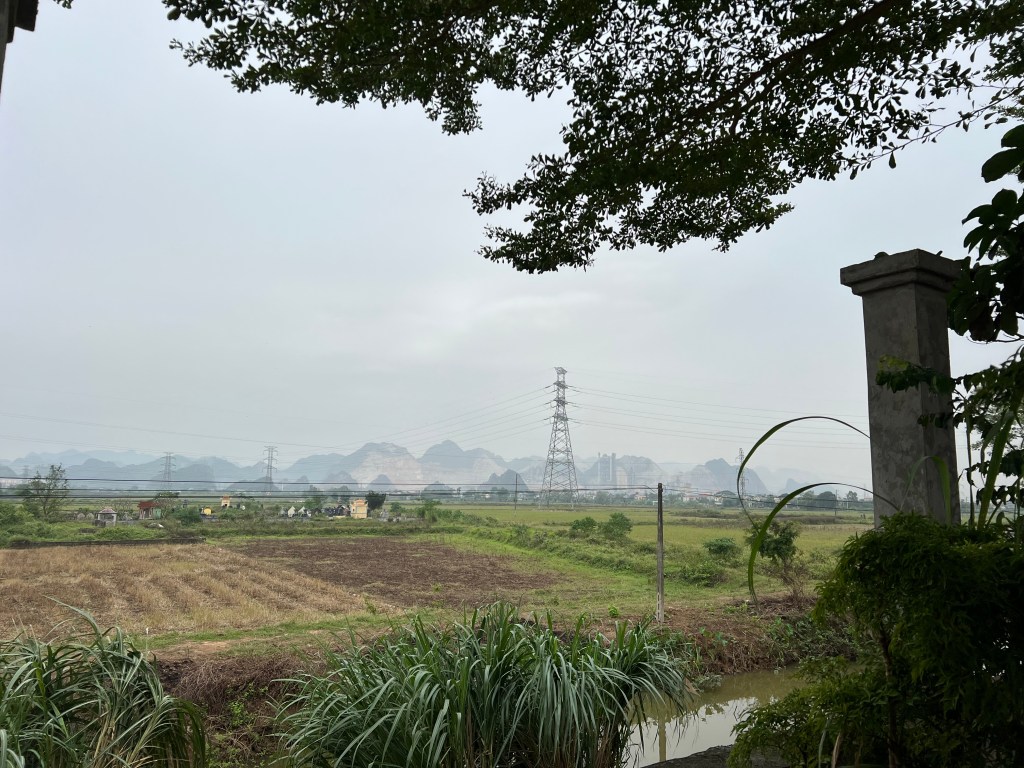
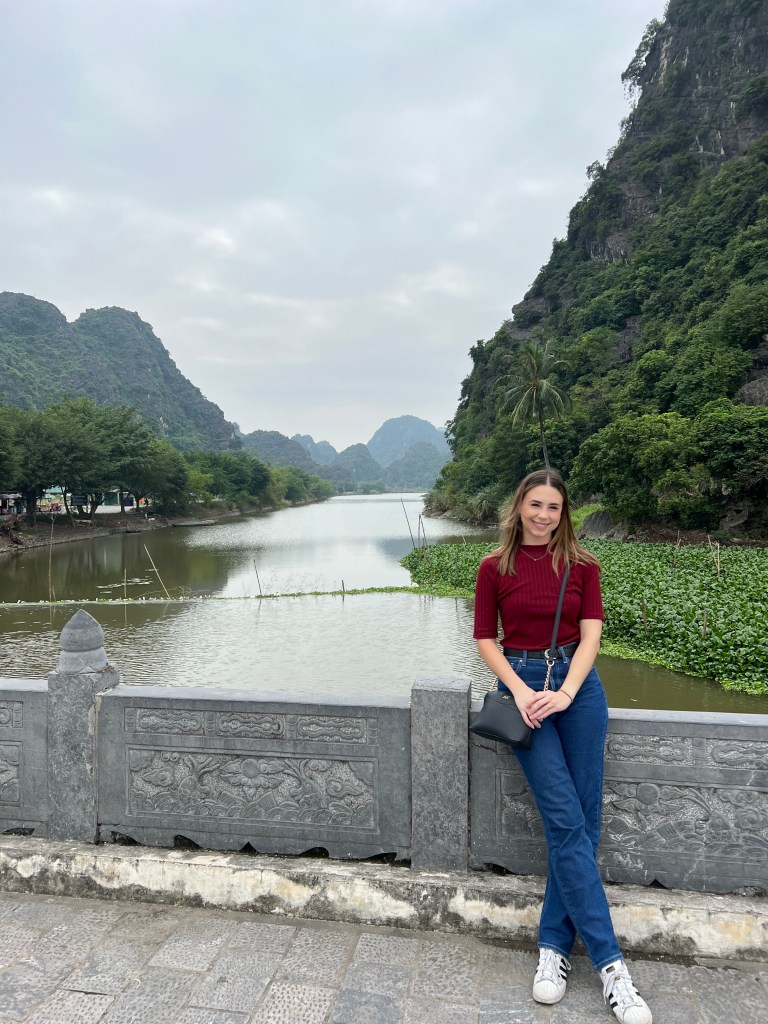
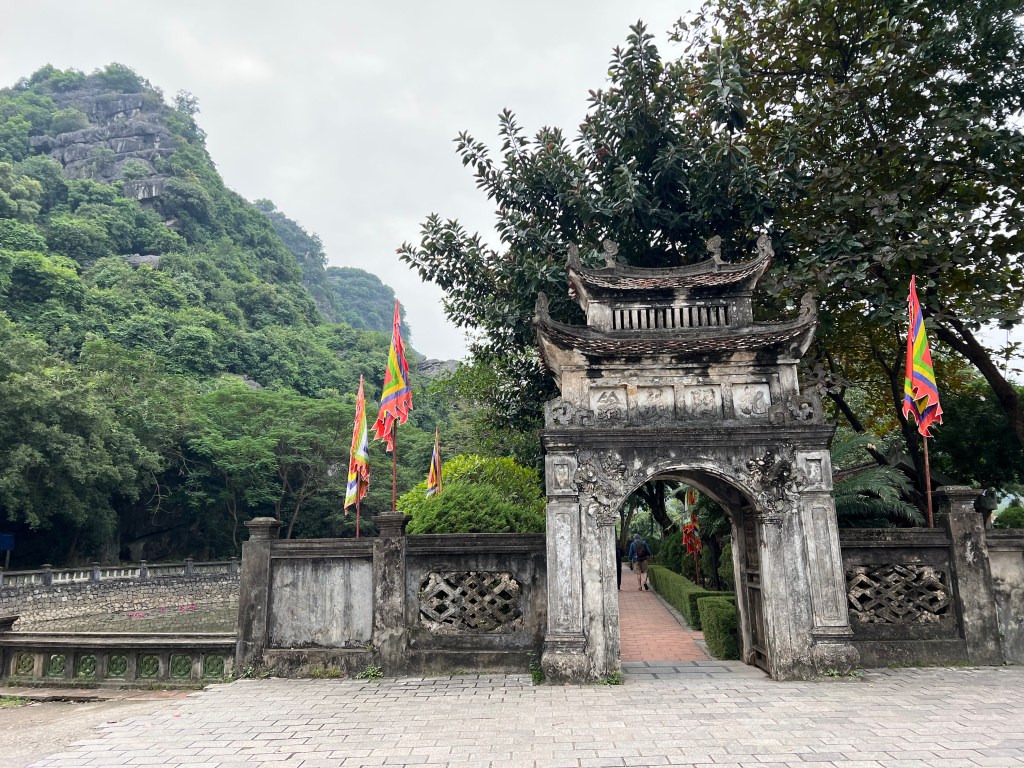
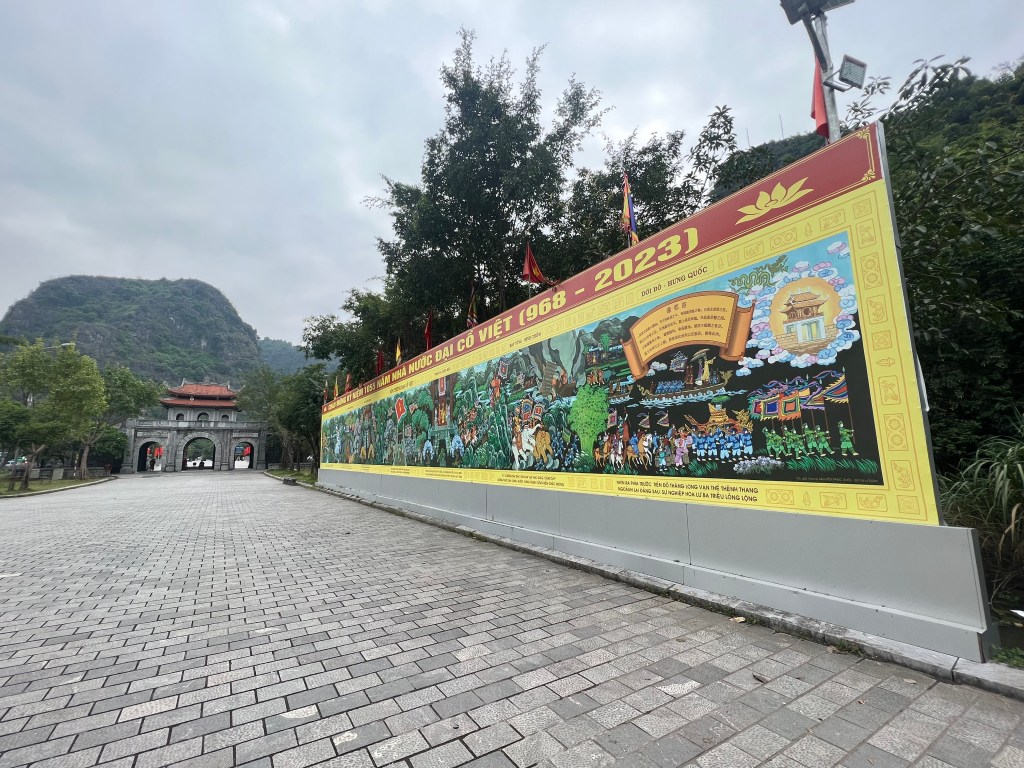
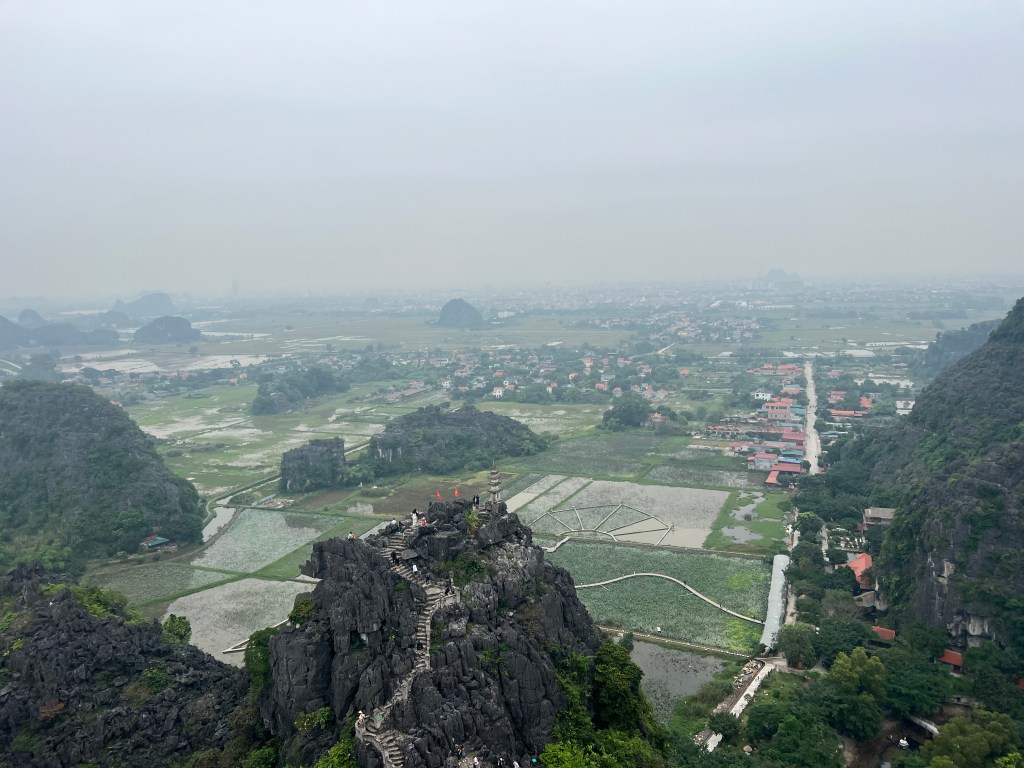
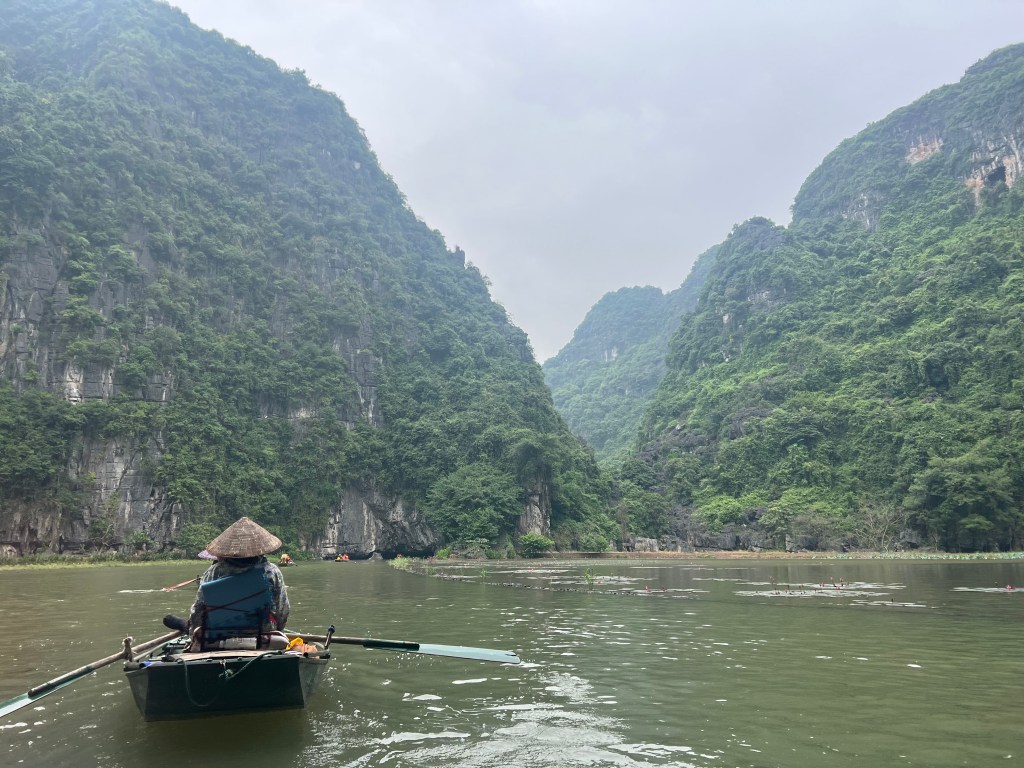
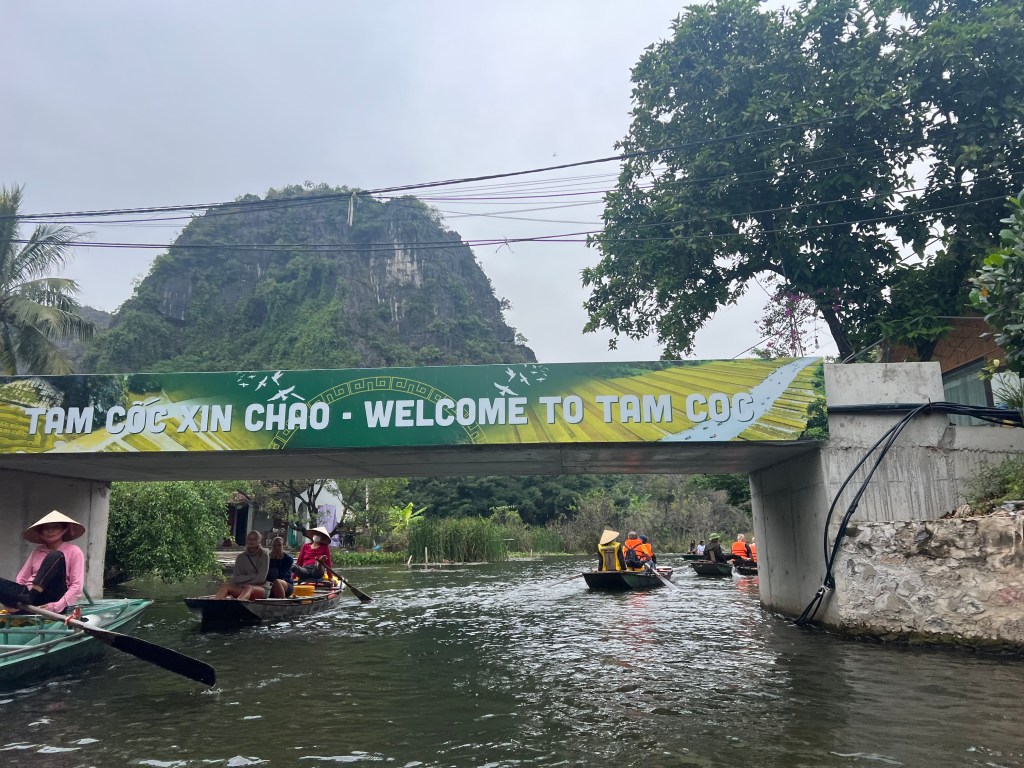
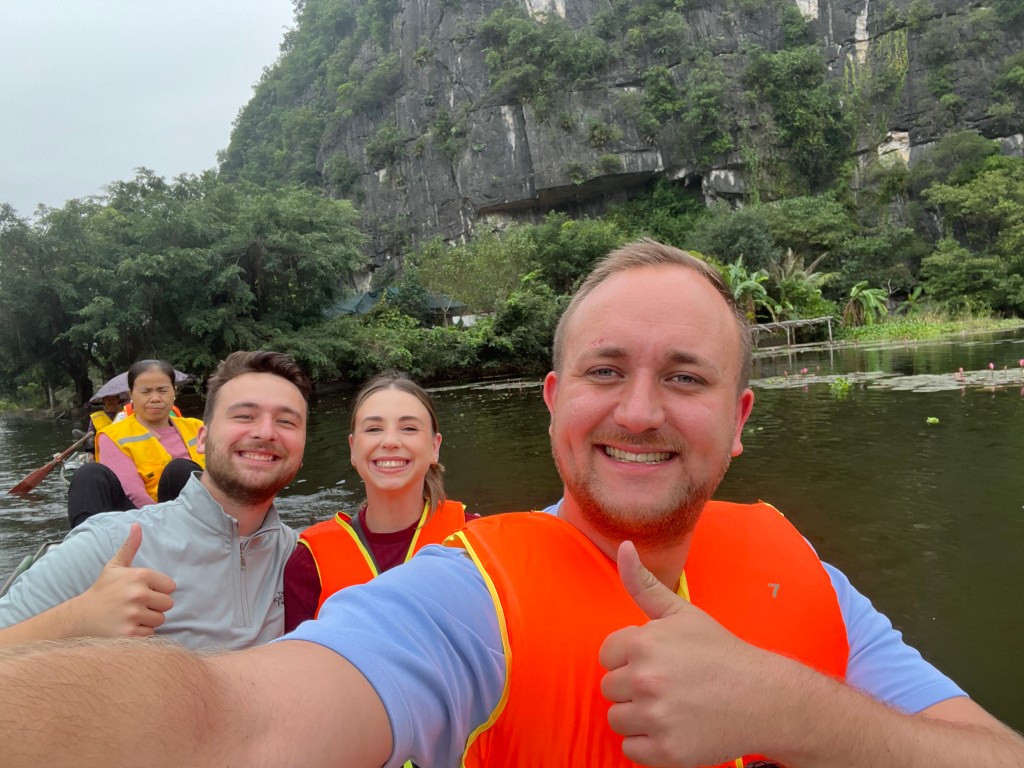
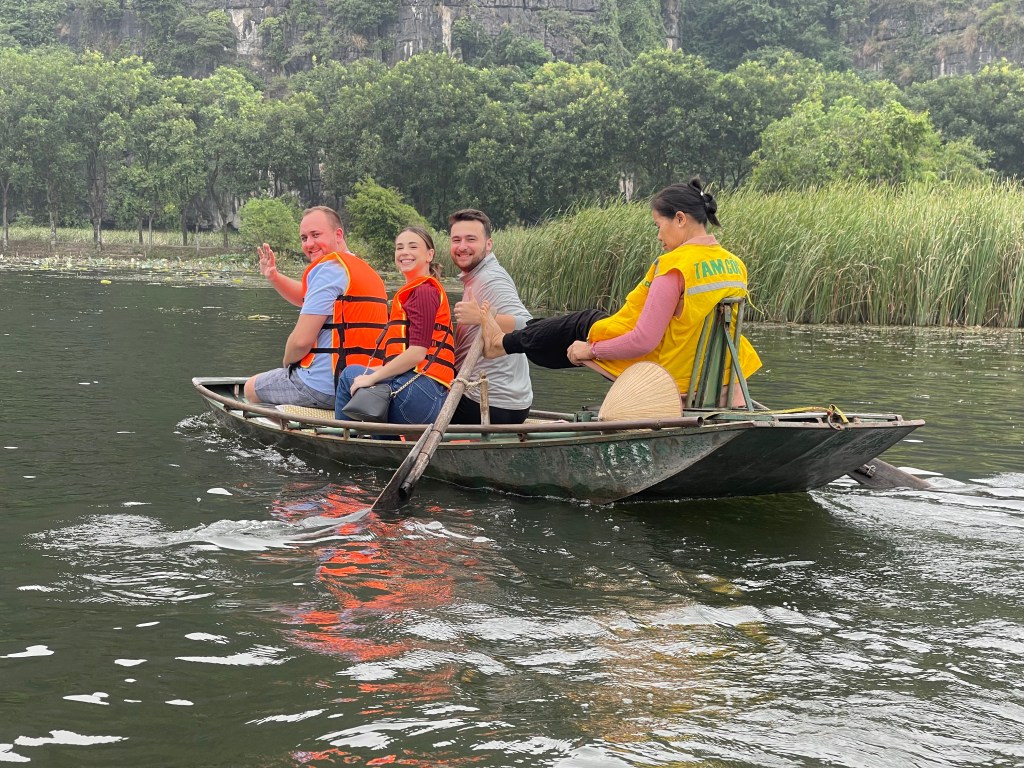
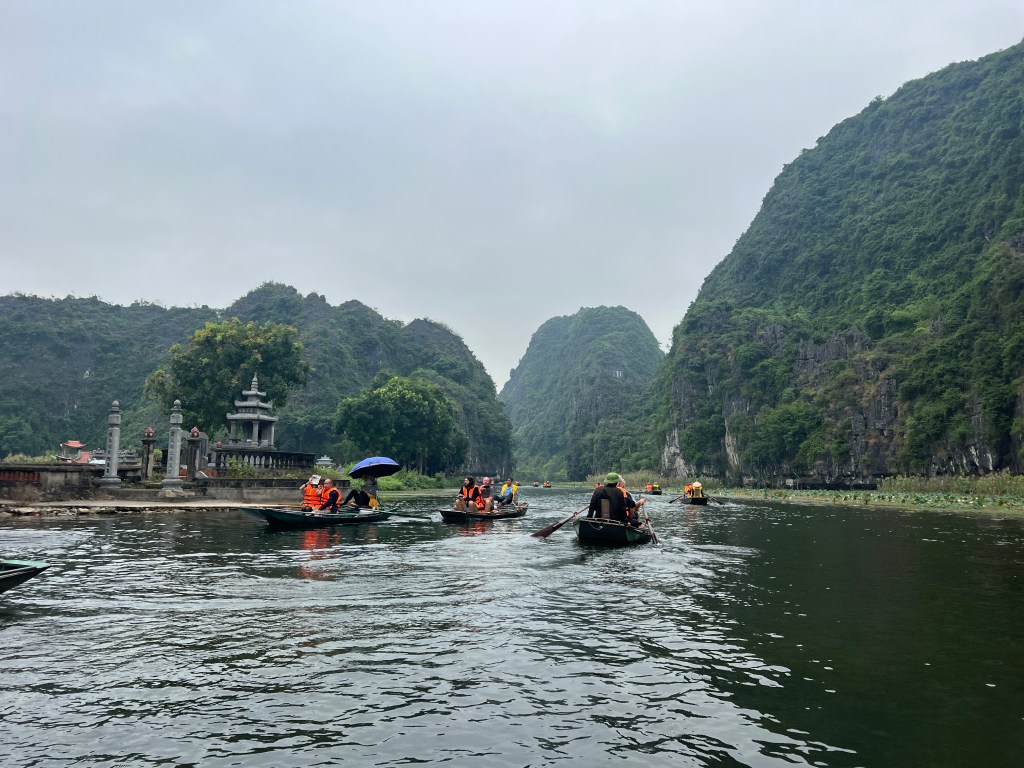
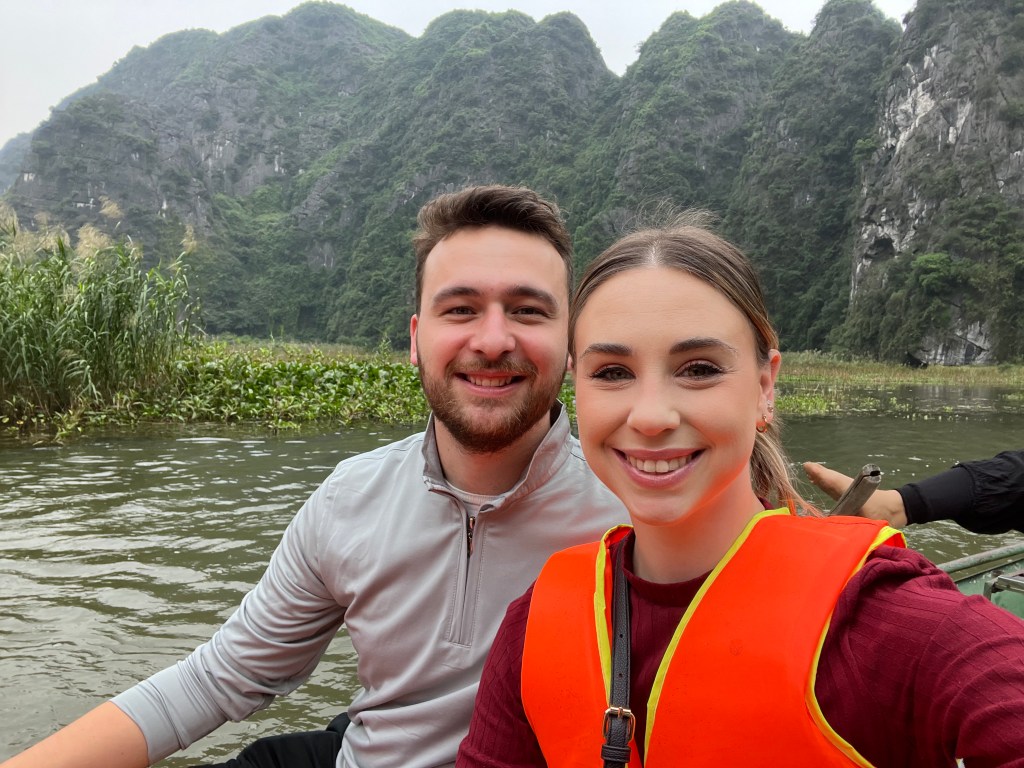
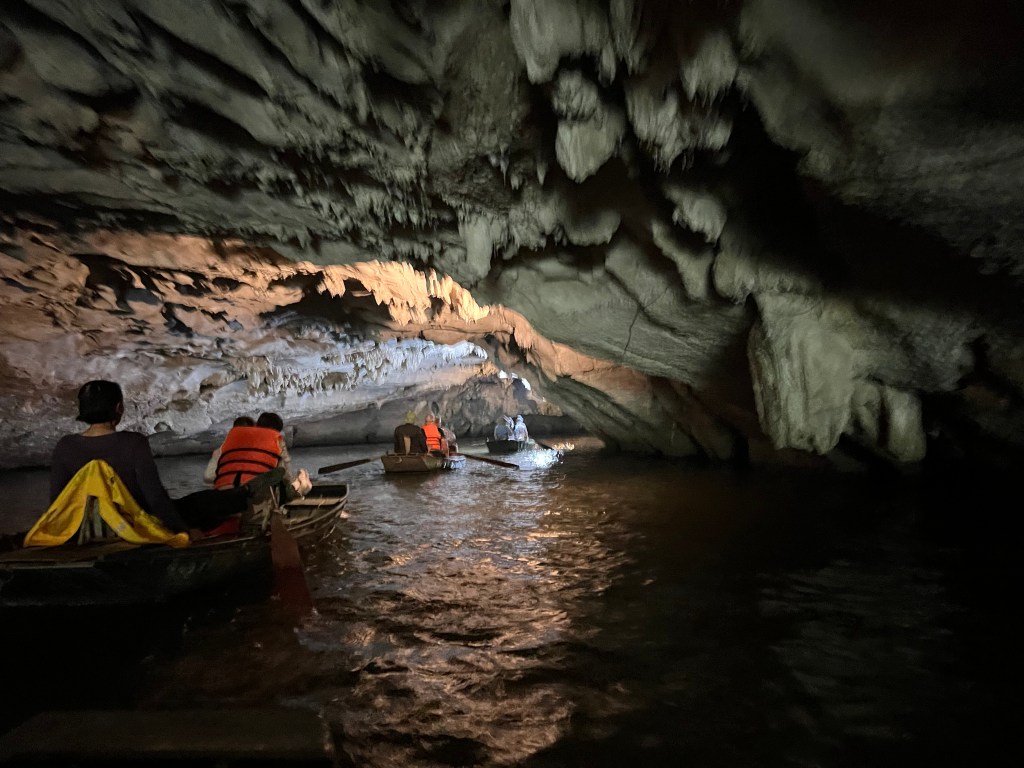
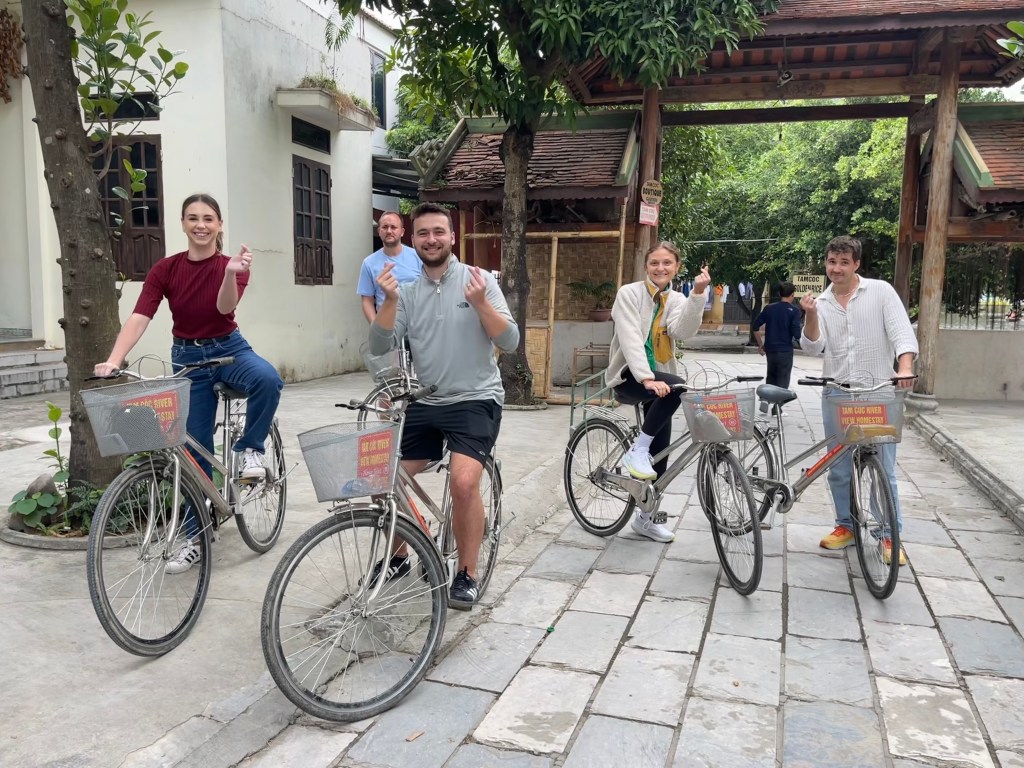
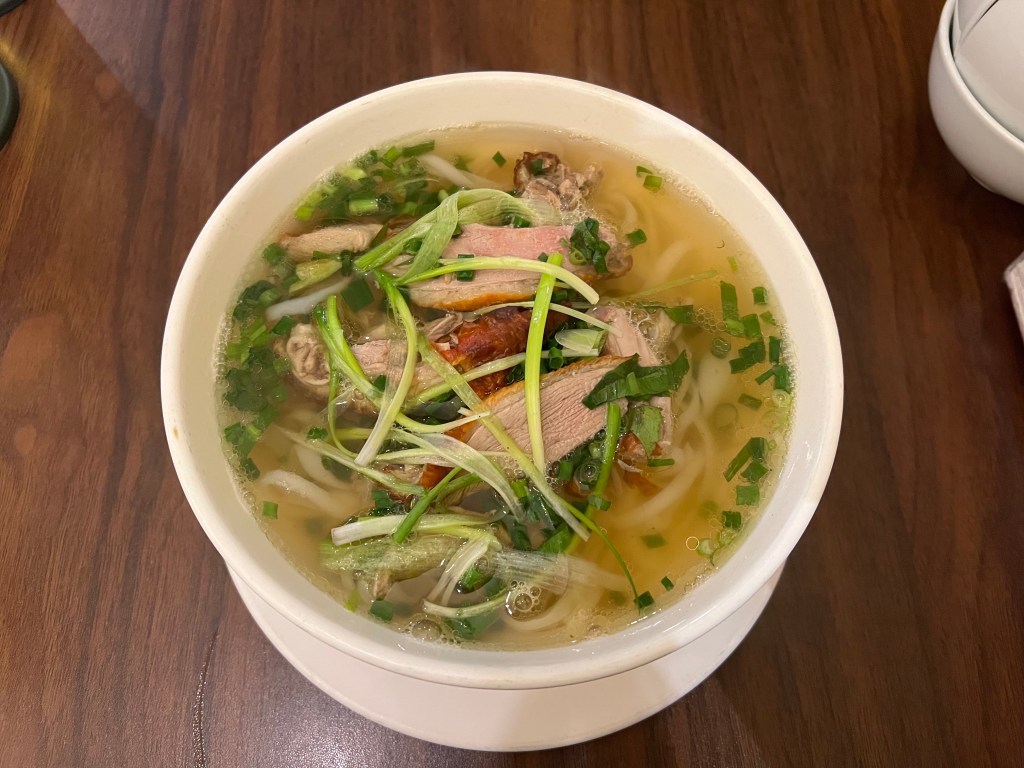
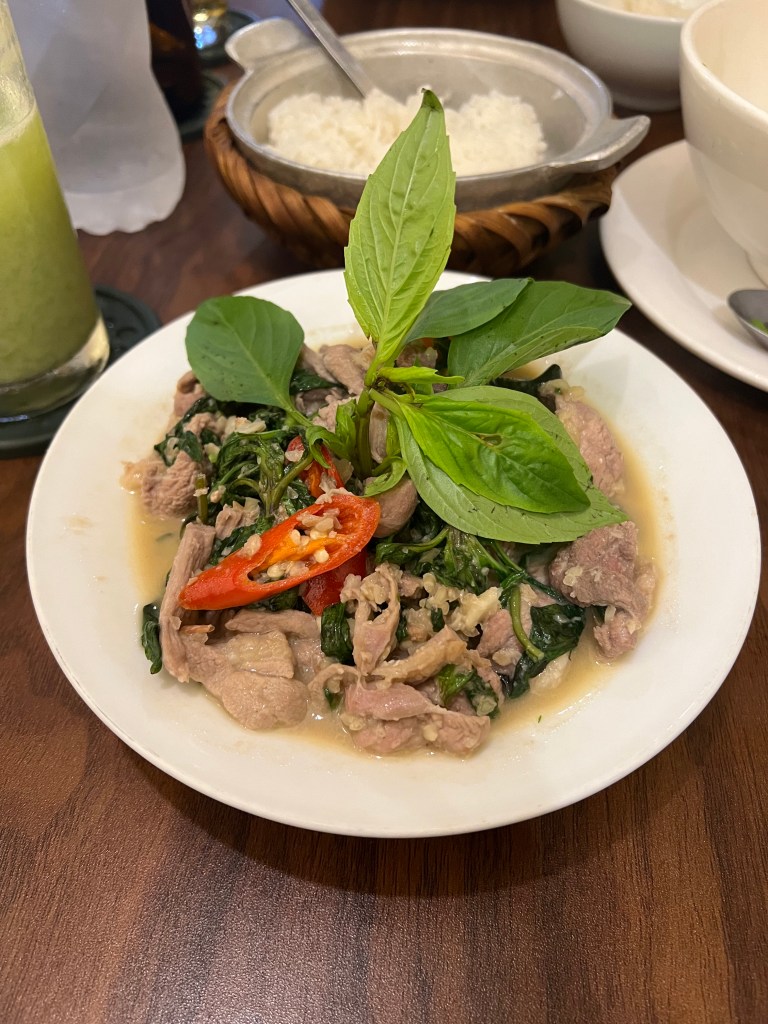
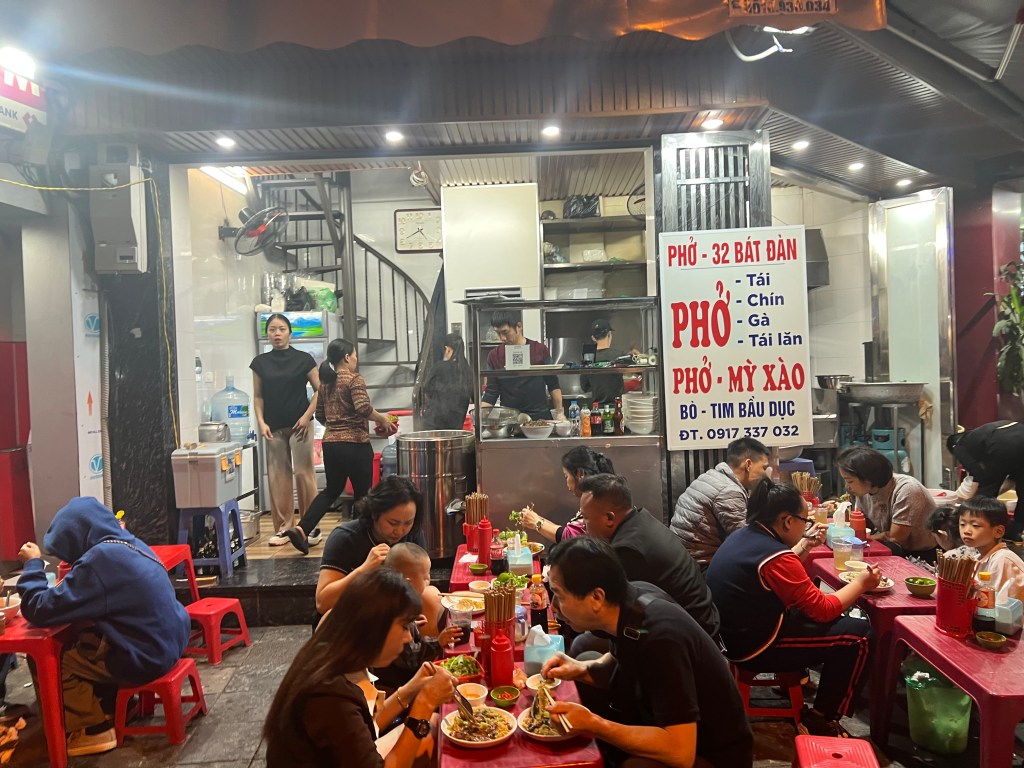
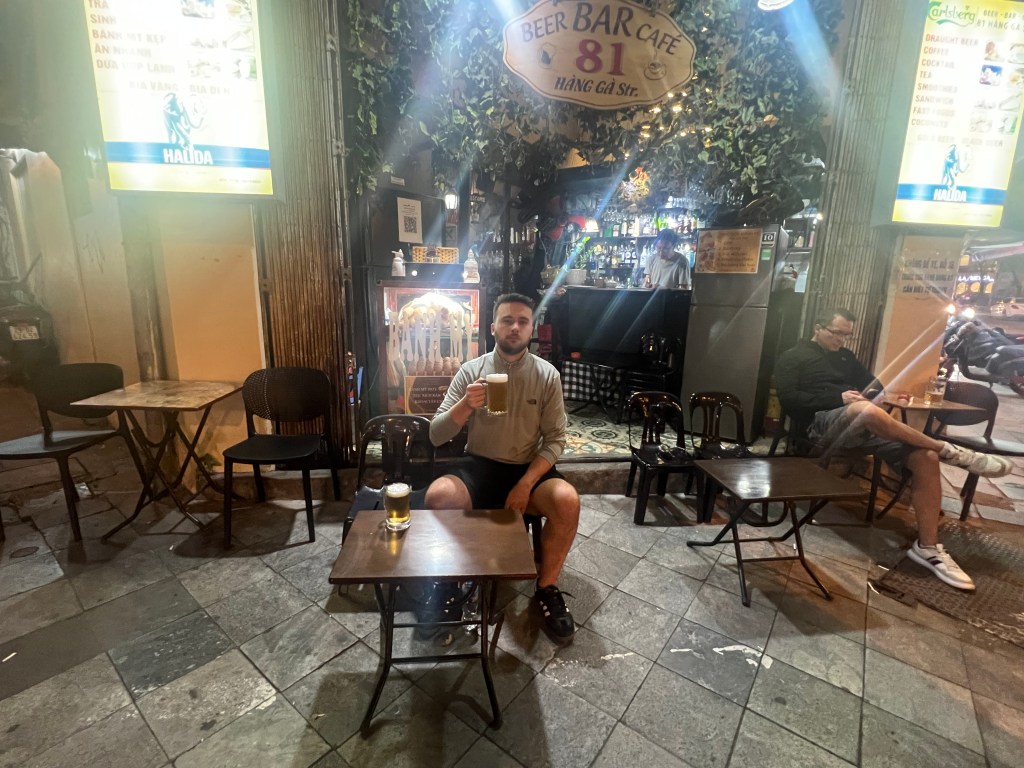
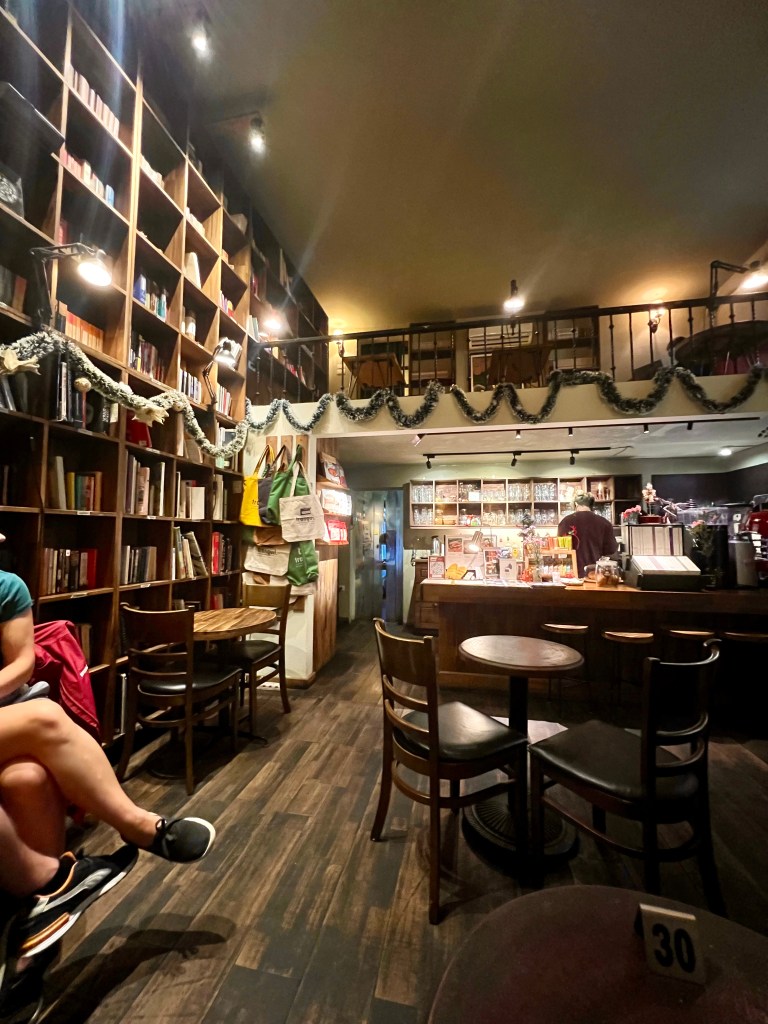
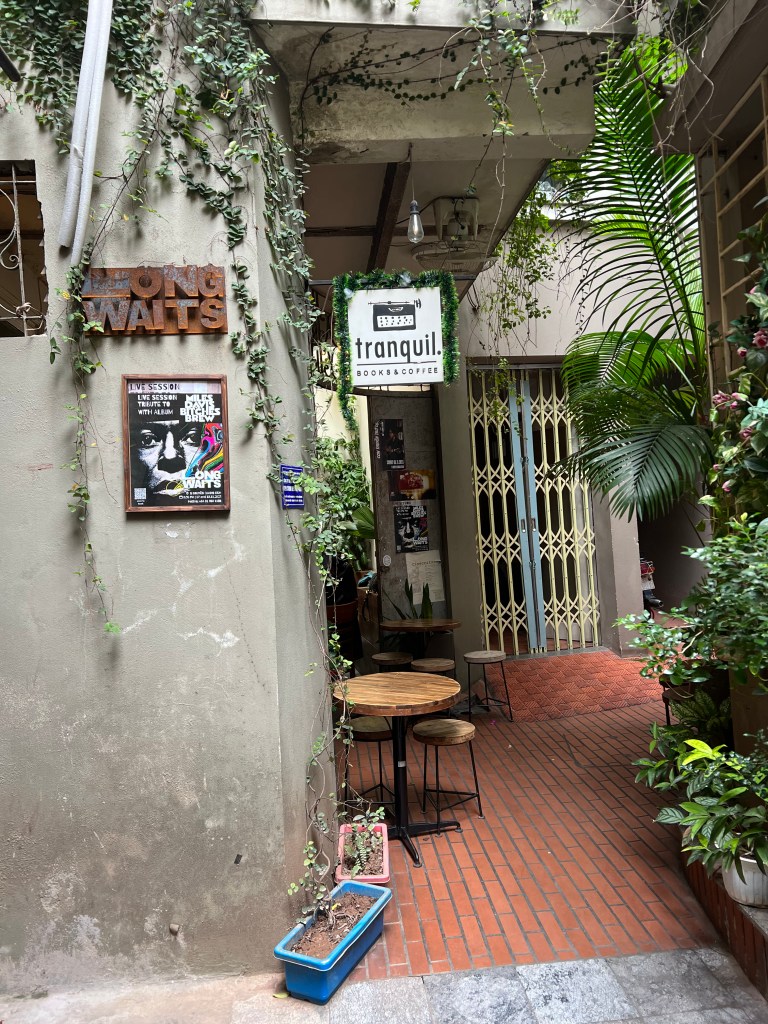

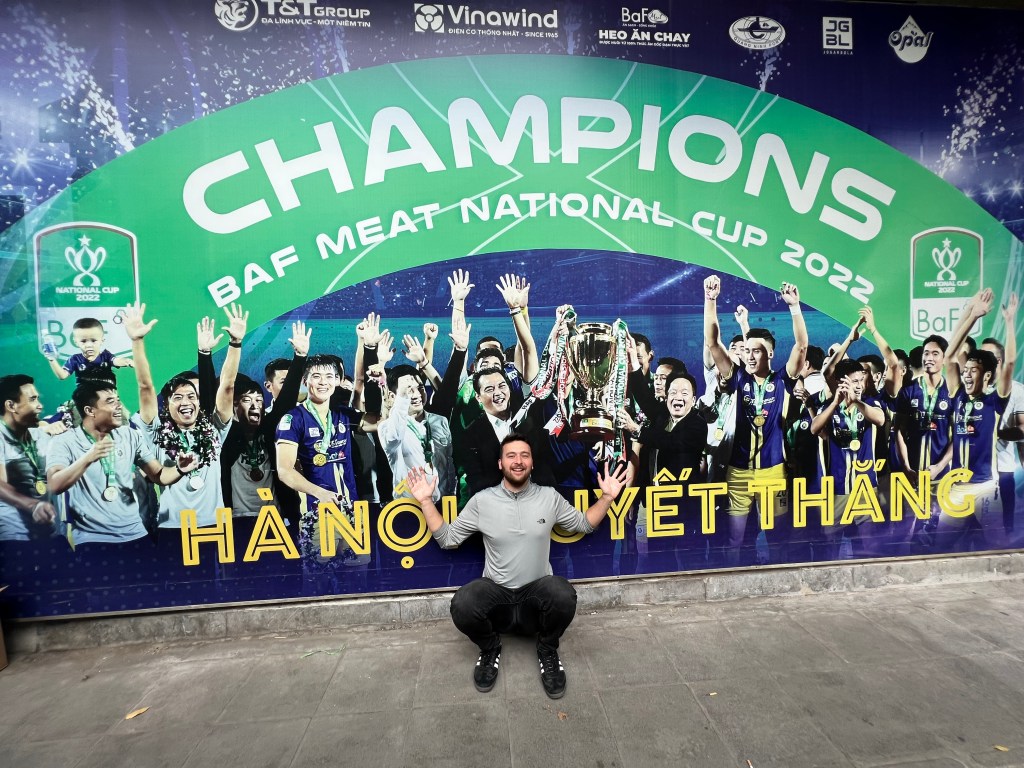
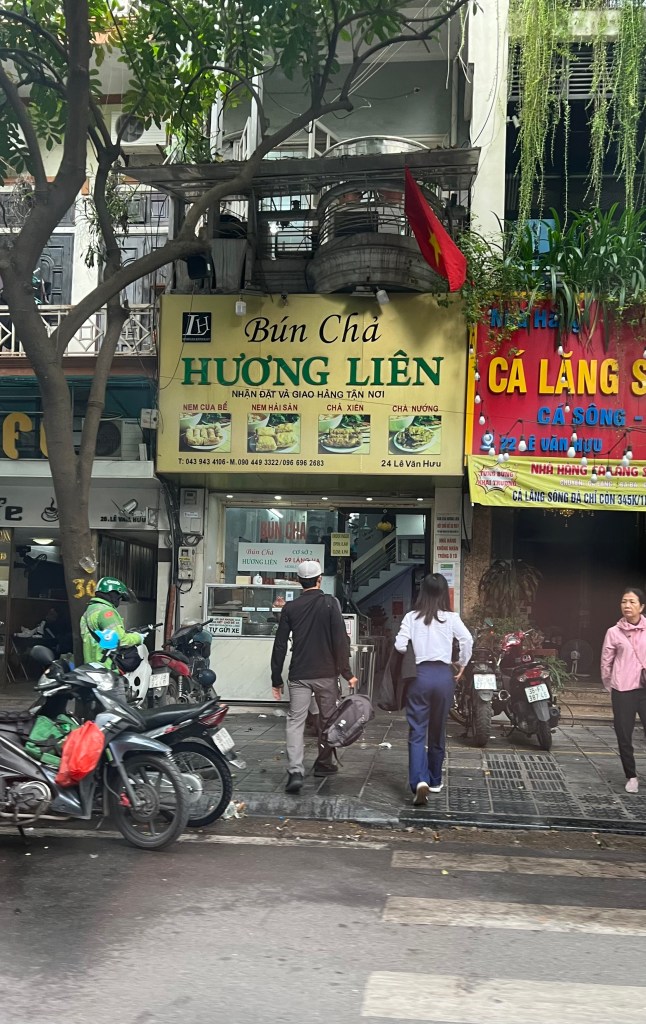
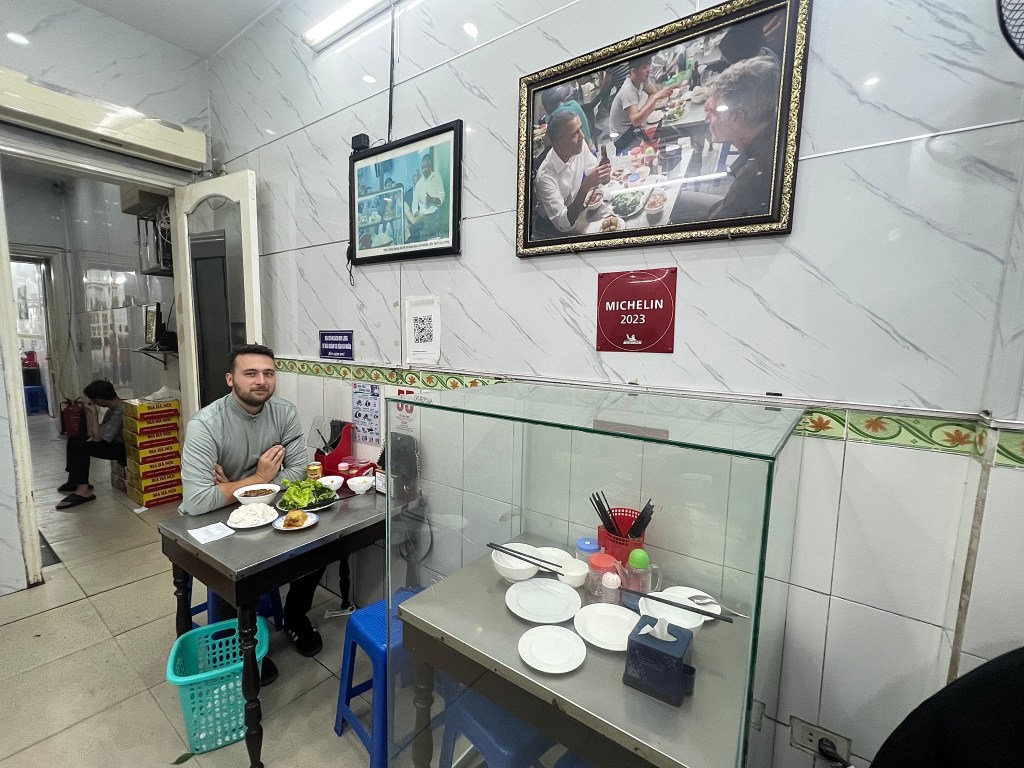
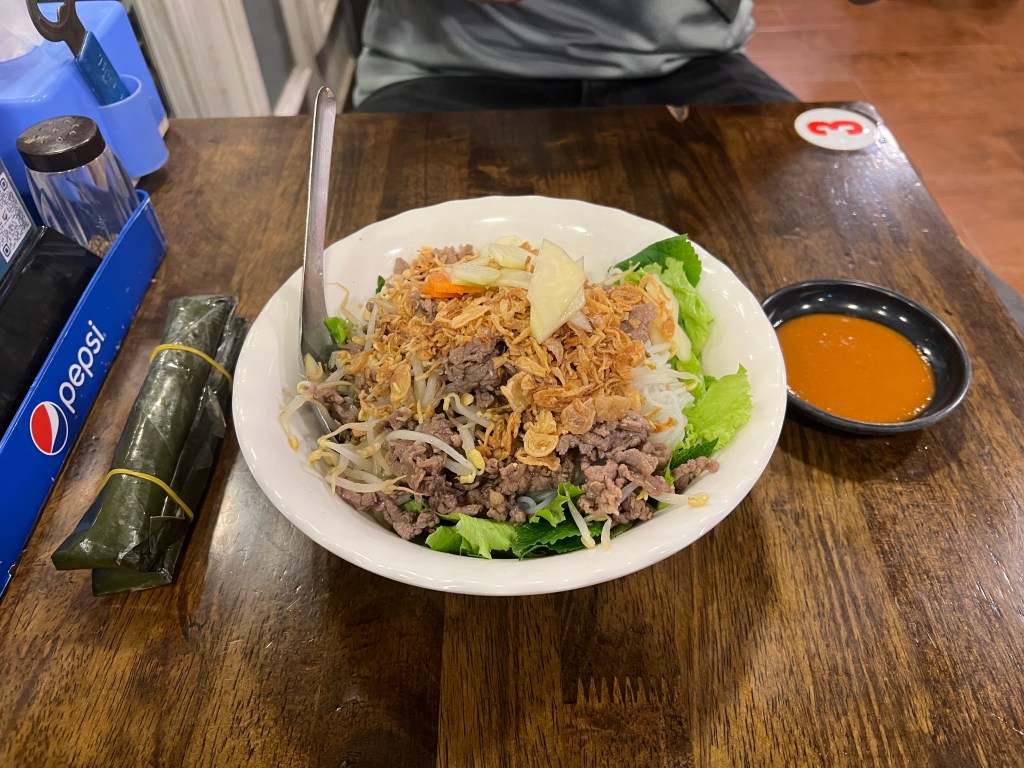
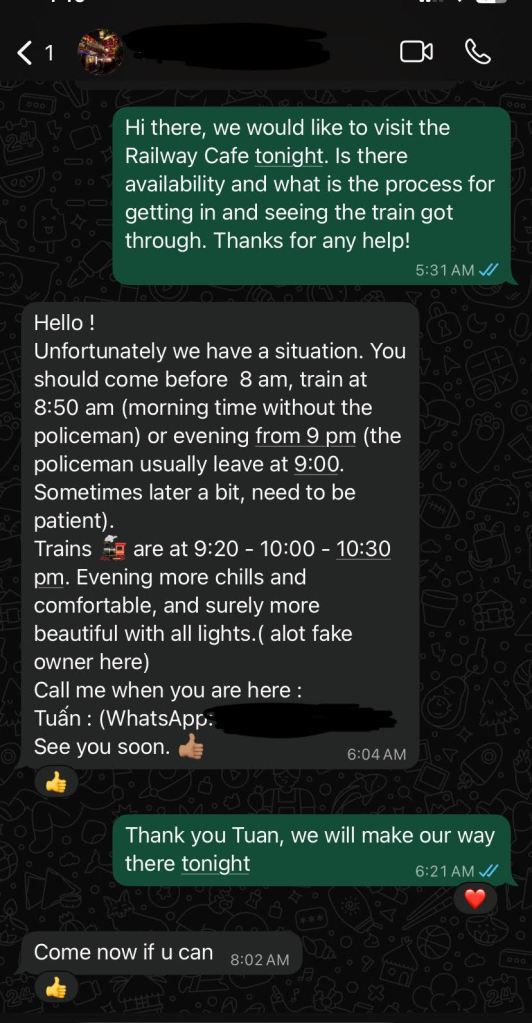
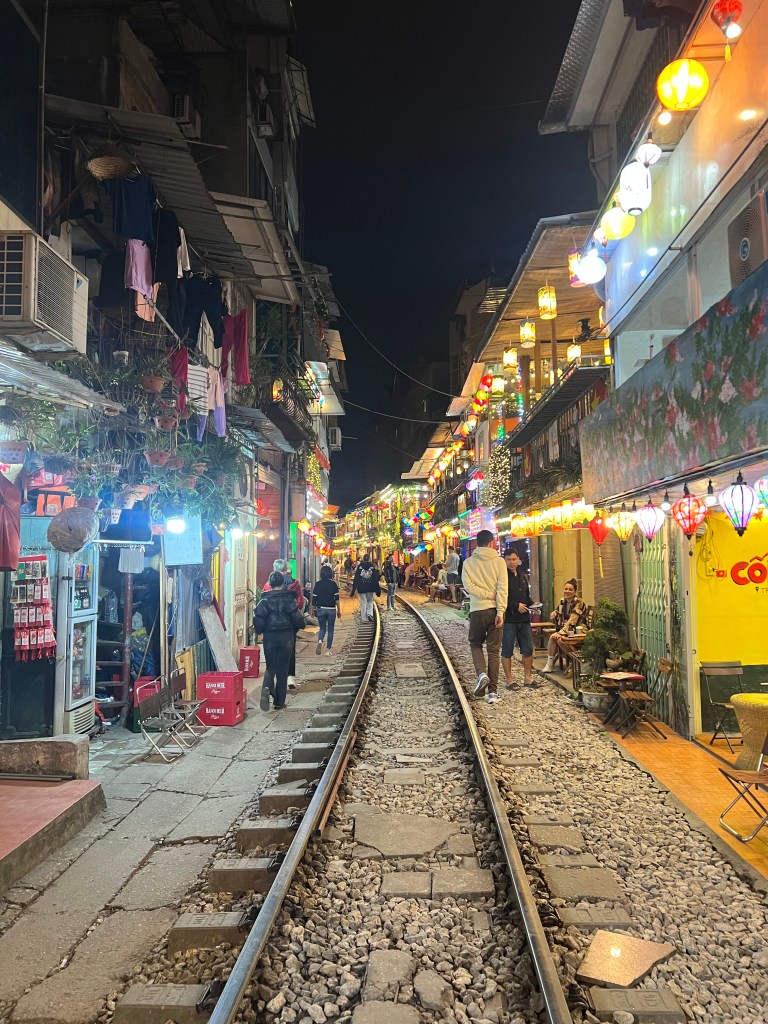
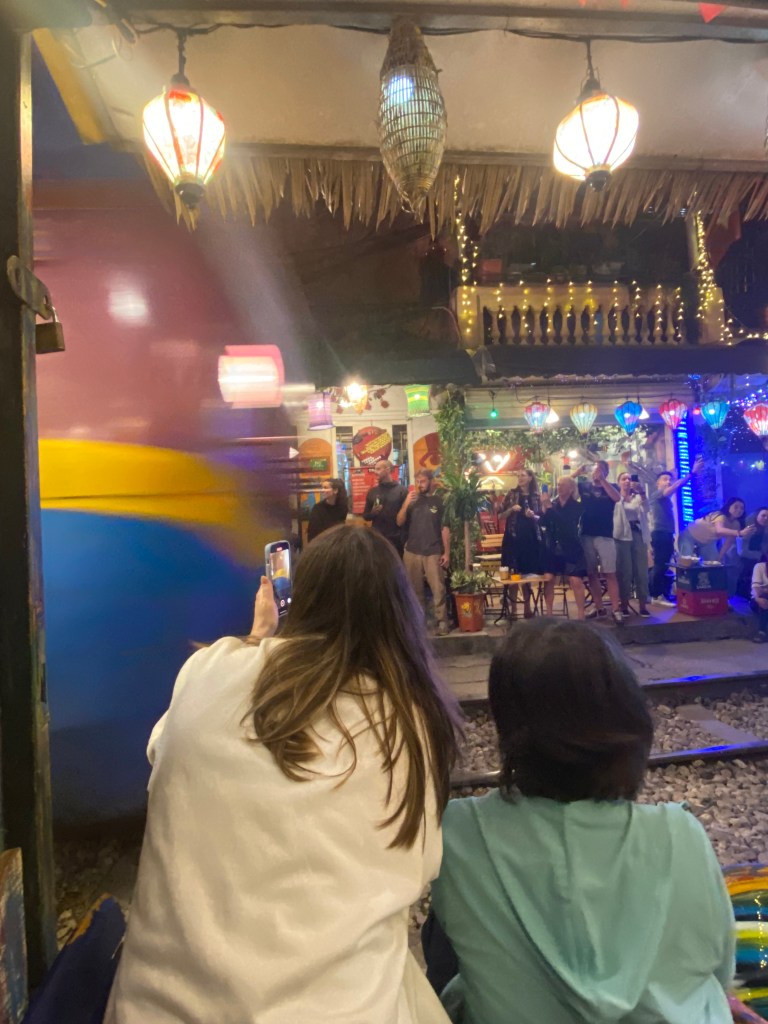
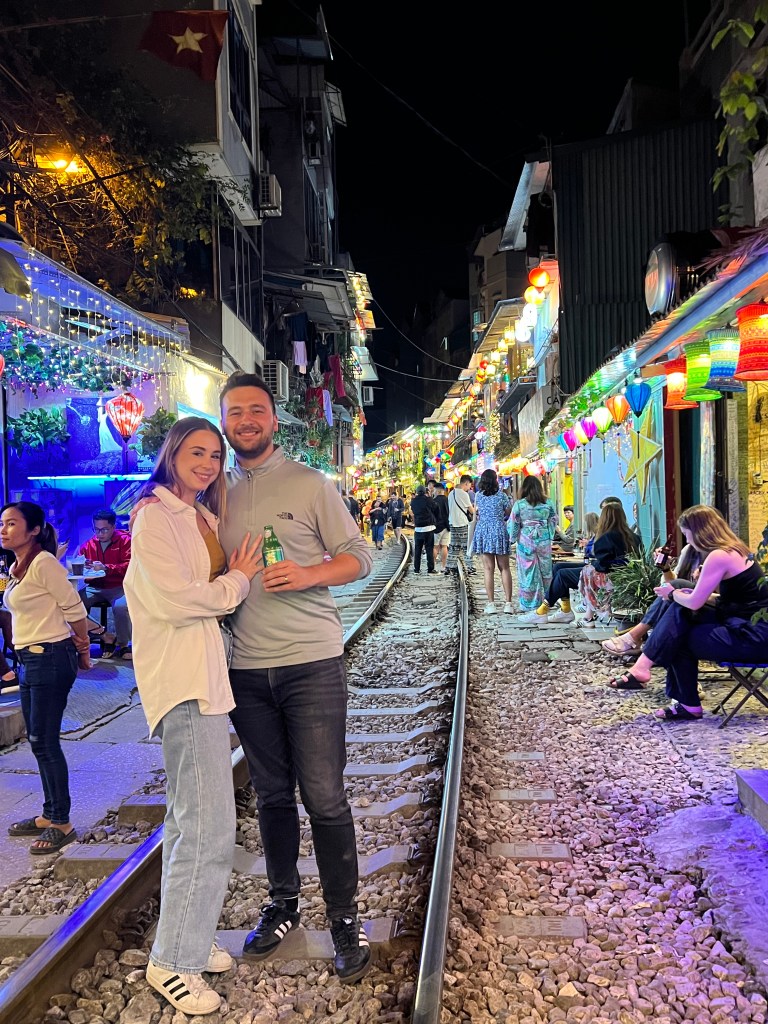
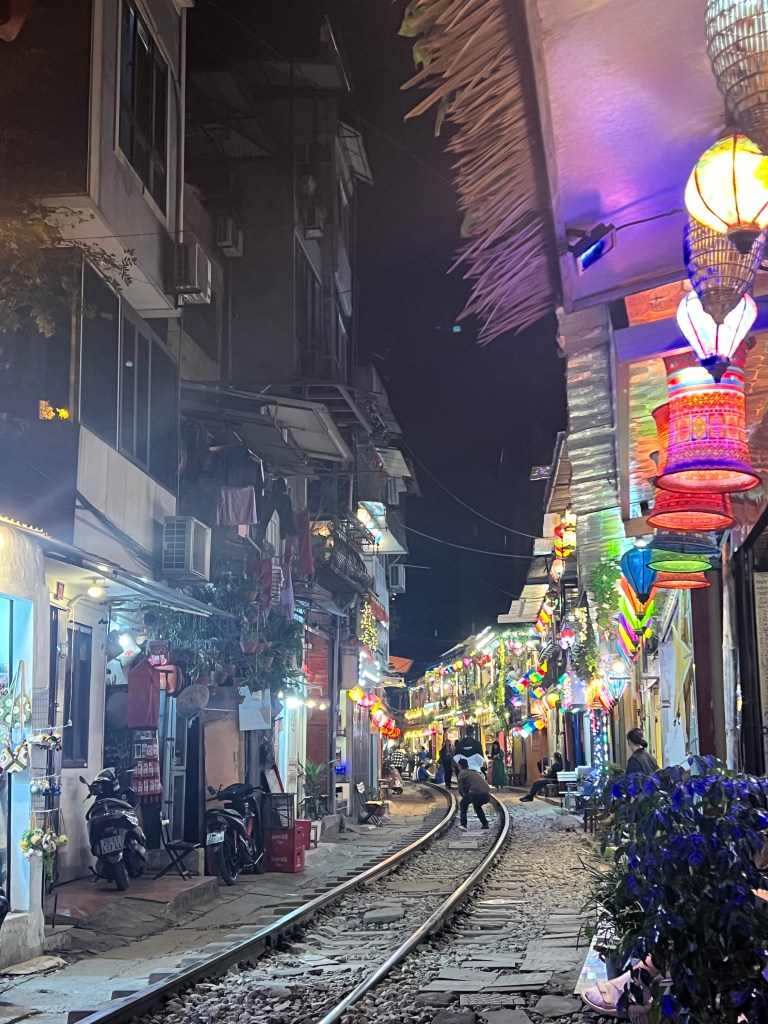
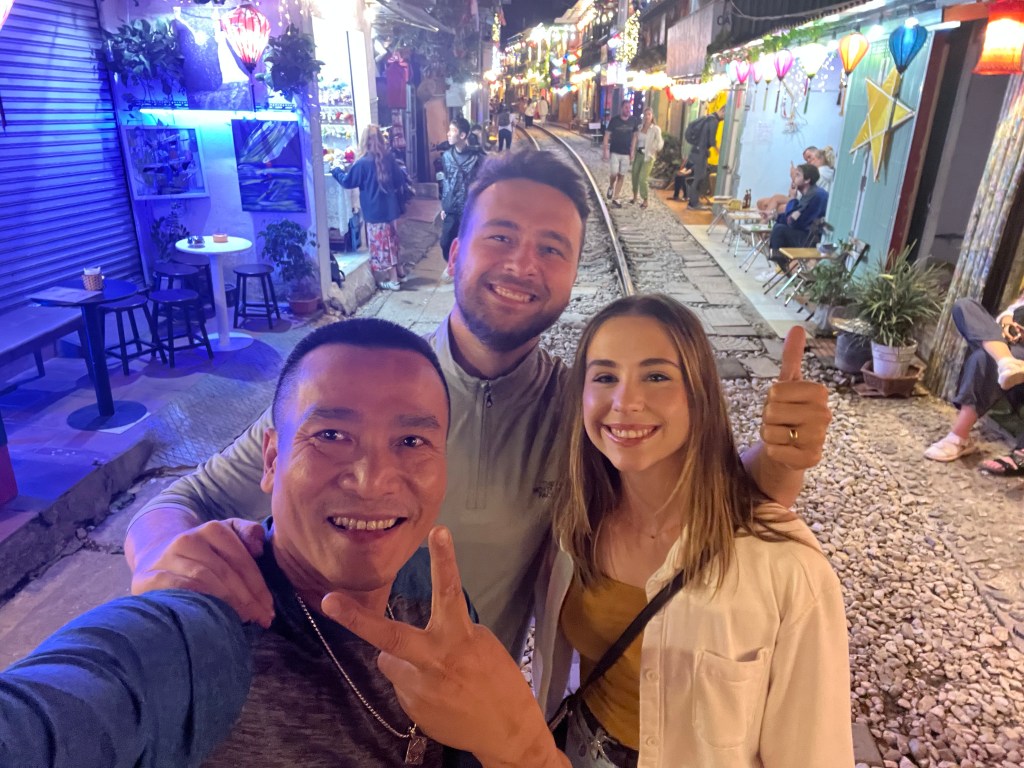
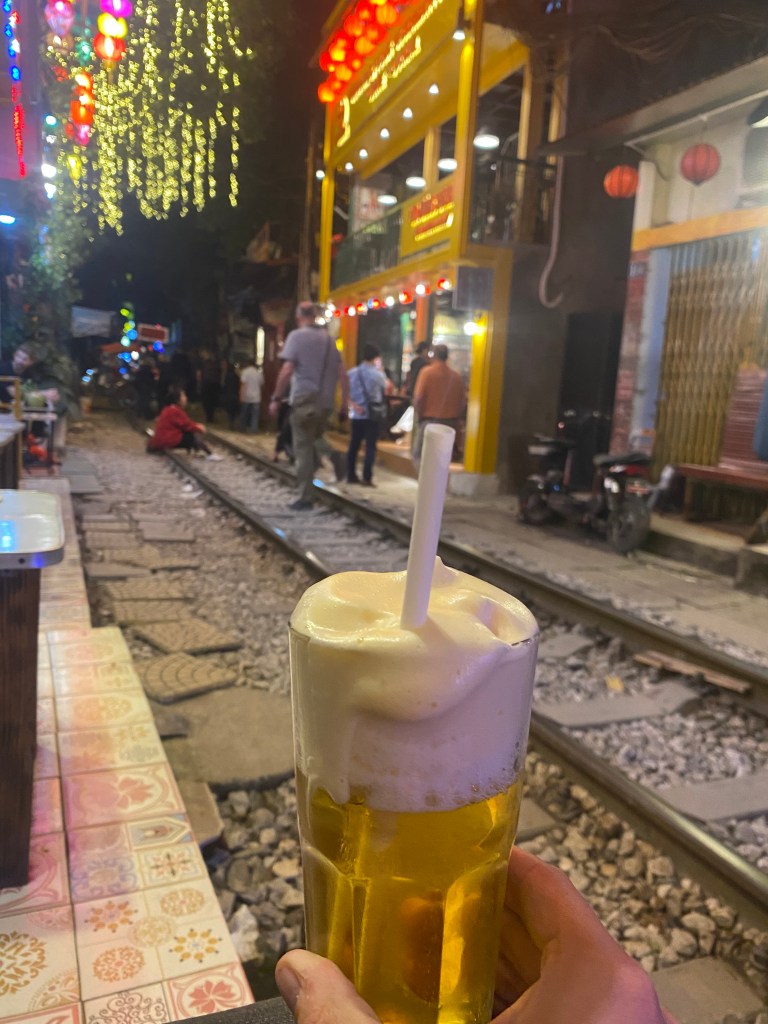
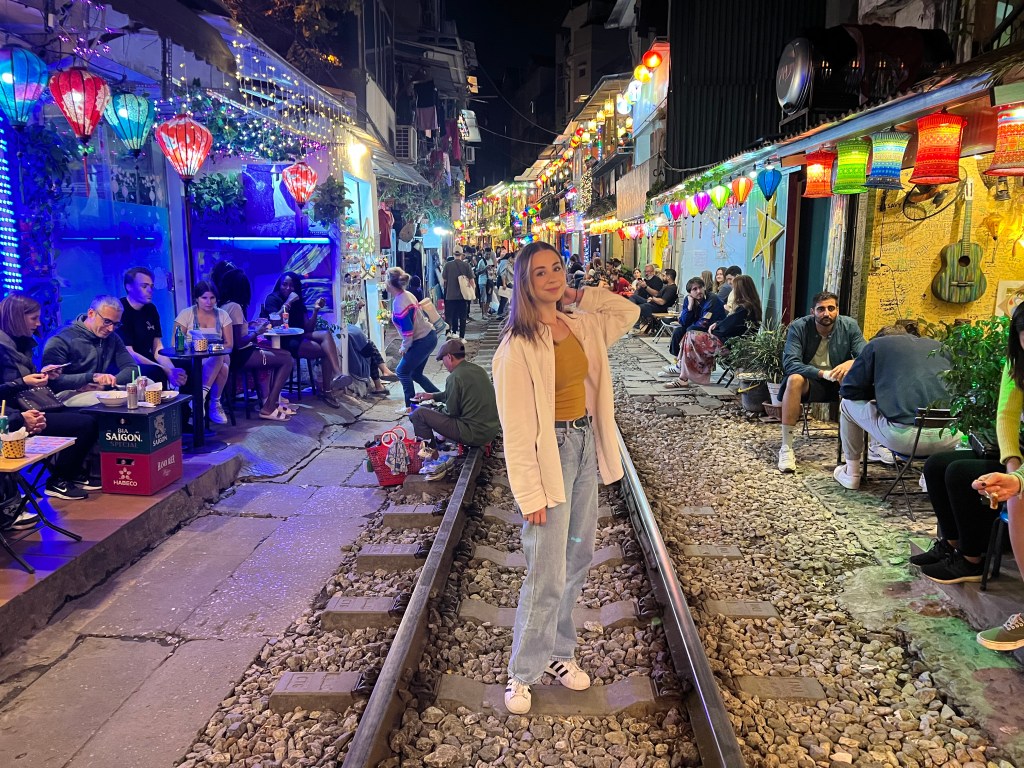
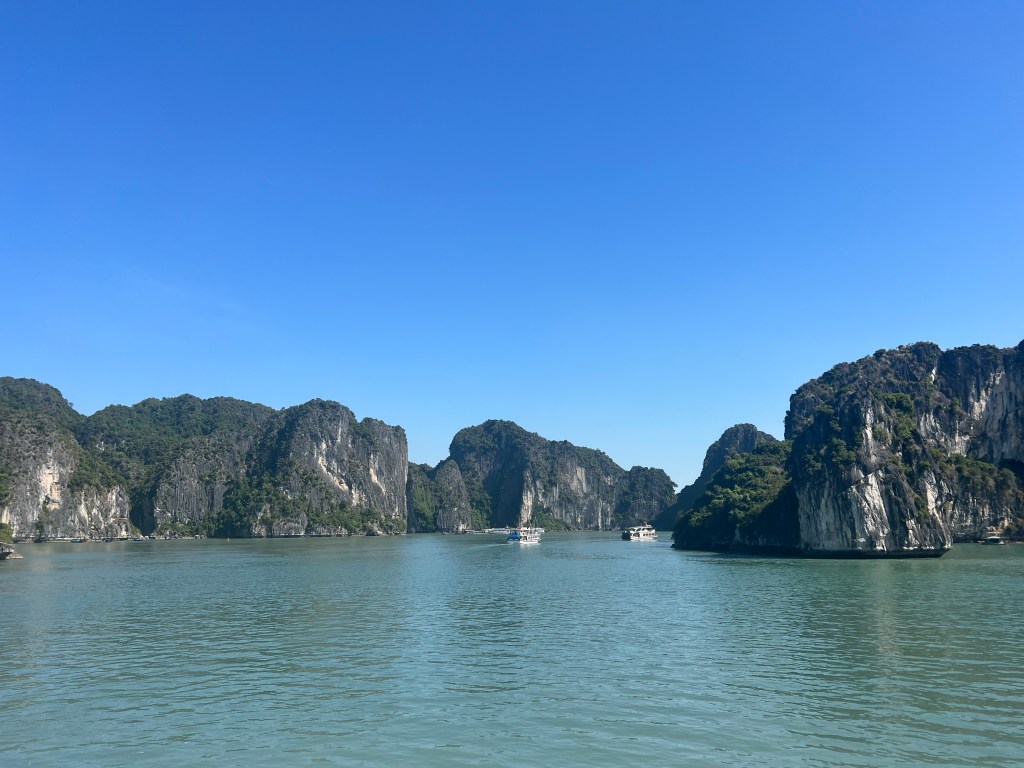
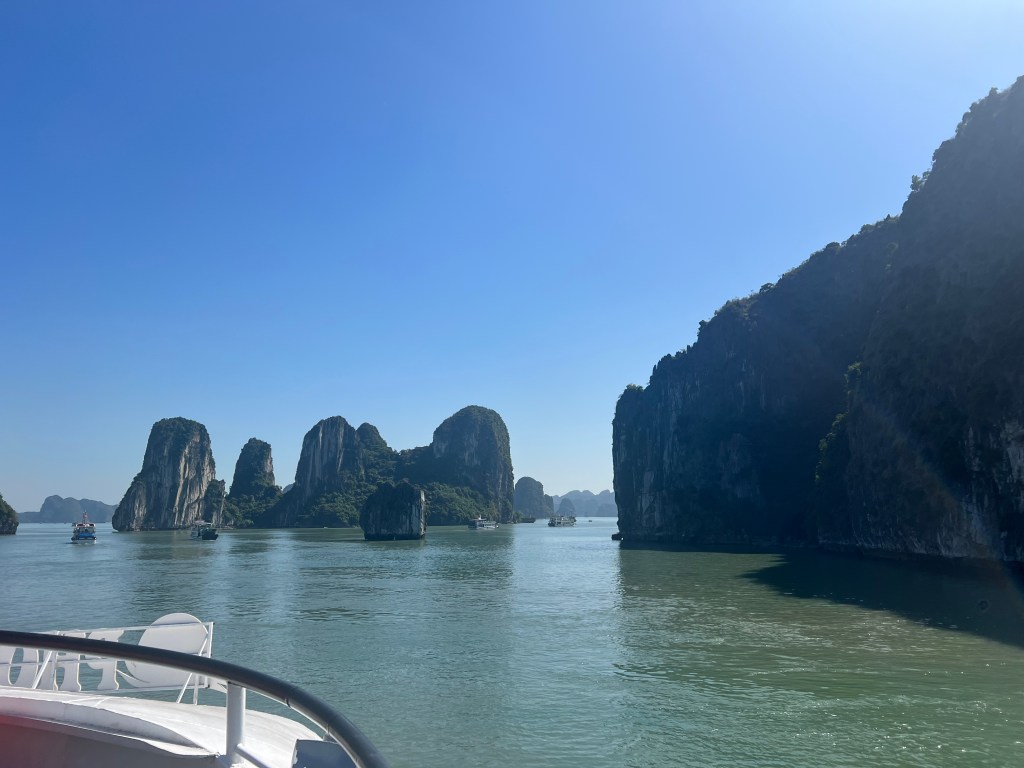
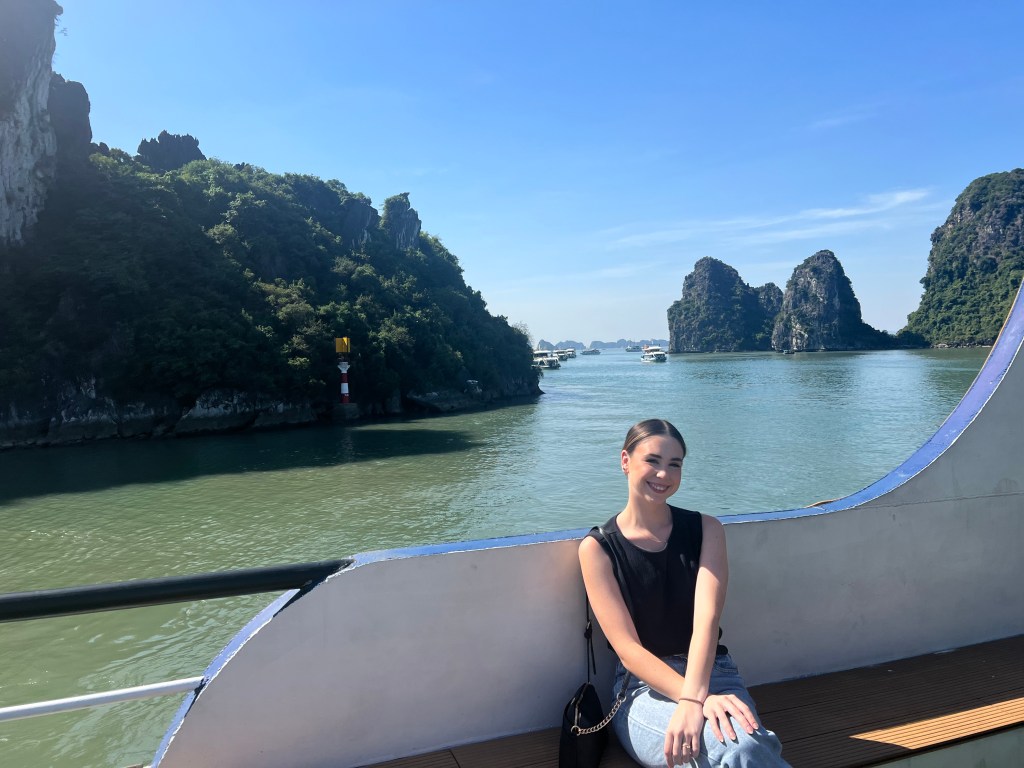

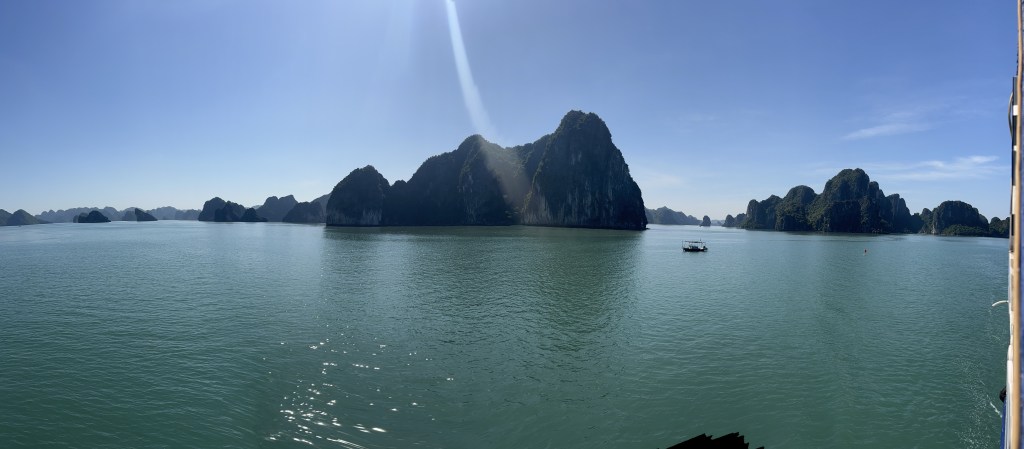
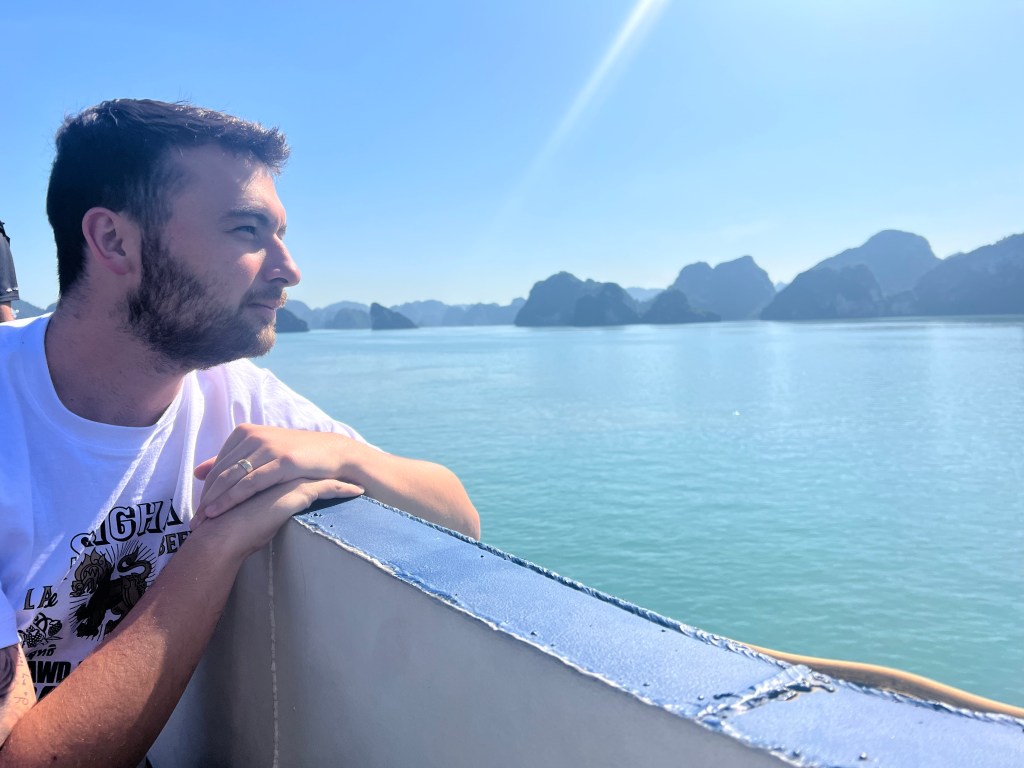
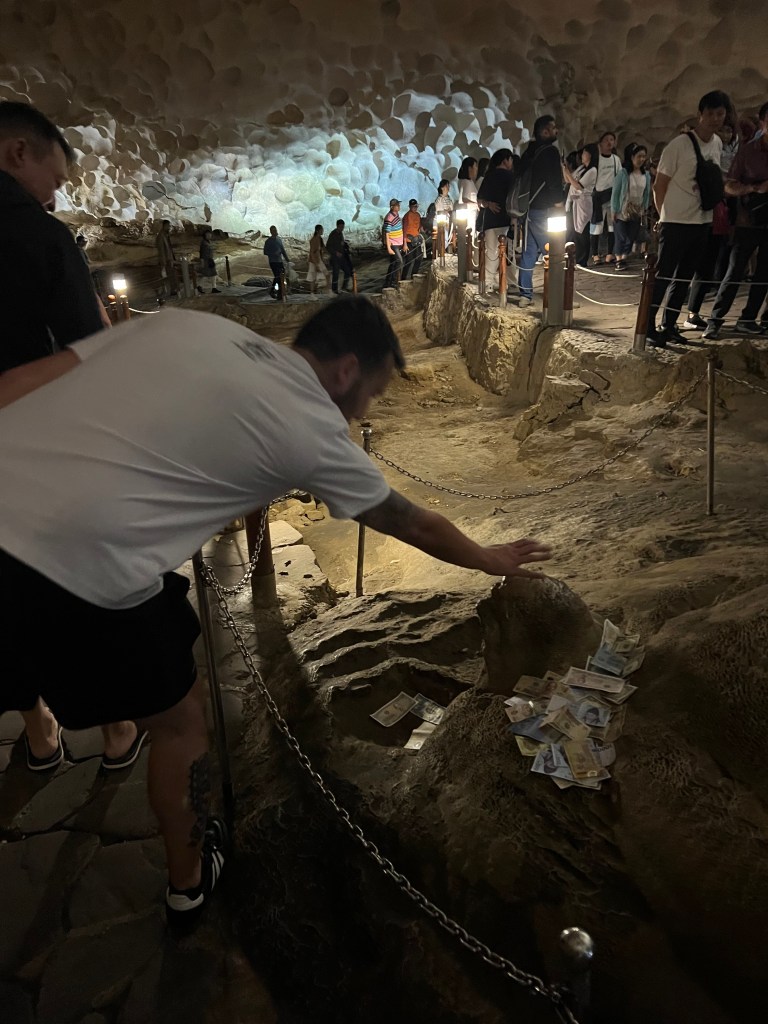
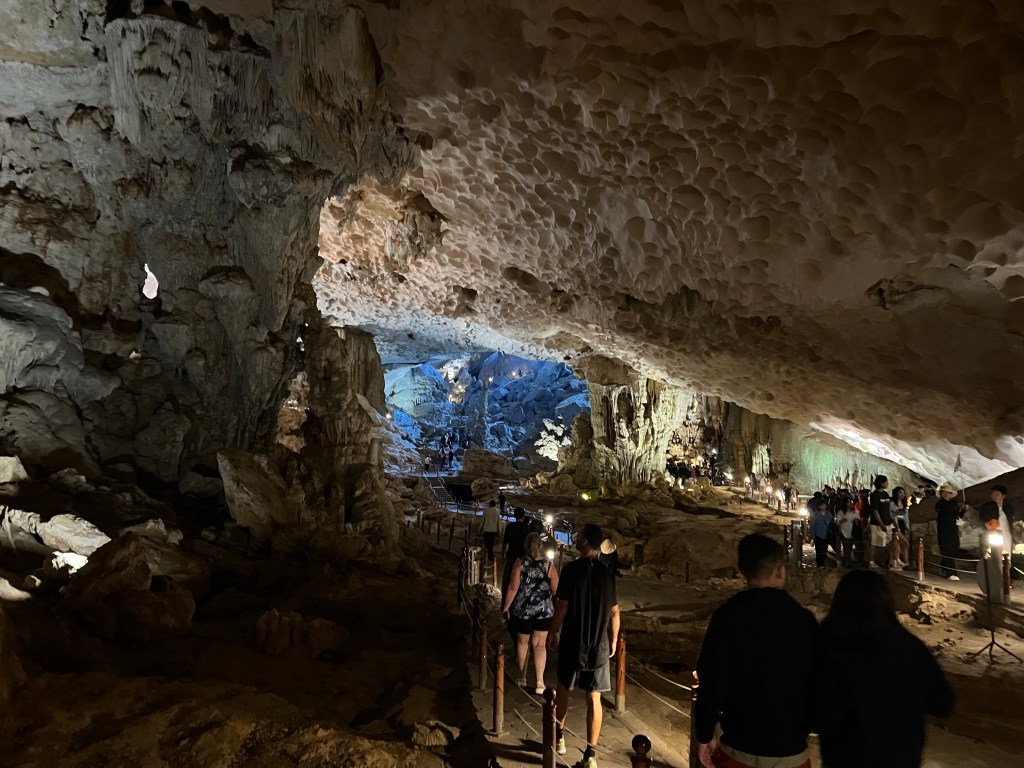
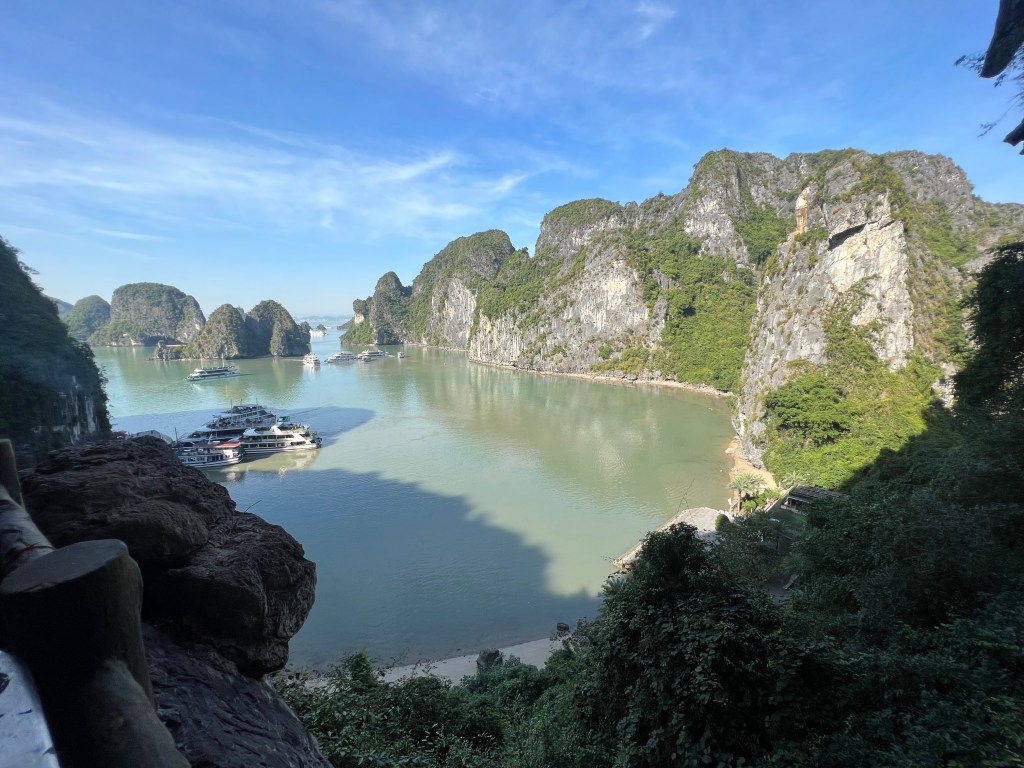
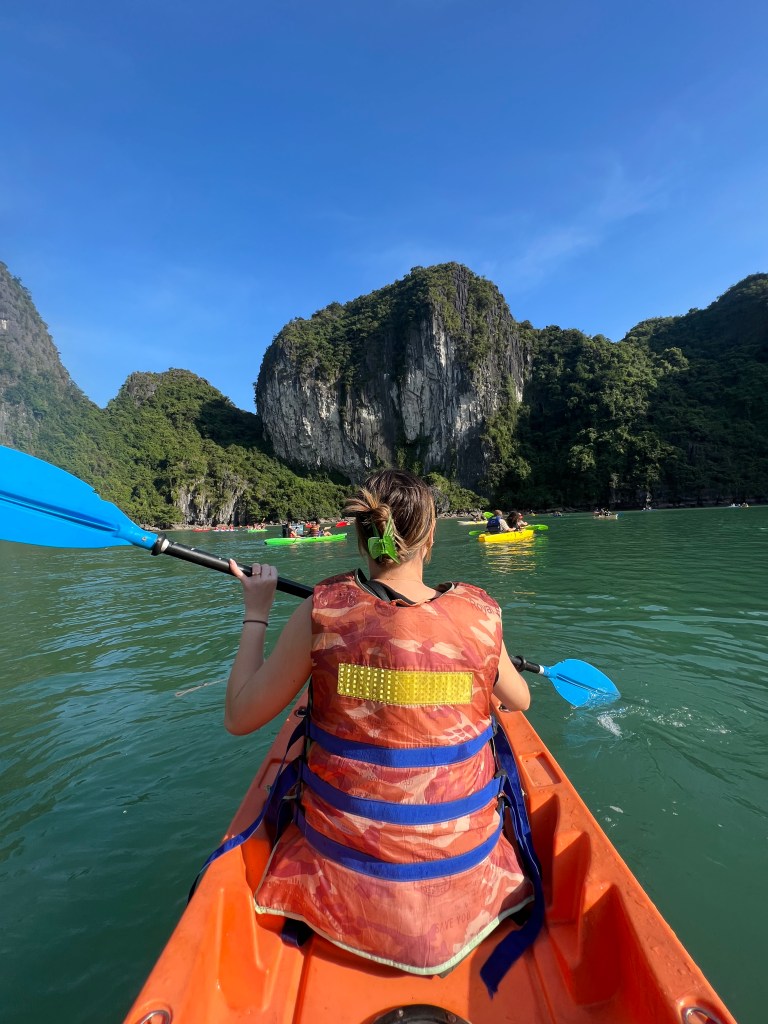
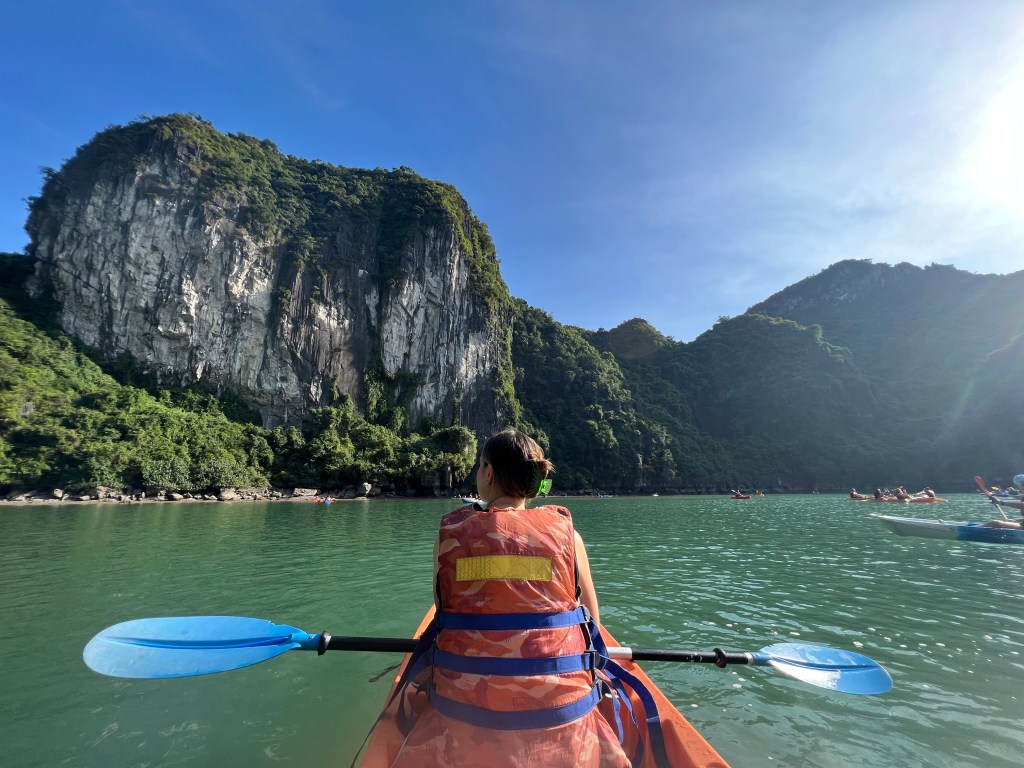

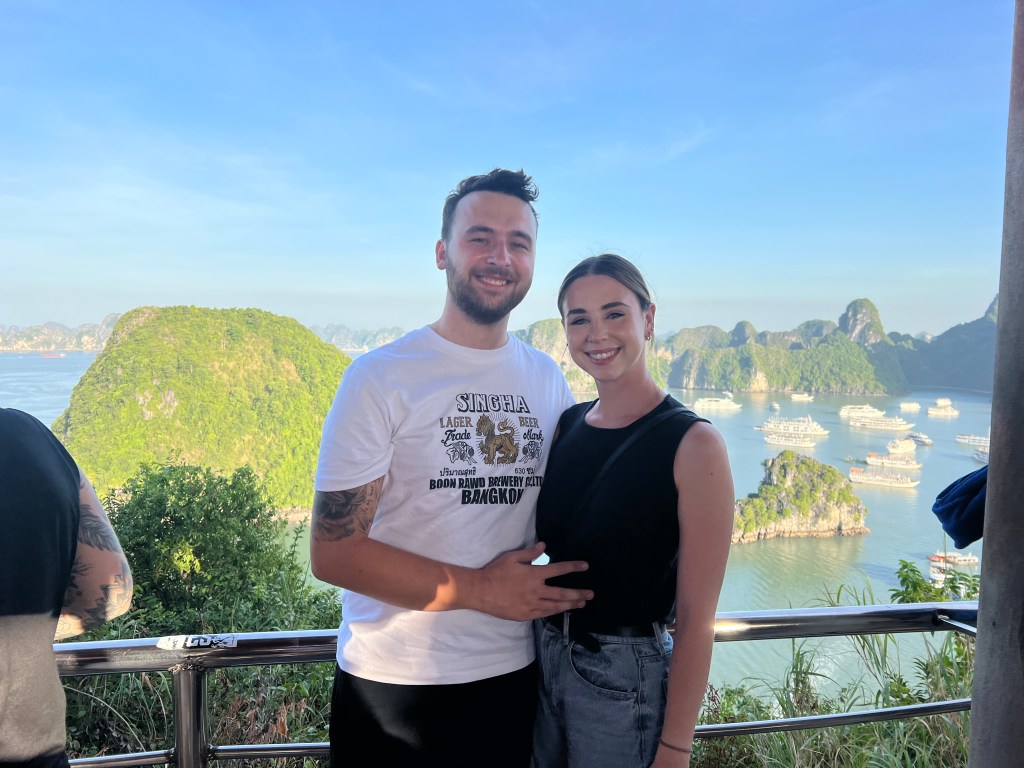
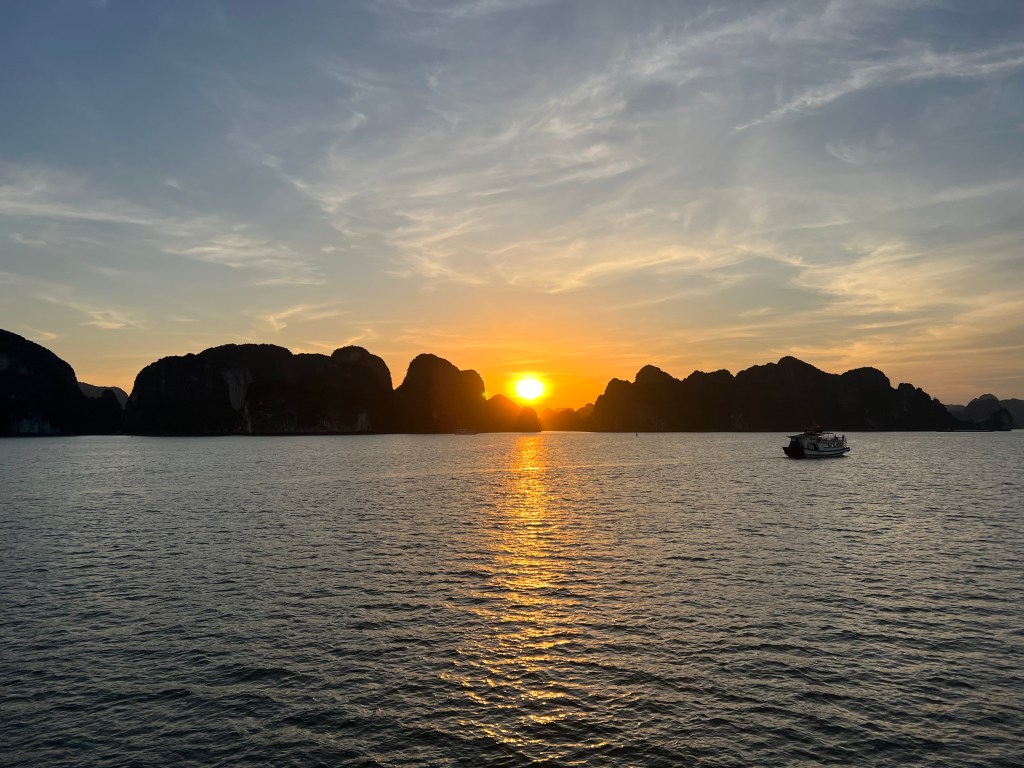
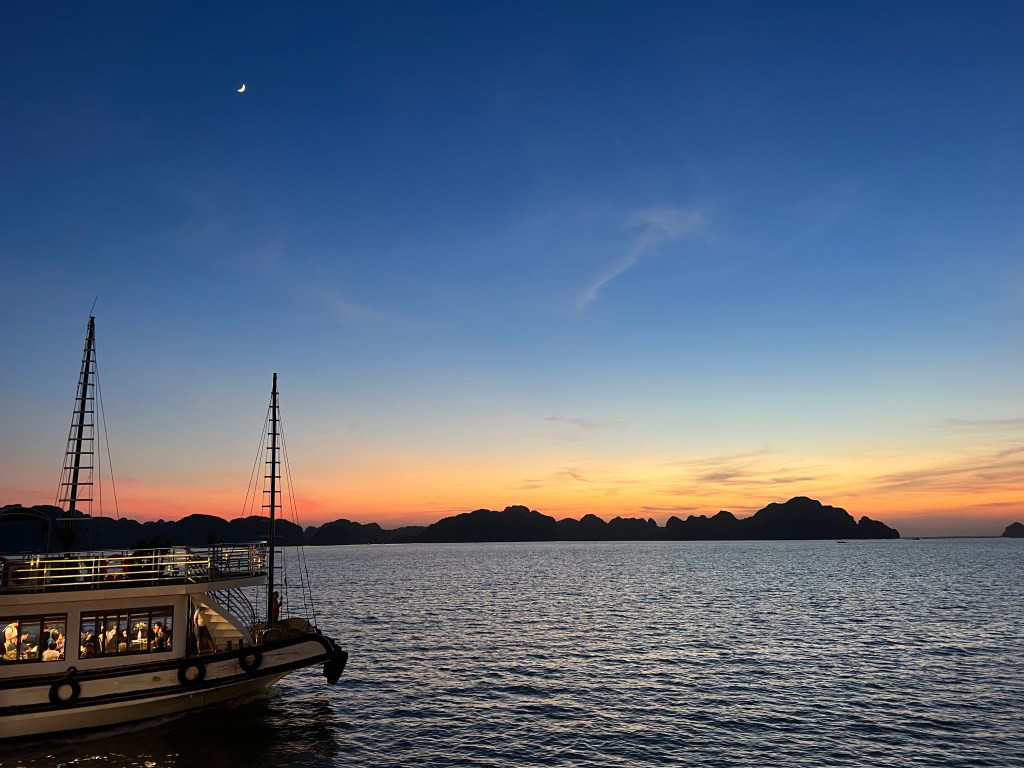
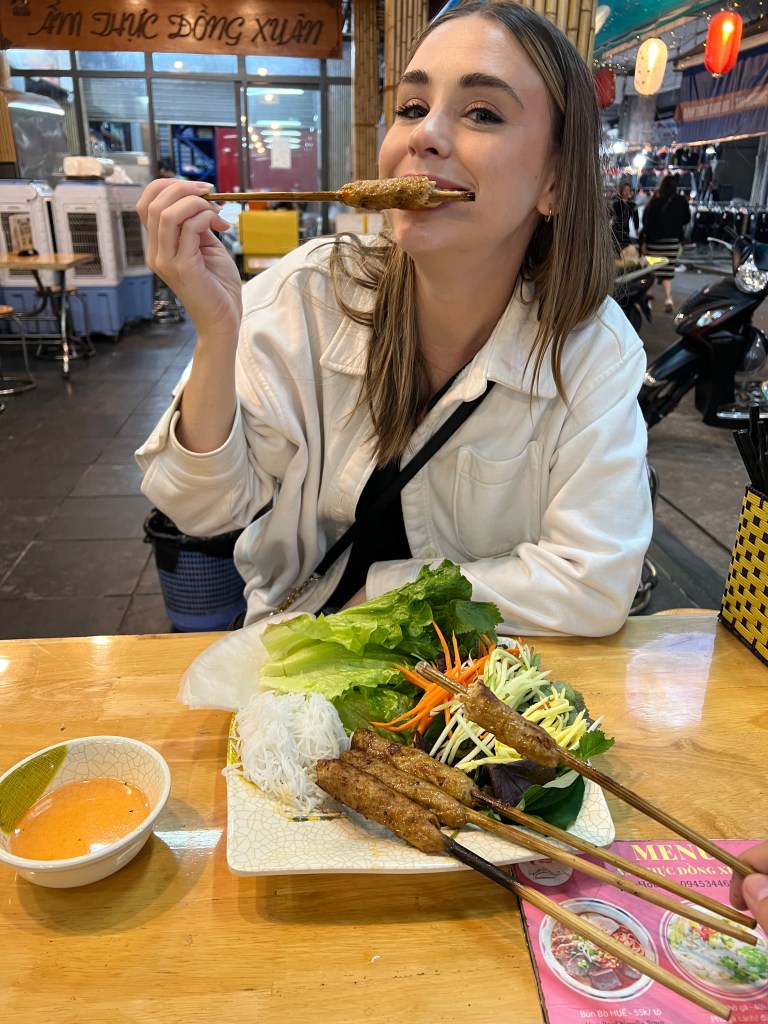
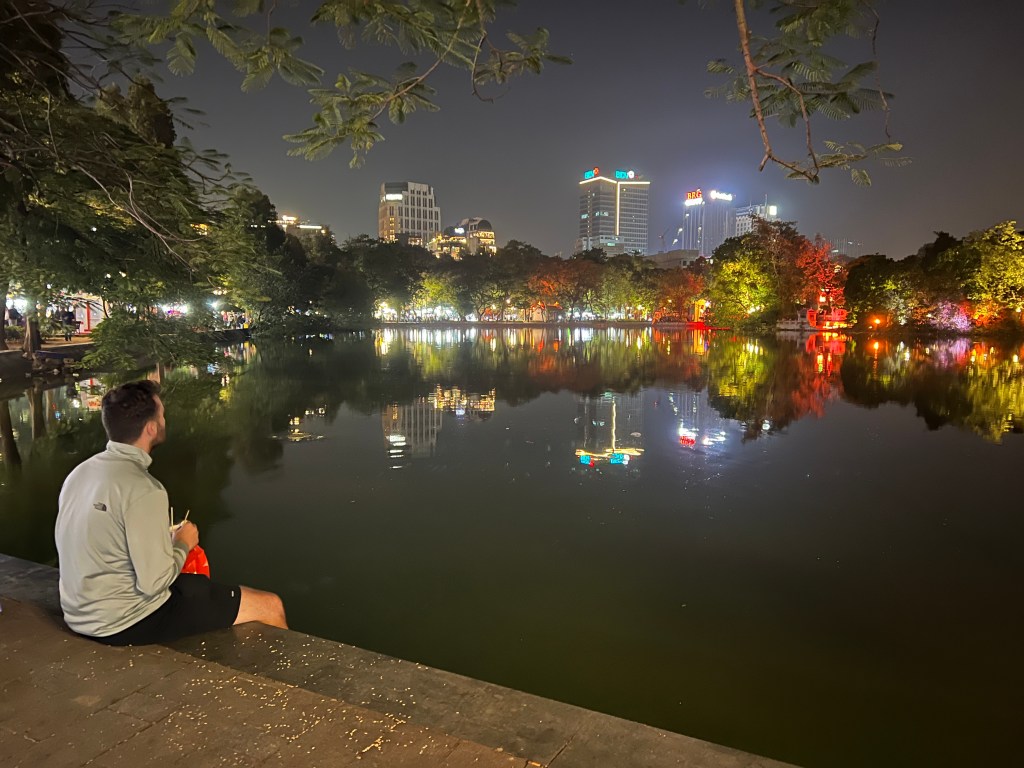
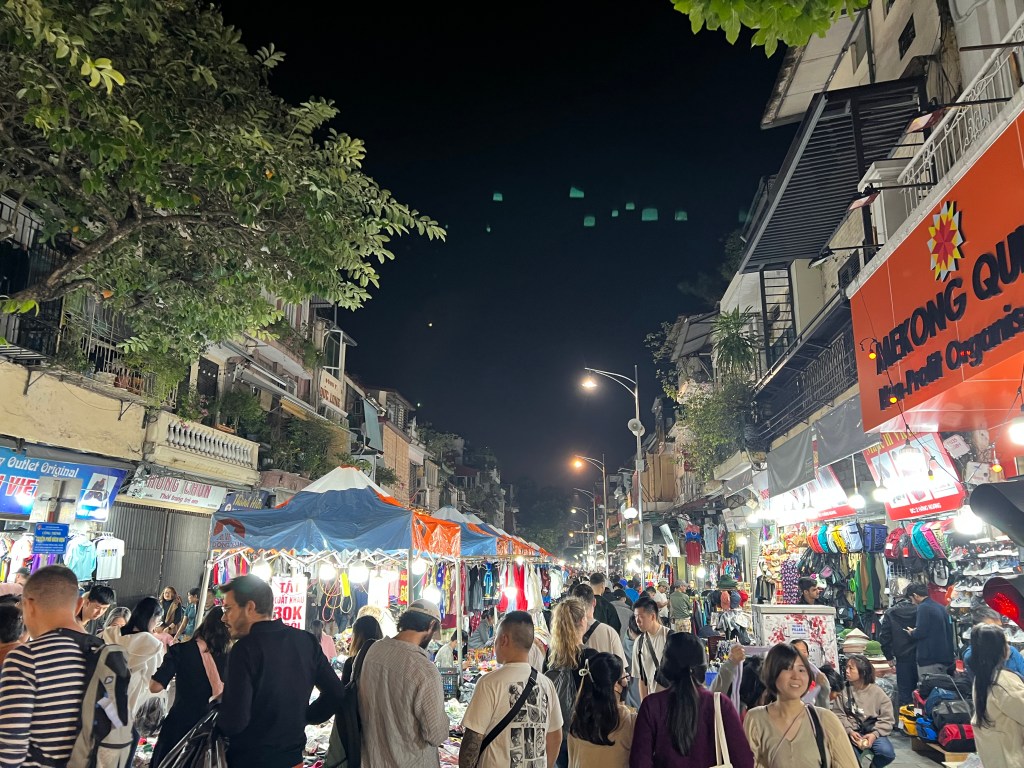
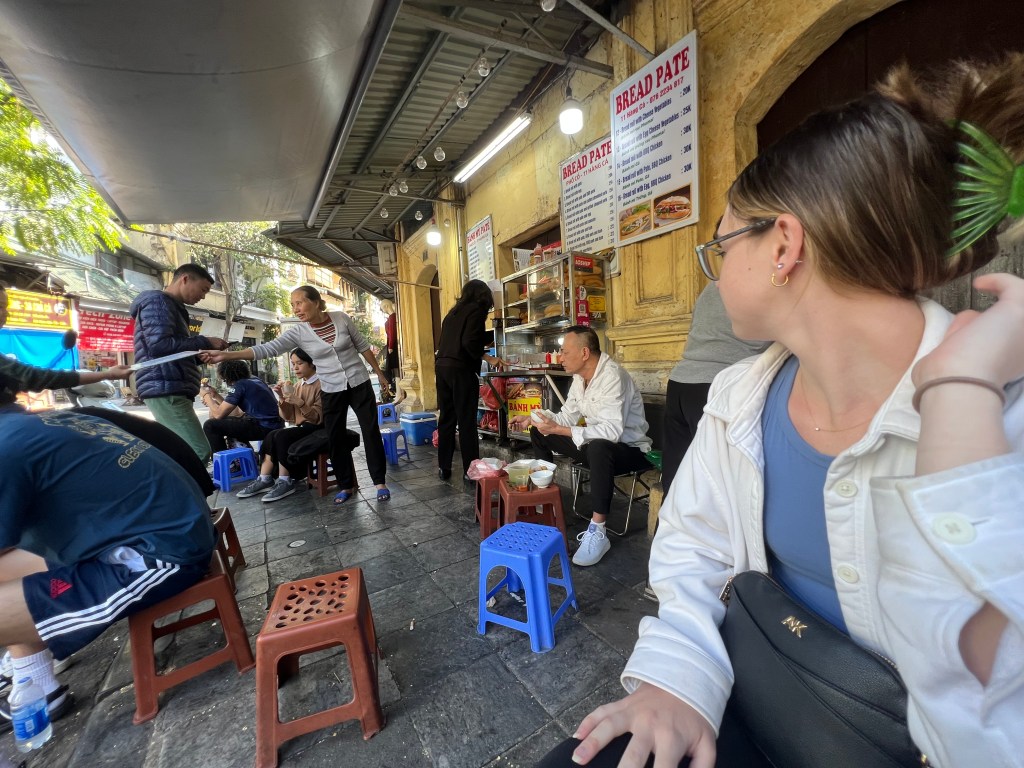
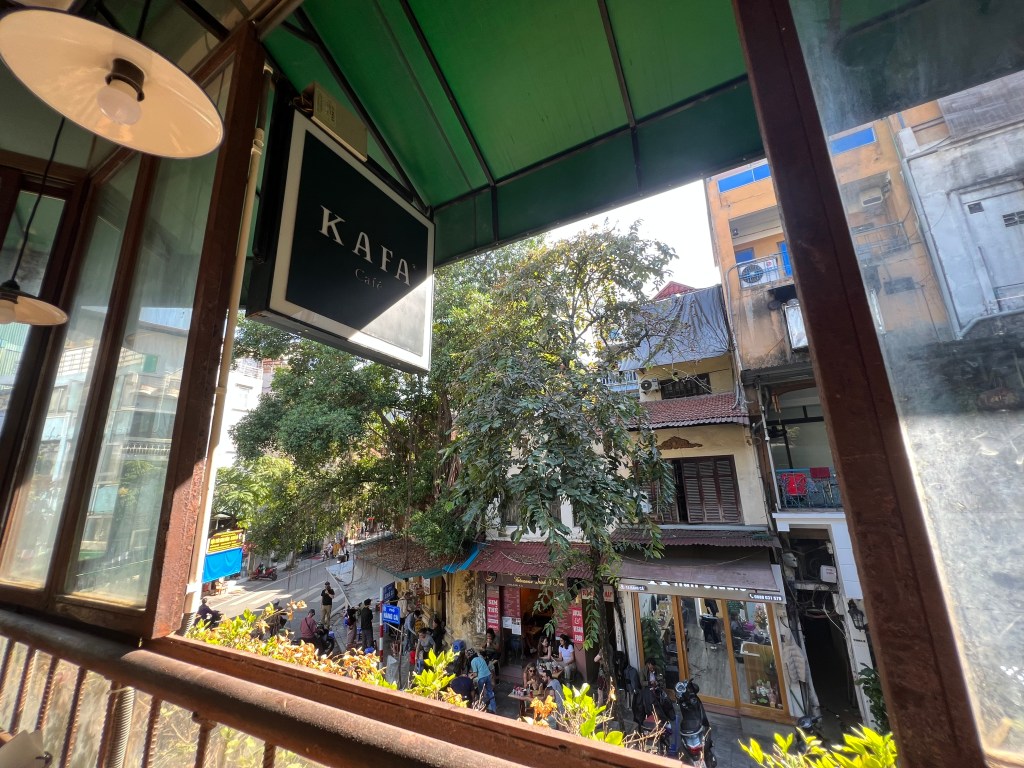
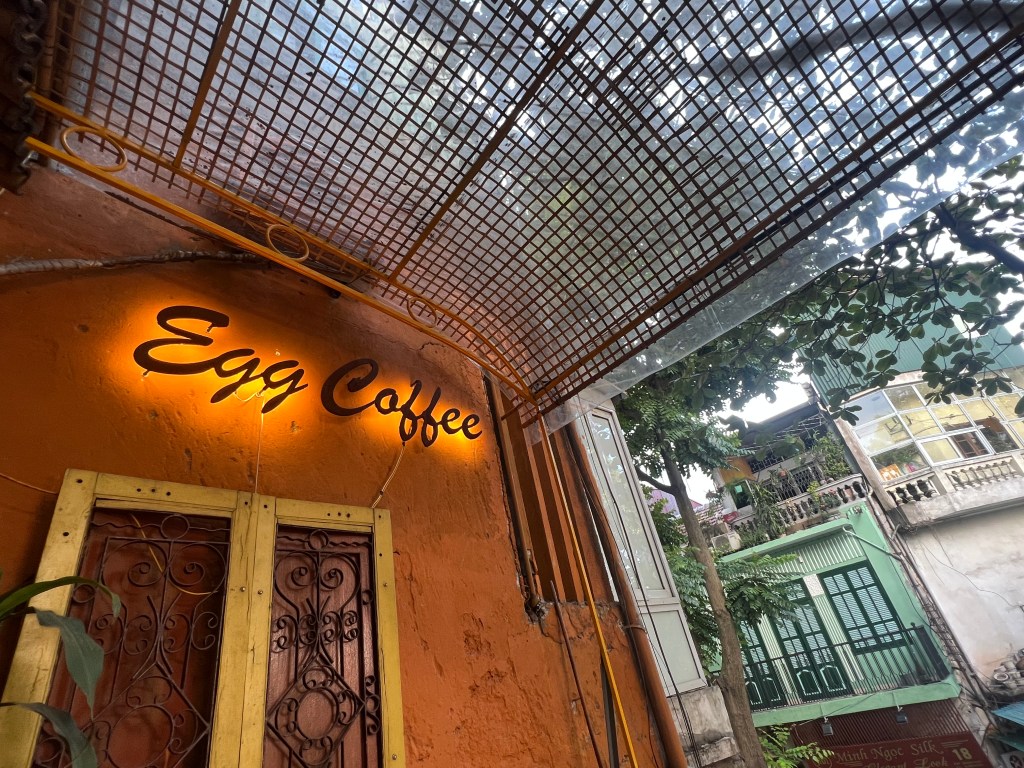
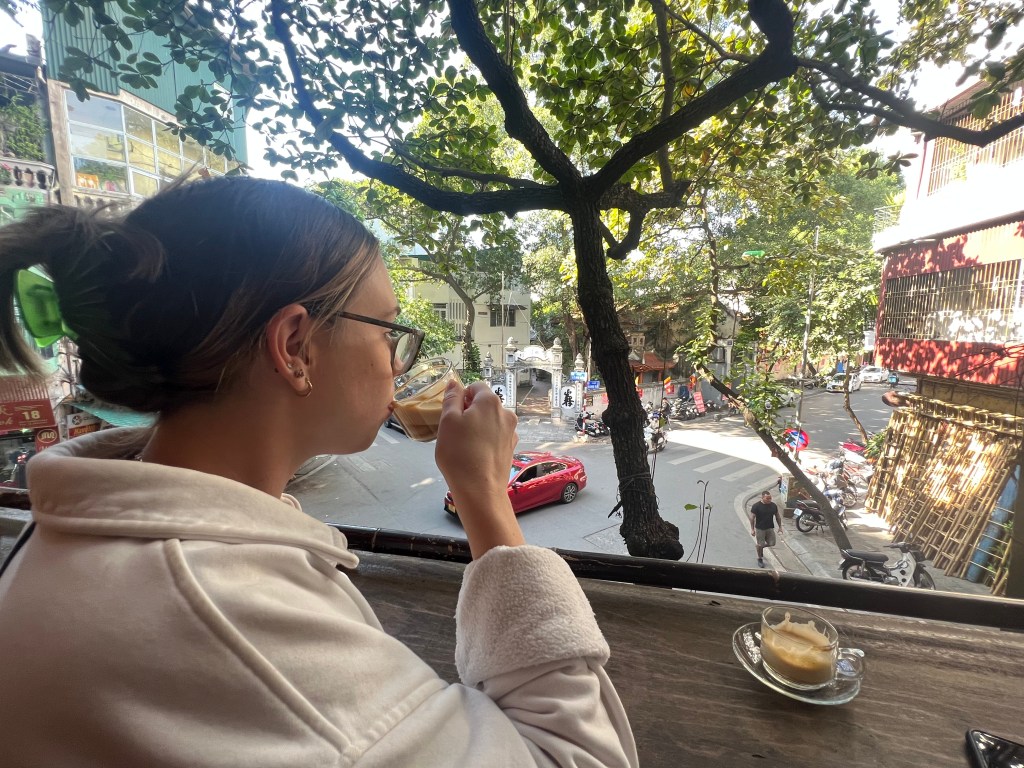
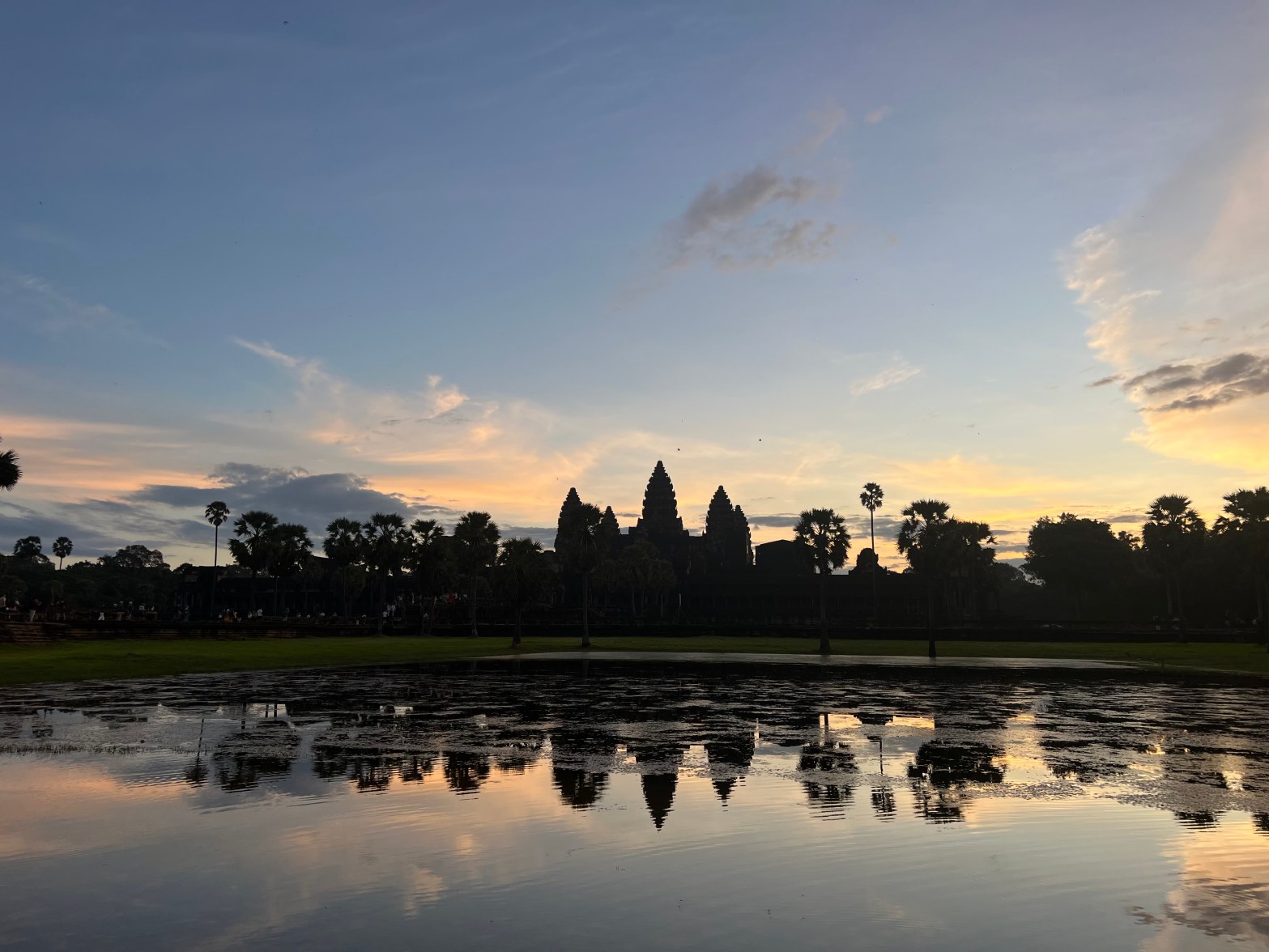

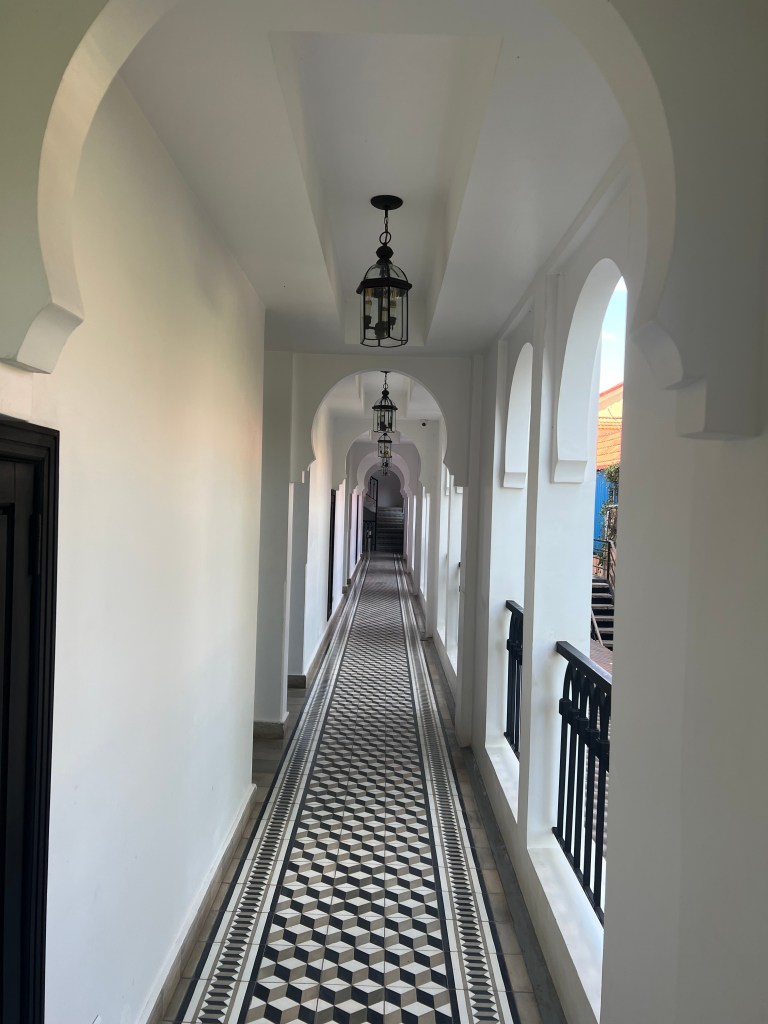


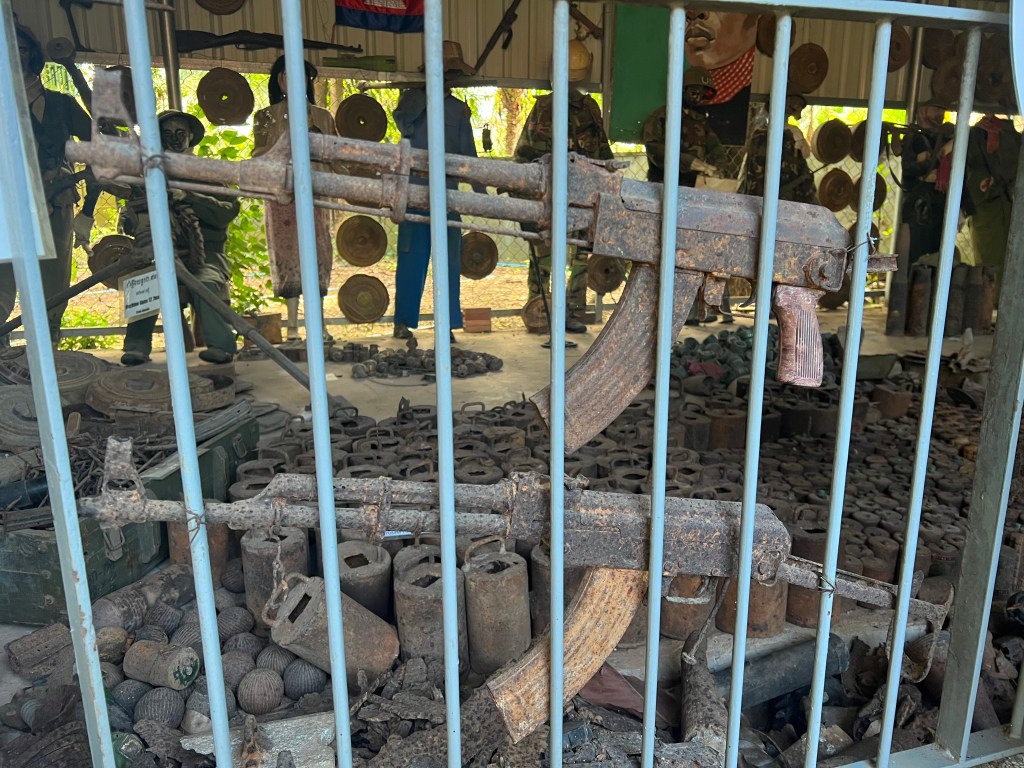
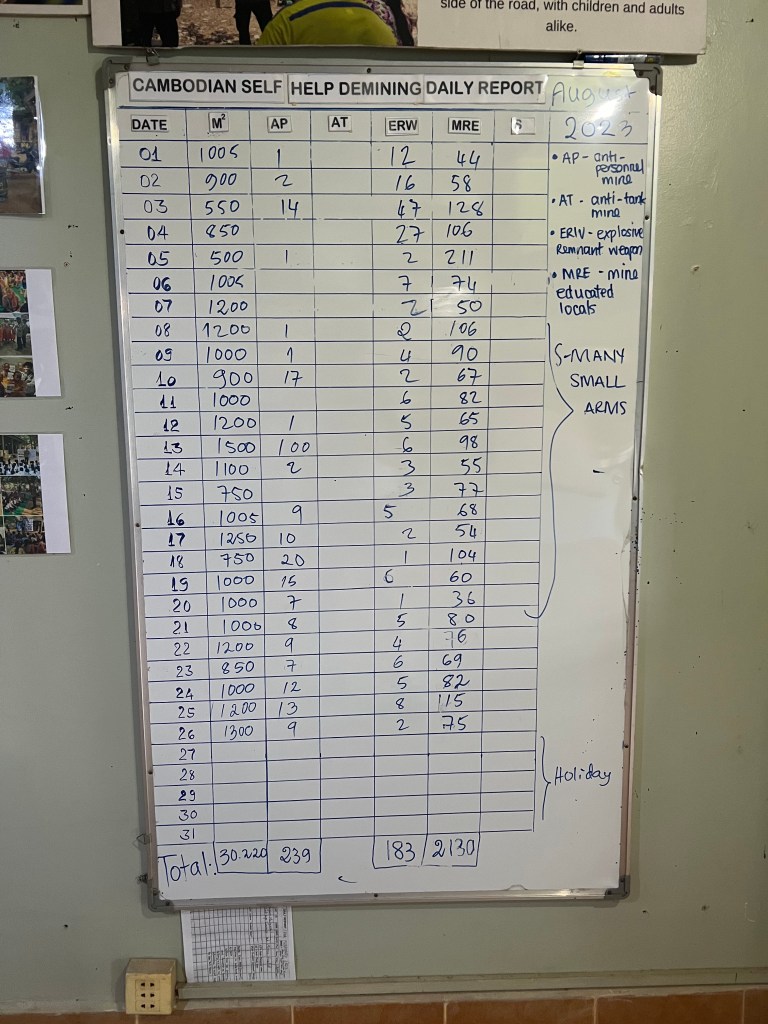


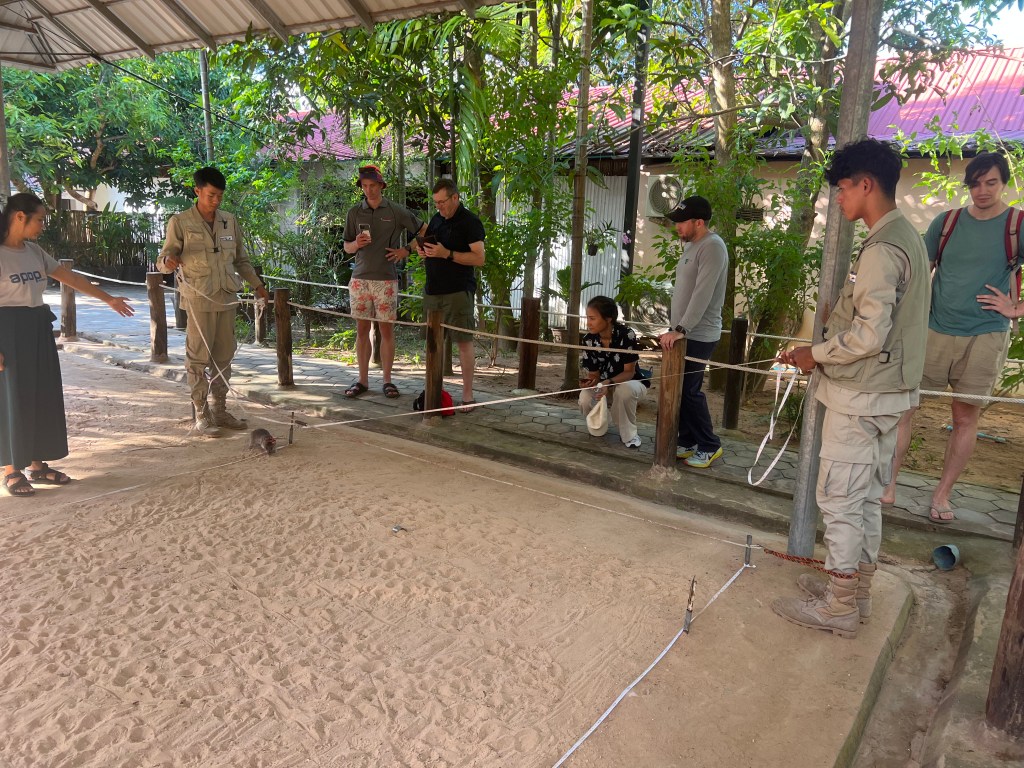
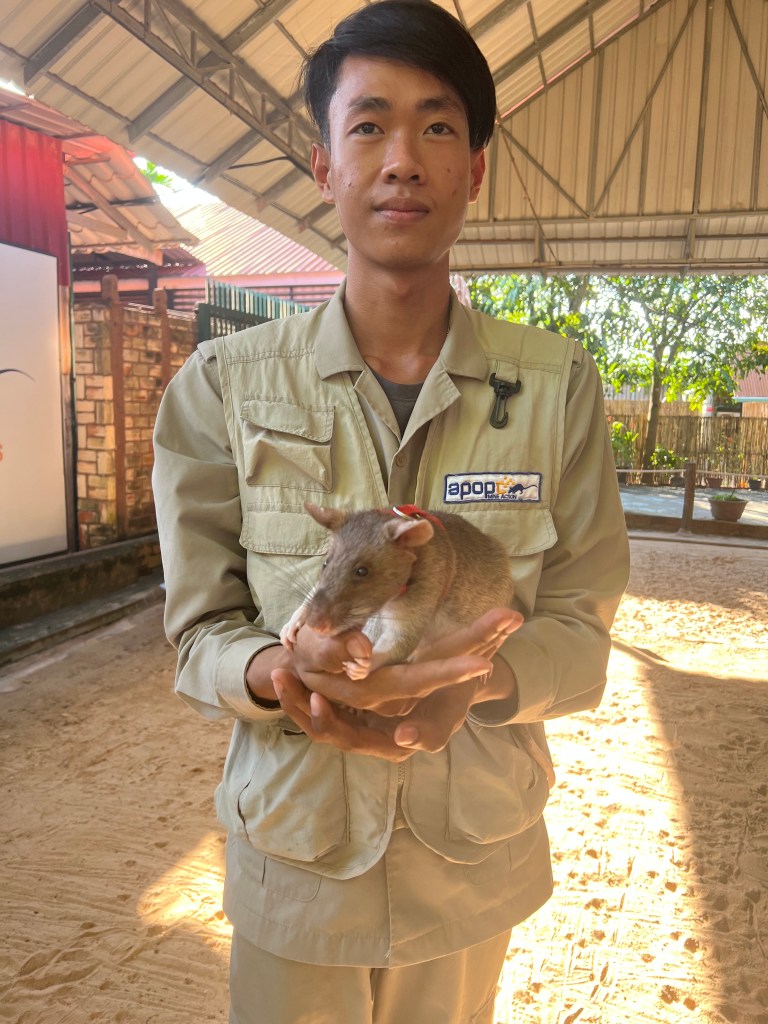


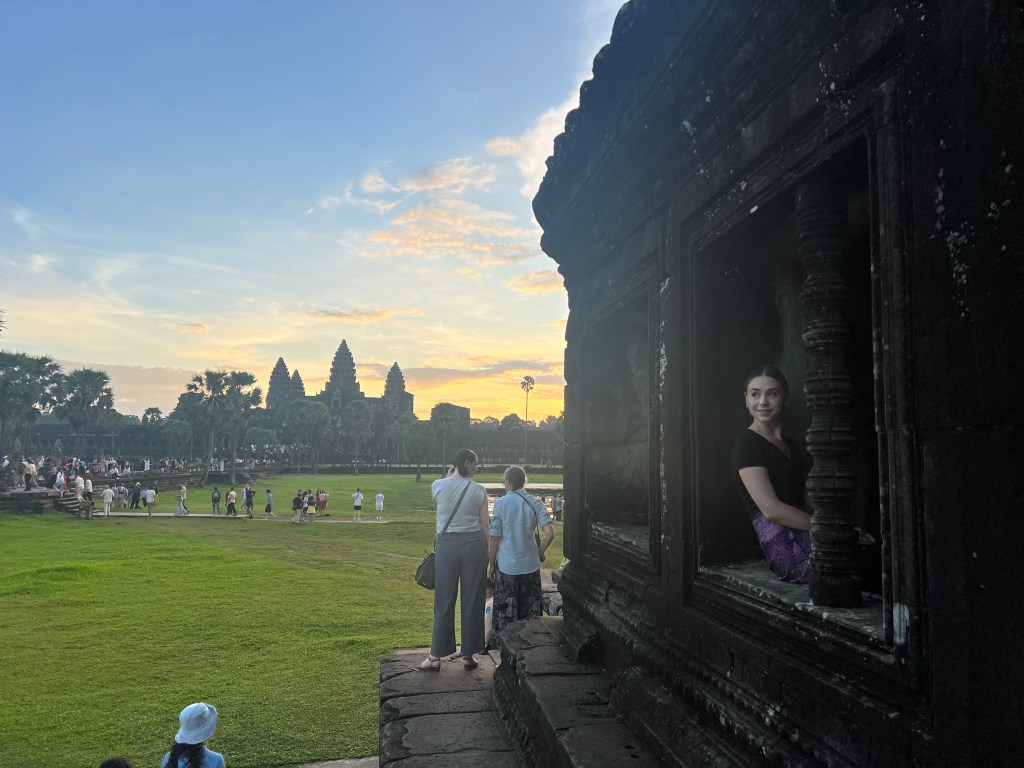





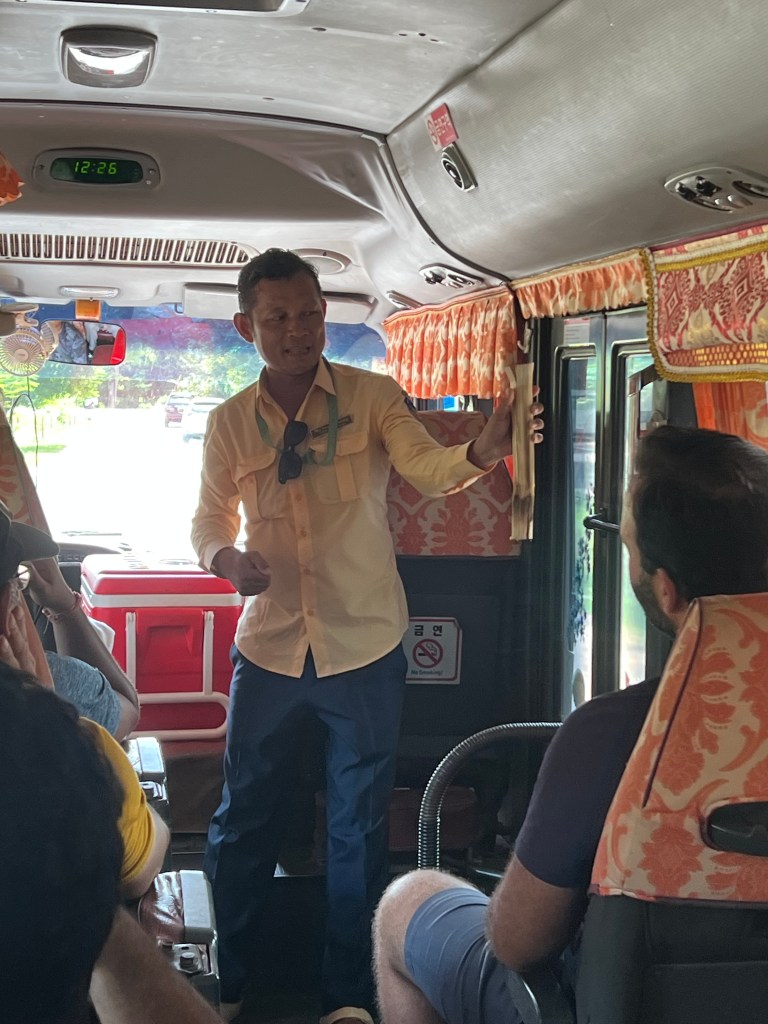
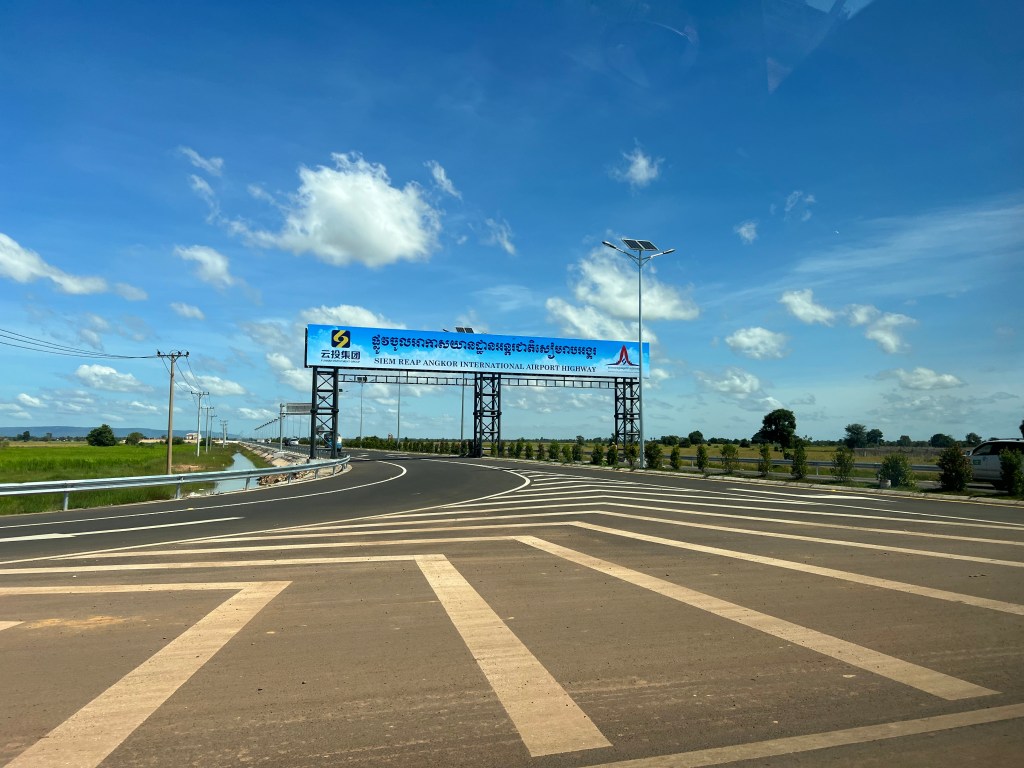
 The Hungry Voyagers