Mountain Wine
June 5th 2024 – June 8th 2024
Table of Contents
- Over the Andes and into a National Dish
- Wine Tour Wasted
- Moving on Up in the World
- Hotdog from Hell
- Tourists in Santiago
- The Final Day in South America
- End of South America 2024
Chile was the 4th and final country in our 2024 South American Trip. To start from the beginning, click here.
Over the Andes and into a National Dish
The flight to Chile was a fun one. We would be going over the famous Andes Mountains. Luckily for us, we had just watched Society of the Snow, which told the story of a Uruguayan rugby team that crash landed into the Andes and resorted to cannibalism to survive. Were we ready to eat other people? Would it count as a National Dish?
About an hour into the trip, the pilot came on the speaker. We only understood one word, “Andes”. It was repeated in English, which gave us the full context, “Intense turbulence expected as we fly over the Andes Mountains”. Fear set in. We began to sweat at the thought.
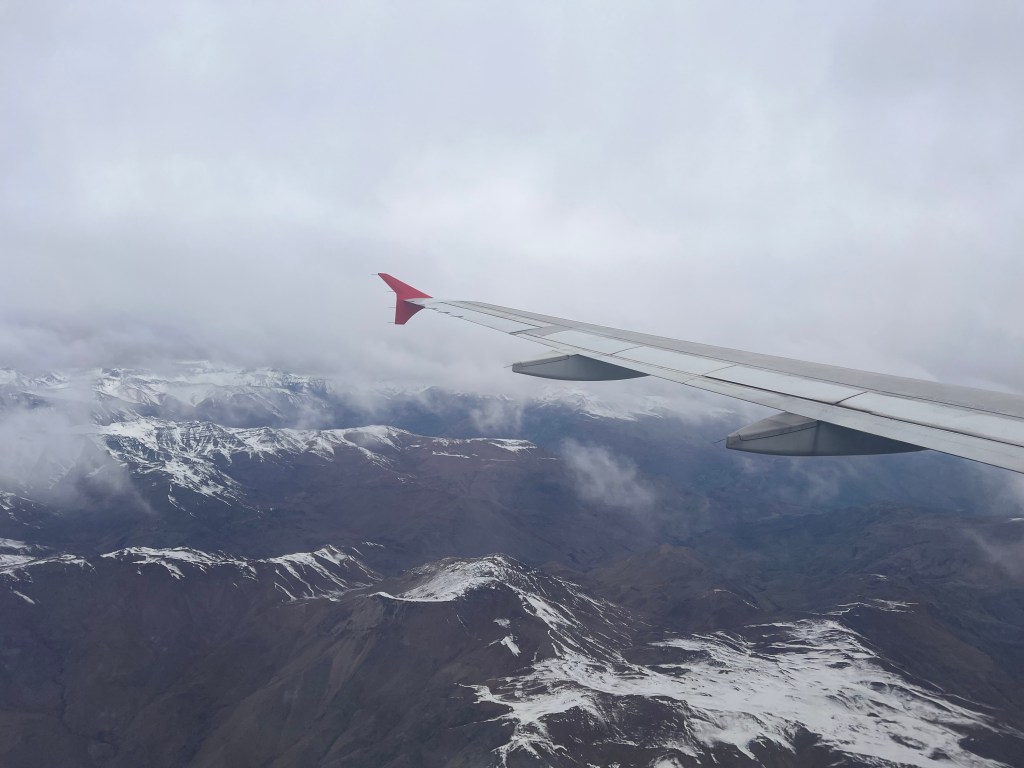
In reality, it wasn’t bad at all. Our flight path was made to avoid the mountains as much as possible, so we only went over a small part of them. What we saw though was incredible. Massive snow capped mountains went on for as far as the eye could see, a great introduction to the last country of this trip.
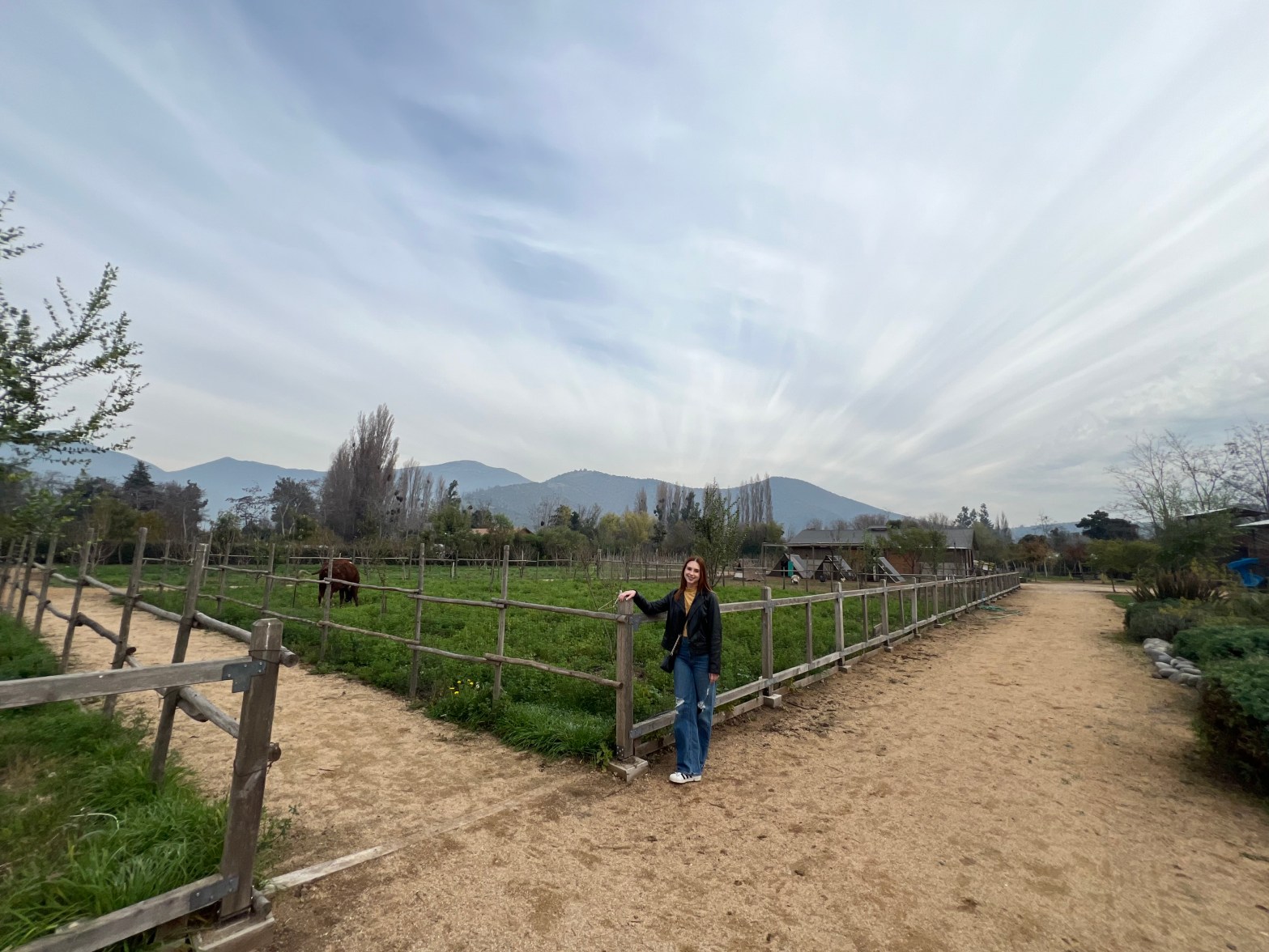
The neighborhood we were staying in was beautiful: Bellavista. Located right at the base of San Cristóbal Hill, it was filled with restaurants, colorful buildings, artisan markets, and bars with people out front trying to pull you in.
Our mission for the night was food, shocking. The National Dishes in South America had mostly disappointed thus far (except Argentina), and it was up to Chile to redeem the others and end on a high note. Lucky for us, Bellavista hosted one of the most iconic places in Santiago for this Chilean specialty, Galindo.

I had researched what this dish months before traveling here so we both knew what it was, but we couldn’t help but laugh after reading the menu. Pastel de Choclo was yet another cornbread type dish, similar to the Sopa Paraguaya and Chipa in Paraguay. These South Americans really loved their cheesy bread. Unlike Sopa, however, Choclo had a little more umph to it. It wasn’t actually cheesy bread, but a corn casserole housing ground beef, chicken, onions, egg, raisons, and olives.
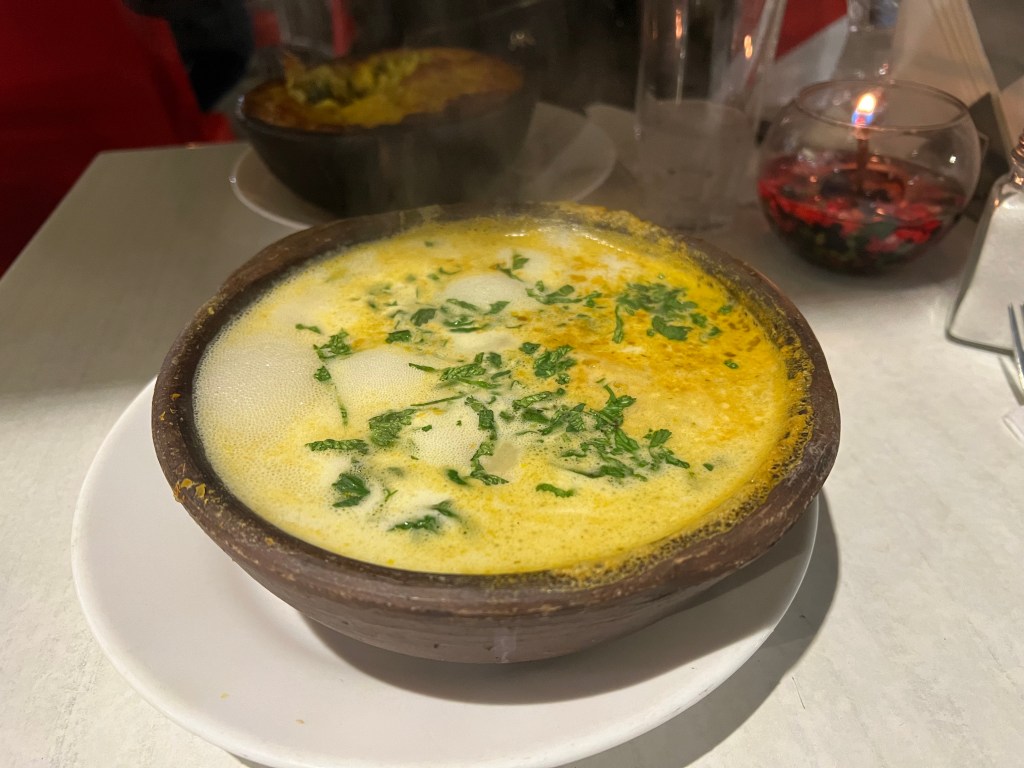
The bright yellow layer of cheese created a strong contrast to the dark, stone bowl it was served in. The vibes were great. It was a cool, dark night and we were seated outside with San Cristóbal Hill looming in the distance. We both had a glass of our first Chilean wine as we cheers’d and celebrated successfully having each National Dish.
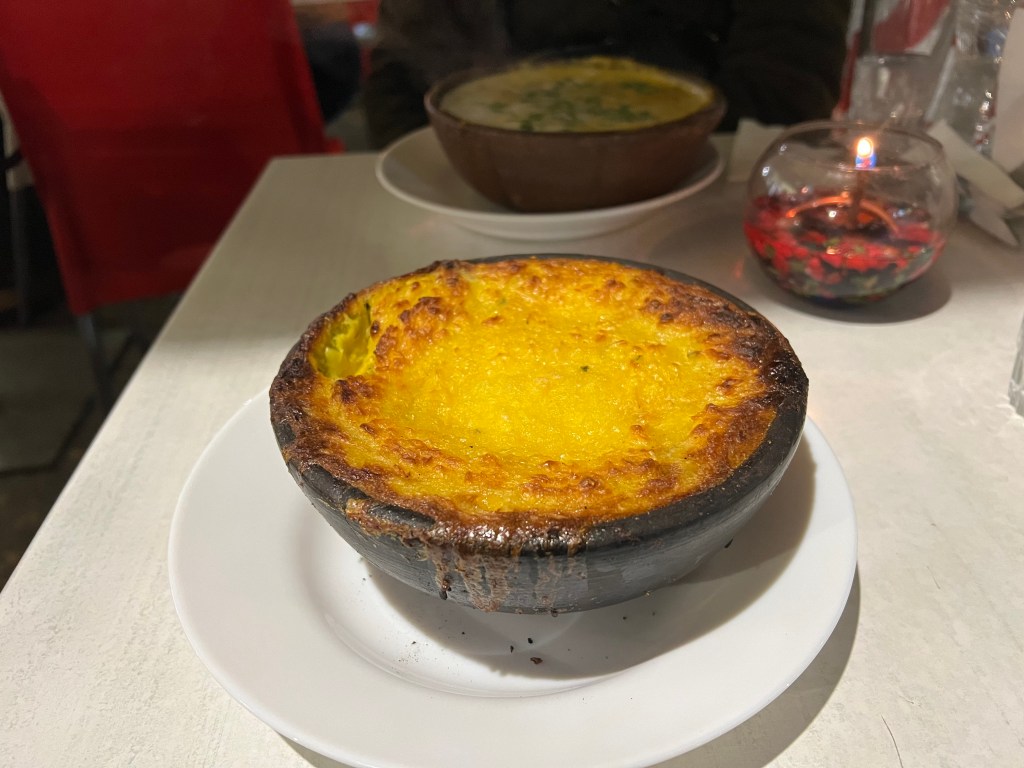
We each took a spoonful and had similar neutral reactions. It was okay, but wasn’t redemption for South America. The corn flavor was overbearing and the bottom was watery, which was a little strange. With the amount of ingredients, you’d think it would be more flavorful, but it was really just warm, creamy liquid with bits of boiled chicken.
We also ordered a Caldillo de Congrio, a rich seafood stew made with Conger Eel. This was another unique, special Chilean dish. It was definitely better than the Choclo. This was our first time eating eel, and we liked it. It wasn’t fishy at all, and the fresh, bright broth really made it an enjoyable experience.
Wine Tour Wasted
When in Chile, there’s only one thing you must do. A wine tour. They’re famous for it and, spoiler alert, there’s a reason why. It’s damn good. We opted for a tour in the Maipo Valley, known for their Cabs.
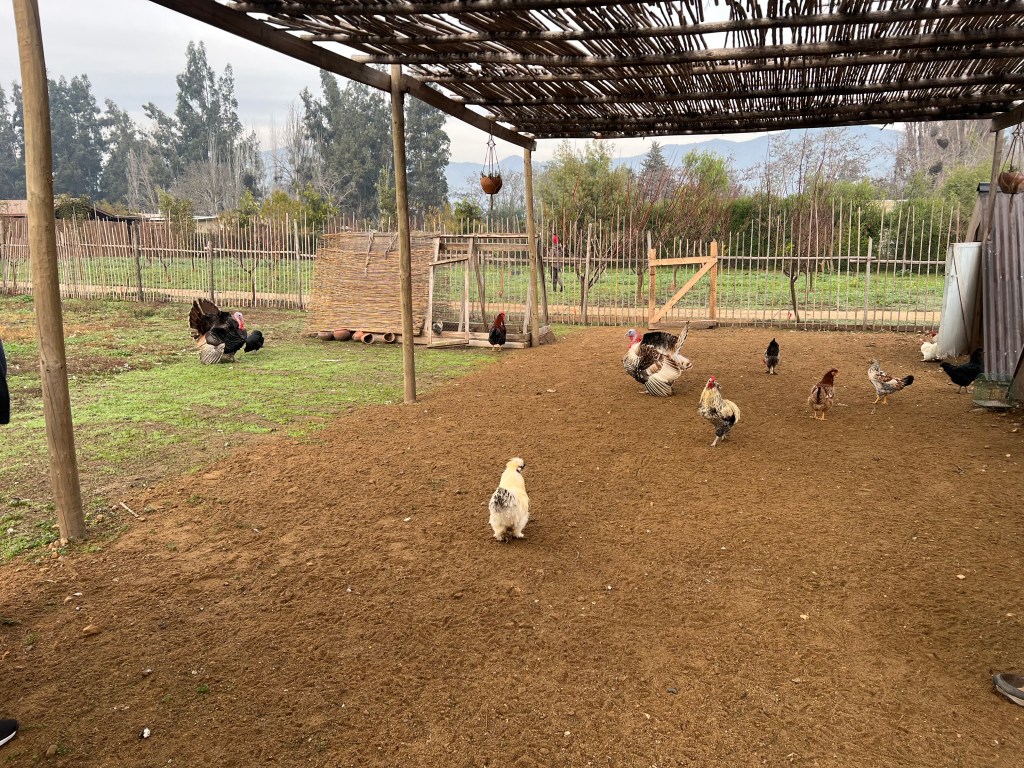
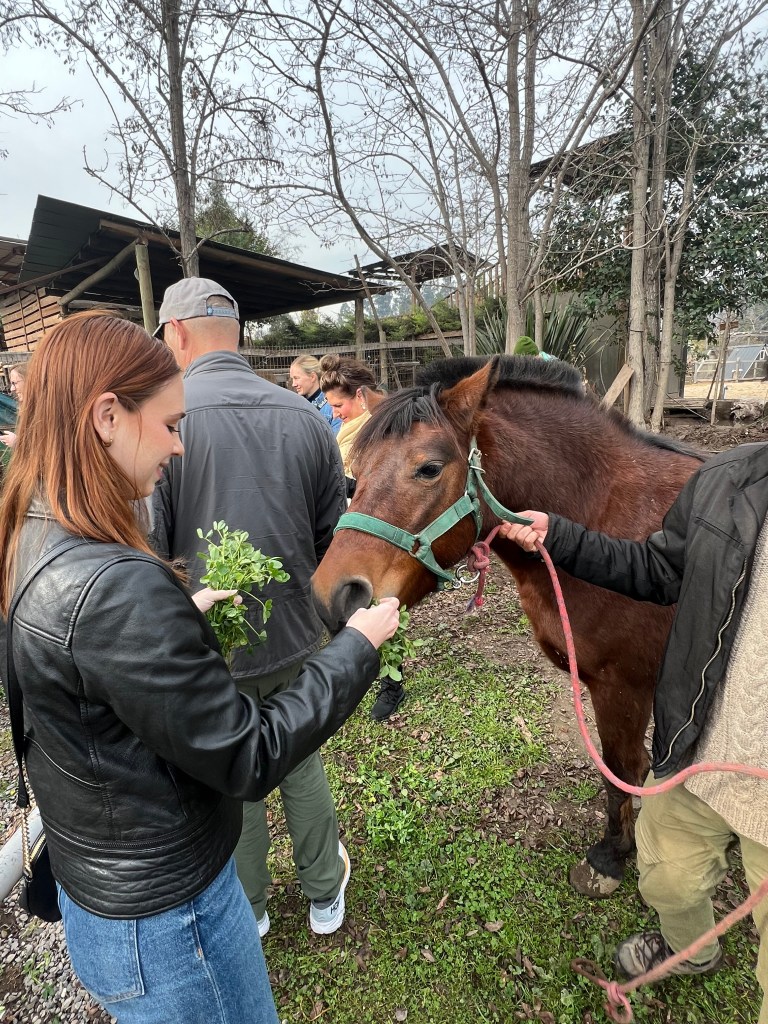
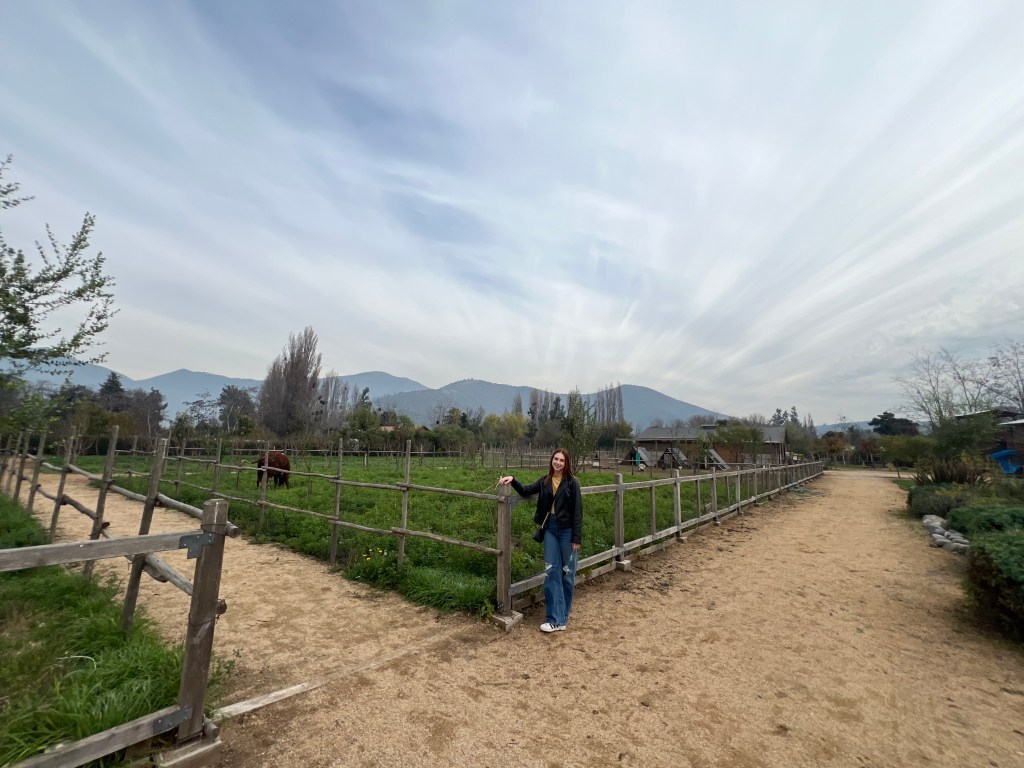
A bus showed up at our hotel at 6am and we were ready to roll. First up was Campo La Quirinca, a small farm to table winery right in the heart of Isla de Maipo. They operated here like a farm, finding ways to be sustainable in their winemaking. For example, they grow cork trees with future efforts to use them to cork their own bottles.
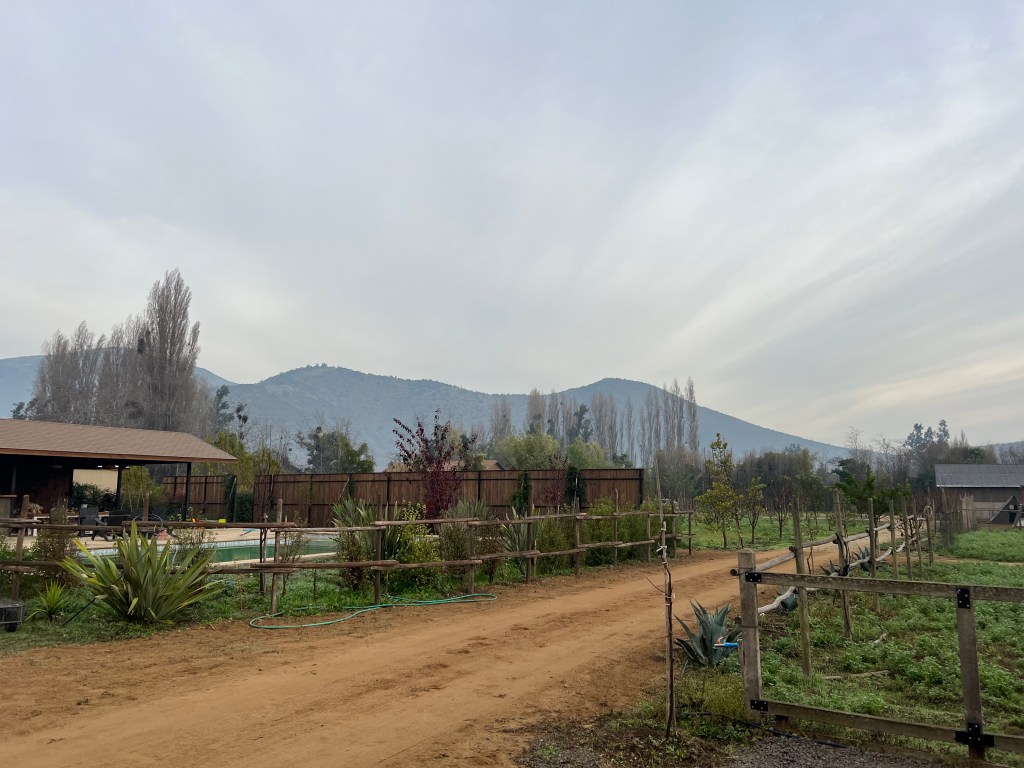

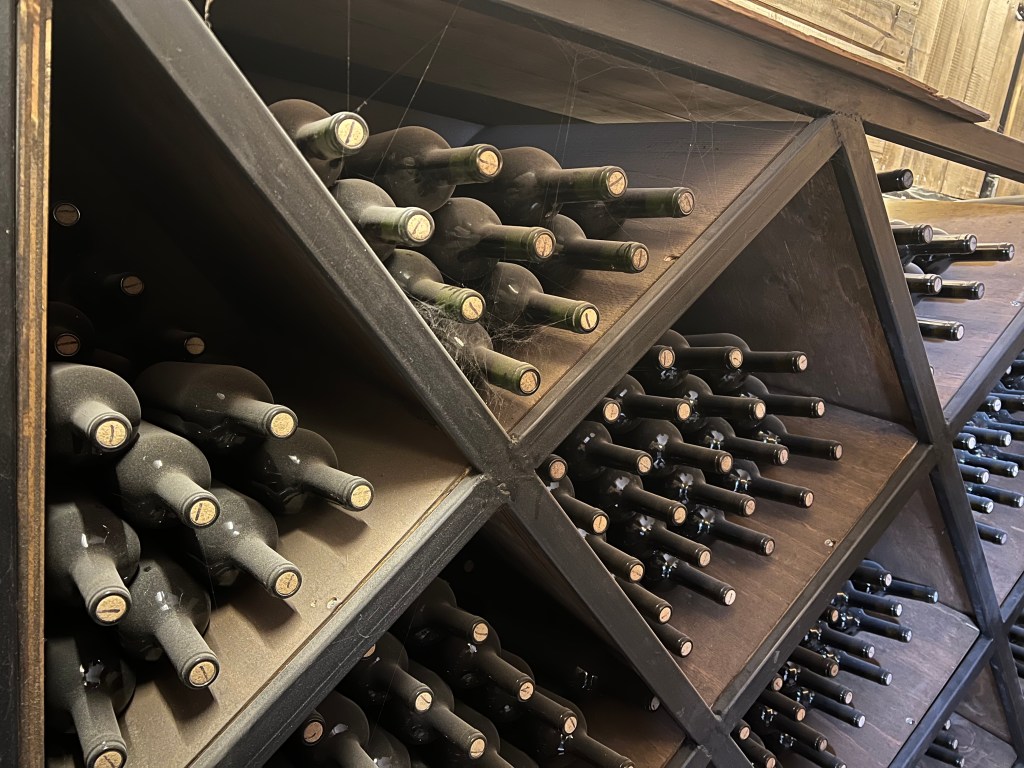
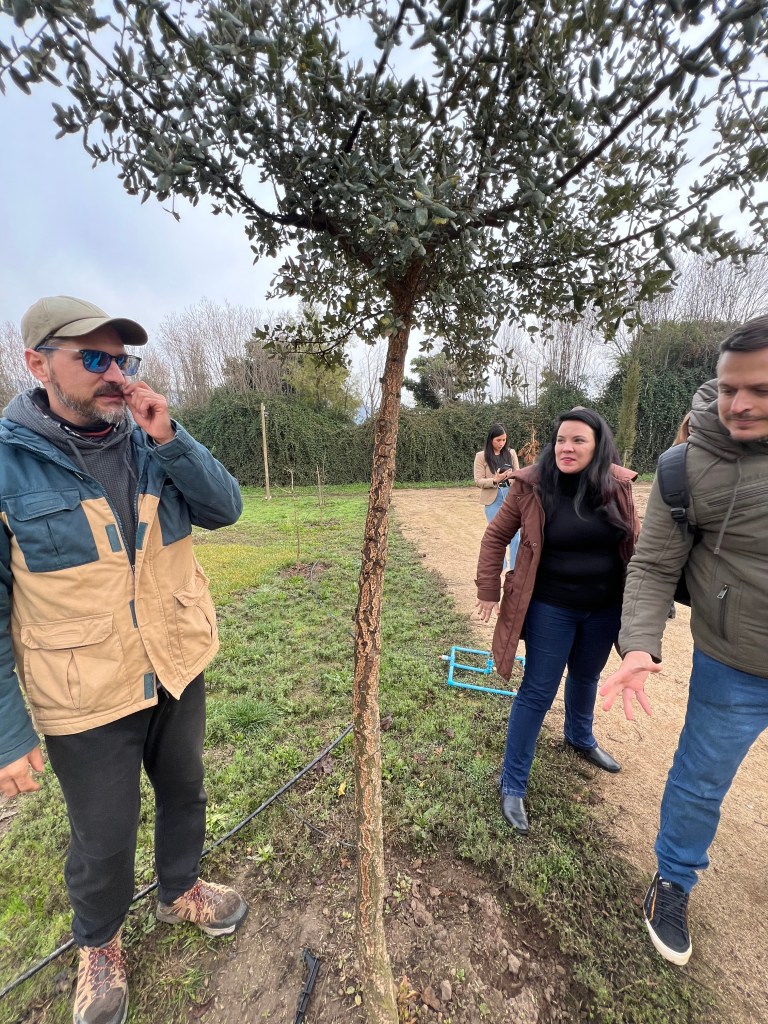

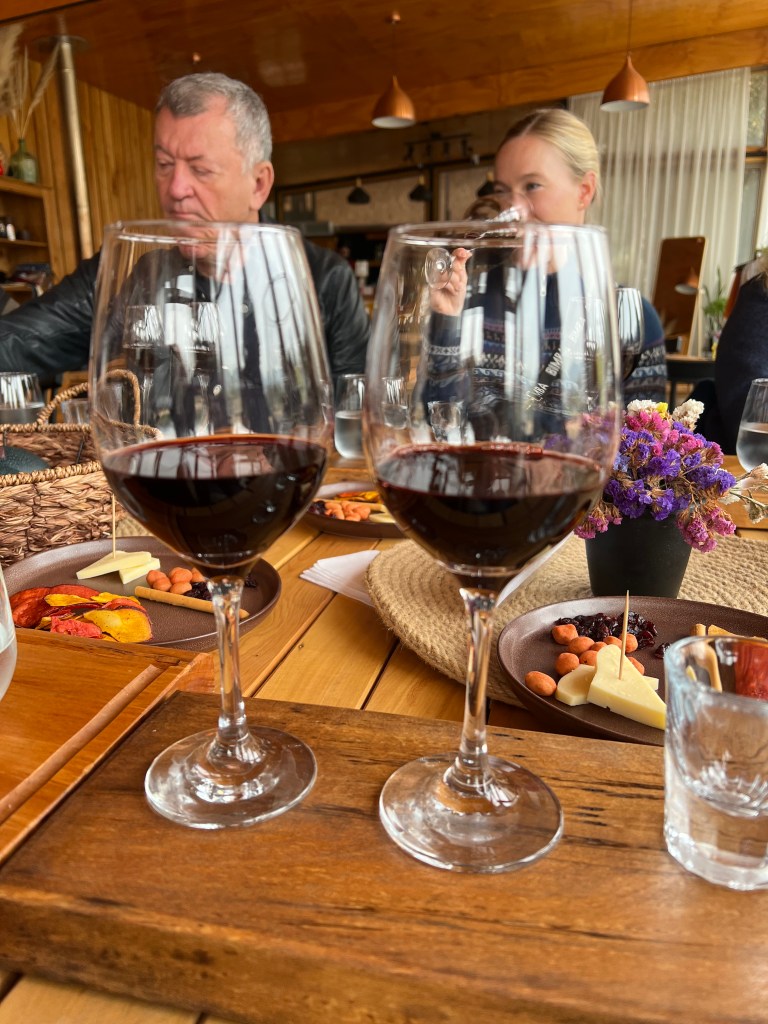
The tour started early and we had not eaten anything and were sat down at a table with nuts, dried fruit, potato chips, all which came from the farm, to taste with our wine. The wines were complex with lots of earthy notes and rich with berry flavors. We couldn’t look into our future to see how much wine we would actually be consuming, so at this point everything put in front of us was subsequently downed. My favorite was the Camenere Gran Reserve.
Looking back now, we didn’t want to jump the gun and buy a bottle at the first winery we visited, but we really should have here. This was the best wine we had the entire day (and not just saying that because the day gets blurrier as we keep drinking).
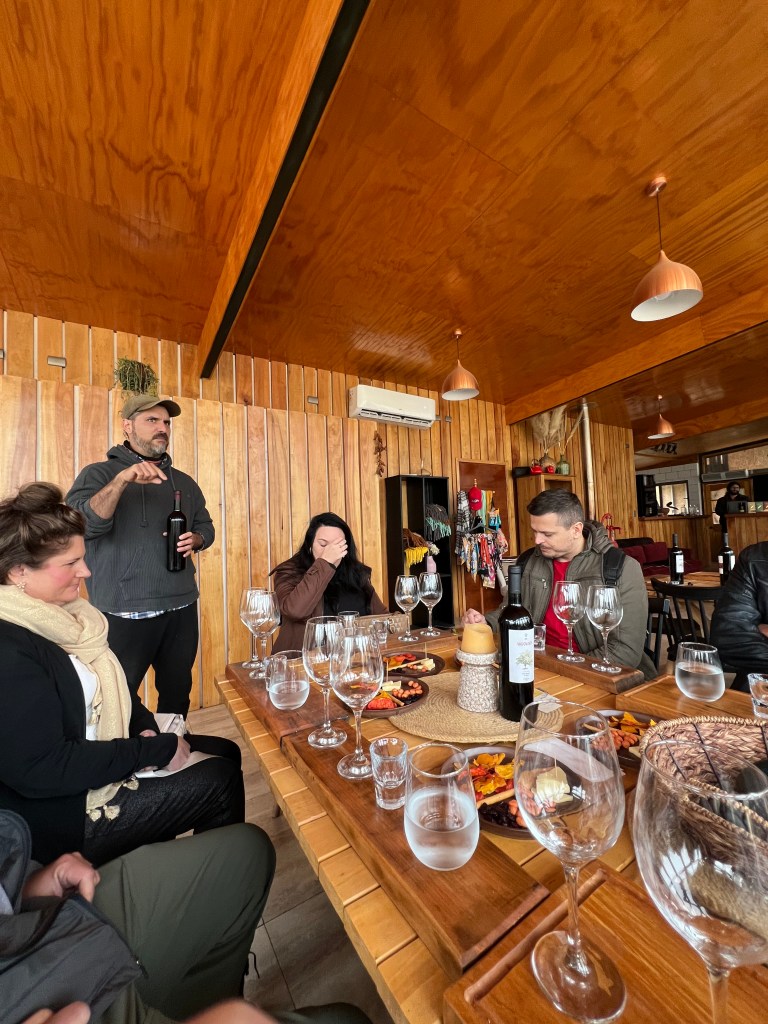

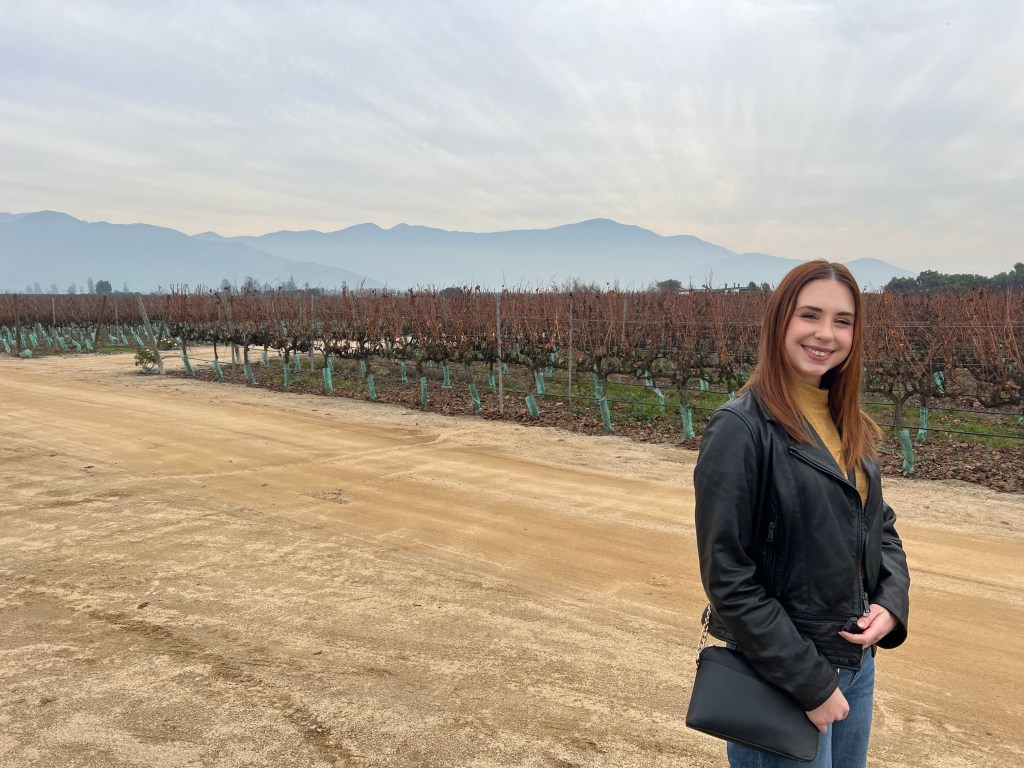
We hopped into the bus and head over to the next winery, Santa Ema. Here, everyone was really starting to feel the wine and people started to get to know each other. There was an older German couple, a couple from Brazil, the Americans from Texas, and the local Chilean. We began to get to know the Canadian couple in our group and had conversations about travel, wine, and of course football. The guy was, unfortunately, a delusional Arsenal fan and had some laughable opinions about the game.
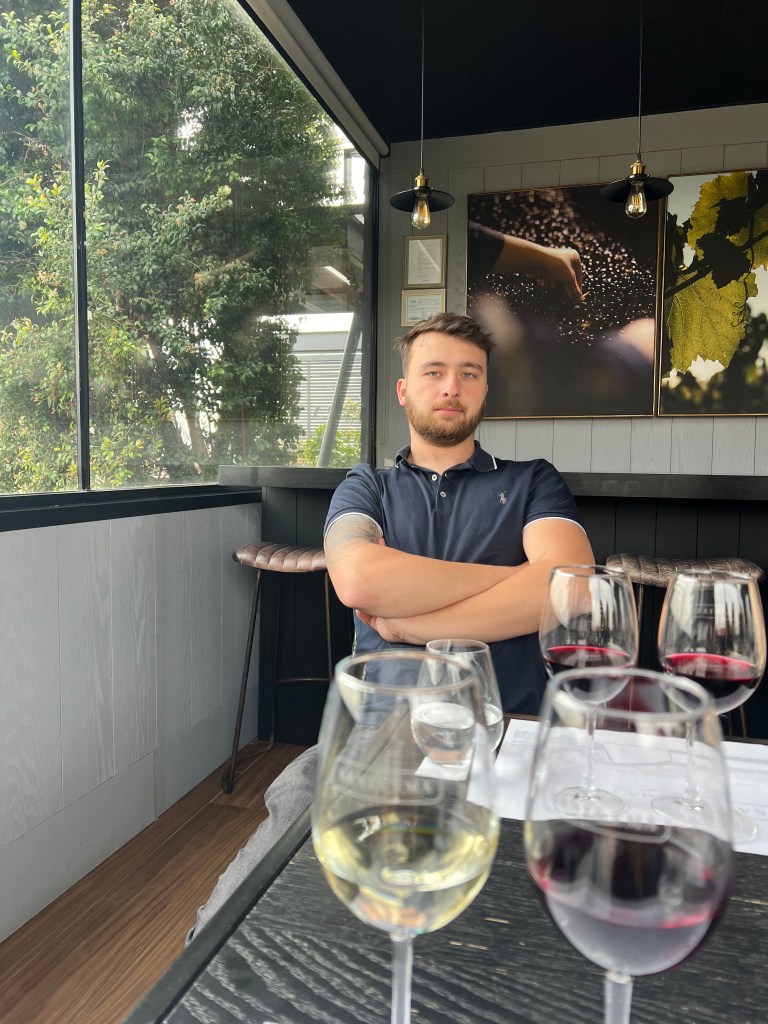
The wine here was pretty good. We had a couple of empty glasses placed in front of us and for each new pour, our host gave an in depth description of the grapes and process that went into creating it. I remember a Chardonnay, a Merlot, and a Carmenere (we’ll talk in detail about later about this special type of wine).
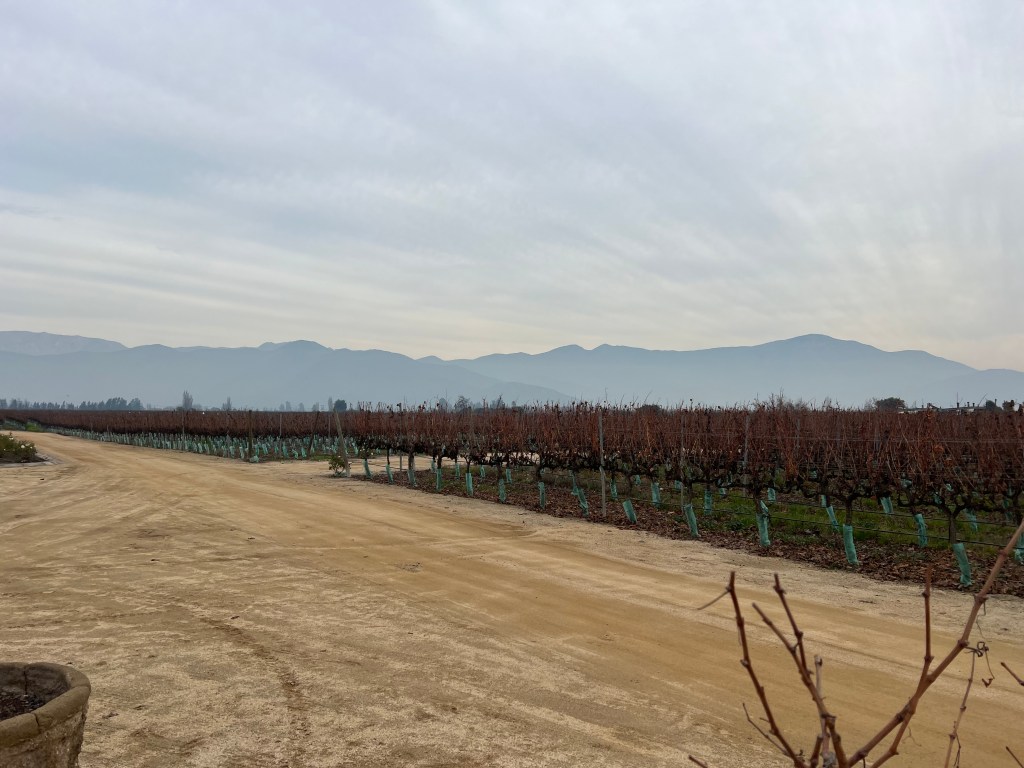
This time we stumbled into the bus and headed to our next winery, TerraMater. This stop was for optional wine and food, which we of course did. We ordered a plate of Machas a La Pamesana and a bottle of their Vineyard Reserve Zinfandel, because why not. The clams were delicious, a Chilean specialty as our host said. I want to tell you the wine was great, but I honestly don’t remember.

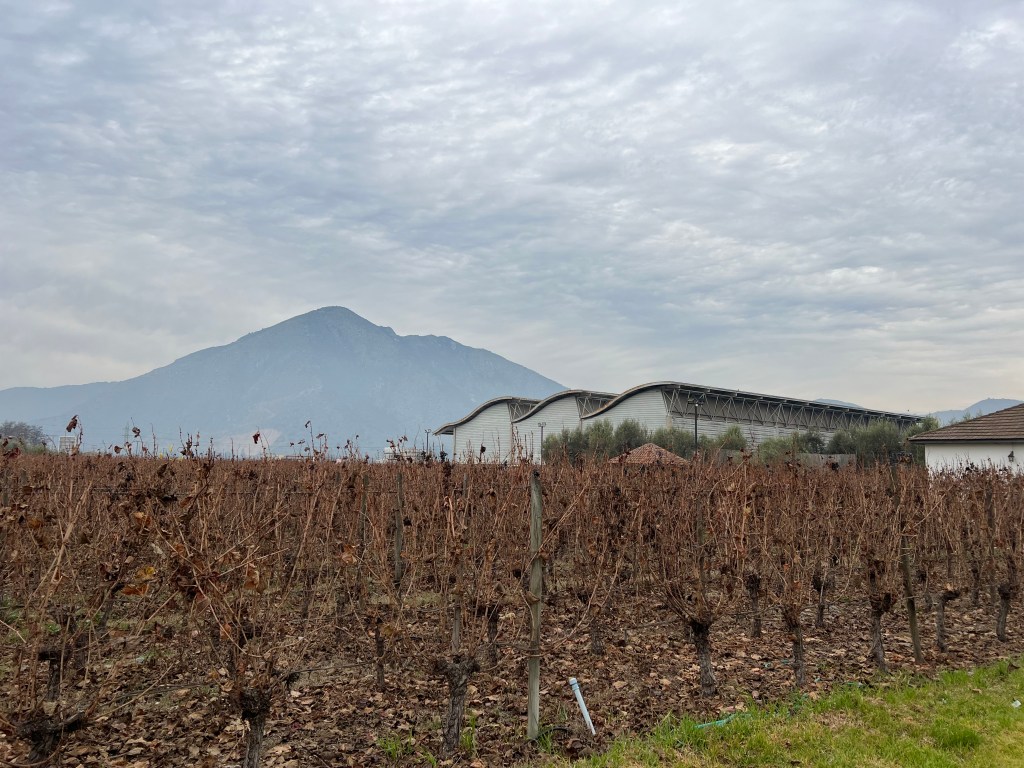
For our last and final stop, we crawled onto the bus and headed to the largest and most famous winery of the region, Undurraga. It was immediately apparent this was the big dog of the area. The property was huge and the production here was larger than any of the other places.
There was a little counter here selling snacks, which I desperately needed. I asked our guide what the most Chilean thing I could order was and he said a Chaparrita. Take a wild guess what it is. If you guessed another goddamn Hot Dog, you’d be correct. Except this time it’s wrapped in pastry. It was actually pretty good.

Again, we were given mini glasses and had pours and again, I couldn’t tell you what any of them tasted like. But they were good enough for me to purchase two of their bottles, a 2021 Founder’s Collection Carmenère and a 2022 Terroir Hunter Carignan. The Carmenère grape is Chile’s signature grape. It was long thought to be extinct by the French, but showed up in Chile back in the 1990s and has been an important part of Chilean wine ever since.


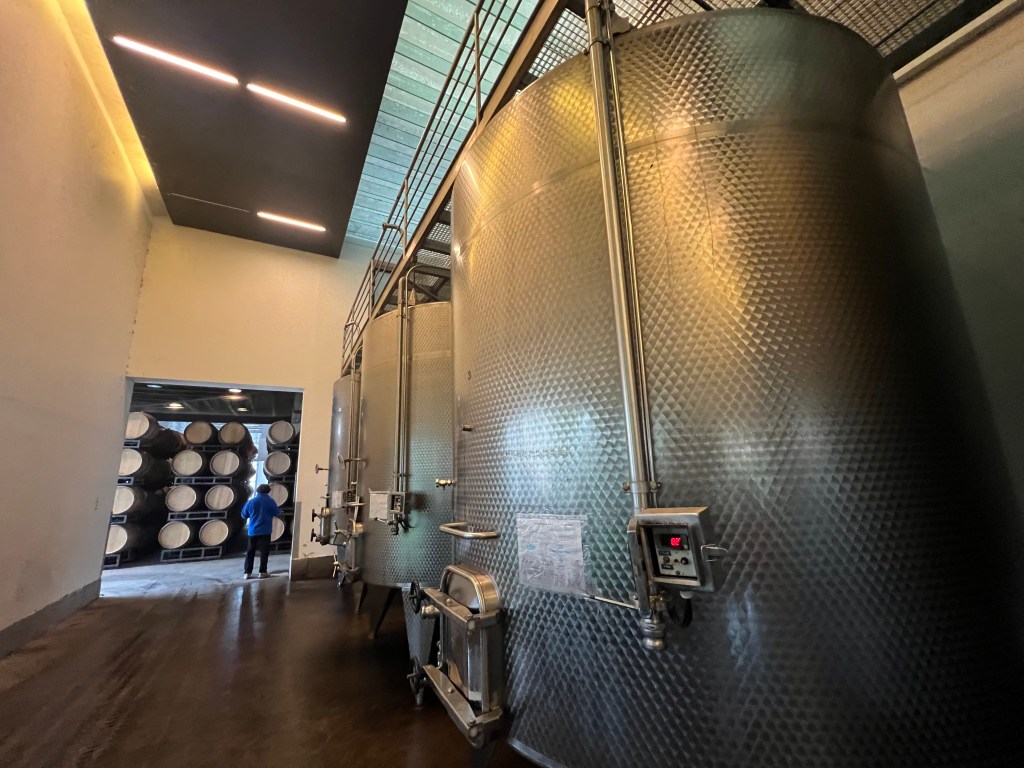

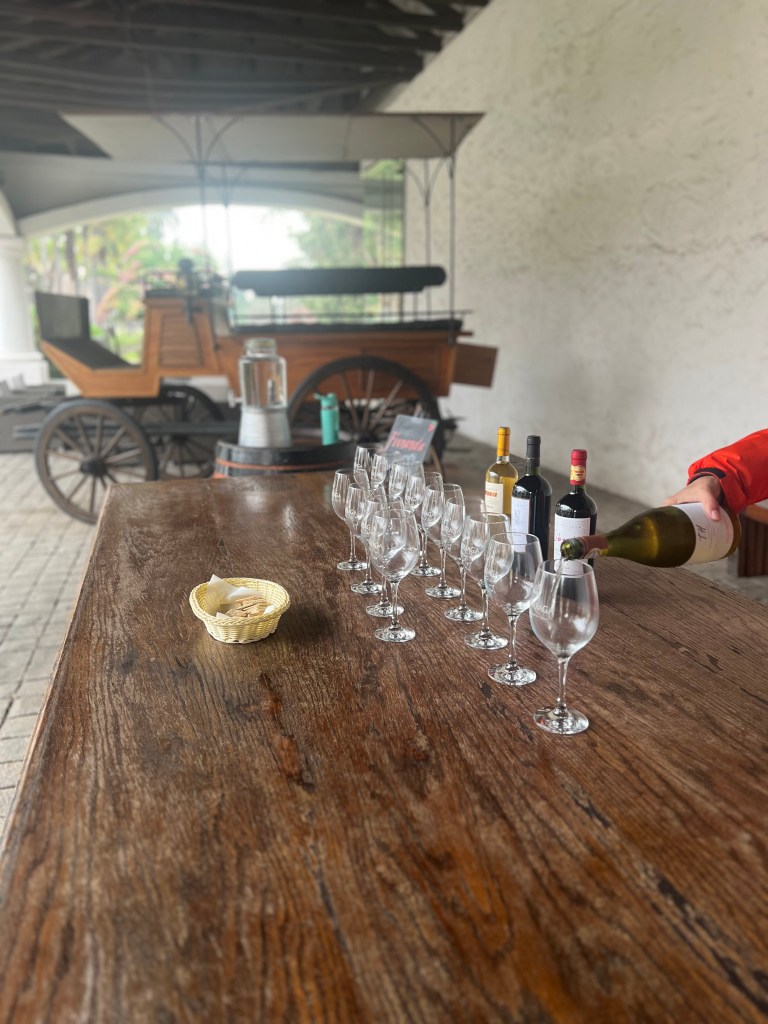
And that was the end of the tour! It was a great time spent with lots of amazing wines and great people (besides the Arsenal fan).

As if we hadn’t done enough for the day, a reservation that night opened up at Peumayén Ancestral Food and we couldn’t pass up on it. This was a fascinating restaurant that focused on showing off indigenous Chilean food throughout history. This was presented through a tasting menu which showed off Chilean cuisine throughout all regions.
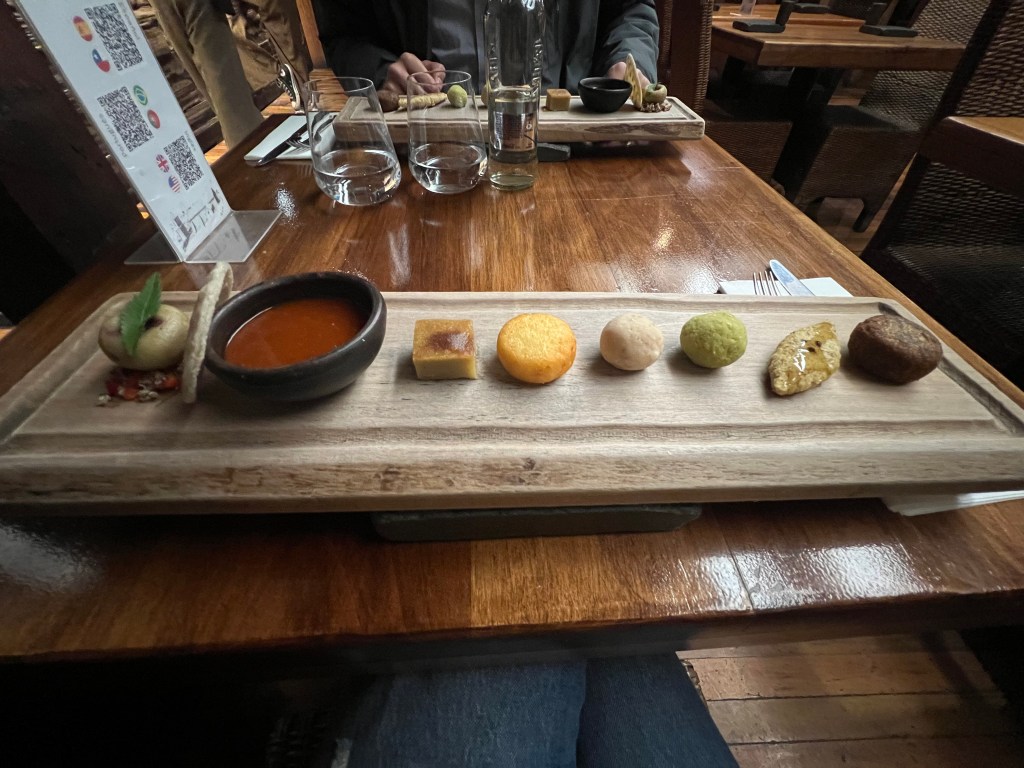
The first course included traditional breads found throughout Chile, going from those found in the Northern provinces to the Southern provinces as you go left to right. I honestly couldn’t tell you what any of these were or what they tasted like, but our waiter went into great detail on each and everyone of these little balls of dough. All I could think in the moment was getting them to sponge up the wine in my belly.
The next course was the starters, brought out and presented on a slate. From left to right: Corn Pastry with Azapa Olives and Cancha Powder, Roasted Paprika in Kalatanta and Goat Cheese with Ulmo Honey, Blood Sausage with Onion Jam, Red Wine, and Merkén, and Salmon Tartare with Mango and Chañar Sauce.
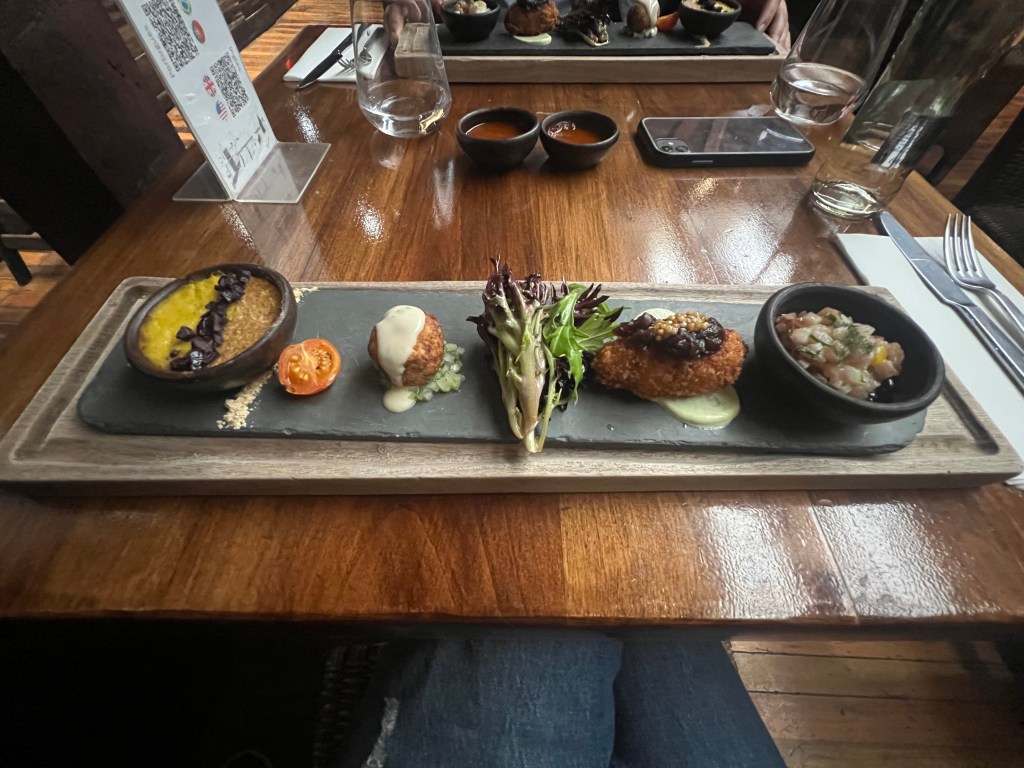
Then came the Main course. From left to right, Chochoca stuffed with Eggplant and Mushroom, Algarrobina Pork, Smoked Caldillo with Shellfish and Conger Eel.

And finally, dessert. Mote with Dried Peach, Profiterole with Lucuma and Milk Candy Sauce with Pisco, and a Papaya Pie.
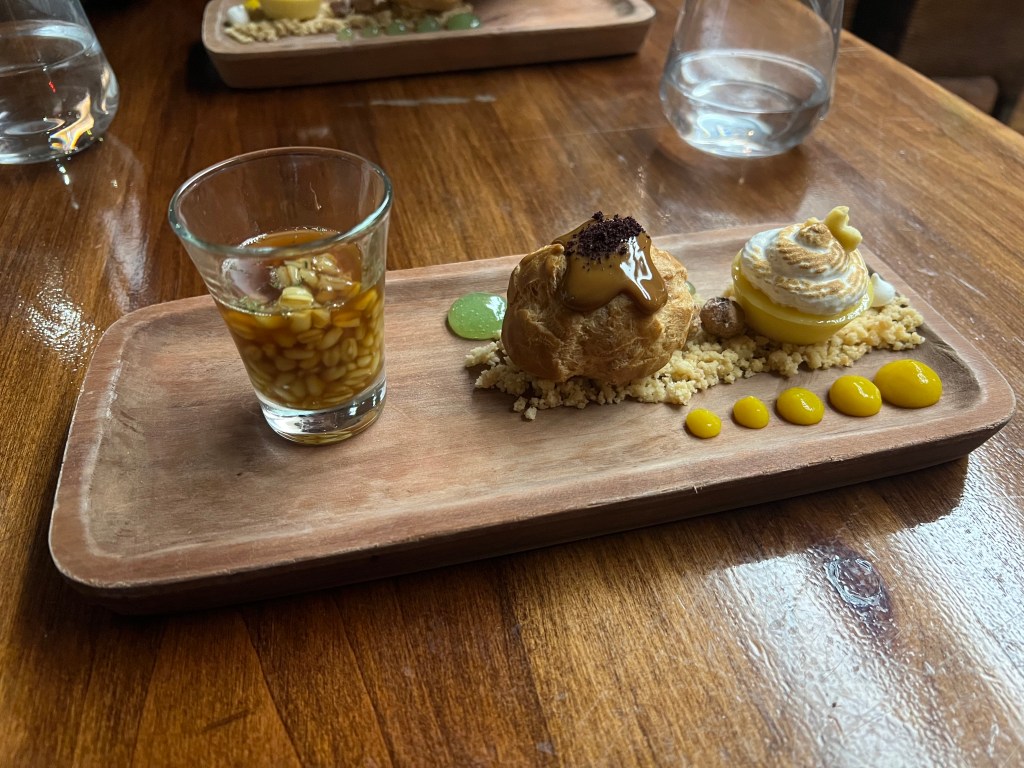
It was such an amazing experience. I can’t go into detail on how every bite tasted (because I have no idea), but I do remember being so surprised at how much flavor was packed into each little bite.
Moving on Up in the World
The next morning we woke up (somehow) and headed out into the beautiful neighborhood that surrounded us. The weather was perfect. It was hard to think that only a couple days ago we were sweating our asses off in Paraguay.

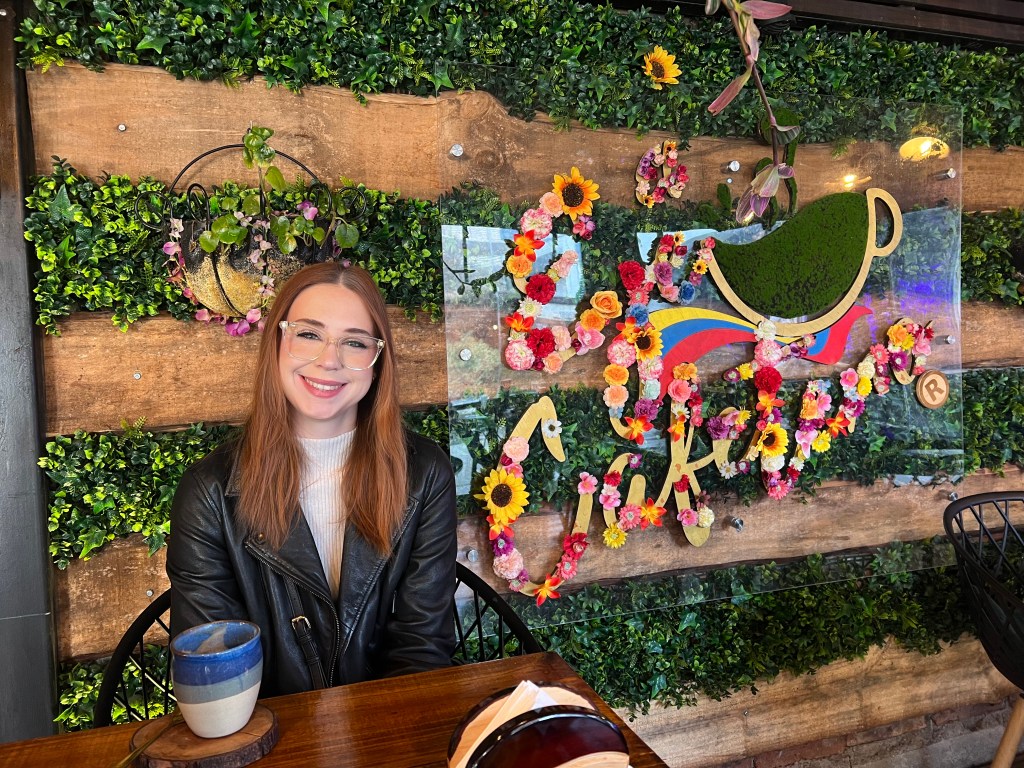
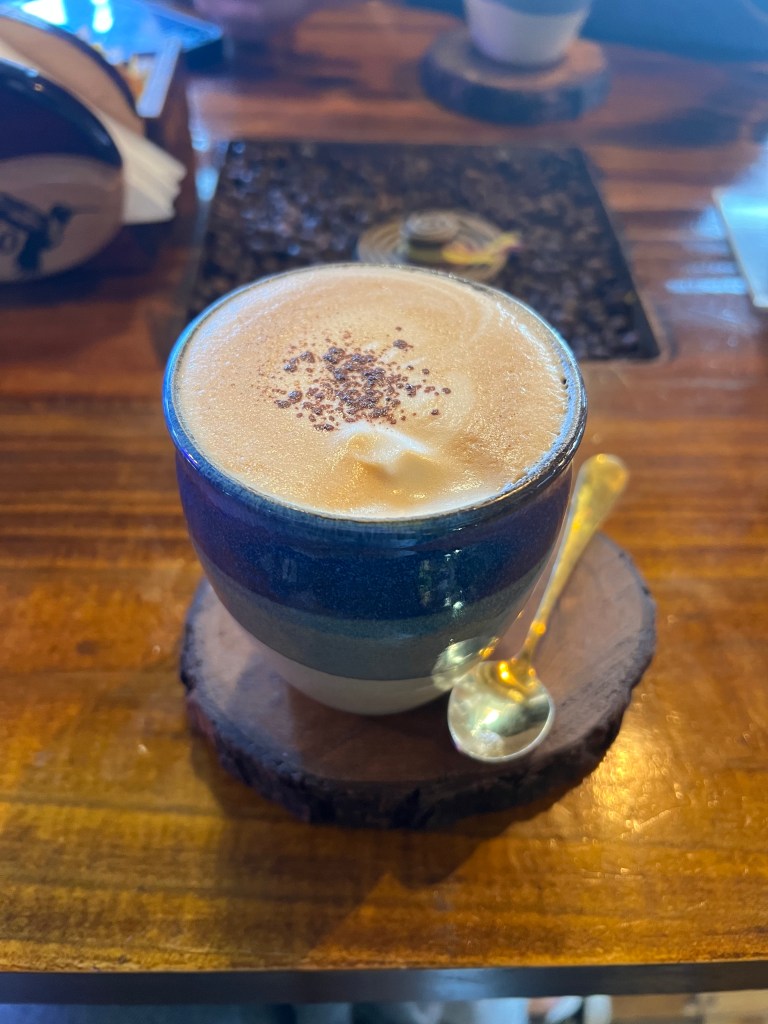
Emily’s goal to visit coffee shops around the world led us to Encanto El Eje, a quaint cafe that is designed to pull in those who want an Instagram photo. In fact, there was a younger couple filming a TikTok video right next to us. I get it though, it’s a beautiful cafe filled with greenery and flowers, coffee bags hang from the ceiling, bright lights illuminate the name, and the Colombian flag is ever present.
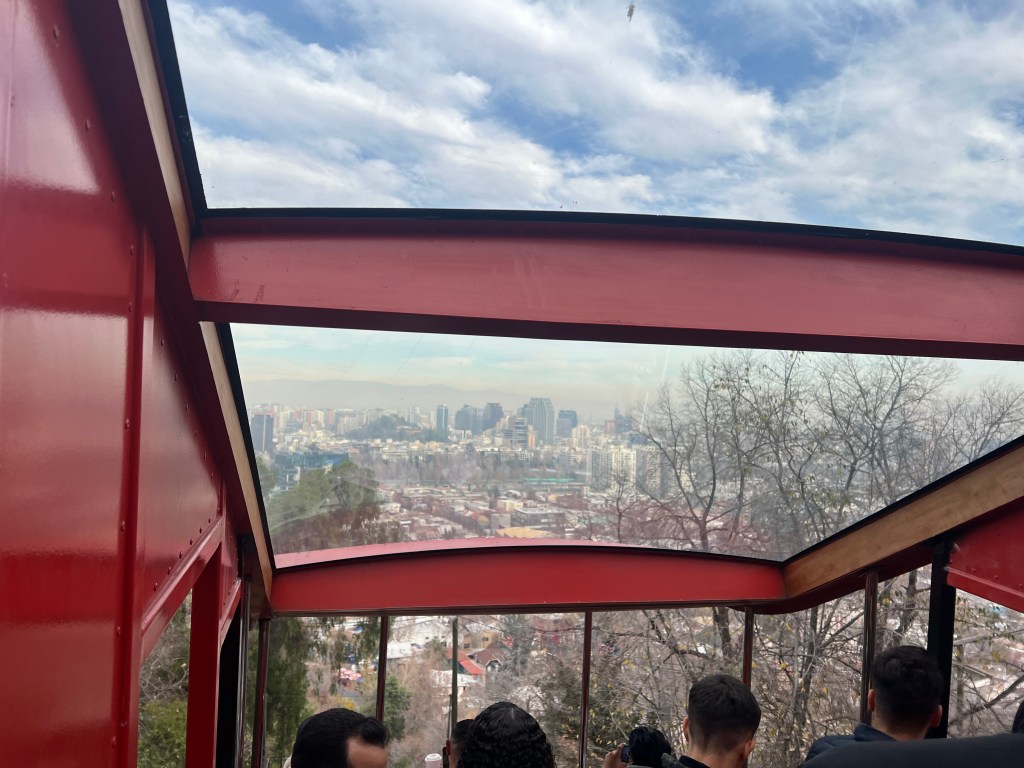
Looming over us in the distance since we arrived was San Cristóbal. It was destiny that we would arrive at the top at some point. Luckily for us, it was only a short walk to the famous Funicular de Santiago. This thing is over 100 years old, taking people to the top of San Cristóbal since 1925. We bought our tickets and poured into the bright red car that would creak its way to the top, going diagonally up the side of hill.
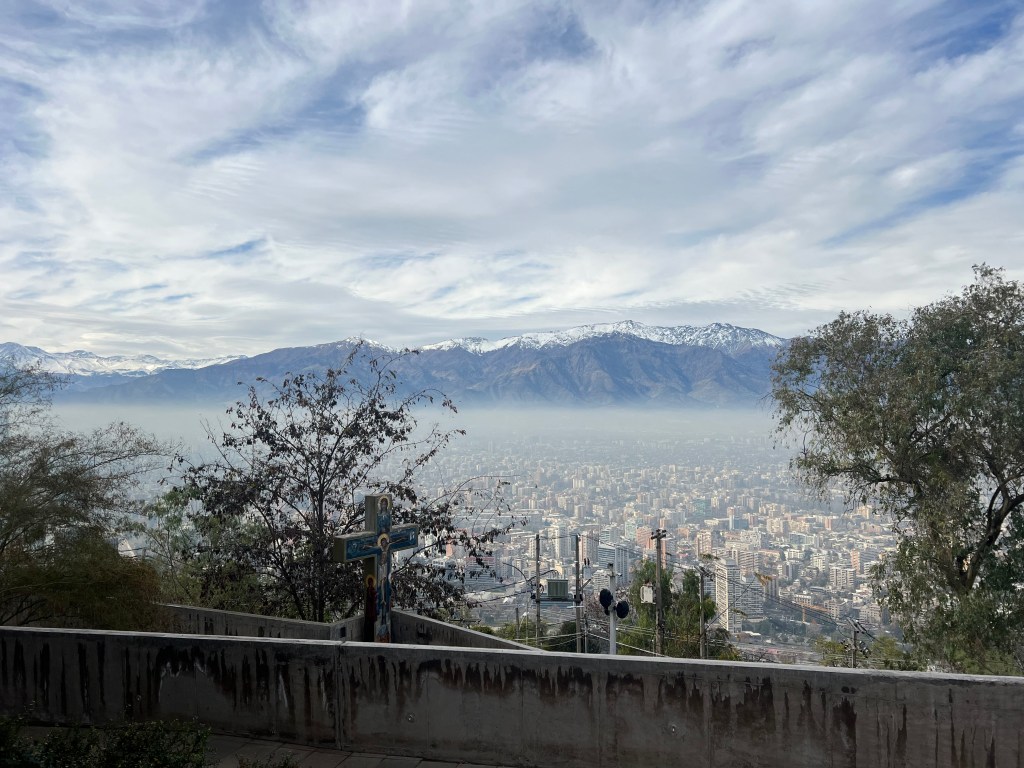
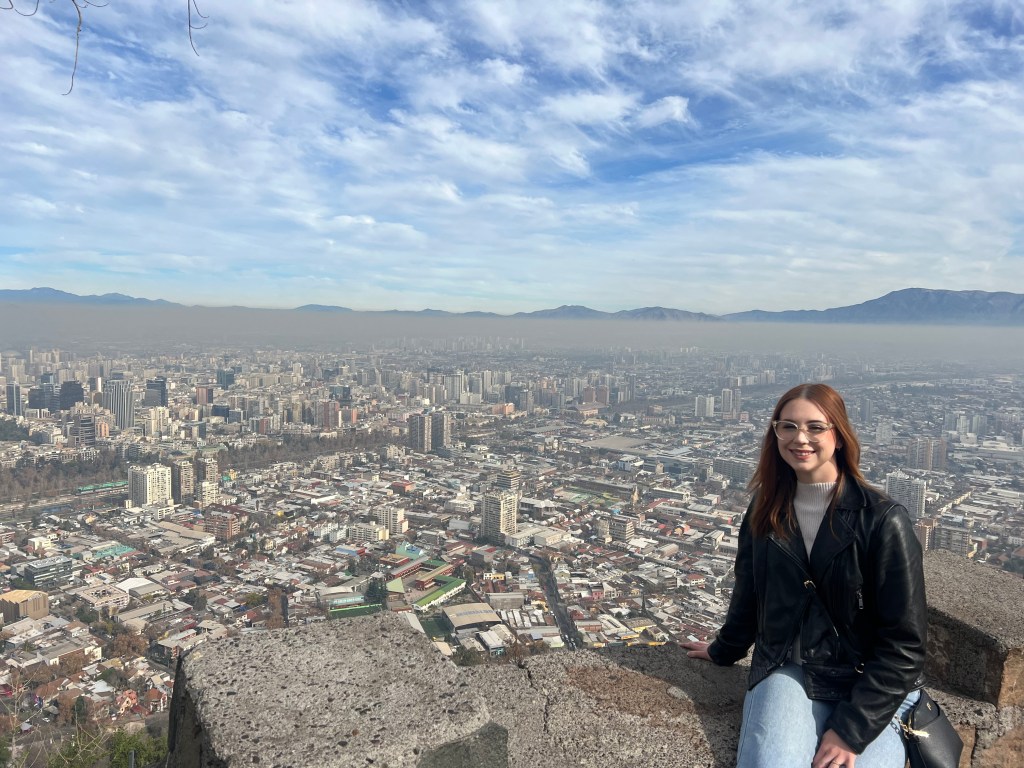
At the top, the Sanctuary of the Immaculate Conception on San Cristóbal Hill, a massive statue of the Virgin Mary and one of the main places of Catholic worship in Chile. The views up here of Santiago and the Andes Mountains were incredible. It really gave perspective just how massive the city was.
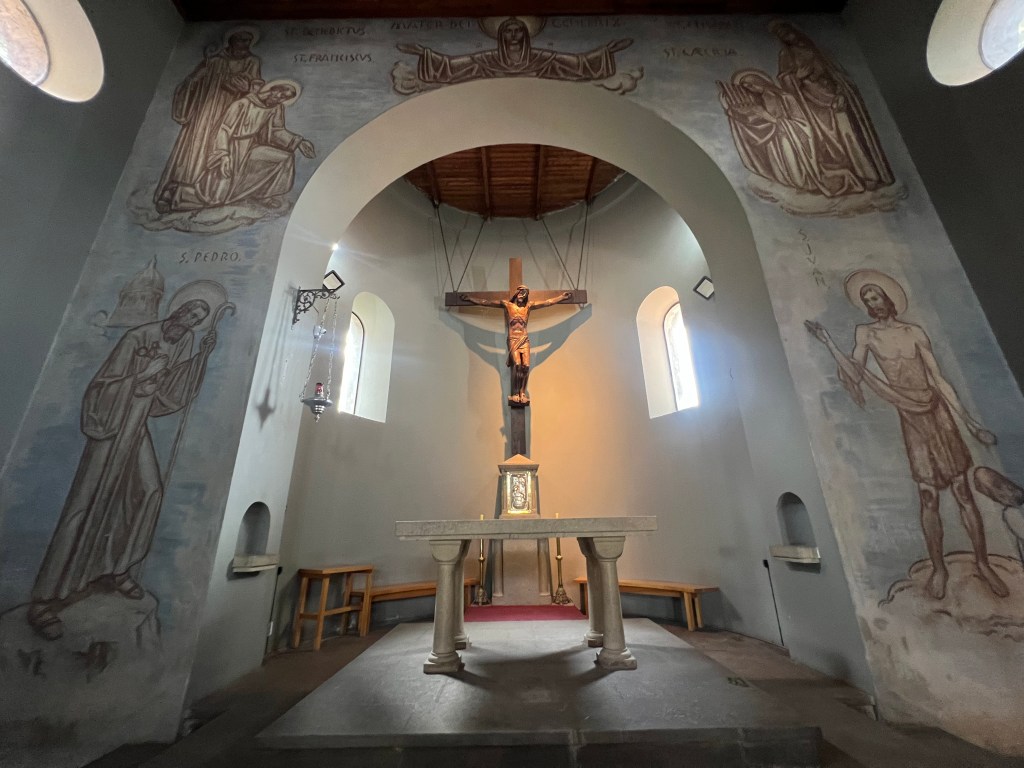
Capilla La Maternidad de María

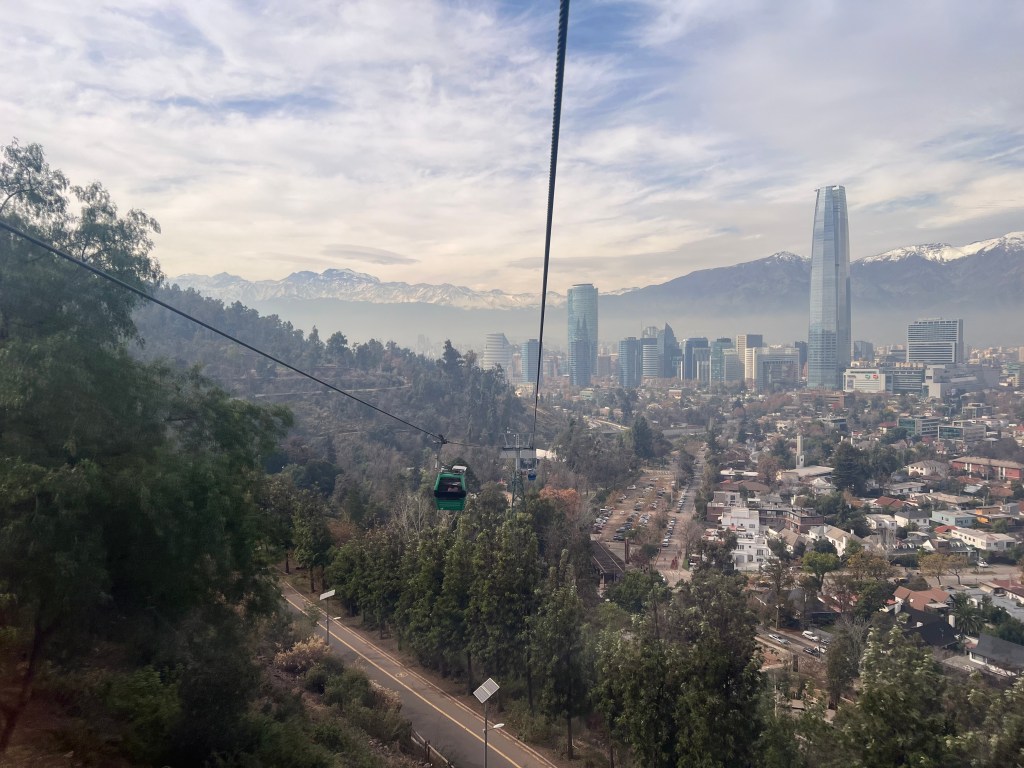
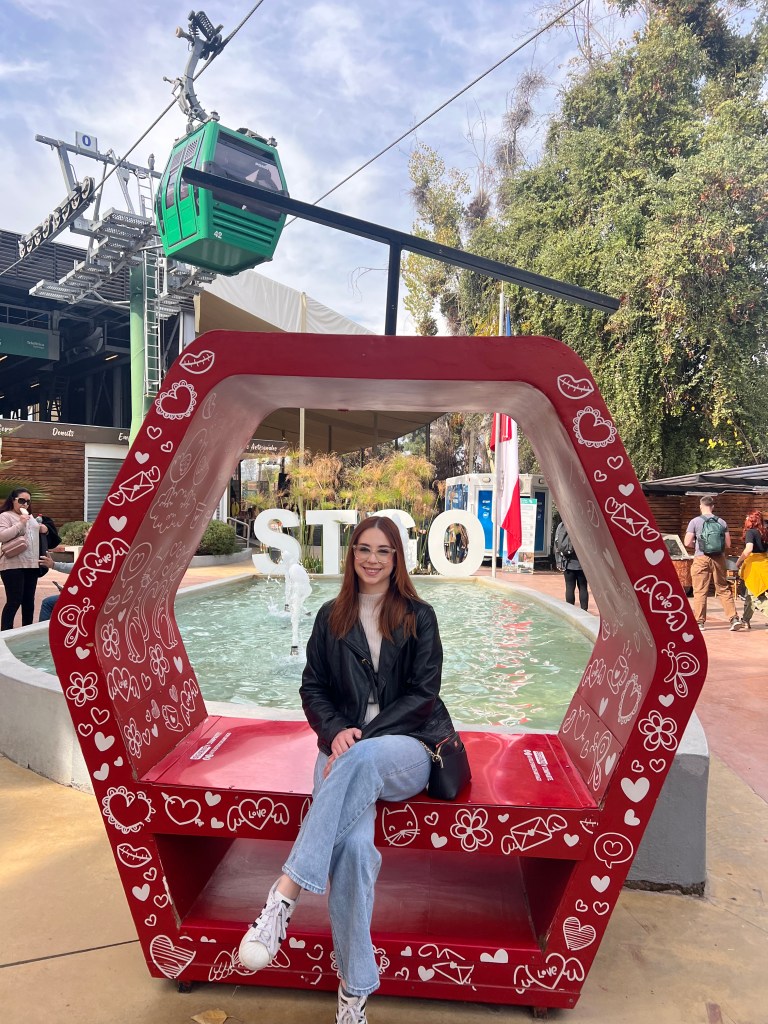
We opted to go on the Santiago Cable Car for the way back down the hill. These things weren’t a hundred years old, they’d actually been renovated 8 years prior. Again, I could go on forever about how beautiful the views were. Something about mountains surrounding a large, metropolitan city that’s so pleasing on the eye.


Hotdog from Hell
We’d eaten a good amount of Hot Dogs on our travels throughout South America. It’s something you wouldn’t imagine being popular down here, similar to Iceland’s obsession with them. The Choripan in Argentina was incredible, the Pancho in Uruguay was meh, but the one that scared me the most was the Completo.
Fuente Alemana was our stop for this horrifying creation. The great Anthony Bourdain visited here in his exploration of Santiago, stopping by for a Lomito, a similarly decadent creation drowned in mayonnaise. We weren’t here for that though, we wanted that dog.
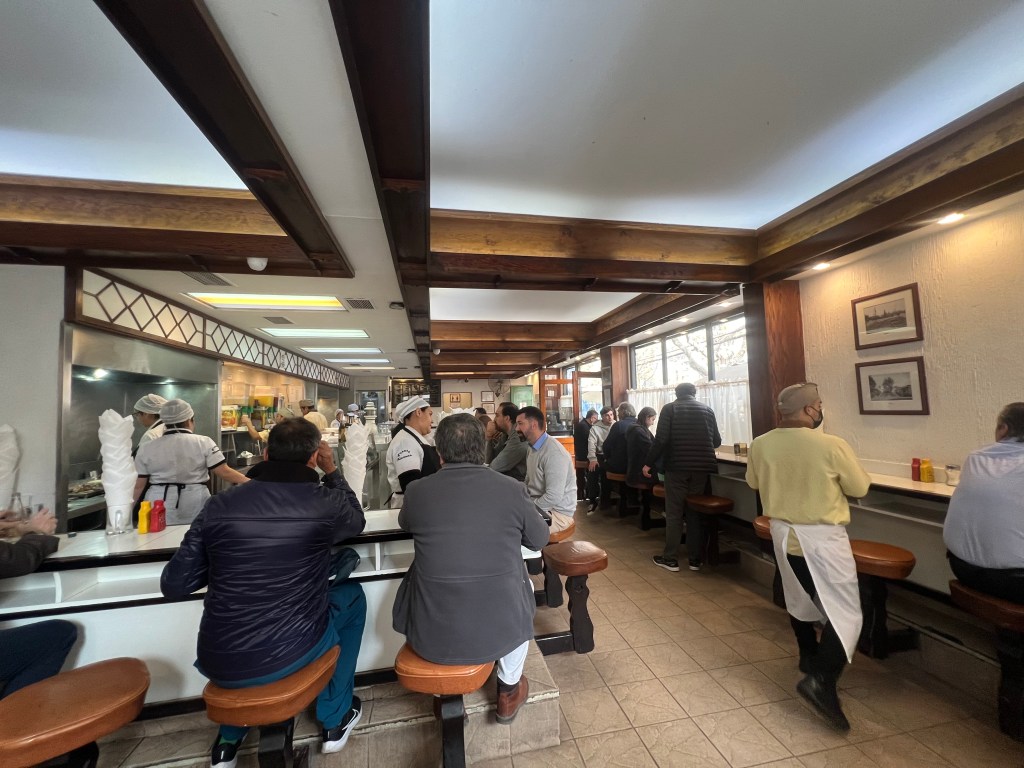
It was a lively atmosphere. Waiters were running around blasting through customers like an assembly line. The grill was sizzling, chefs yelling out order. A line had started to form outside as we were seated, it was getting busy.
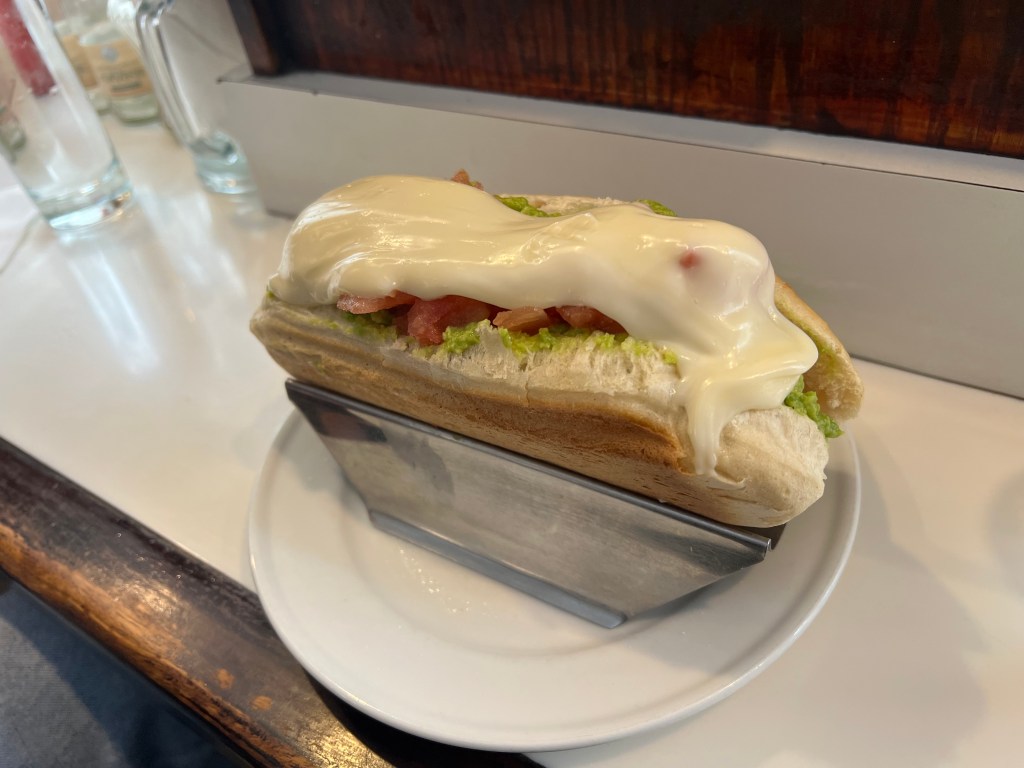
And then out it came. The Hot Dog Completo, my own personal hell. You wouldn’t guess there was a hot dog underneath it all. An absolute monumental amount of mayonnaise sat on top of tomatos, mashed avocado, and eventually, a hot dog. I couldn’t take more than a couple bites. No human should eat that amount of mayonnaise. Am I being dramatic? Yes. I hate mayonnaise, so it’s my fault for thinking this would be any different, but you have to put aside any past biases to experience local cuisines.
Emily liked it far more than me, and after wiping off about 75% of the mayonnaise, we were able to finish it. Chile, you have some explaining to do about this whole mayonnaise obsession.

Tourists in Santiago

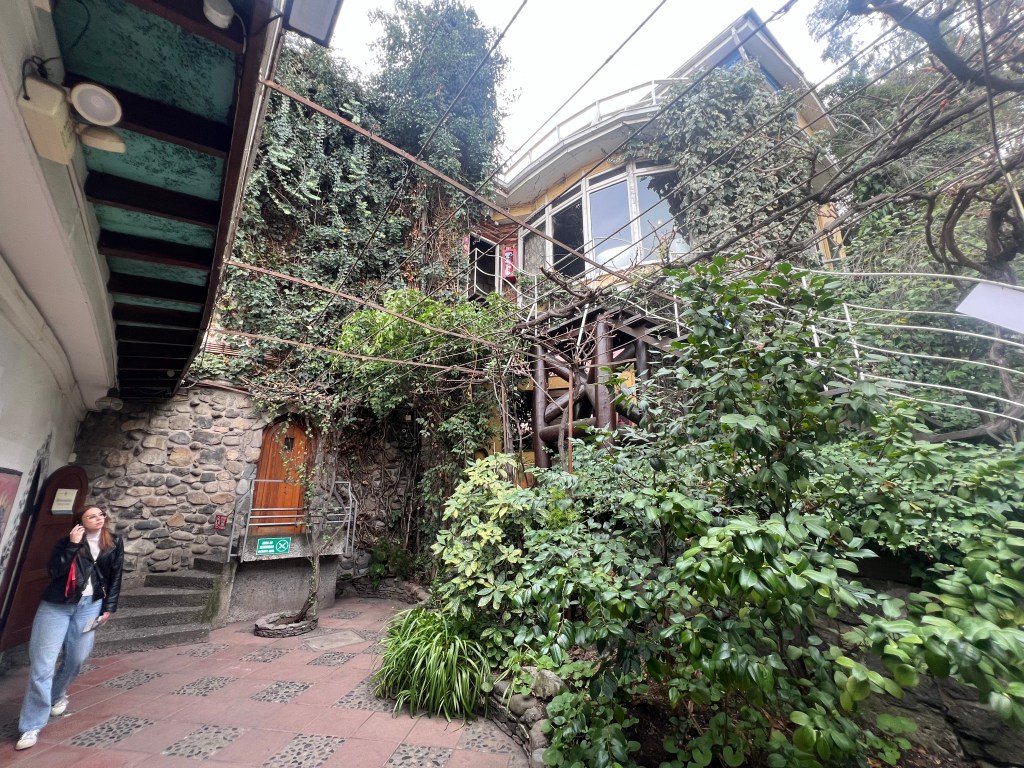
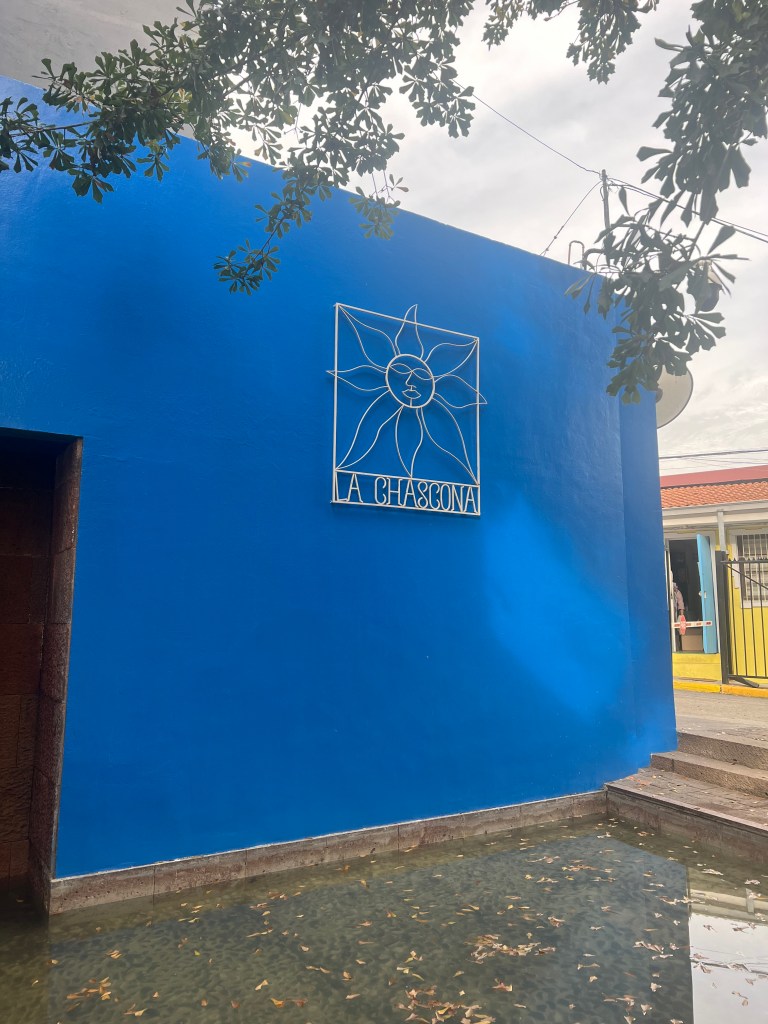
La Chascona was the home of beloved Chilean poet and Nobel Prize winner, Pablo Neruda. We were recommended to visit here by the Hotel staff. The man lived a hell of a life, and it was nice little look into Chilean history.
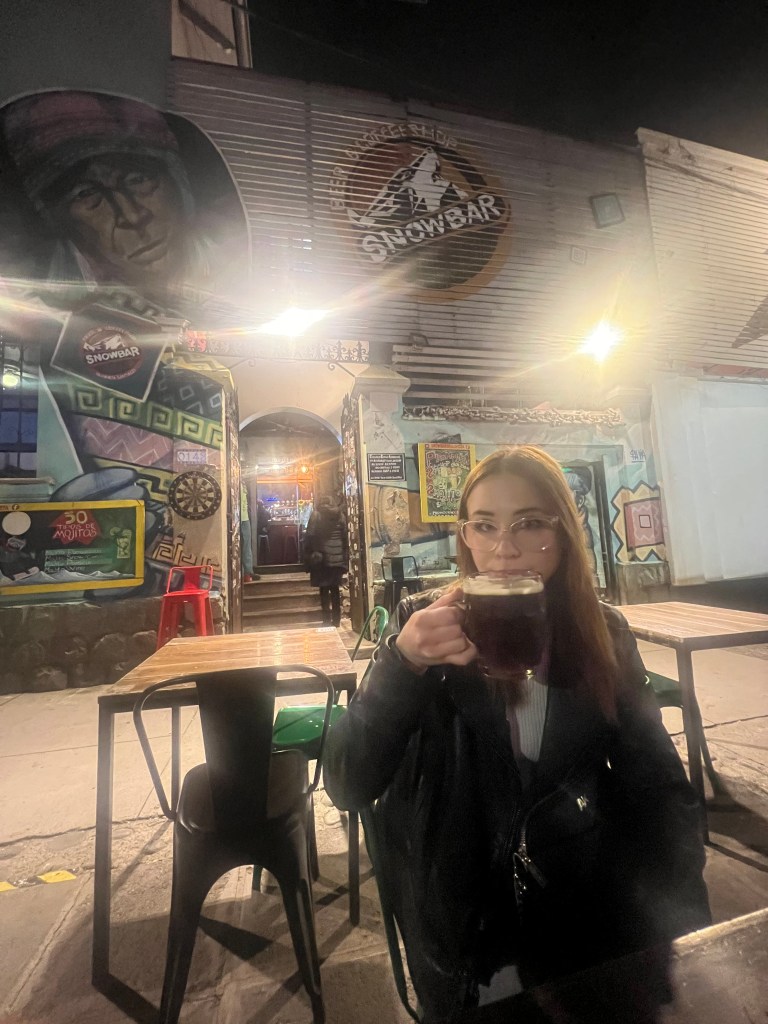
We spent the night hitting bars around the neighborhood. Snowbar in particular was a fun spot.
The Final Day in South America
Plaza de Armas
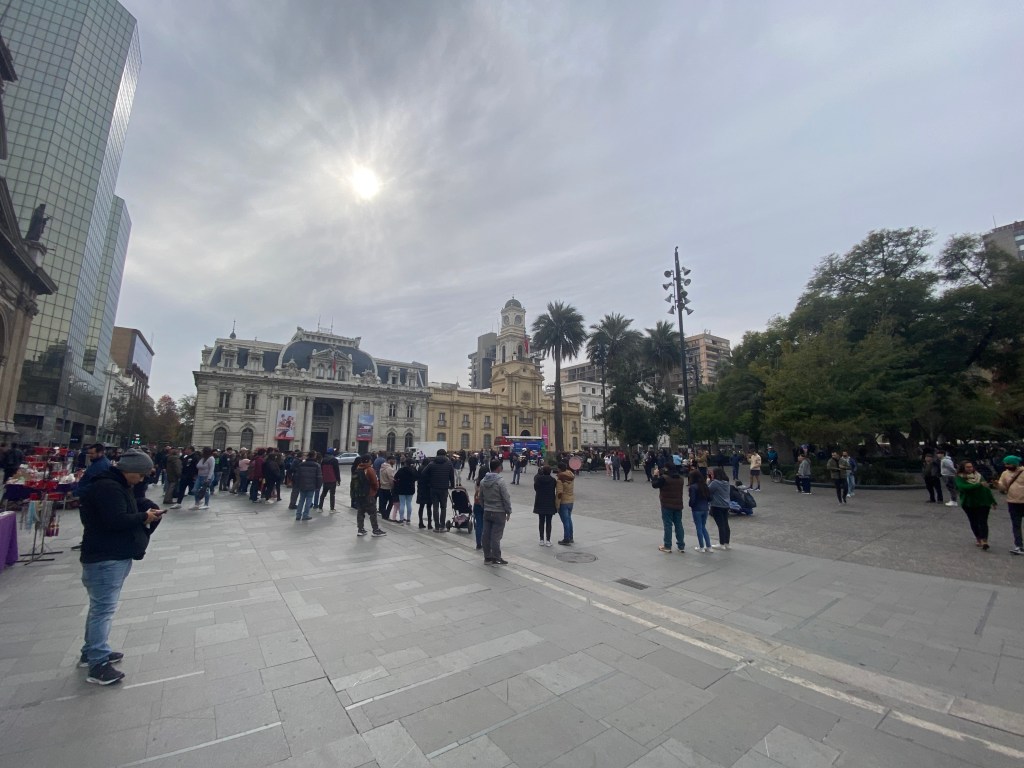

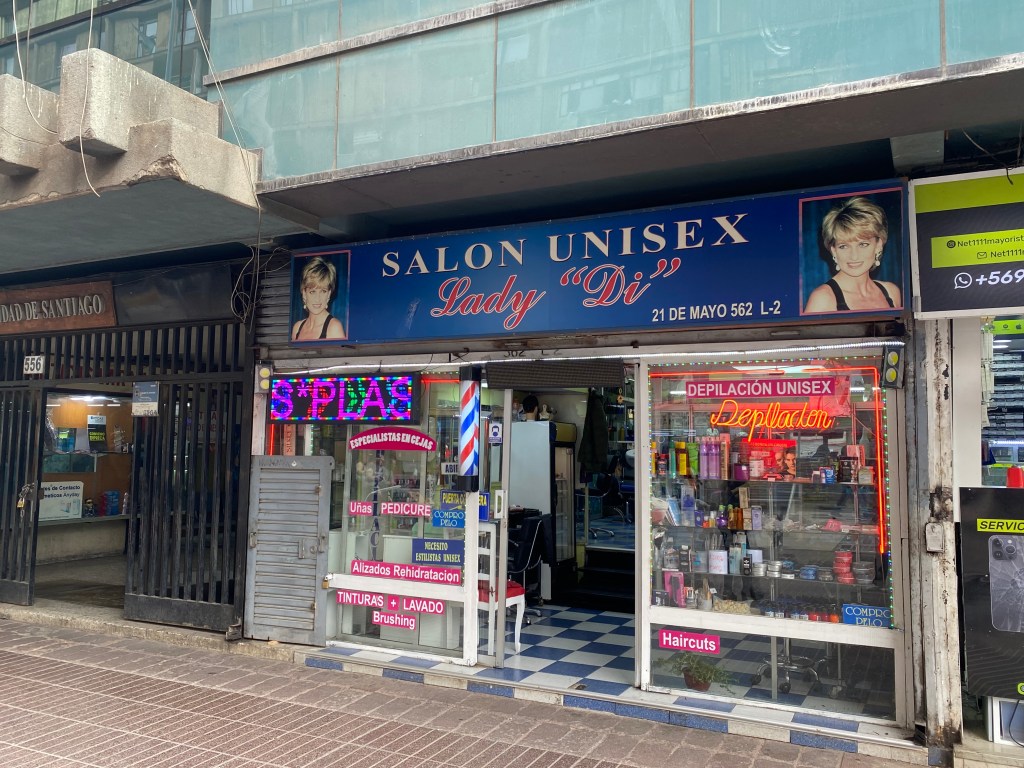
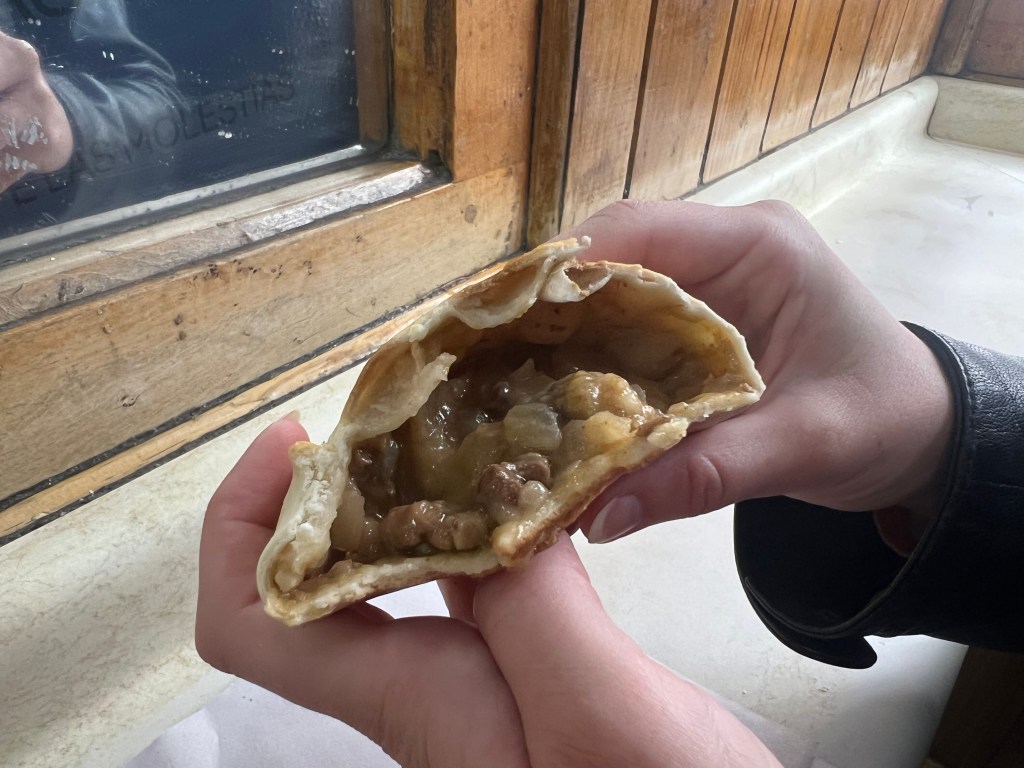
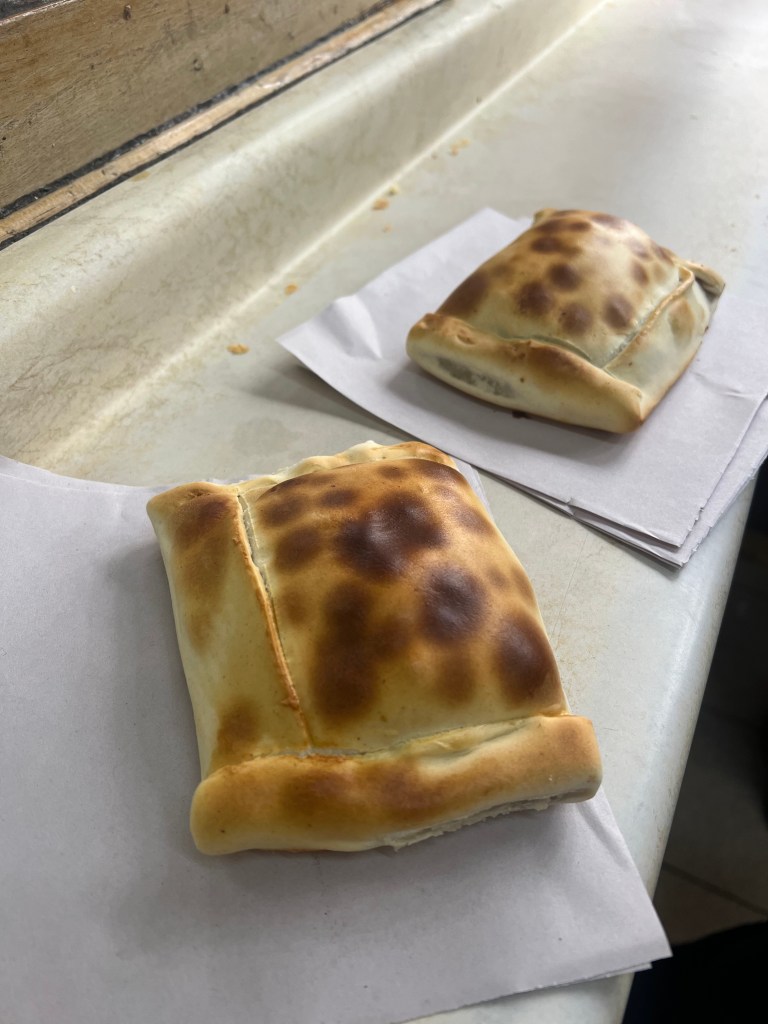
For our final Chilean meal, we went to the historic Emporio Zunino. Opened in 1930, its been in the same family ever since, becoming a staple in Santiago. There was a ton of people here. We had to get in line, order, get a ticket, bring the ticket to a cash register, pay, then wait for one of the men in the old timey white outfits to say our number.
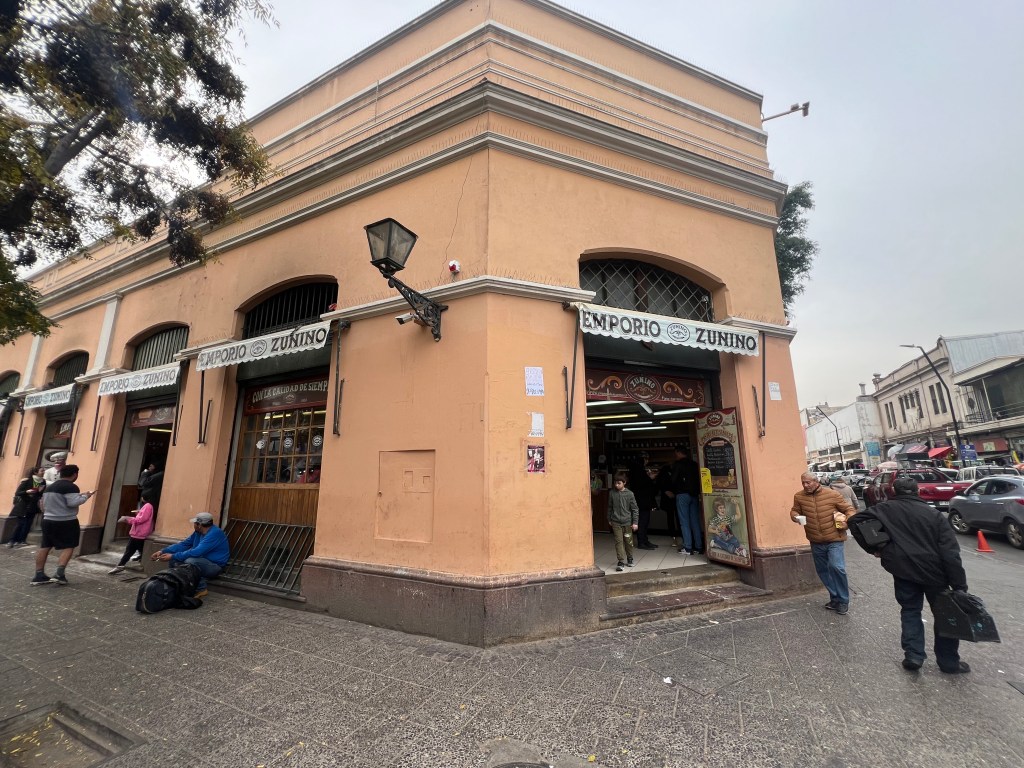
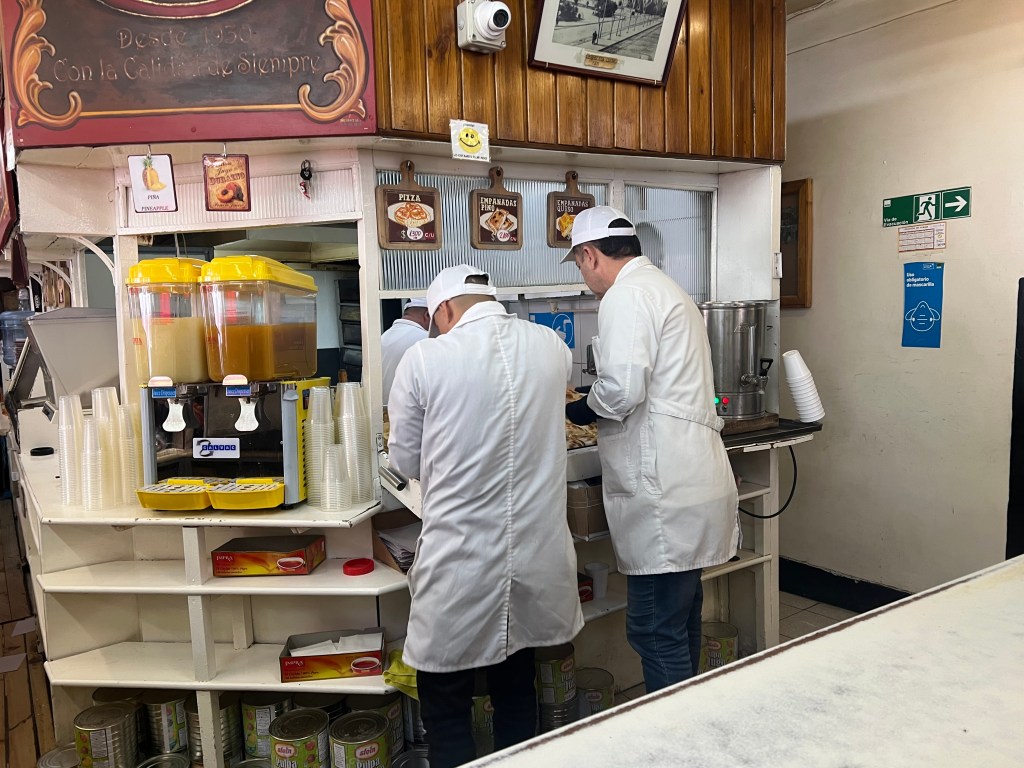
There was only thing we could order, their specialty, the Empanada de Pino. The pastry looked great. It had that rustic, homemade feeling to it.
Mercado Central


End of South America 2024
 The Hungry Voyagers