
8 Hours in Johor Bahru
October 31st, 2023
Table of Contents
- The Most Crossed International Border in the World
- Beautiful Bread
- Nasi Lemak
- The Streets of Johor
- Final Stops
- The Real Malaysia
Malaysia was the 2nd country we visited in our Southeast Asia 2023 Trip. If you want to read through chronologically, start here.
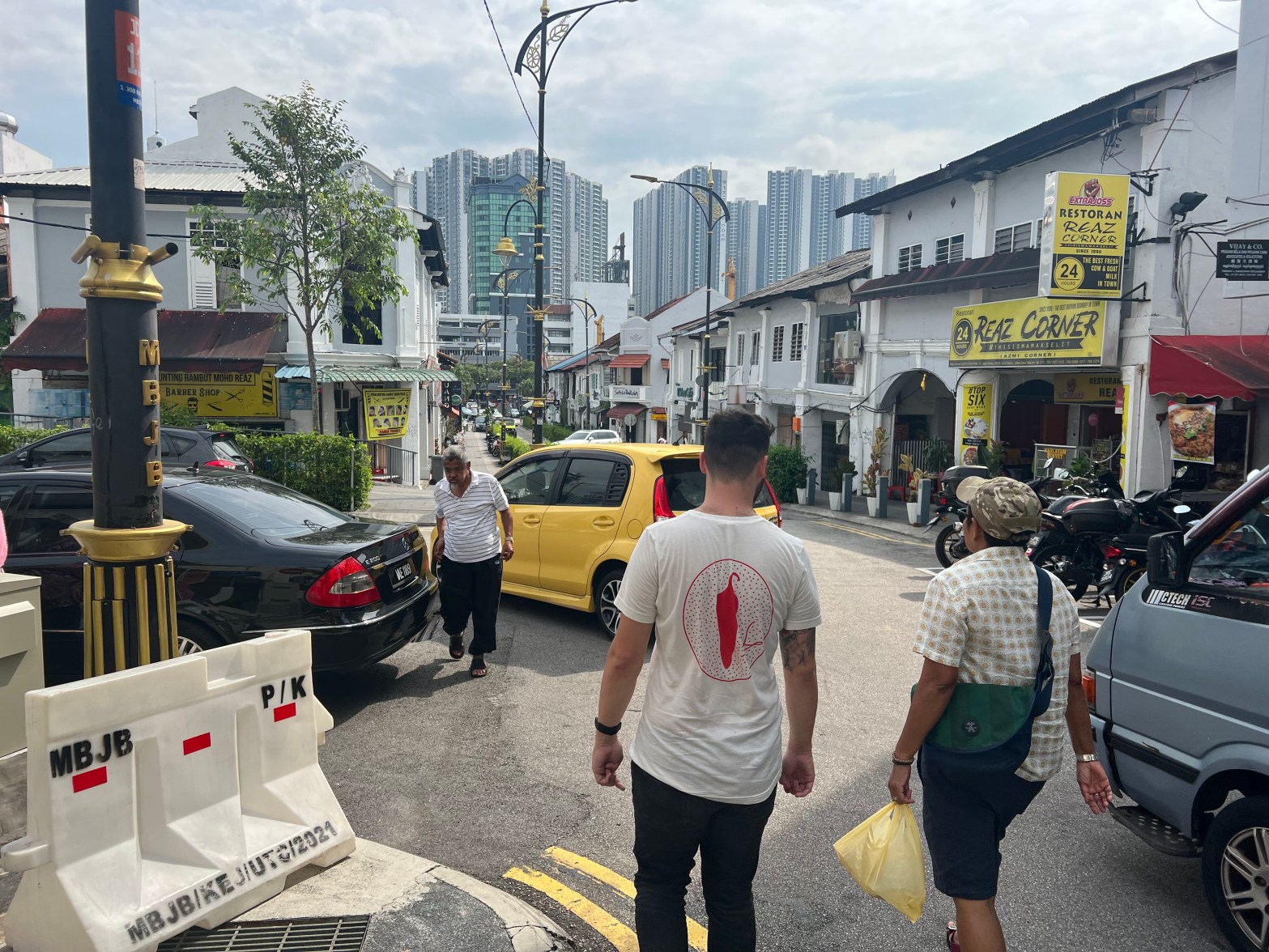
At this point we’d only been in Singapore for one full day. Our bodies were still acclimating to the 12 hour time difference, but excitement was propelling us onward. During the planning phase of the trip, we knew that Malaysia was right next door to Singapore, but the logistics of getting there were tough. The Singapore – Johor Bahru border was the most crossed international border in the world. People crossing could wait up to 3 hours at a time to get across. If we wanted to cross by ourselves, we’d have to wake up around 6am, find a 45 minute Uber to the border, then get a train or bus that could take us across. Train tickets sold out weeks in advance and buses could very easily get stuck in the 3 hour grind. We were lost on what to do, that was until I came across Han.
I had reached out to a couple of tour guides on ToursByLocal, most of who replied that they don’t take people across the border. Han was different. Being a local Malay herself, she agreed to take us across, even though she’d never done it as a tour before. We talked a bit over email in which I gave her just one request, “I just want to eat the National Dish, everything else is up to you.” What lay ahead was 8 hours of incredible fun in Johor Bahru, Malaysia.
The Most Crossed International Border in the World
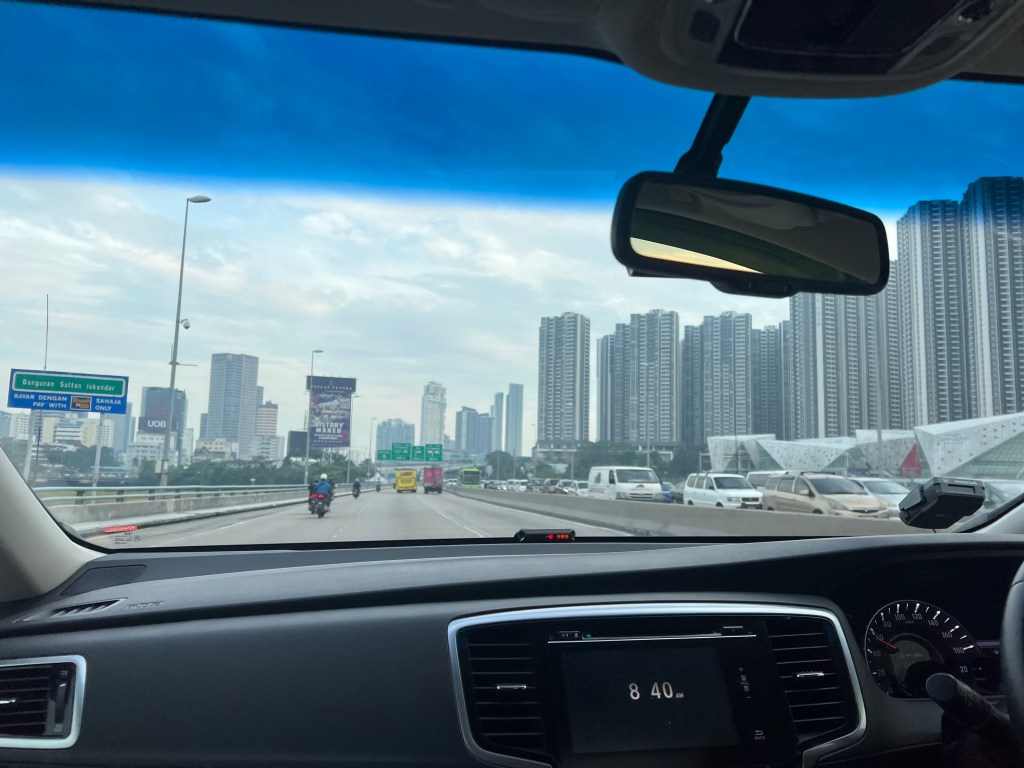
We woke up at 7am. Well, Emily woke up at 7am, my body was still waking me up at 4am! Han was already outside waiting for us. We’d been in constant communication about the traffic situation at the Singapore – Johor border. She was like a detective. On one phone she had an app that livestreamed webcam footage of the border. On another phone she had traffic conditions that showed the flow of traffic and estimated wait times. On the radio was current updates to any delays. I didn’t realize how serious this border crossing situation was. Well, not until the stories we heard about waiting in the line for 4-5 hours. Luckily for us, Han told us that it “looked good for now, but we can’t be sure”.
As we got closer to the border, it became apparent why this was the most crossed international border in the world. Open flatbed trucks filled with Malaysian workers began driving past us. Han told us how they live, “These people wake up at 3am and queue 4+ hours to cross, then work all day in Singapore. When they’re done, they queue for another 3-5 hours, get home late, then repeat. I have nothing but respect for them”. I could not imagine. Living in America, it’s easy to become ignorant to what happens outside of the country. We’re privileged and accustomed to the quality of life we know. Yet there are places like this, where people are waiting 7+ hours a day just to work so they can support themselves and their family. It feels so dystopian, yet what other options do they have. Han told us the pay in Singapore is so greater than that in Malaysia, so the money they earn goes a long way. I suppose that is a positive way to look at it.
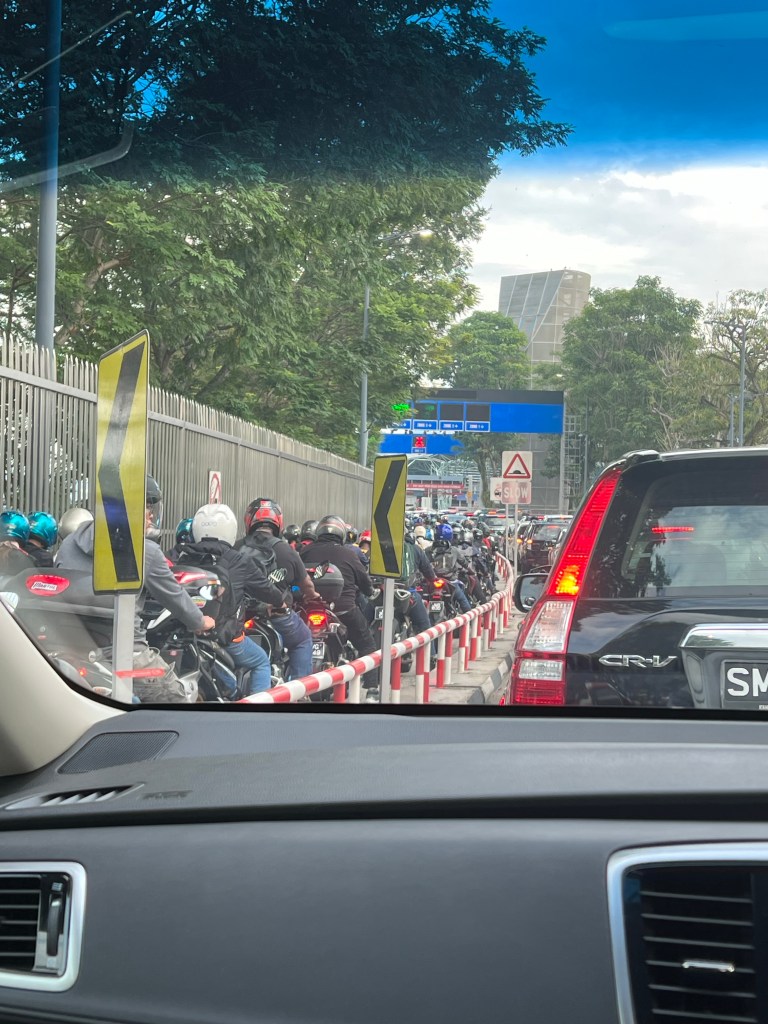
Eventually we got to Woodlands Border Checkpoint, the main crossing point into Malaysia. I have never seen so many bikes in my life. They absolutely packed into the small lane that was provided to them, jostling with each other to gain a couple of feet ground. The blaring of horns was constant. Han swore at a car that was trying to get in front of her. “You never give an inch, or they will take your spot”. It took about 30 minutes of bumper to bumper traffic until we reached the actual border. We passed our passports to Han as she handed them to the agent. She rolled down her windows and we smiled and waved at him and he did the same to us. “They are much friendlier on this side than the Malaysian side”. She wasn’t joking, on the Malaysian side we were met with stern faces and silence. But here we were, we’d made it. Country number 15. Malaysia.
Beautiful Bread
Singapore is very serious about trash and keeping the country clean. It’s so serious, that if you’re caught spitting on the ground, you can be fined. Because of this, the entire country is spotless, and you don’t really realize it until you leave, especially when you cross the border into Malaysia. That was the first thing my brain processed. It wasn’t necessarily dirty, but it was no where near as clean as Singapore.
As soon as we finished crossing, we were met with a gas station. Because gas is much, much cheaper here than in Singapore, people will cross the border, fill up with gas, and then go back. Han told us that border guards had started cracking down on people doing this and sometimes do random checks to see how much gas is in your car. We thought this was pretty funny and raised the question, how much queuing would you do to save money on gas?
Anyways, our first stop was to try one of Malaysia’s favorite breakfast snacks, Roti Canae. This simple flatbread listed by TasteAtlas as the Best Bread in the World! I had actually found this out in my research and was really excited that it would be our first stop. It was pretty close to the border, about 10 or so minutes. After driving round a small, windy road, we pulled in to a packed dirt lot and walked towards our first location of the day, Warung Roti Canae Bukit Chagar. This place was exactly what we wanted from this trip. It was simply a tin roof over some seats and a table with a couple of guys rolling dough and throwing it on a grill, and there wasn’t another tourist in sight. We were getting the real experience.
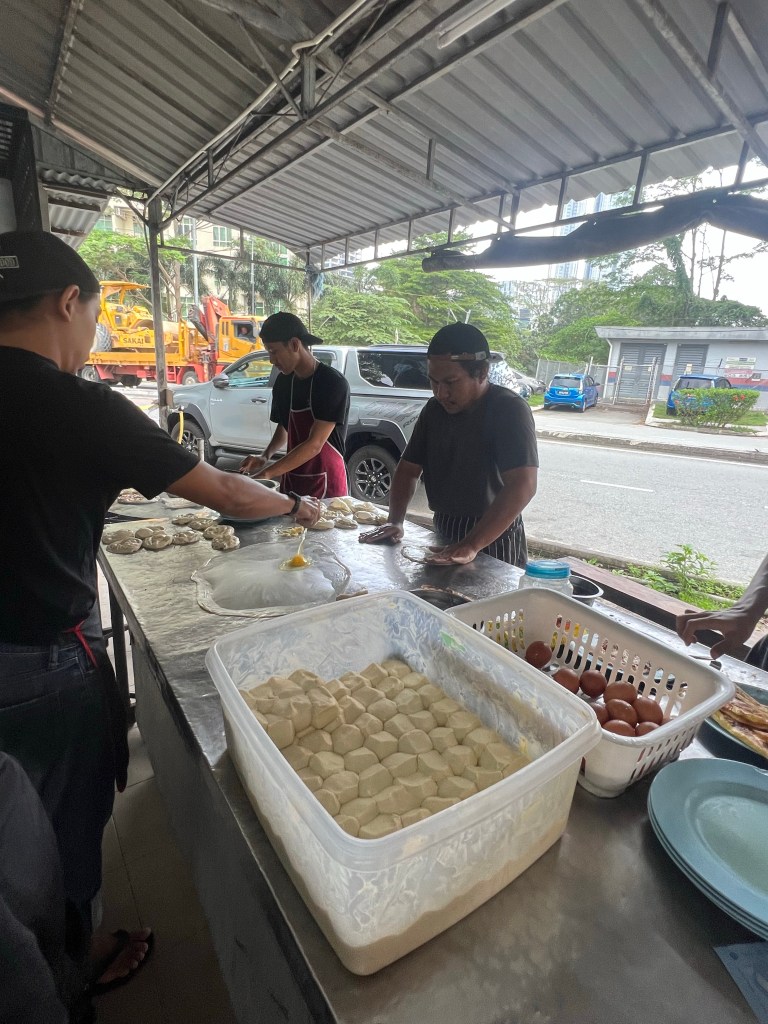

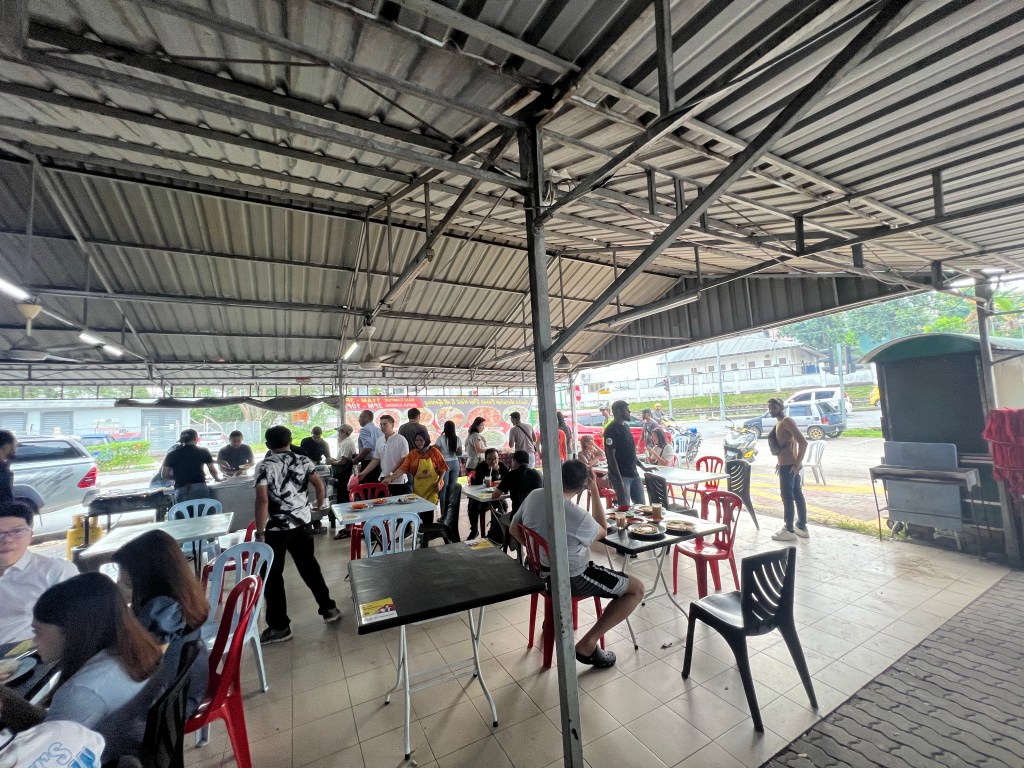
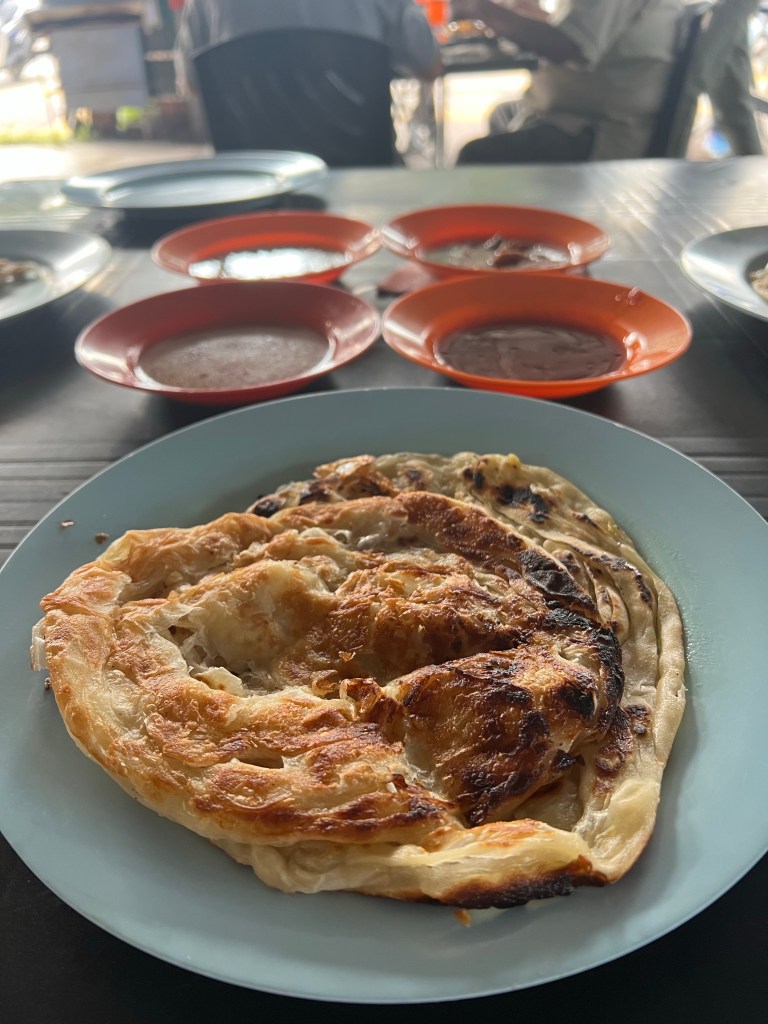
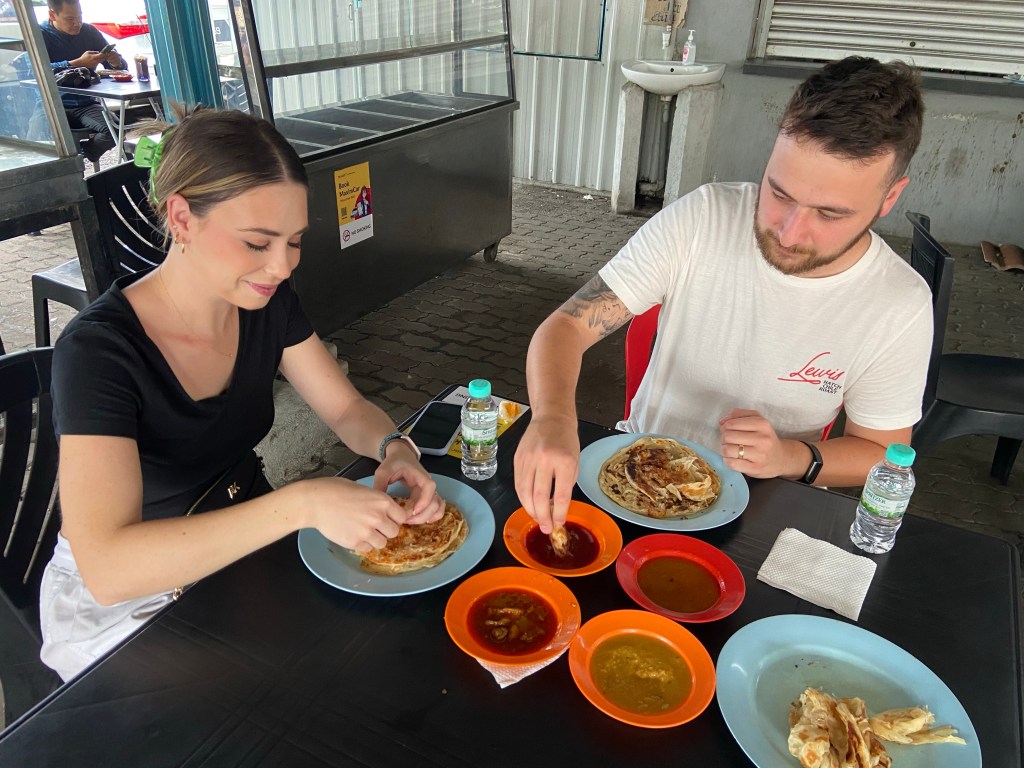
Han came back with a couple of Roti Canae‘s. The dough was flaky and the right amount of greasy. It broke apart with ease, crispy on the outside and soft on the inside. The best part was dipping it in one of the four dipping sauces: vegetable, chicken, mutton, and chili. Each had their own distinct flavor and mixed perfectly with the buttery Roti. Our favorite was the mutton sauce.
Nasi Lemak
We parked at a nearby mall, Galleria @ Kotaraya. Inside, we laughed at the sheer amount of people at KFC. To be fair, it looked way better than it does in the US. “It is very popular here” Han told us. This mall is also where Emily had a great cultural experience. As she went to the restroom, she was met with only a hole on the porcelain floor and a hose attached to the wall. This is why we travel.
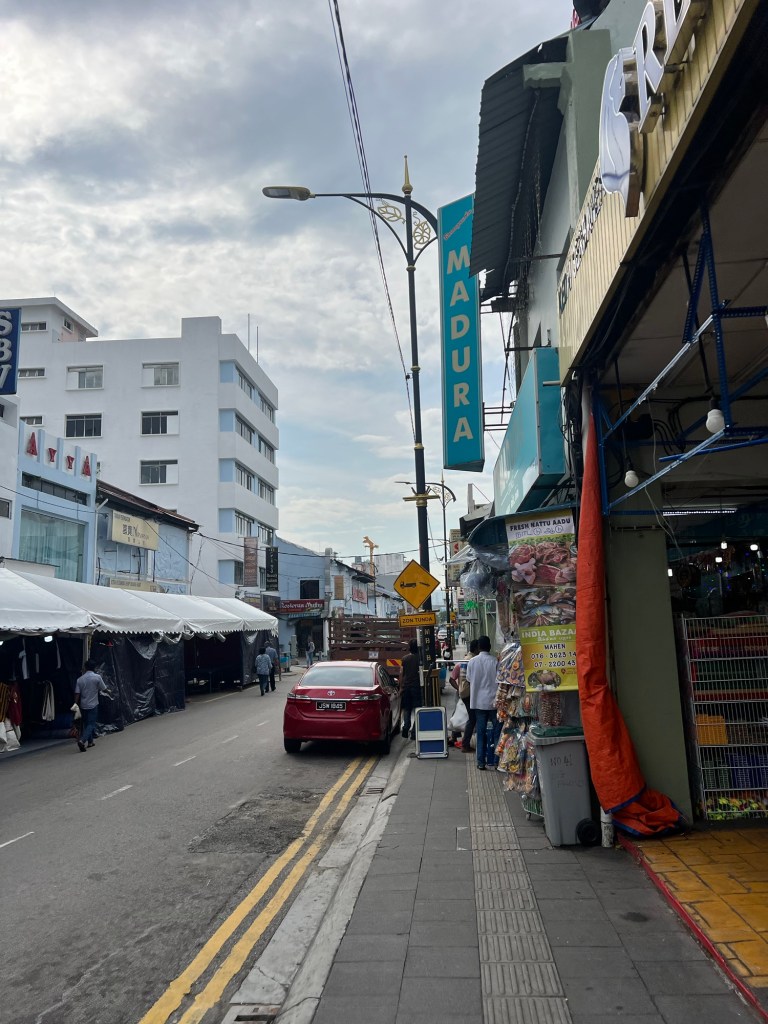
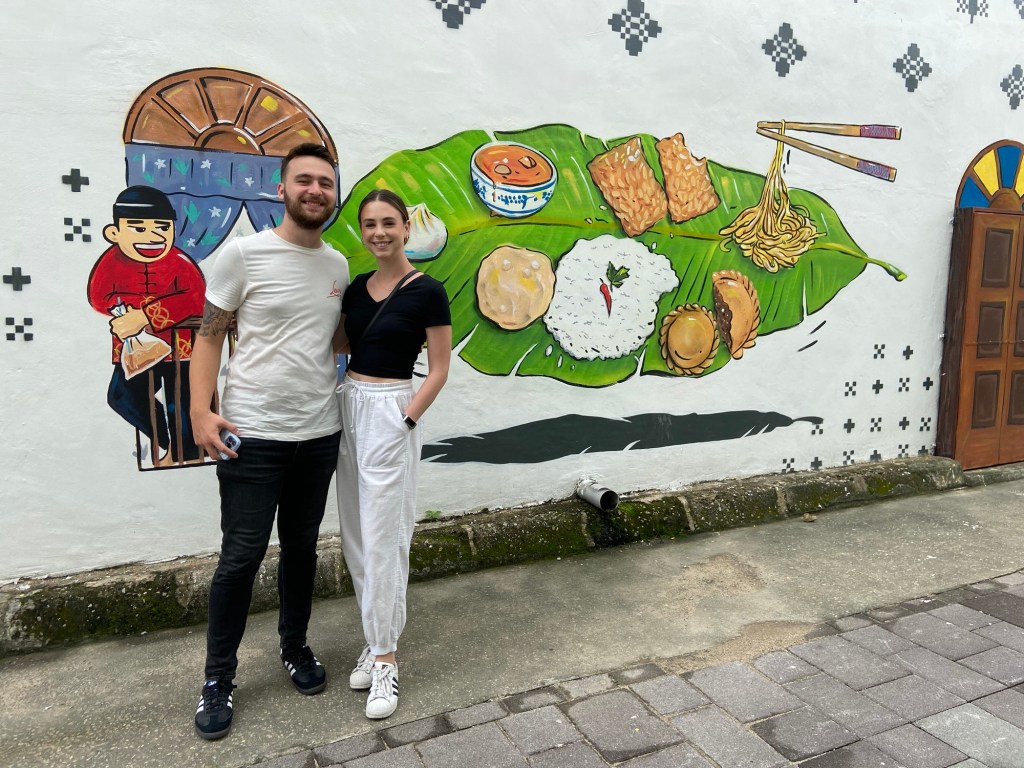
As we walked down the streets of Johor Bahru, Han pointed out a mural which depicted our next dish. In fact, it wasn’t just the next dish, but it was the most important dish in all of Malaysia, Nasi Lemak.
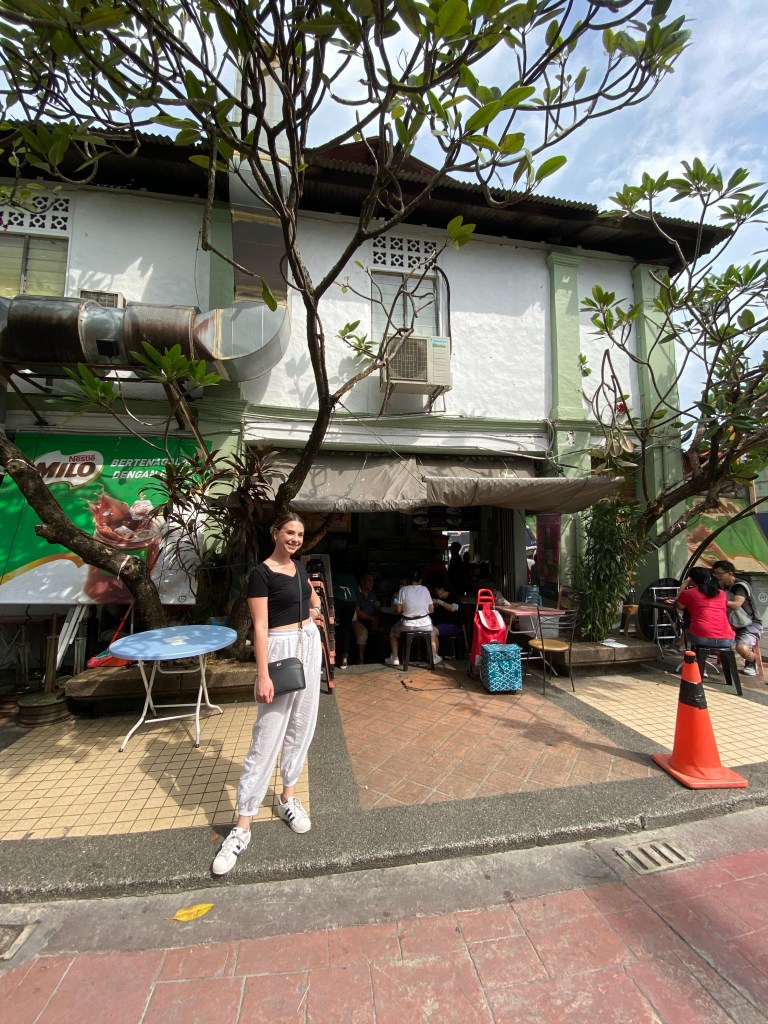
Restoran Kin Hua. The place was a literal hole in the wall. A small opening in the side of building which had been packed with seats and tables. It was bustling. One of the owners grabbed 3 tiny stools and made room at a table for us. I took in my surroundings, I love experiences like this. We were the only tourists. There was little English. It was real.
Han suggested we get some Chwee Kueh, one of her favorites. These little white clouds were steamed rice cakes with radish and sambal. I thought they were really tasty, a flavor and texture combination unlike anything I’d ever eaten. The rice cakes were jiggly and a little chewy, the radish on top gave a sweet taste, and then the sambal hit you with spice.

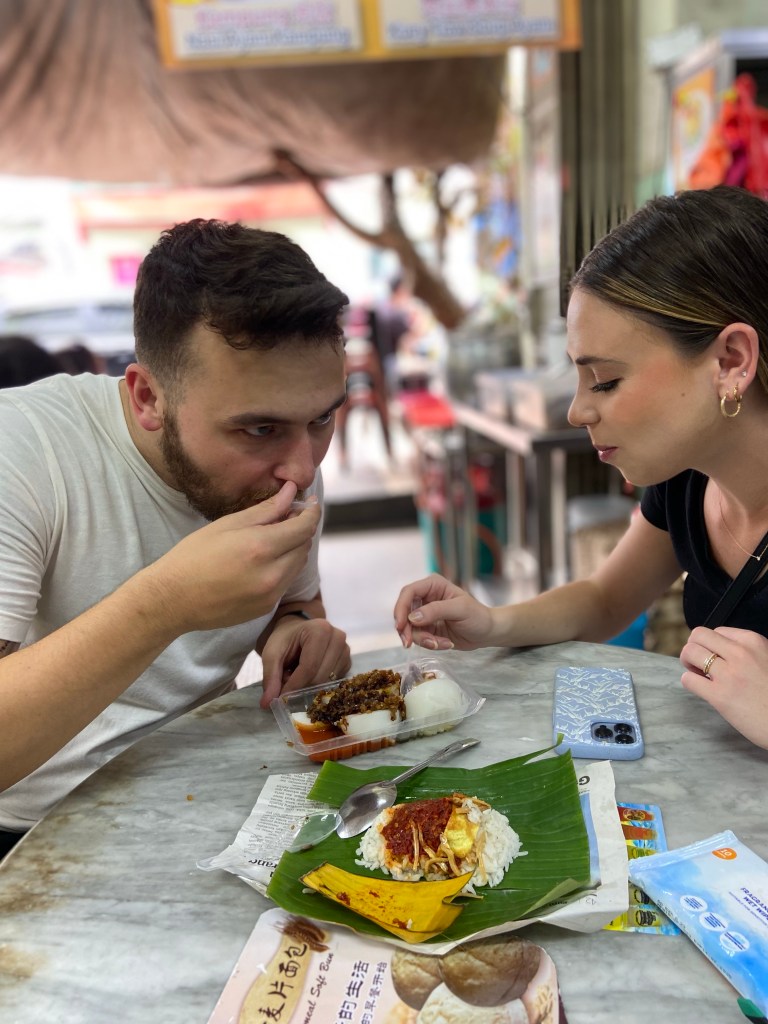
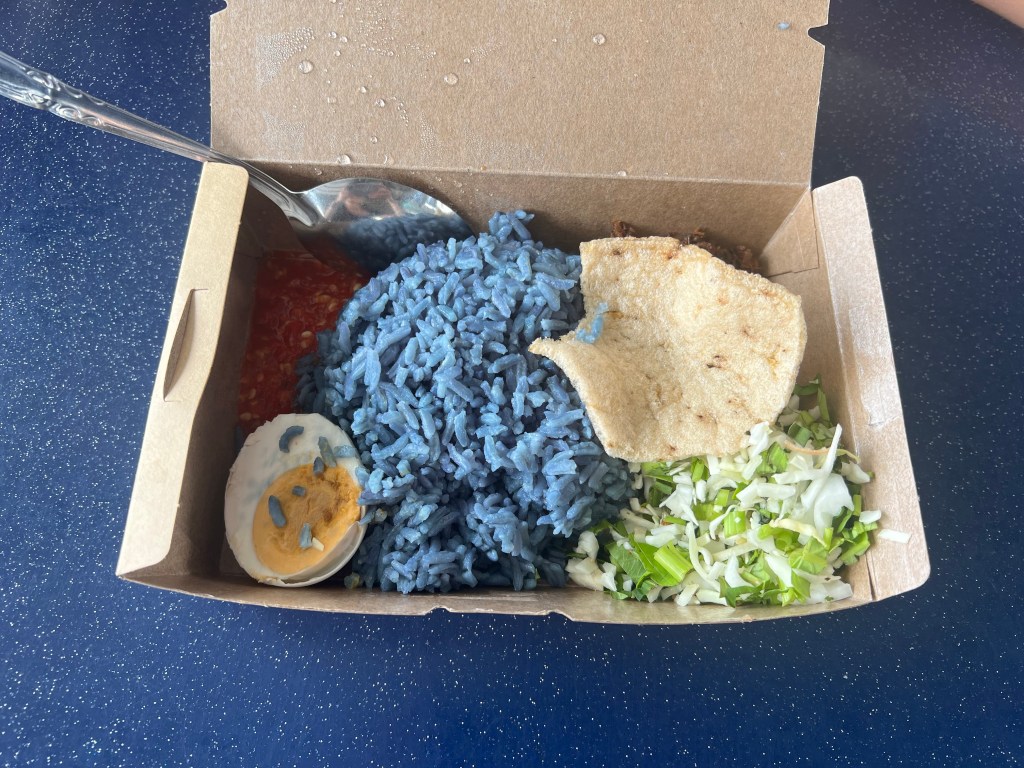
And then it was time for the main event. One of the aunties dropped a small banana leaf off at our table. We unwrapped our little present and there it was, Nasi Lemak. Consisting of coconut cooked rice, sambal, anchovies, and sambal, this was the National Dish of Malaysia. I took a bite. I wanted so badly to love it because of the hype and Han’s excitement, but I just couldn’t. The sweet coconut rice and fishy anchovies didn’t combine well in my mouth. The flavor combinations were just too strange, unfortunately.

We were also given some Barley Water which was really refreshing on the hot, steamy day. Han told us it was something the locals loved to drink here. I see why, the heat was already starting to get to me. She must have seen the sweat pouring from me and felt pity.
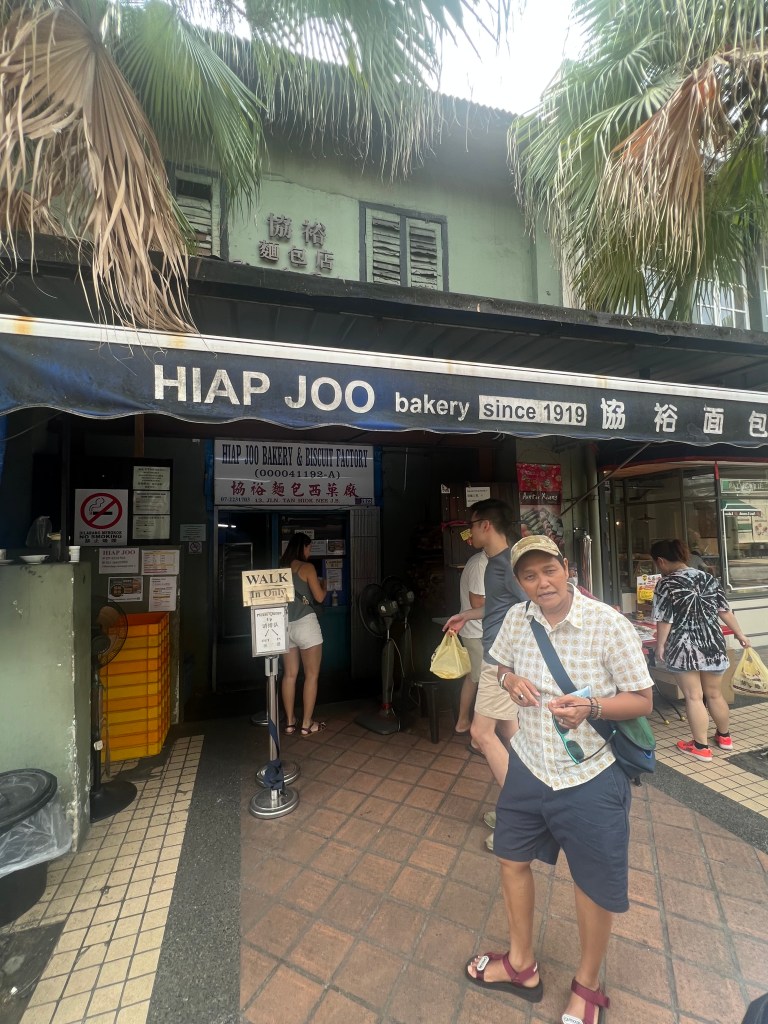
Across the street was Hiap Joo Bakery, a popular spot in Johor Bahru, especially for its Banana Bread. The people here were very nice, and made sure to welcome us to their country. But what about the banana bread, was it any good? I’ll let you look at Emily’s reaction when we ate it back at our hotel to determine that for yourself.

The Streets of Johor
As we continued on we ended up at Jalan Dhoby, which seemed to be a lively place. The area was filled with cafes, stores, malls, and restaurants. It was a really nice place and parts of it looked like something you’d see in a western country.
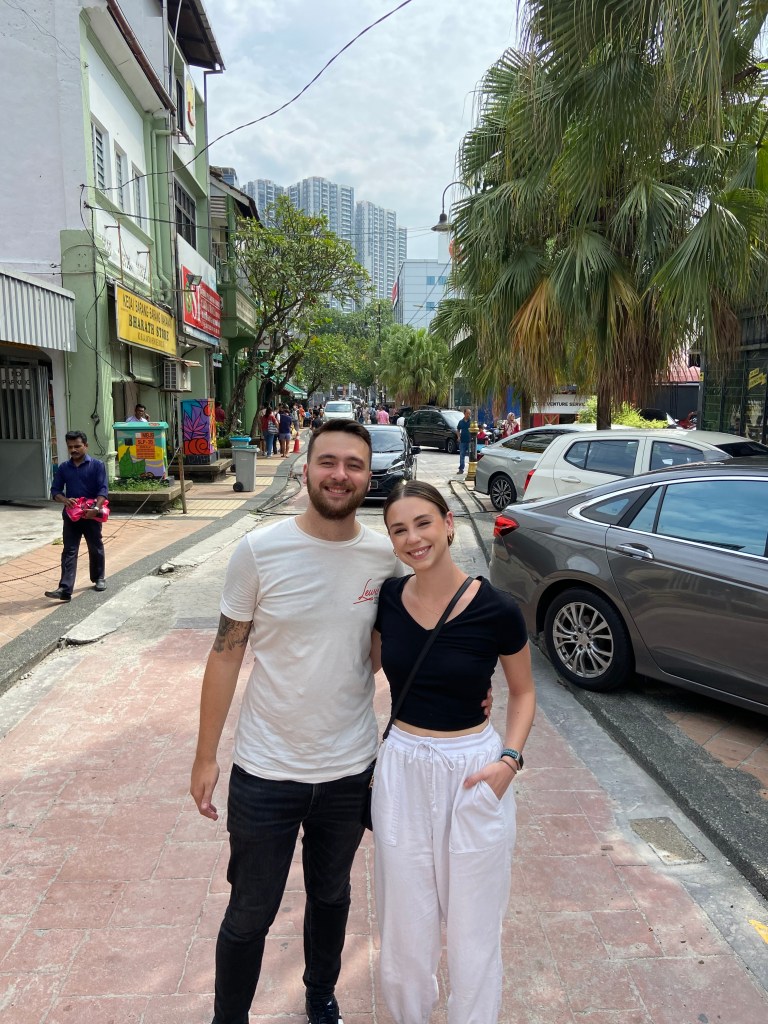
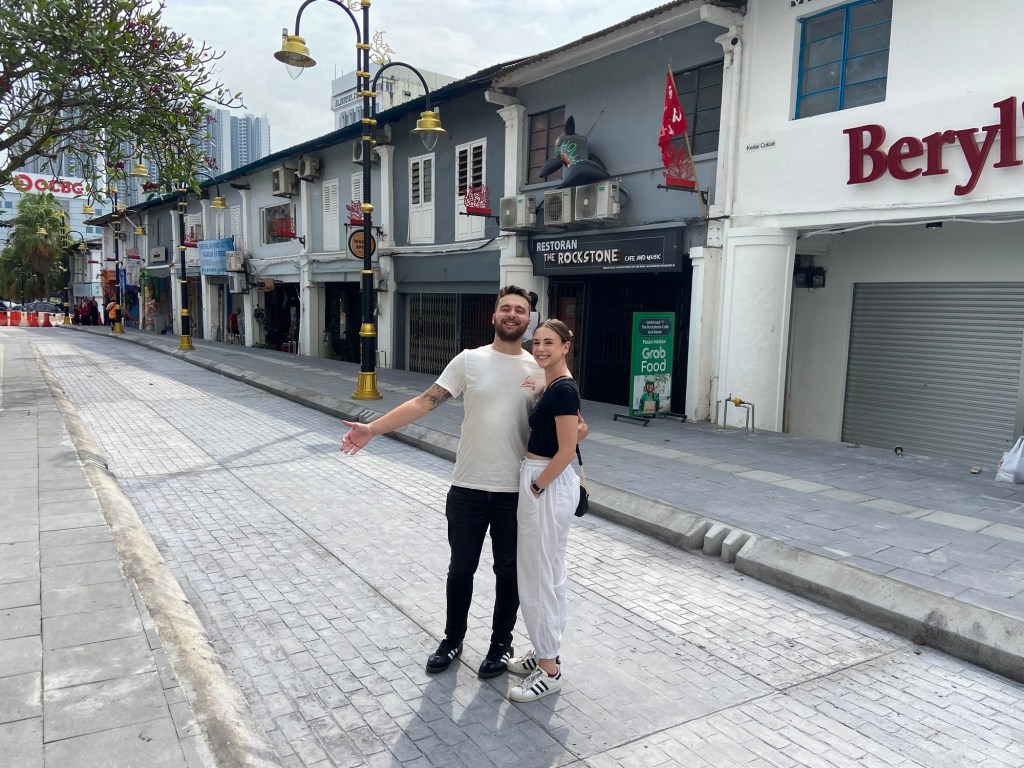
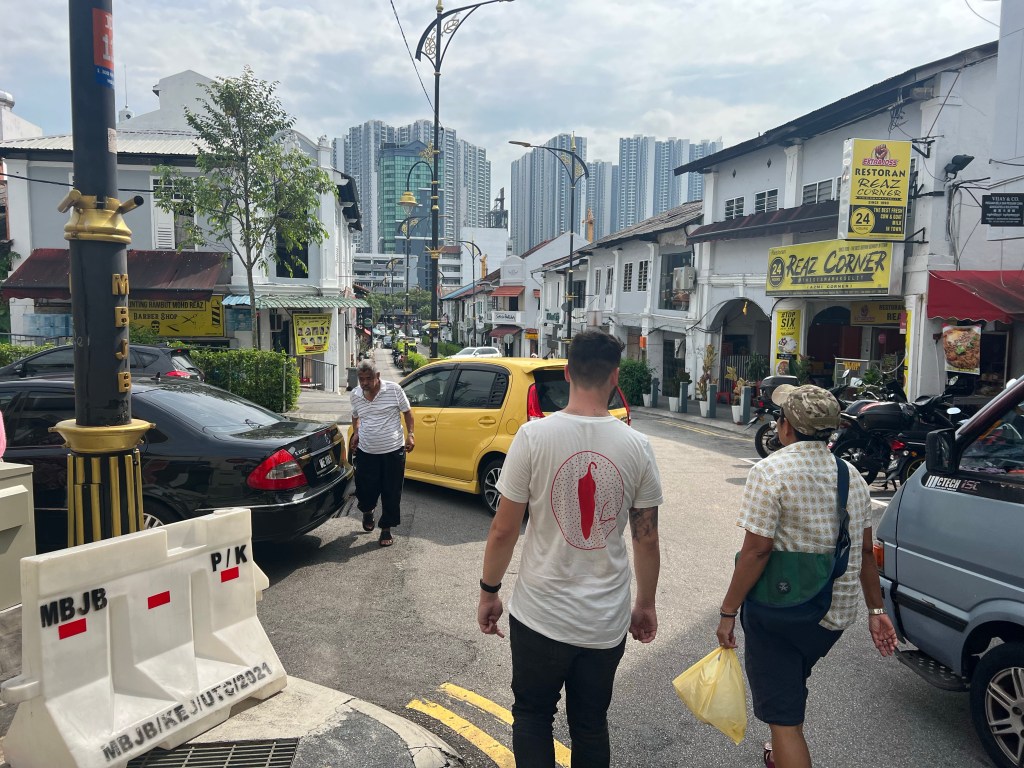
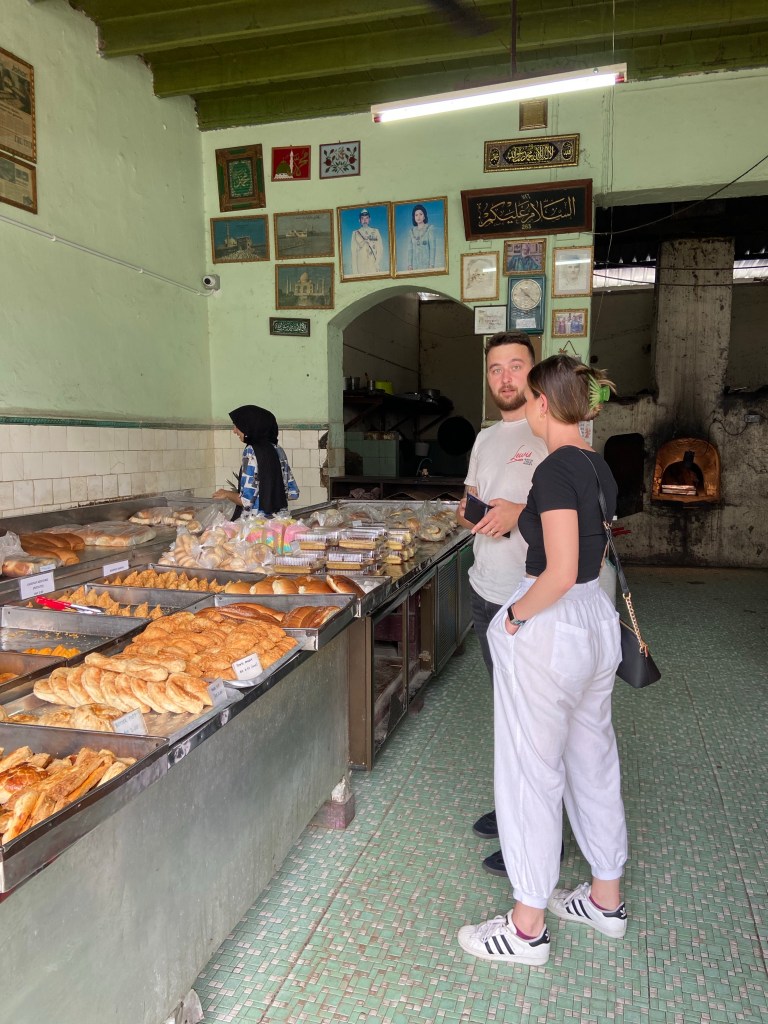
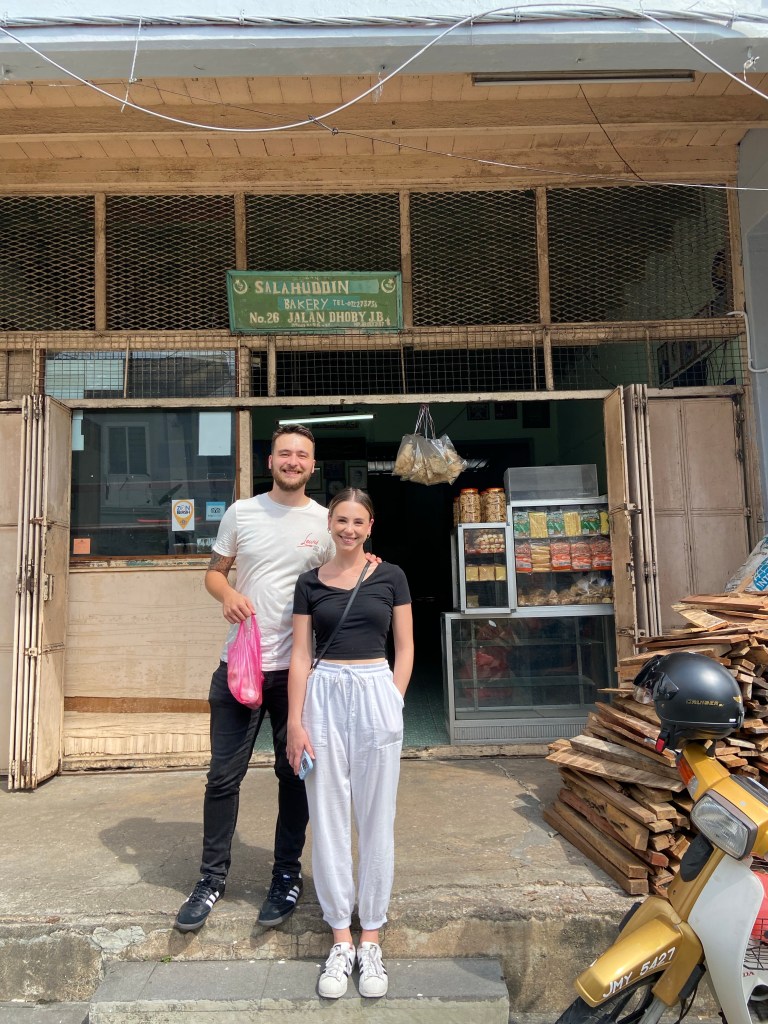
It was here that we stopped by Salahuddin Bakery, which definitely became the coolest bakery we have ever been to. Tucked in between the some of the more modern buildings, this bakery has an inconspicuous entrance. Just a simple green wooden sign sits above it’s opening, “Salahuddin Bakery No.26 Jalan Dhoby JB”.
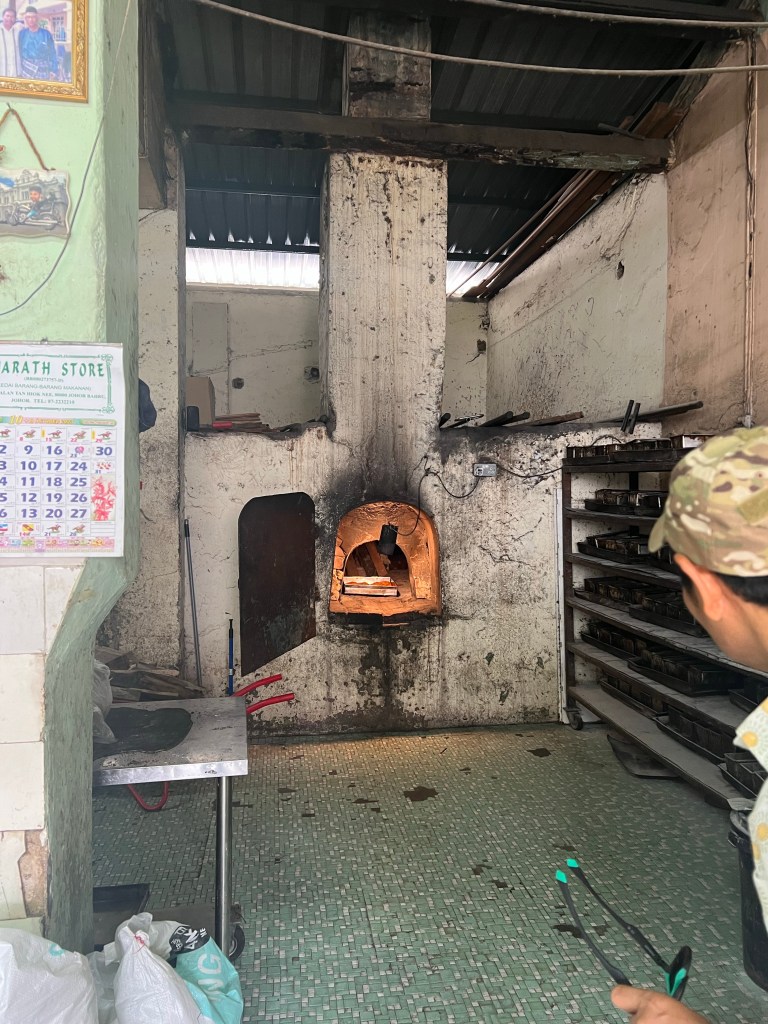
Walking inside, the smell of fresh baked pastry hits like a wall. I felt like one of the cartoons being swept off their feet and floating towards a fresh baked pie on a window. At the back of the store, a century old brick oven sits where they still bake their bread today. And the bread, wow, if you had to draw a loaf of bread, it would look exactly like it does here. We ended up getting 3 buns, each stuffed with something different.
Final Stops
Han was really excited about our last food stop. Pisang Goreng Mawar has been at this spot in Johor for over 20 years and serves one of Han’s favorite food, Pisang Goreng (fried banana fritters). It was cute to see her literally buzzing with excitement as we pulled up to the small stall, “They are so, so good!” she kept on telling us, grinning through her teeth.

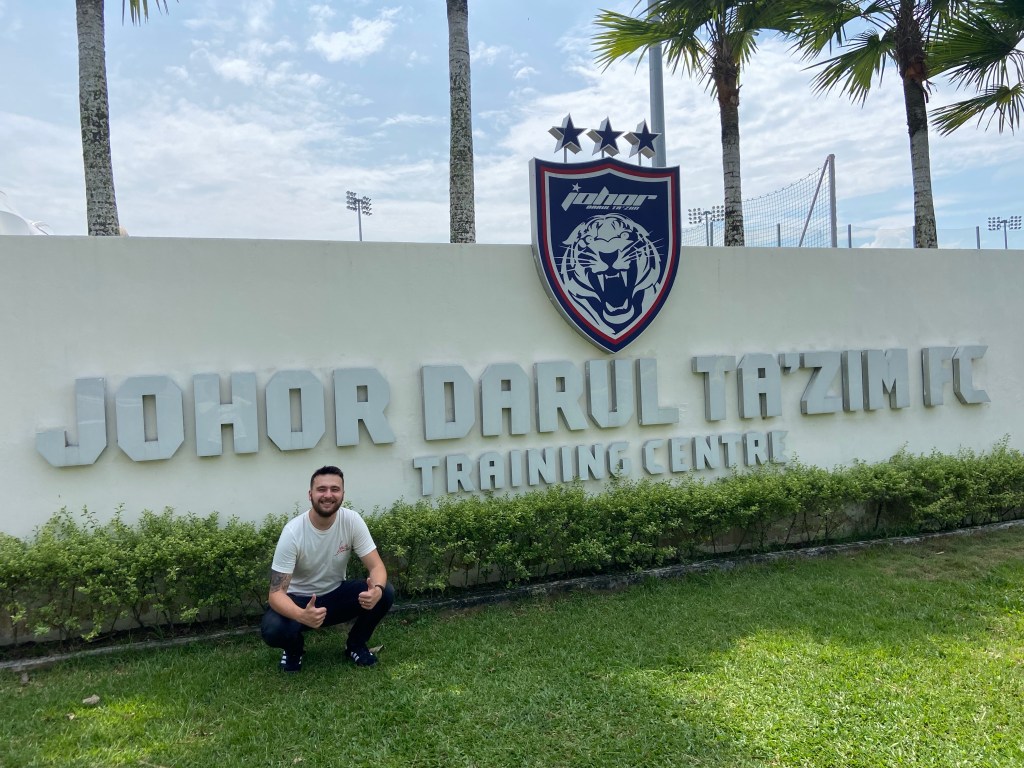
Right outside this stall was the training facilities of Johor Darul Ta’zim FC, the most successful club in Malaysia. I’d been bugging Han all day about soccer, so I’m sure she was glad to finally get me to shut up.
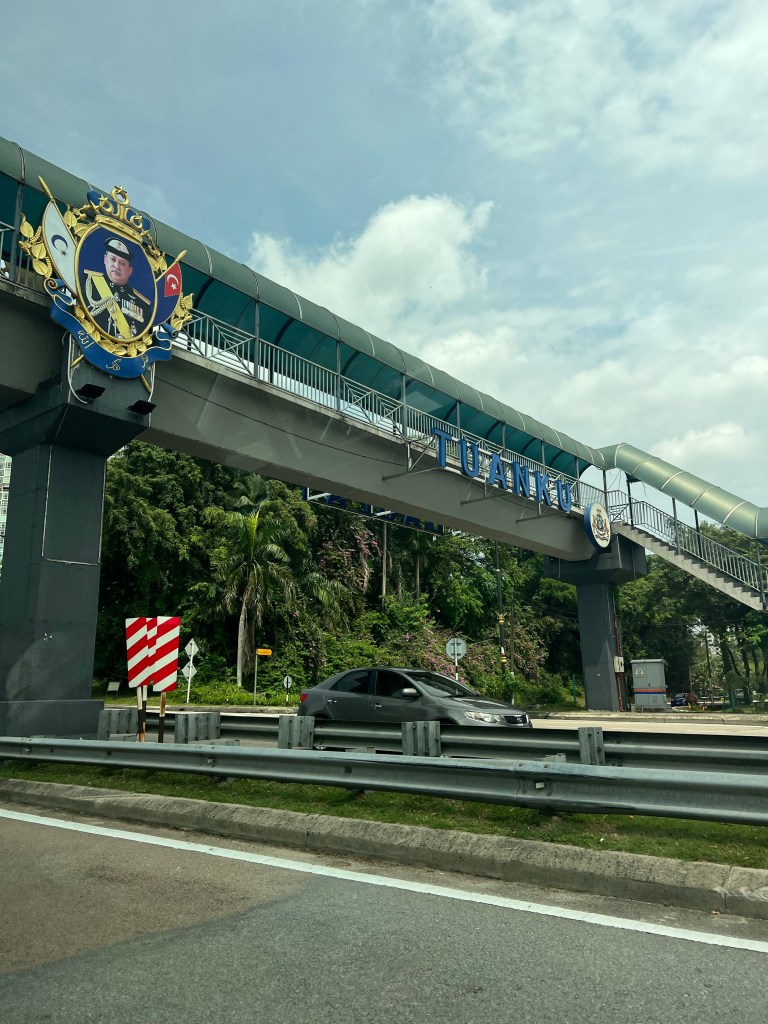
Malaysia has a very interesting way of choosing their leaders. Each of the 9 states has their own ruler and together, they vote on which of them is to become the leader. The leader at the time was Sultan Abdullah Sultan Ahmad Shah. Interestingly enough, he was just recently replaced by Johor’s own, Sultan Ibrahim. Han had told us that Johor is by far the most powerful of the Malaysian states and holds a lot of influence over the country. Anyway, we saw photos of the Sultan are posted all over the highway next to the words, ‘Daulat Tuanku’, which translates to Long Live the King.
The Real Malaysia
As our journey came to an end, an idea popped in to Han’s head. “Do you remember that small village near where we got Roti Canae? They are called Kampungs. They are all over Malaysia. I will show you to one.” We drove up a small, windy road through tropical tree’s and foliage. This was Kampung Sungai Danga. The people here lived humble, simple lives. The houses were small, and put together with tin. It was so different to everything we’d seen in Singapore. There it was all incredibly modern and large, yet just a short bridge away was this.
“Look, Rambutan!” Han excitedly pointed out a fruit that was growing from several trees in the neighborhood. Without a second thought, she pulled in to the driveway of a random house and got out. “Come, lets eat some”. I thought it was strange and felt a little uncomfortable that we had just pulled into this random mans driveway, but Han assured us it was okay. The owner was sitting on his porch and simple smiled and waved at us. I guess that meant we were good to try some! Han picked a couple off the ground and handed them to us. The outside was a spiky and bright red, but inside was a white, gelatinous blob. I took a bite and immediately hurt myself on the pit inside. After learning how to eat it correctly, I was able to enjoy them. It was a sweet flavor and so fresh.

And just like that, it was time to go back to Singapore. Before we crossed over the bridge, Han proudly showed us her apartment and the surrounding neighborhood. It was a beautiful place. As we began the drive back, we reflected on our time in Johor. What had made this so special was doing it with Han. Going to tiny, local cafes and listening to Han get excited and tell us stories about her favorite dishes and experiences.
If you decide to visit, you can book Han as your Tour Guide here!
 The Hungry Voyagers